before joining the war, the Entente promised Italy to give them territories such as Istria, Dalmatia, and even a piece of the colonies in Africa, but at the end of the war, Italy struggled to even receive a part of what the allies promised to give, I know the 14 Wilson's points had something to do with this but what actually made the allies decide to betray Italy?
I have put together somewhat of a very, very long answer on this point - focusing substantially on the Italian side of things. I'll try to edit together the pieces of previous contributions.
One recurrent theme in the explanations for the rise of Fascism in Italy is that of the discontent and resentment of the Italian population for the limited gains made by the Italian nation after its three and a half years in the Great War. The “mutilated victory” - in the fortunate expression chosen by Gabriele D'Annunzio already in October 1918 – found since then its way into countless school manuals. What was usually lost though, was the remarkable amount of subtleties to be found in the context of such an expression.
It's perhaps convenient to break them down.
First, there is the objective fact of the “mutilated victory”. Italy had joined the Entente powers in May 1915 after a labored process that involved cross negotiations with both the Central Empires and the Allies and culminated in the signing of the Treaty of London on April 26^th . The Treaty included a thorough list of territorial gains for the Italian nation, to which the allies – France, Great Britain, Russia, and by extension the Kingdom of Serbia; which was not, anyways, one of the signatories. The Serbian diplomacy had been, whether they liked it or not, largely operating in a subsidiary manner to the Russian one; therefore the Serbian compensations, that had been taken into account in the preemptive negotiations, had been a result of the Russian pressure, and had made Serbia somewhat of an invested party in a treaty they had not been called to ratify. Even if, admittedly, under the circumstances, their acceptance could be taken as a given.
Now, after the obvious preliminaries declaring how the four allied nations were in fact expected to cooperate to their respective military operations by the establishment of adequate conventions, the articles 4-7 listed the Italian territorial gains. It would be incorrect to interpret those as “promises” made by the Entente powers towards Italy, in the most immediate meaning of the war. After all, those lands were neither the Versailles gardens nor the backyard of Buckingham Palace, nor some piece of art in the Hermitage. They were territories subject to a foreign nation, with their own forms of sovereignty, administrations and local authorities, of which – in the case of a satisfactory conclusion of the conflict – GB, France and Russia, accepted the annexation by Italy. In this sense, while the Treaty is not explicit in this sense, there was an obvious expectation that the final arrangement would result from a peace settlement between Italy and Austria (Italy wasn't at war with Germany) – or better between the Kingdom of Italy and the Austro-Hungarian Empire, that is a bi-partisan treaty of peace, whose terms the allies were preemptively approving, in so far as specified by the Treaty.
Incidentally, you can read the Italian text of the Treaty here and the English text here. As for the nullification of the treaty that followed from the various deliberations of the Paris peace conference – that is the fact that the allies chose to apply the Treaty only in those portions that applied to the regions they considered homogeneous to the Austrian Kingdom, but not to Dalmatia which they assimilated to the Croatian region and thus was destined to the new Kingdom of the Serbs, Croats and Slovenes – that may lead to an interesting debate of international law and the nature of treaties. But it should be understood that for the concurring parties, the Treaty of London was a list of possible developments they agreed upon [this point especially is something that could be debated - not everyone among the allies agreed on this view around 1915, if we follow for instance Poincare's memoirs - more of that later], and that the choice by the allies was not equivalent to the direct breach of a treaty. And that would be ignoring the fact that the US could claim to have brought a substantial contribution to the allied war effort, which helped create the preconditions for the application of the treaty, but had not ratified it nor accepted its general terms; and were therefore somewhat of an active party without being bound by pre-existing obligations.
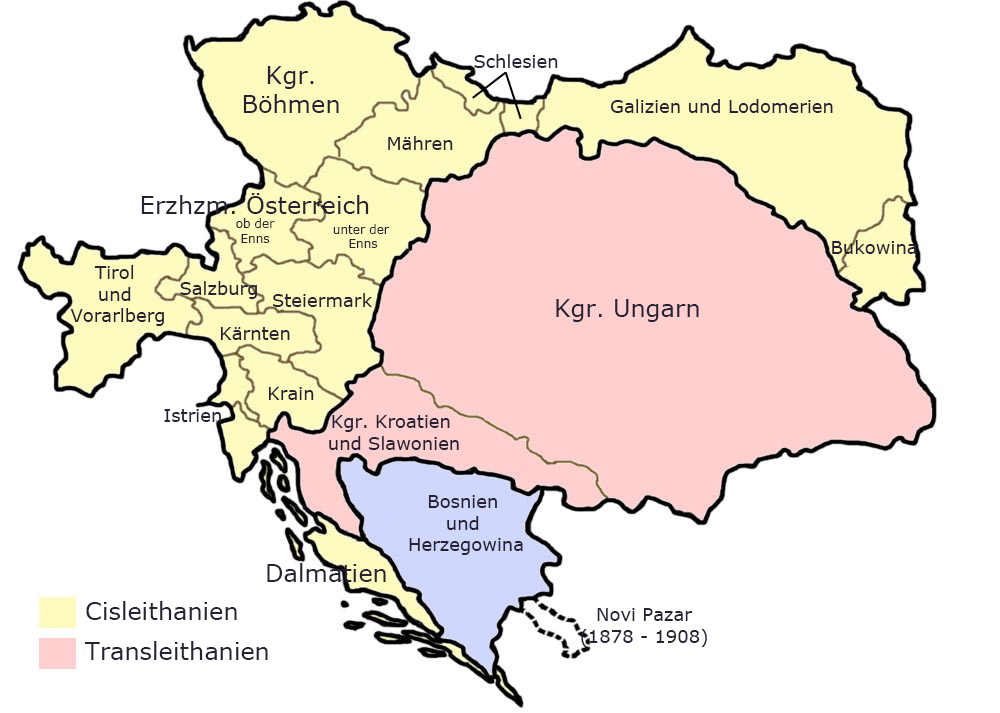
The core of the Italian claims were the regions of Trent, with south Tyrol up to the Brenner pass, Istria with a few round ups along the border – going from Gorizia and Trieste, almost to the outskirts of the city of Fiume, which was nonetheless not included within the terms of the treaty – and the northern portion of Dalmatia (the largest part from Zadar to the watershed, excluding the southern portion with Split) with the islands of Lessina and Curzola dominating the Split Channel. South along the coast, the old Maritime Republic of Ragusa with the adjacent Bay of Kotor were left to constitute a neutral zone – but subordinated to a pre-existing treaty with the small state of Montenegro that already established the special status of the coastal towns of Antivari and Dulcigno.
The remaining portions of the coast (in addition to those temporarily established as neutral) were to be assigned to the not well defined entity of “Croatia, Serbia and Montenegro” - which at the time was in all likelihood intended to be the Kingdom of Serbia with its possible annexations, but could have been taken to mean the still non existent Kingdom of the Serbs, Croats and Slovenes. Notably though, this undefined polity was going to inherit the Hungarian special status port of Fiume. We'll get back to that later.
The potential Serbian annexations had been negotiated mostly through the Russians – partly due to the logistical difficulties that resulted from the desperate state the Kingdom of Serbia had fount itself by early 1915 – and had insisted on the need for the Serbian State to gain a portion of the Adriatic coast. The treaty though, made no mention of the other Serbian demands, which were not agreed upon and at the time seemed to be mostly an annoyance for the British and French, who were more invested in preventing the Romanian Kingdom from joining the Central Empires. It's frequent for maps, such a this one to reproduce all the Serbian claims as of 1915 within the context of the Treaty of London – while those were discussed in the preemptive talks, they were not part of the Treaty. In fact the Serbian claim to the Banat region (roughly the one from Subotica to Timisoara) was fairly problematic for the Allies, and eventually dropped by the Russians as well, since it threatened to alienate the Romanians who could instead play a large role as a leverage against the Hungarians.
The presence of a large Hungarian “quasi-state” within the Empire, with its own parliament, army, administration, and subordinate provinces (that is the old Kingdom of Croatia) was in the minds of the Entente powers a potential element of weakness for the German leadership of the Austro-Hungarian Empire. And especially for the Italians, who at the time appeared to be to overly reliant on their national history in trusting the “anti-Austrian” sentiment of the national Hungarian “Party of Kossuth”. The clause of art. 5 concerning the assignation of the coast of Croatia (the administrative region of the Hungarian Kingdom), including Fiume to Croatia, could be intended as a way to leave that portion of the coast to the Hungarian Kingdom – and therefore, rather than a promise to Serbia (which, again, wasn't signing the treaty, if not per the intermediate action of Russia) could be taken as a reassurance towards the Hungarians that Italy had no aspiration over their own national territories.
The reasoning was in fact so obvious to the various parties that the Ministry of the Navy, vice-admiral Leone Viale, simply observed that Fiume had been excluded from the treaty “for fairly obvious reasons”. And similarly, the Italians had conducted their talks with the Austrians for the purpose of compensation in exchange for their neutrality, by keeping the German element of the dual Monarchy well distinguished from the Hungarian one.
Art. 7 of the Treaty was somewhat paradigmatic of the fairly hypothetical nature of the various stipulations, by establishing an Italian protectorate over a residual Albanian State, if the French, British and Russians had agreed on a partition of the northern regions of Albania between Montenegro, Serbia (treated as different political entities here – with no mention of Croatia) and Greece, and if the points at art. 4-6 had been previously applied.
Art. 8 concerned the international recognition of the Italian occupation of Dodecanese and art. 9 introduced further hypothesis with the possible total of partial partition of the Turkish mainland (that is actual Turkey); in which case the Italians would have received their share in the exploitation or occupation rights of the southern coast. And art. 13 introduced the right for the Italians “to demand an equal compensation” from France and Great Britain if those powers were to seize the German colonies.