Interesting proposition, as you make a connection to usurpers of imperial power in antiquity and the early middle ages. It might actually be helpful to see the break between the "dark ages" or the early middle ages and antiquity less strong, as is also implied in your question. There have been many propositions made and books written about the notion of continuity.
Therefore, I first want to follow your question with a hint at continuity. The important word in this case is "perspective", because at the time of Charlemagne there actually was "another" empire to the east. The line of tradition between Byzantium (whos rulers and people still saw themselves as Romans) and the ancient empire was still very strong. As such there can be no doubt that for them the Carolingian emperor was a usurper, but one who they seem to try to take not as serious for the most part.
But lets look at this from another perspective too: If one wants to be very strict with your comparisson and take a closer look at the inside of the Frankish realm than it becomes more complicated.
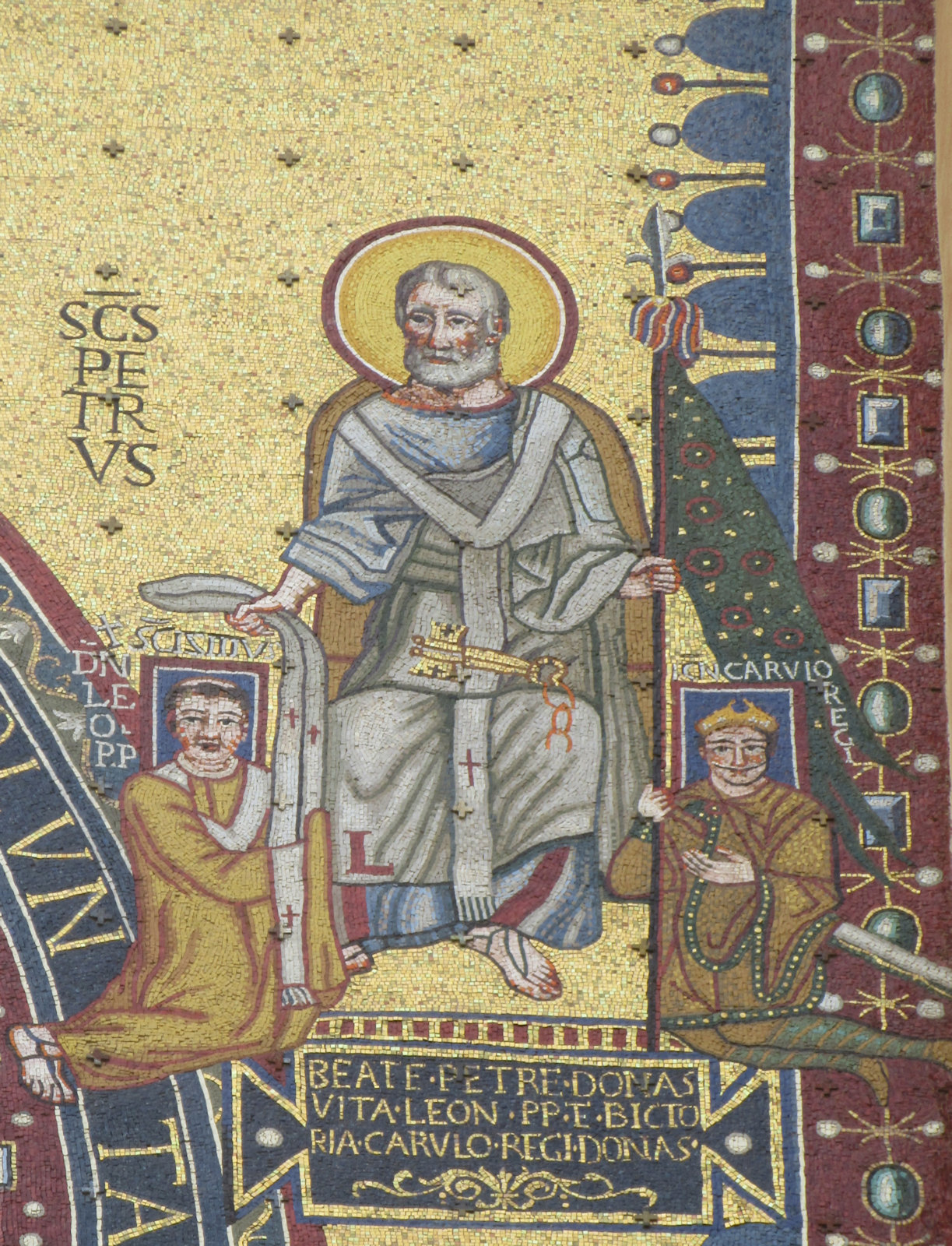
First let me set the stage regarding the events around christmas 800:
When looking at the usage of titles under the Franks and the issue of realpolitik it seems much more likely that the Carolingians actually used Byzantium as a frame of reference. This is also often said by historians regarding the issue of images in religious context, which became a contintious issue in the 8th century for the east and were used by the west to oppose them and the church under Charles. On the other hand, and I already gave several examples before, the claim of an imperial title made definite reference to the Roman Empire, no doubt. If we want to look at your question closer thou, it becomes more difficult: The realities of Charles time were different to the ones of Diocletian or the 4th century in general. The problem here is that one of the cause for such coups in the 4th century was conflicts at the borders, were soldiers had to fend of diffferent threats and thus wanted to have the emperor be close to lead the armies and organize the security. Similarly there were new subcapitals such as Trier which were closer to the frontier and lastly the system of Tetrarchy employed to reorganize the empire.
Drinkwater, John, Maximinus to Diocletian and the 'Crisis', in: The Cambridge Ancient History 12, Ed. Alan Bowman, Averil Cameron, and Peter Garnsey, Cambridge, 2005, p. 28-66 (esp. 58-64).
Fouracre, Paul, Frankish Gaul to 814, in: The New Cambridge Medieval History 2, Ed. Rosamond McKitterick, Cambridge, 1995, p. 85-109.
Fried, Johannes, Charlemagne, Cambridge, Mass. 2016. (Also available partially on googlebooks)
Heather, Peter, The Restoration of Rome. Barbarian Popes and Imperial Pretenders, London 2013.