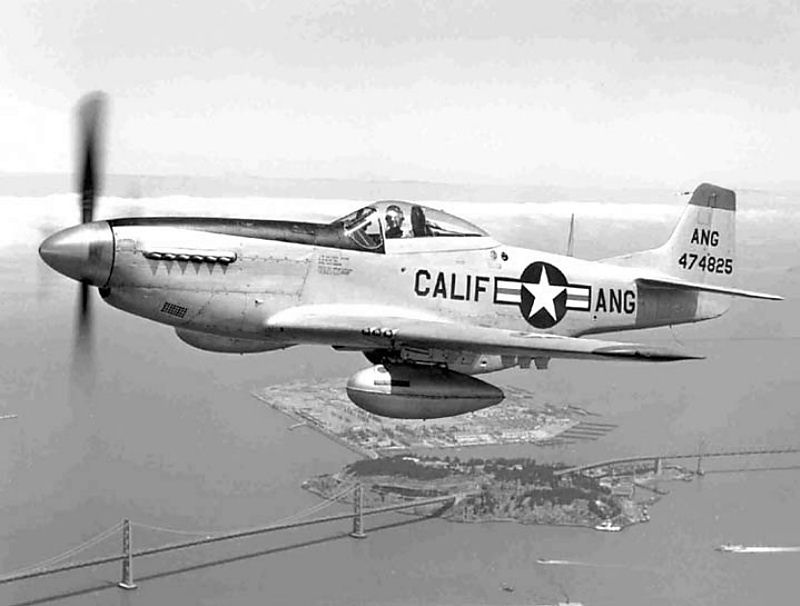
Planes used in Europe seem to commonly have cone shaped propellers while planes from the Pacific were barrel shaped. Was there a specific reason for this? Google didn't help.
The distinction you speak of between barrel-shaped and cone-shaped propellers is, I assume, the distinction between inline engines (like this) and radial engines (like this).
The Pacific was indeed dominated by planes with radial engines, like the Corsair, Hellcat, and Zero. In this you are correct. Europe, on the other hand, had Mustangs and Spitfires, and Bf 109s. But the European theatre also saw its share of single-engined* aircraft powered by radial engines, the most prominent of them being the P-47 Thunderbolt on the allied side and the Fw 190 on the German side.
So, why radial engines in the Pacific? Because the war in the Pacific, especially in its early phase, was fought mainly from aircraft carriers, and not land bases. And on aircraft carriers space is just about the most valuable resource you have, so you cut down on storing anything that does not need to be stored. And switching from inline engines to radial engines gave you one immense gain in this field: inline engines use glycol for cooling whereas radial engines are air-cooled.
The US Navy decided to limit its carrier-borne aircraft to those with air-cooled engines in 1926. Some time ago I tried to find the date when Japan made the same decision, but failed.
Air-cooled engines also give you the benefit of being more resistant to battle damage. There's simply no cooling system that a bullet might pierce and cause it to malfuntion. A radial engine is cooled by the airflow, to which all the cylinders are exposed equally. It is presumably for this reason that the P-47 saw a lot of action in ground-attack missions in Europe. Though it did serve as an escort fighter, too.
*) I've belatedly added the single-engined part, as there are also multi-engined aircraft powered by radials, with the B-17 and B-29 being arguably the most famous.