Is this just due to western romantic orientalism, were shields actually not common with Chinese and Japanese soldiers? If they did use shields, what kind were they?
You don't see Western portrayal of Chinese with shields, but Chinese love depicting themselves with an unreasonable amount of shields.
Shields were very common in China. For much of history, Chinese warfare would involve spearmen with shields, much like the West. The average shield was was made of wood with leather or bronze/iron added and often coated with lacquer. Larger shields were used at the front to defend against arrows (see this Tang dynasty illustration), whilst smaller shields were used on the standard infantryman (shields like this).
In Japan, however, shields were only used in the early period of it's history, such as the Yayoi or the Kofun period. Yayoi period shields were wooden and painted whereas the Kofun era shields followed the Chinese designs. Shields were used in Japan during the time of the Yamato empire, when Japan still had a national army. However, eventually, Samurai would supersede the Yamato soldiers as the primary combatants and they would dictate how war was fought.
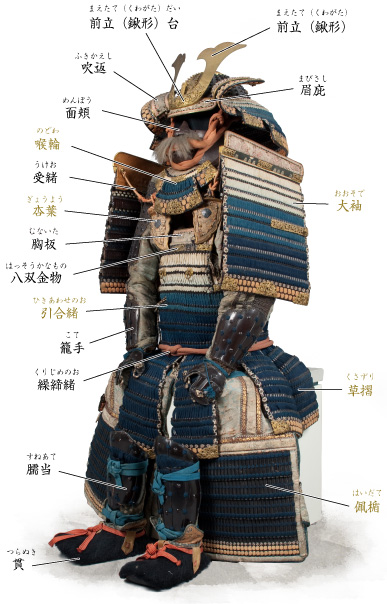
The samurai, having their origin as horse archers, did not use shields initially. Later, they adopted heavier and heavier armour for protection, which further reduced the need for shields. The same thing could be seen in Europe, where the more armored knights became, the more they gave up shields. A unique part of Samurai armour design was that they opted to have shields built into their armour instead of carrying shields. Samurai shoulder plates were very large because they act as pseudo-shields to protect the Samurai on horseback. These too became smaller as Samurai armour became heavier, going from lamellar to laminar (and later even whole plate for the cuirass). For example compare this 16th-century armour with the previous O-yoroi armour and you'll notice the shoulder plates are much smaller.
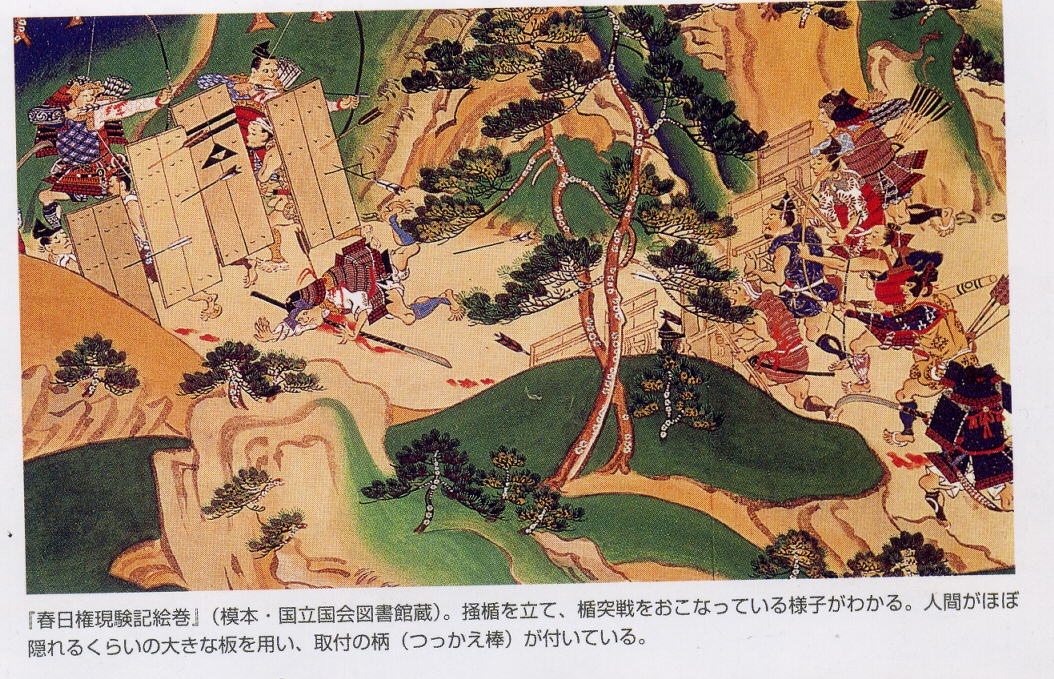
That isn't to say the Samurai didn't use shields whatsoever. However, the shields that the Samurai preferred were not personal shields, but pavises. Samurai would have their footsoldiers hold up pavises so that they could shoot arrows safely from behind them. It works by the same principle as a modern ballistic shield where one person carries the shield and the person behind him shoots.
The most popular depictions of Samurai are from the 16th century. By then, muskets had rendered the concept of shields obsolete, save for massive pavise-like pillars made by wrapping bamboo.
As for why Western depictions of East Asia lack shields, everything from here on is but my personal conjecture. I think it is likely that, by the time the West had made enough contact with China and Japan to get a good idea of what their warfare was like, shields had already been phased out of combat in Eurasia. For example. the first Europeans to prominently arrive in Japan were in the 16th century, when neither Japan nor Europe used shields anymore.
Furthermore, Samurai media leaked into Western cognition in the form of Jidaigeki, which is often set in the Edo period. During that period, there were no wars and so the only combat were unarmoured duels on the street using katanas. This was a far cry from actual Samurai warfare, which involved ranks of armoured pikemen and bowmen (later replaced with musketeers), but it was the image that was the most popular. Because of this, the West and Japan alike adopted a tendency to romanticize the Samurai as a "lightning-quick warrior" which used the katana as its weapon of choice (whilst it was but a sidearm in reality). One of the main critics of Akira Kurosawa was that he catered to this Western misunderstanding of Samurai. Thus, Samurai became associated with speed and agility in the West, when in reality Samurai were these slow, cumbersome, armoured soldiers. Things such as heavy armour and shields were unfitting to such an image and were cropped from the Western mind.