I know vikings didn't have horns on heir helmets but what about the popular depiction of them having wings on them?
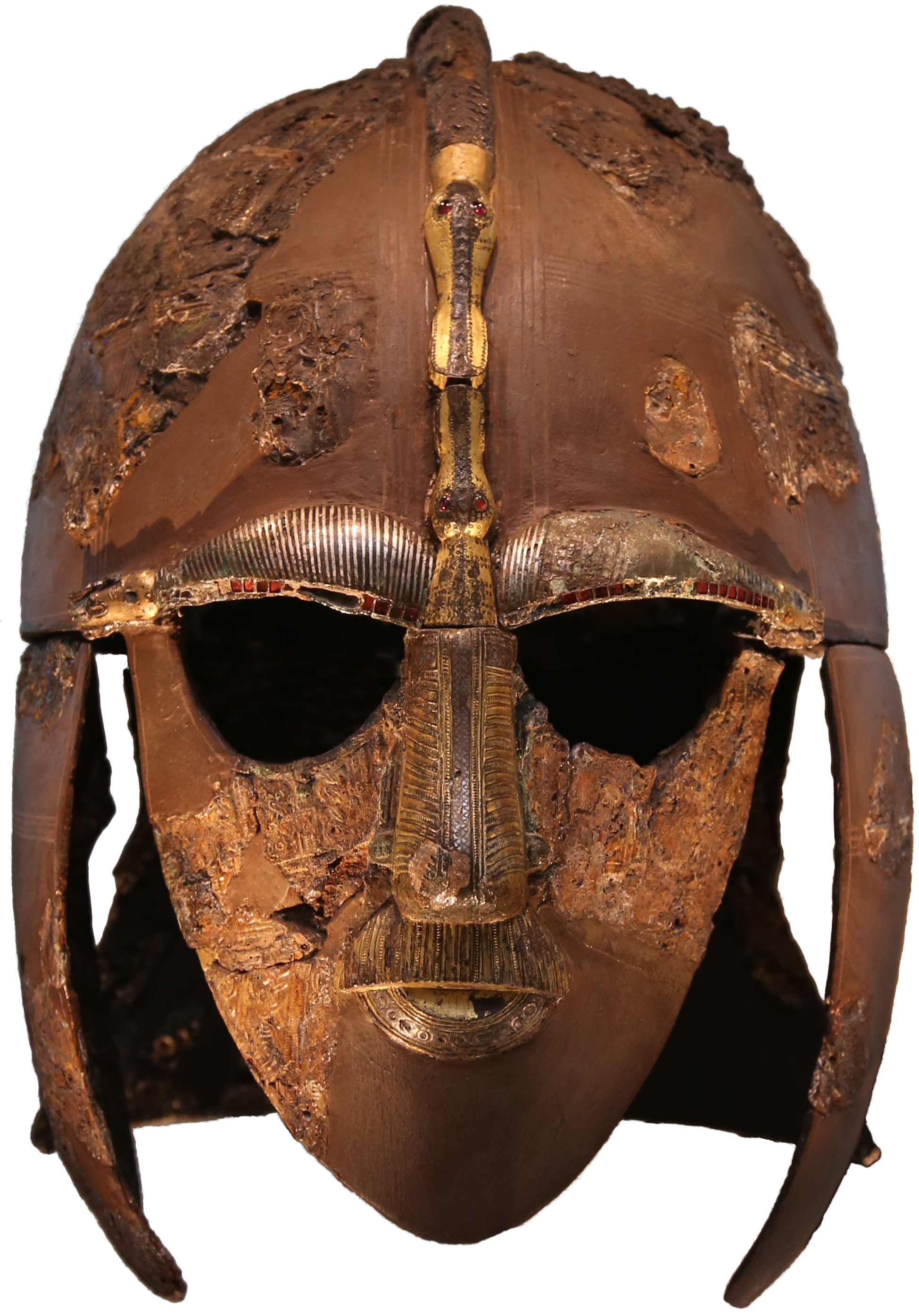
You could really cover all the basics of Iron Age Norse helmets in a few paragraphs. There are a few helmets from fancy ship burials in Sweden from the Vendel Age (550-800), the centuries preceding the Viking Age. Examples would be Vendel I from Vendel (these very finds gave name to the age), Vendel XIV, Valsgärde VII and Valsgärde VIII from Valsgärde. The numbers are which grave they're from; the two sites are about 25 km from each other, both not far north of Old Uppsala in Uppland, Sweden. There's also the Ulltuna helmet which is a bit different but with some common features. It's often remarked upon that these also have many similarities to the Sutton Hoo helmet from England, which is contemporary Anglo-Saxon one, also from a fancy grave. This right here is most of the reasonably-complete helmets contemporary with the Vendel Age. For instance from Norway there are only 3 confirmed helmet fragments from the era.
As these are elaborate grave goods from elaborate royal tombs (that contained ships, animal sacrifices and lots and lots of other stuff), they probably don't represent what the average Sven was wearing at the time. It also seems a bit unlikely someone would go into battle with a garnet-encrusted helmet like Valsgärde VII. Which hasn't stopped plenty of Viking fiction for utilizing the designs though.
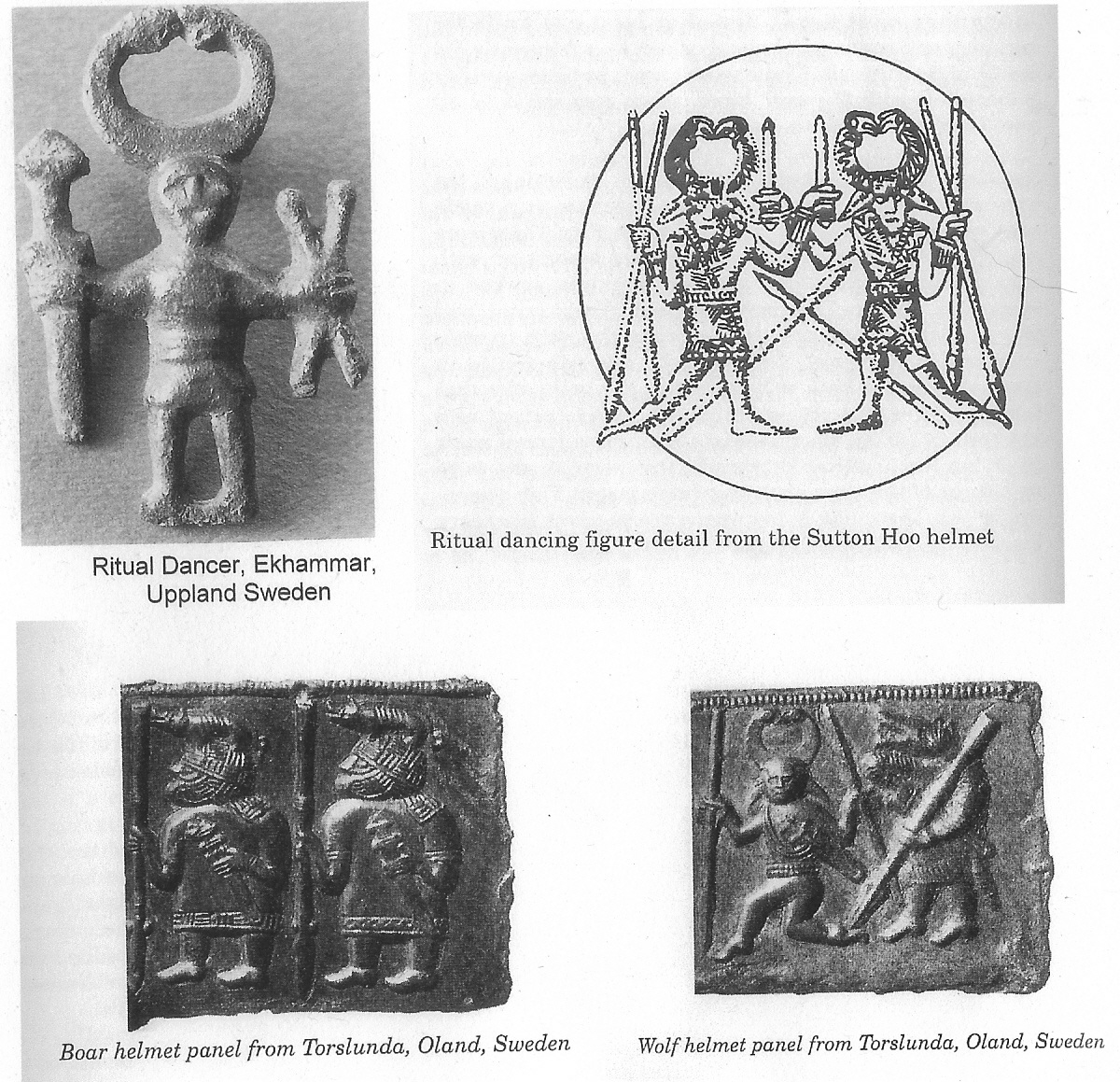
There are also decorations from the Vendel Age such as the Torslunda plaes which depict apparently-ceremonial helmets with boars and animals on them, and one guy with big horned helmets and a bear-like warrior. (we don't really know exactly what these depict, although there's no shortage of theories) A similar picture of guys with big-horned helmets holding spears, is on the Sutton Hoo helmet. Together these are called the 'dancing warrior' motif. It's possible this referred to some kind of ceremonial helmet that actually existed in the Vendel Period, but we haven't found one. (it's not the source of the horned-viking helmet idea though) The type of helmet with the boar has been found in England, with the Benty Grange helmet (7th cent). Again showing cultural connections between the Norse and Anglo Saxon world.
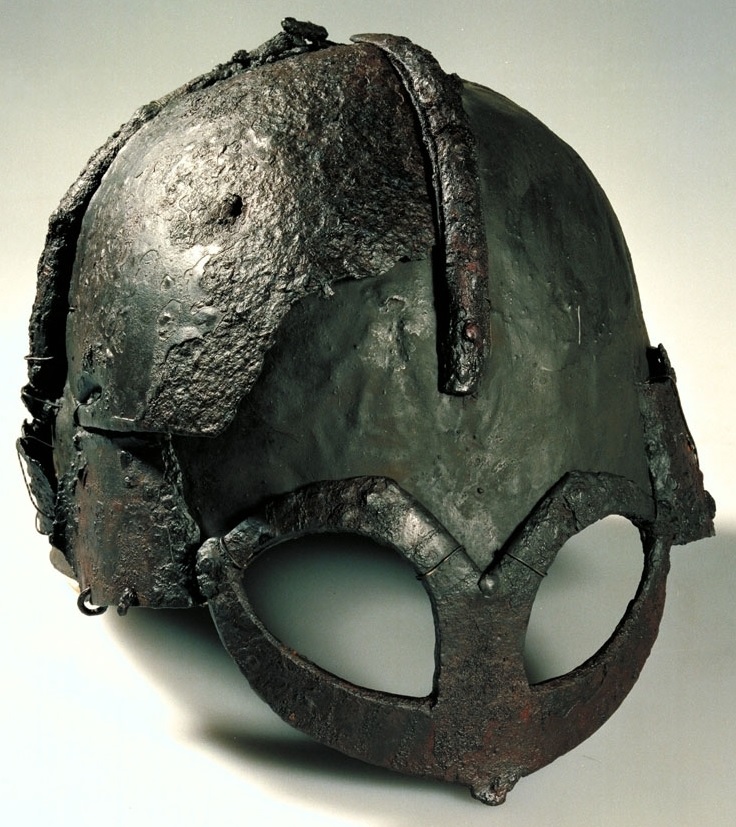
But from the Viking Age, there is only a single helmet fragment that's reasonably whole, which is the Gjermundbu helmet, dated to the 950s. It's a simpler and less design than the Vendel helmets but similar, and was formerly decked out with gold, and likely had the same ceremonial purpose. The Lokrume fragment from Gotland and Tjele fragment from Denmark. Both fragments are of the characteristic 'eyebrow' bits which is how they could easily be identified as helmet fragments.
There are a couple more fragments but this is basically it, all the known helmet and helmet fragments from Viking Age Scandinavia and the preceding three centuries.
So not only no horns nor wings, but not a heck of a lot of evidence they even wore helmets at all. Now, the Sagas and Eddas do mention the wearing of helmets here and there. Some of them are even made of gold. And that's the thing; the stories are about kings and heroes and gods, so again we can't expect them to tell us much about the regular people.
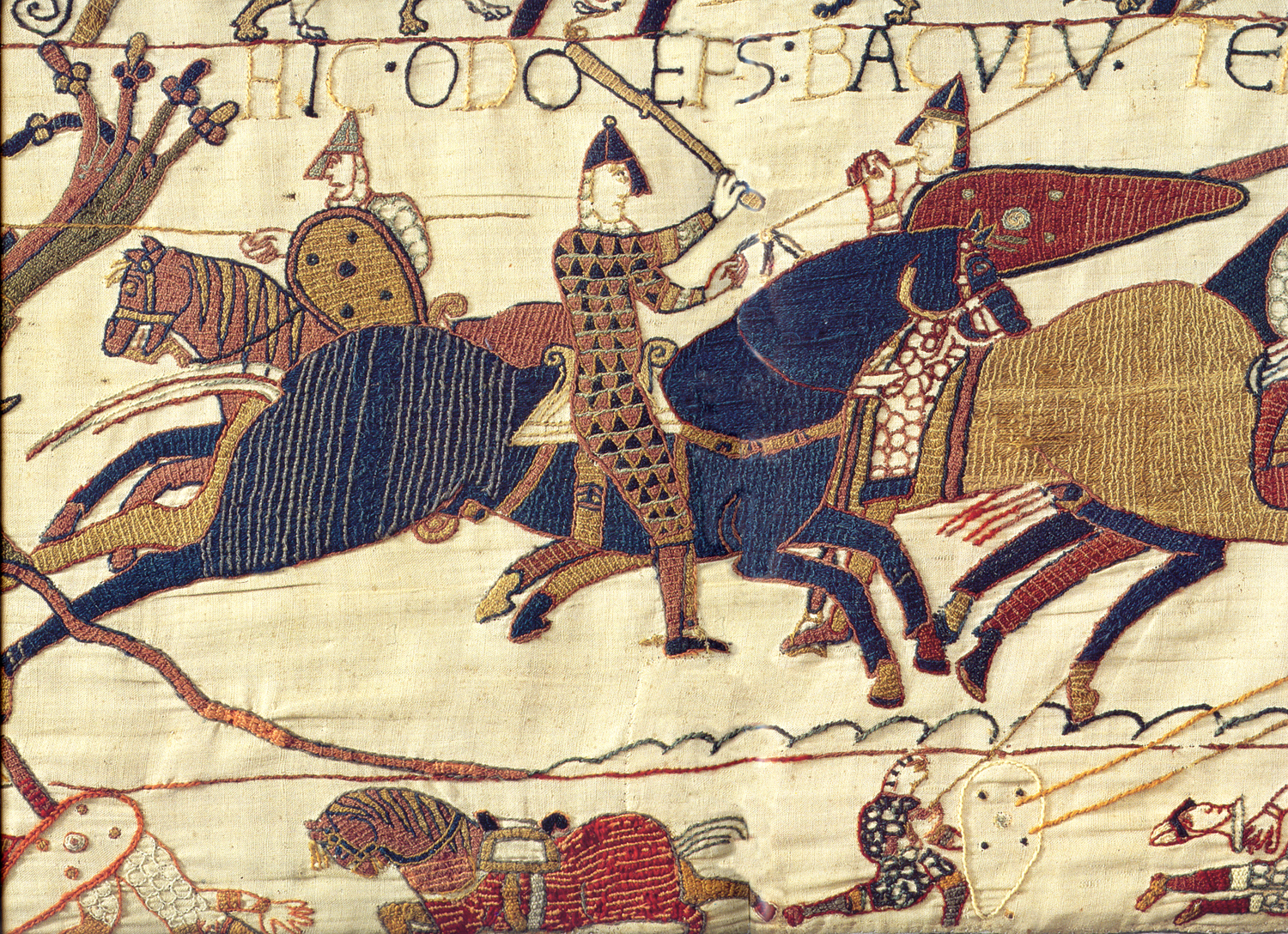
There are Viking Age artistic depictions of helmets though; such as the Rällinge statue. This figure, which has been suggested to represent Freyr (on the basis of him having an erection, ergo fertility god) is wearing a pointy helmet with a nose guard. You can find a similar helmet depicted on the 11th century Ledberg Stone (which has been suggested to be Odin despite the cross on the stone, mainly on the basis of him holding a spear). These kinds of helmets - nasal helmets did exist in contemporary Europe. Quite famously there's a lot of them on the Bayeux tapestry illustrating William the Conqueror's conquest of England (so, 1066).
But as we've seen, if vikings had nasal helmets, they've not left any concrete trace of it. (by comparison, there have been thousands of spear-tips and hundreds of swords found) So if you assume they did have these helmets, the question is why they're not here. (not least when there's often so much other stuff in graves) And that just requires further assumptions so you don't really get anywhere.
So there's no real consensus about actual Viking helmets; whether they had any or what they looked like if they did. One narrative is that they may have had less-ornate versions of the Vendel/Valsgärde helmets in that period, and Gjermundbu being end-of-the line model as they shifted over to nasal helmets. At the opposite end of the spectrum, one could imagine they had no helmets at all, except for these ceremonial/status-symbol ones.
The portrayal of Vikings as having horned helmets as well as winged helmets are thus not based in history at all but 19th century Viking-Romantic imagery. For instance, the Swedish painter August Malmström's paintings illustrating Frithiof's Saga he gave the hero a winged helmet. Otherwise horned helmets seem to belong mainly to the English Viking-Romantic art, such as Dicksee's "Funeral of a Viking". (also illustrating the burning-ship-burial trope) The costume design for Wagner's Ring Cycle is often credited with creating the horned-helmet trope, and if so it likely created or contributed much to the winged-helmet trope as well, as there are plenty of winged helmets in it too. (e.g. Brunnhilde often has one)
So anyway, we know so little that if you've read this far, you too are now a bit of an expert on Viking Age helmets. But there's every reason to hope and believe another find will be made some day that'll advance our knowledge on the topic. (actually so many large burial mounds remain unexcavated it's practically a guarantee another helmet find will be made, some day)
Thank you so much, especially for all the links! I swear reddit is way more helpful than the entirety of the rest of the internet.