Japan has very much tried to get into the commercial aerospace industry. Their attempts have not been very successful, but try, they did, with Mitsubishi taking on the lion’s share of the effort.
The first Japanese commercial aircraft to enjoy a measure of success (and one of the first Japanese post-war aerospace designs in general) was the Mitsubishi MU-2, a small twin-engine turboprop, first flown in the early 1960s. A number of airframes were actually license-built in the USA. The MU-2 has a nasty safety record. The generally reliable Aviation Safety database has a long record of 219 accidents, in which fatalities would easily total in the three digit range for the period from December 1968 until September 2017. But the aircraft itself was successful with 704 manufactured. Of these, 205 were still operational in the USA and 58 worldwide outside the US as of 2018.
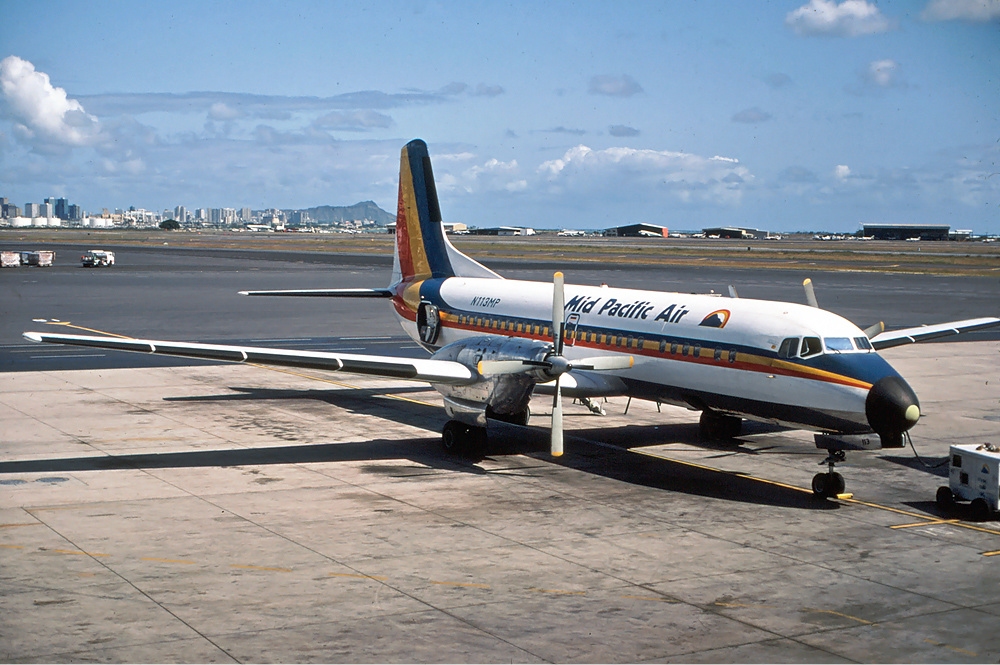
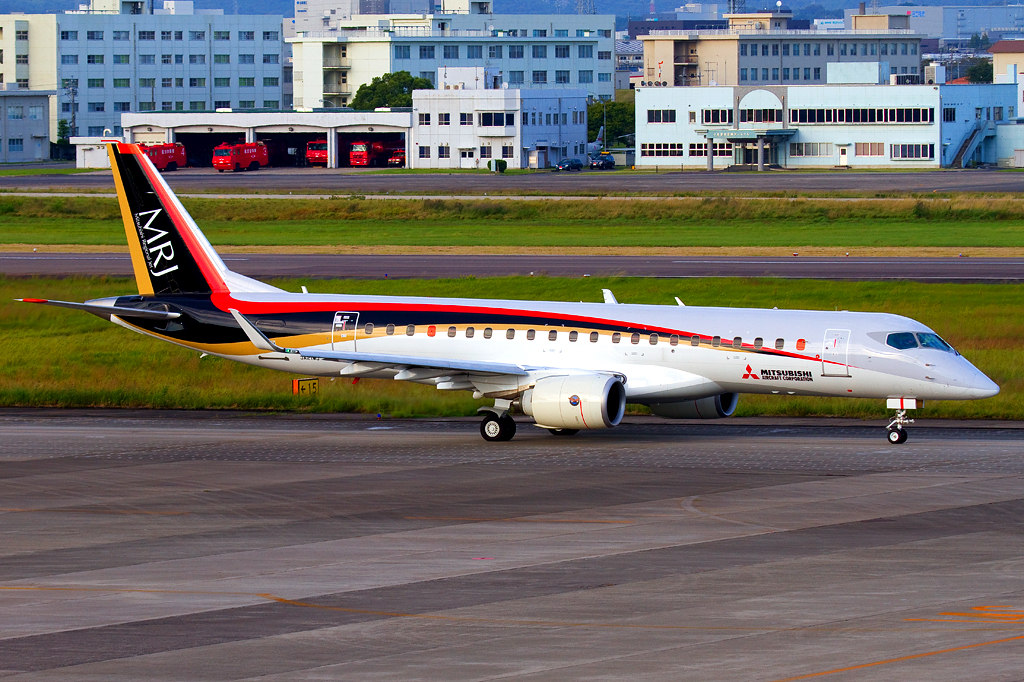
Around the same time that the MU-2 was first flown, the NAMC YS-11 also took to the air for the first time. This was an airliner in the proper sense of the word, able to carry 64 passengers. It was never used by any major airline outside Japan, but did see service with some minor fleets, such as Phuket Air, pictured above, or the American airline Mid Pacific, pictured here. Nowadays, Mitsubishi is working on its Mitsubishi Regional Jet, first flown in 2015. This aircraft is likely to see widespread international service, though we still have to wait and see whether that will be the case.
So, the question should not be: ‘Why didn't Japan or Korea ever get into the commercial aerospace industry?’ It should rather be phrased as: ‘Why did Japan and Korea never become internationally successful in the commercial aerospace industry in their own right?’
I’ve added that last part, because it should also be noted that Japanese companies do participate in the international aerospace industry as subcontractors, mainly for Boeing. If you’re interested in details, this book, page 266, provides a breakdown of which company manufactured what for which airframe.
So, now that we’ve re-framed the question, it’s high time I gave you your answer. While it’s impossible to pinpoint one factor, there’s a number of factor which contributed to the current state of affairs and the main one is what I’ve talked about in the previous paragraph: subcontracting work. Designing a modern aircraft is a supremely difficult task: it requires immense engineering know-how and huge up-front investments. With aircraft manufacturing banned for a number of years under US occupation, Japanese aerospace companies have deliberately focused on subcontracting work and subsequently on manufacturing home-made aircraft for the military (or the Self-Defense Force, I should say). As a result, there was simply little room left, in the financial and organizational sense, for developing commercial airliners. There was also no opportunity to develop an international tech-support network.
Being a subcontractor also makes you a master of one trade. You know the saying, “Jack of all trades, master of none”? Well, to build a successful aircraft you need to be a master of all trades in order to integrate all the components into a functional aircraft.
Additionally, Japan has a well-developed railway infrastructure, which means that small, short and medium range passenger airplanes, which would otherwise be useful for connecting distant cities on separate islands, become… less useful. Don’t get me wrong, Japan has a big domestic airline market in absolute numbers, but it pales in comparison to railways. It’s not an insurmountable barrier, which we clearly see with the MU-2 and YS-11 as examples, but it does make a difficult situation even more disadvantageous.
Nowadays, the industry is absolutely dominated by two giants: Boeing and Airbus. Embraer of Brazil is a distant third. China and Russia are trying to get a slice of the pie. If another country wanted to fight for a slice, and not just breadcrumbs, it would require and immense effort. It’s not totally out of the question, as evidenced by the Mitsubishi Regional Jet, but it’s costly ad risky.
In Korea’s case all these factors repeat themselves with varying emphasis, the most crucial ones probably being the late start and the fact that Korea Aerospace Industries, the Korean aircraft manufacturer, also focused on military aircraft.