Usually, Greek and Romans scholars rather focused on hairs, which rather defined Gauls due to their length, to the point a nickname for independent Gaul was Gallia Comata, hairy Gaul.
In fact, Diodorus is the only one to really insist on a Gaulish custom of grooming moustaches.
Some of them shave the beard, but others let it grow a little; and the nobles shave their cheeks, but they let the moustache grow until it covers the mouth. Consequently, when they are eating, their moustaches become entangled in the food, and when they are drinking, the beverage passes, as it were, through a kind of a strainer.
We, first, learn that all Gauls could either galbrous or bearded, but that moustaches were rather typical of high social status. It is not necessarily seen as Barbarian in itself (altough it definitely fits tropes on Barbarians), but as a bearing that in spite of incomfort, is widespread enough among a certain social class to differenciate itself from others.
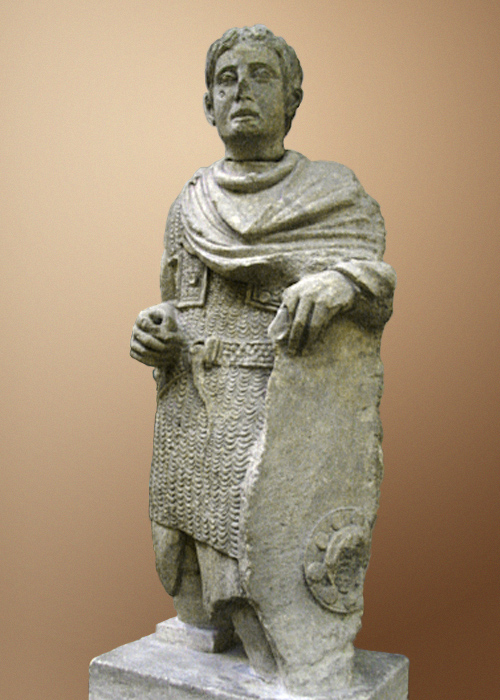
Unfortunately, we don't have a lot of evidence or counter-evidence at disposal : late Gaulish art adopted a firgurative representation of humans, but essentially influenced by Hellenic or Roman exemples with the relexation or abandomnent of Druidic practices since the IInd century (altough it's more obvious in The Warrior of Vachères, for instance, the God of Bourey, or the Bard of Paule could have only be made in this context).
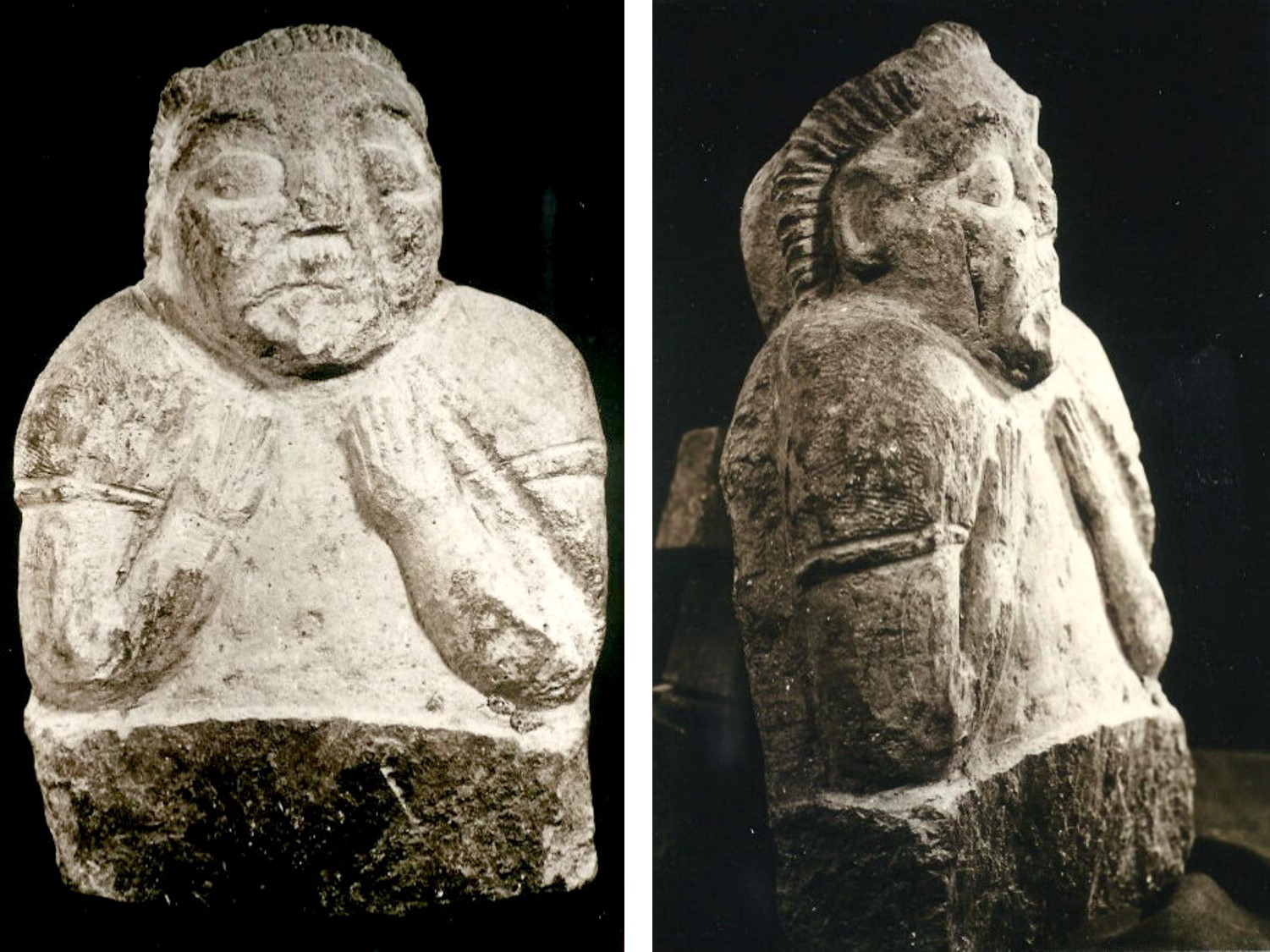
Still, art from regions both further from Roman influence at this point and possibly less touched by Druidic concerns can be useful.Namely, the head of Mšecké Žehrovice, found in Bohemia; thestatue 1 of Glauberg (altough from the Vth century, rather than the late period which Diodorus described).Even in Gaul in its strictest sense, busts of St-Utel or the warrior of St Maur depicts moustache bearing in spite of post-druidic and outer influences.
The Dying Gaul, and the Ludovisi Gaul, both copies of hellenistic scultpures, have a Gaul arboring moustache as well pointing that the practice was common enough in the IIIrd century BCE.
On the other hand,early laternian depictions of warriors, as well as Hellenistic or Roman depictions of Gauls have them often represented as galbrous, altough it might be representations of young warriors : especially if we remember that moustache implied a possible high status.
At the least, moustaches and absence of beard on cheeks is attested and represented : does that means it was typical of the Gaulish aristocracy?
So far, there's no much against the idea, altough we have more than enough evidence to point that not only most of the people shaved or groomed their beards as they wanted, but that moustaches might have turned a bit out of fashion in late independent Gaul since the IInd century BCE.
Just a bit, tough, because we have evidences of its survival in Gallo-Roman Gaul, at least until the IInd century CE as you can see there (found in Lausanne) and there (found at Lausanne), altough a bit more thin.
It's to be noted that chinstrap beard might have been fashionable in Gaul too, with or without moustaches, and with a continued use in Roman Gaul (Dole), distinct from the Greco-Roman beard styles.
Of course, such features were forgotten with time, and Gauls as every other Barbarians, were sported with wild beards in Renaissance and later western arts which found their epitome with romanticist and nationalist arts (with some exceptions), especially in France where Gauls all had long hairs and moustaches, without much difference in composition to depiction of Franks, which let a lasting impression up to the XXth century trough what was called images d'Epinal : you can see the difference between the moustache as represented in Antiquity, and the very wild approach took there.
Sources
There's not a lot of dedicated studies on Gauls' cosmetic fashions, but there's still pretty interesting takes in interview of specialists there and there (everything I have access to is in French, tough). Still :
- De certaines modes masculines gauloises touchant à la disposition des cheveux, de la moustache et de la barbe, Marcel Chassaing.
- Nos ancêtres les Gaulois, Jean-Louis Brunaux (not as such an academic study, but an introduction on some clichés about Gauls by an eminent scholar on Gaulish civilisation)