Disclaimer: I don't look at Vikings as a historically accurate show, this just struck me as an interesting concept and I wanted to see if it was accurate.
EDIT: As stated below, I wrote this question very quickly at work so I apologize for its rambling nature. To clarify: Was it commonplace for Christian religious leaders (Bishops, Arch-Bishops, Cardinals) to participate in a battle, as either a commander or supporting figure?
What I'll write is just a very brief note, and we would have better to wait for the proper answer from Anglo-Saxon specialists.
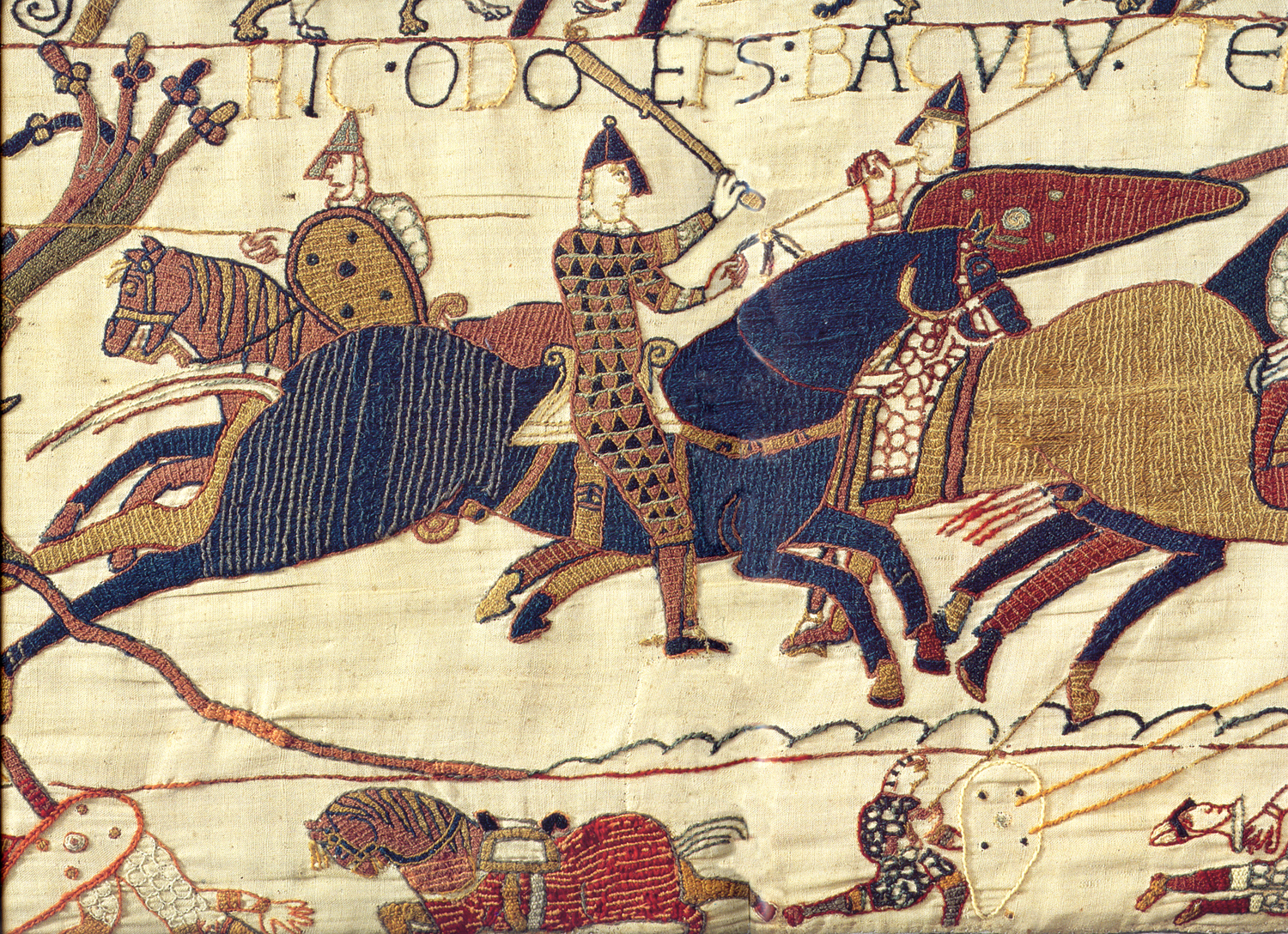
While I'm not so sure about the exact primary texts about 9th century Northumbria, it was probably not so rare for the English people in the 11th century to see some bishops putting the full-armor on and commanding the army, though they were mainly non-English ones:
Concerning also in earlier times like 9th century, increasing number of recent studies have re-evaluated the possible contribution of Church as well as monastic lands as suppliers of military resources (i.e. warriors) to the royal expeditions in course of last 50 years. Anglo-Saxon England has been no exception. Instead of classic image of national army (fyrd), developed by the 19th century Anglo-Saxonists, we now regard the fundamental component of Anglo-Saxon army as military retinues of the magnates, including ecclesiastical ones (i.e. bishops as well as some monastic lords) (Cf. Abels 1988).
Though not so often specified in the documentary sources, recent scholars also suppose that bishops from 8th century to the 11th century England imposed de facto military obligation on their tenants to them with charters (Abels 1988: 152-54). In other words, these tenants constituted of the military retinues of each bishop in Anglo-Saxon England who was in turn to work also as a military commander of the royal army. Furthermore, some late Anglo-Saxon evidences suggest the highly developed naval defense organization in the bishopric, also under the command of king (Ravelle 2010: 158-60, 164f.).
Thus, we are now relatively confident about the possibility that the ecclesiastical institutions as well as bishops in Anglo-Saxon England played not so negligible role in the military organization. On the other hand, we don't have many extant sources on how some of them fought as actual military commanders, I suppose.
References:
+++
The phrasing has me a little lost on the spirit of your question. For the sake of clarity, are you asking about if kings armed themselves and participated in early medieval battles? Or are you asking if clergy (priests/bishops) participated in battle?