http://www.vikingsofbjornstad.com/MyImages/Hai_2009-07-19%2014.55.43.jpg
Im specifically interested in the way the walls are built, log-cabin style.
Sort of.
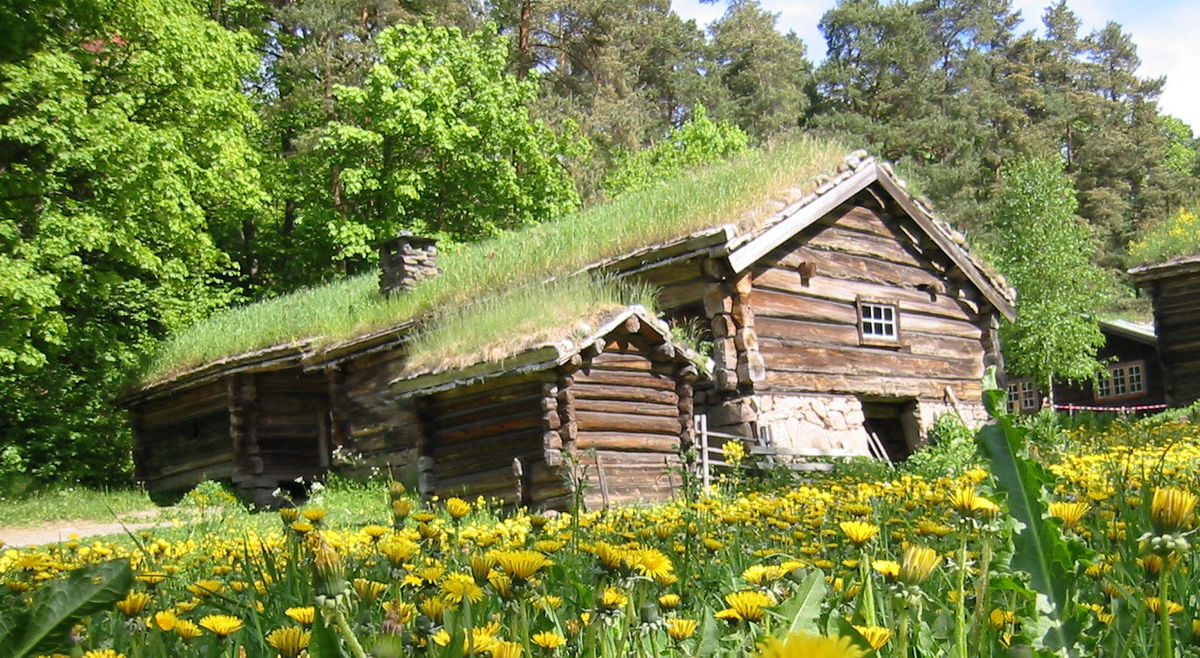
"Log cabins", or rather the knot-timbered (Swedish knuttimring, Norwegian lafteverk ) construction technique (which was used for far more than cabins) was in fact introduced into America by Swedish and Finnish immigrants in the 17th century. Since the Middle Ages it'd been the standard form of wood construction in Norway, Sweden, Finland, the Baltic states and parts of Russia, and would continue to be until the 19th century at least, and is still not-uncommon today.
The technique did not originate in Scandinavia though; buildings from the 9th and 10th centuries have been found in Staraya Ladoga and Novgorod, while the earliest found ones in Sweden (Birka, Sigtuna) and Norway (Trondheim) have been from the early 11th century, and it may have been introduced in the 10th century. The earliest preserved building in the technique are from well after the Viking Age (800-1050). (Vindlausloftet in Norway is from the 1170s and the Fåsås firehouse in Sweden is from the 1250s)
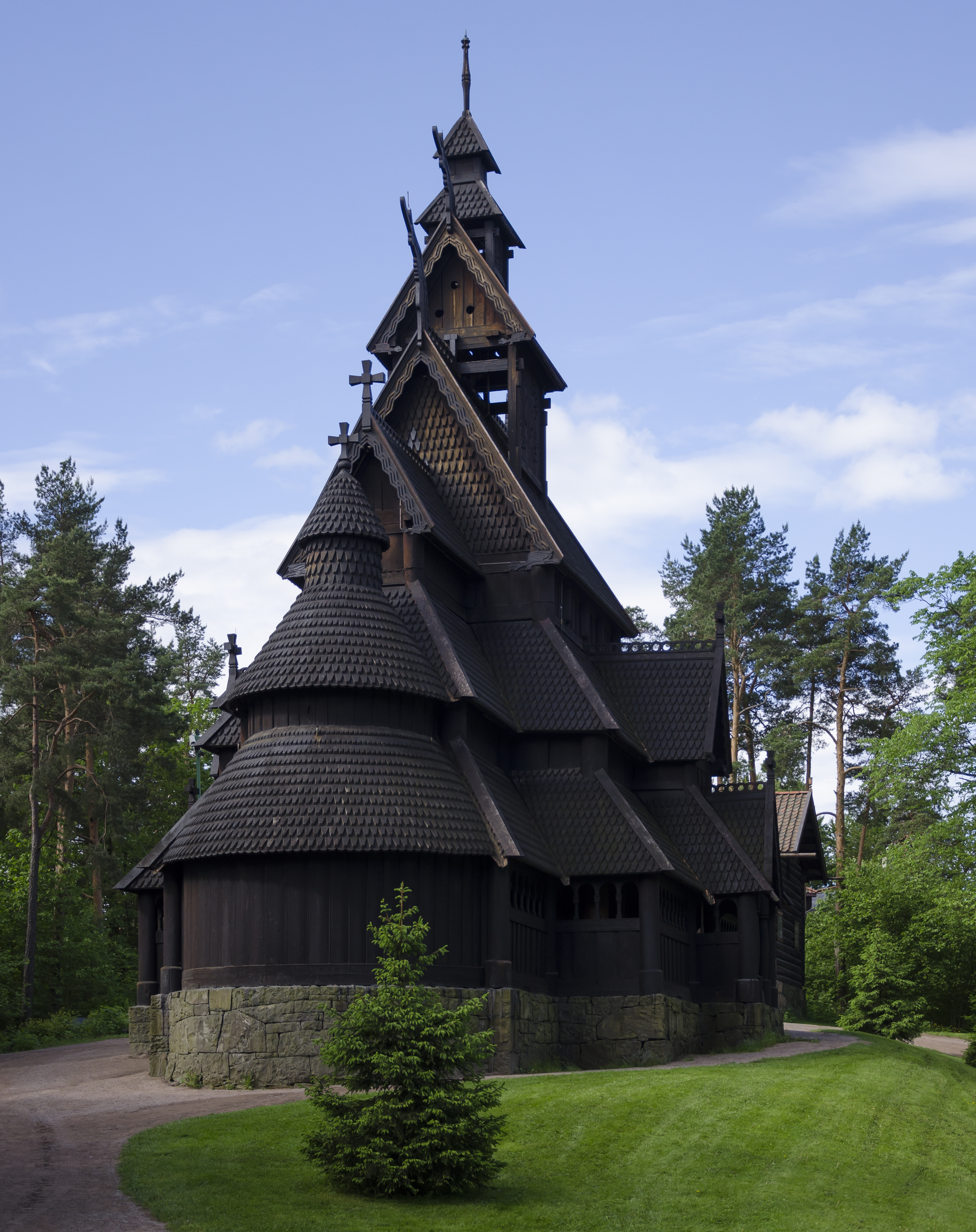
So the theory goes that Vikings travelling east learned this technique and introduced it to Scandinavia over the course of the Viking Age. It grew in popularity and became the dominant form of wood construction around the 13th century, and would remain so for another 6-700 years. So although the construction technique existed in the Viking Age, it is the older technique utilizing standing logs (or 'staves') which is more associated with the Viking Age (and earlier periods) in the Scandinavian popular imagination. This is the construction technique used for the Viking Age longhouse for instance, and the technique used for stave churches (e.g. Gol). Hence the name; the noteworthy thing about them is the vertical timber.
But in any case, yes the construction type existed then. But the devil is in the details; since many styles and variants of the technique developed over the centuries and in different regions. (just to mention a few; dalaknut, underhakknut, sexkantsknut, rännknut, laxknut and haklax - It's not without reason there are two-year educations here in Sweden in log building; and they usually require previous carpentry experience)
The versions thought to have been used during the Viking Age were however limited to two; the 'round log notch' (Swedish rundknut, Norwegian vagelaft) and the beveled-log notch (rännknut, findalslaft). the former is the simplest possible technique; the logs are kept round and semi-circular notches are made. The latter adds a round or v-shaped groove or bevel along the length of the bottom of the log (as seen here) and insulation material (moss, later oakum) would be placed in-between. And the result looks like this. And if the sides of the logs are hewn flat (as done later in history) it looks like this.
So the specific style used isn't one known to have been in use during the Viking Age. (the logs also look a bit small, but this is in Germany so straight-grown large pines/spruces were perhaps harder to come by)
When it comes to log cabins; the construction technique was simplified after introduction into the Americas. The status seems to have been reduced; in that they became 'log cabins' - implying a temporary structure, which they often were on the American frontier, but didn't really need to be. (one might speculate on whether this was because the non-Nordic settlers didn't view them as 'proper' houses, or perhaps lacked the skills to build the more sophisticated types; or perhaps a bit of both) So the earliest log cabins in America built by Swedes and Finns were built in the Nordic style of the time with flat-hewn sides and tight-fitting logs which did not have (nor require) chinking to fill out gaps in between the logs. This was simplified into round-log-notch style, but with large gaps allowed to remain between the logs, which was filled with chinking instead, resulting in a style more similar to the style of log house used in central/southeastern Europe (e.g. Slovakia).
Thatched roofing was certainly common in the Viking Age. The sod roof might be more iconic but the thatched roofs were common too. Both styles almost went extinct with the advent of affordable tiled roofs in the 19th century.
This is one subject where I'm afraid the best sources tend to be in the Scandinavian languages:
Karin Rosberg, Vikingatidens byggande i Mälardalen. Ramverk och knuttimring, Aun 38. Uppsala, 2009
Göran Andersson, Timmerbyggnader - Tematiska undersökningar av traditionella timringsmetoder, Göteborgs universitet, 2016