Title. It seems as though any time I see any examples of Japanese armor/illustrations of Japanese armor, there are numerous unprotected gaps that could be exploited in combat. This seems strange to me, considering in Europe they seemed to make a point of covering any possible gap with mail or some other form of protection.
Why was this the case? The Japanese did have mail, so why not cover themselves more fully rather than leaving many sections unprotected?
there are numerous unprotected gaps that could be exploited in combat
This is also the case for much European plate armour. For example, in this battle:
all of the soldiers are armoured. All have open-faced helmets, a couple of them have no leg armour, and some have unarmoured arms (or possibly protected by textile armour). The soldier in the middle of the left-hand edge (climbing(?) the hill) shows gaps at the back of the neck and backs of thighs and buttocks. The soldier with grey sleeves at the foot of the hill appears to have unarmoured arms apart from his gauntlets, and the backs of his thighs appear unarmoured.
Many of the soldiers here:
have even less coverage. Many unarmoured legs, legs with only articulated knee armour, and legs with exposed backs of thighs. Open-faced helmets, unarmoured arms and hands.
As we move from Medieval examples into the era of pike-and-shot war,
plate armour becomes even more gappy. Many of the soldiers here are completely unarmoured, some have breast-and-back, many have simple open-faced helmets. The arm armour worn by the soldier near the bottom right only covers the outsides of his arms. For a photo of re-enactors in similar armour:
This Japanese soldier is comparably armoured to many European pike-and-shot soldiers (and wears more armour than many of them):
namely, breastplate, some arm armour (probably metal plates on textile armour), and his headgear might be a helmet (or might just be a hat). While his arm armour is mostly textile armour, it does cover the inside of the arm. These Japanese arquebusiers are quite respectably armoured:
with body armour with tassets, and at least some of them have armour on their arms and lower legs (textile with metal plates).
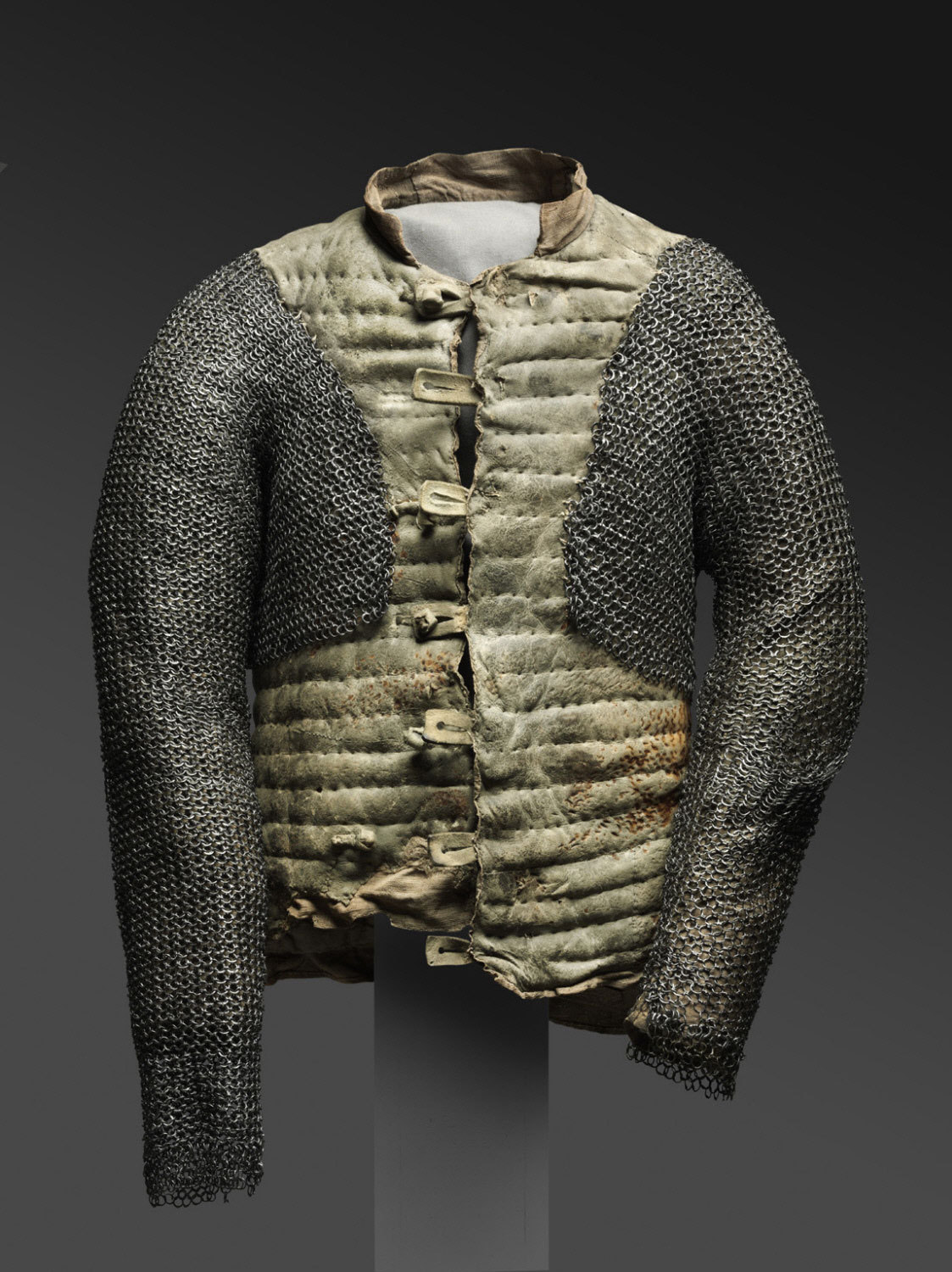
If we move from the armour of the common soldier to the armour of the elite, we find more effort to cover gaps, in both Europe and Japan. For example, we find arming jackets with mail to cover gaps such as the armpits:
European: https://66.media.tumblr.com/a27551cc4644e7e700788b9e3ddce738/tumblr_p3v6ajI07t1u442p8o1_1280.jpg
Japanese: https://en.wikipedia.org/wiki/File:Karuta_sashinuki_kote.JPG
Japanese: https://commons.wikimedia.org/wiki/File:Wakibiki.jpg
In the last example above, the armour consists of small plates sandwiched between layers of cloth; in Europe, this would be called a "jack" (which was also used to describe other types of armour, such as textile armours).
Foot armour: https://en.wikipedia.org/wiki/File:K%C3%B4gake_armored_tabi.JPG
Armpit protectors: https://commons.wikimedia.org/wiki/Category:Kikko_wakibiki#/media/File:Kikko_wakibiki_1.JPG
Apart from armour for the common soldier, Japanese armour can also appear gappy due to metal plates or mail being sandwiched between layers of textiles - what appear to be cloth sleeves can have an inner layer of metal armour (or be multi-layered textile armour). Also, as the gun came into widespread use in Japan, breastplates (and often helmets) were made more protective so as to resist bullets. This is difficult to do with arm and leg armour due to problems with increased weight. Thus, in both Europe and Japan, one sees a reduction in the amount of arm and leg armour being worn - either it is discarded to reduce weight to compensate for heavier breastplates and helmets, or is discarded as not useful enough since guns can shoot through it. Much of the Japanese armour we see (whether Edo period or older) is designed for such a gun-dominated battlefield.
In addition, the least-gappy European armours are sporting armours, not battle armours. These are armours for the tournament and the joust. Until the development of proto-kendo, Japanese sporting armours do not appear to be a thing (and kendo armours developed in the context of weapons simulators, not sharp weapons).
One part of Japanese armour that is less protective than its European equivalent is hand armour. Before the gun, the bow was the dominant battlefield weapon, and the Japanese soldier - including the armoured soldier - needed to be able to use it. Japanese hand armour allows archery.


.JPG)