I've written an earlier answer on Inuit relations with the Norse Greenlanders. The short of it is there were some interactions going on, but the extent of which are really unknown. Written sources mention Skræling attacks but there seems to also be archaeological evidence of trade and perhaps even co-habitation. From a religious point of view the 13th century figure resembling a European priest wearing robes and a cross on his stomach was found as far away as Baffin Island. But we don't know if this was from Norse trade or Inuit trade or even who made it.
To get to your question here we just don't know. We don't know if they told anyone about it, if there was a reaction and what it was. The sources don't mention it. Sources on medieval Greenland are extremely sparse, and those mentioning Skrælings could easily fit onto a single page. As I wrote in the older post, there's also a letter from the priest Haldor in the mid-13th century going looking for the Skrælings (for unclear reasons but missionary work or preparing a mission is a pretty good guess), but failing to find them. Possibly reflecting the disappearance of the Dorset culture, which was replaced by the Thule. There's also record of the 14th century bishop Eirik going to look for Vinland, possibly preparing a mission as well.
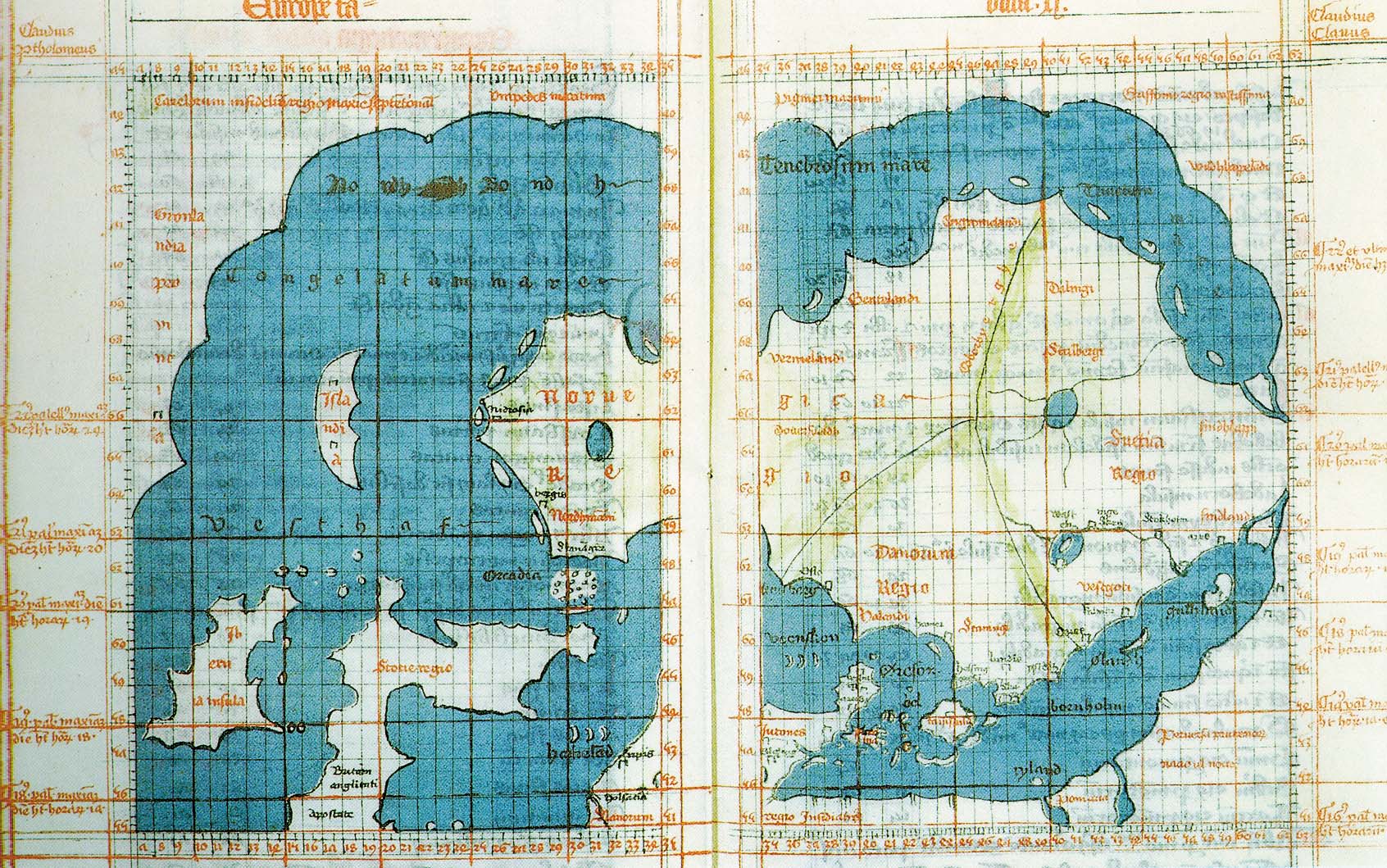
There's evidence that knowledge of the Skrælings existed in Scandinavia even into the 15th century, where a German traveler recorded stories about people with 'leather boats'. But the knowledge was confused. The Danish cartographer Claudius Clavus 'Nancy map' lists Carelian Infidels as living in Greenland, and also populates the north with pygmies and unipeds. (the latter a monstrous race also mentioned in the Vinland sagas) So some educated Scandinavians had a hard time separating fact from fiction here, and it's likely continental Europeans were no better informed.
Anyway. As far as the Scandinavians knew, these people were not non-Europeans; there was no concept of this being a different continent. They looked different, with darker skin and hair, but so did (for instance) the Sámi back home in north Scandinavia. We don't know a heck of a lot from sources about the Sámi in the Middle Ages either, because there was fairly little Scandinavian presence up in Lapland at the time.
After conversion you have the Crusader Period up until about 1300, when the Danes and Swedes and Christian neighbors (Teutonic Order, Livonian Brothers of the Sword, etc) set about converting and conquering their neighbors in the Baltic States and Finland. This was of course more about military conquest than just conversion. As shown by the fact that while Lapland (Sápmi) was claimed and annexed by Norway and Sweden, no real organized/concerted effort was made to convert them beyond sending missionaries sporadically. (Although some converted it was not until the organized efforts in the 17th century the rest did) The Middle Ages did have organized trade with the Sámi though. And perhaps that also had a role; the Scandianvians were getting what they wanted from them economically (mainly furs) without having to bother with have full state-and-church administration over Lapland.
Inuit relations may have run along similar lines; If the attempts at Skræling contact by Icelandic and Greenlandic clergy had an intent to proselytize, it would fit the pattern of being sporadic individual efforts. It was another peripheral people from whom they were already getting what they wanted (mainly walrus ivory) through trade.
Another aspect is the American side of things, where you have the Dorset culture disappearing and the Thule culture appearing somewhere in the Crusader Era timeframe 1100-1300. So when he Scandianvians were zealous about conversion, it's possible that they, like Halldor, were unable to find the Dorset Skrælings, and by the time the Thule ones showed up in the 14th century, interest had waned and there were other problems like the Black Death to attend to, and then the Great Schism (coinciding with the death of the last resident bishop Álfr) complicated matters too. After 1378, none of the Bishops of Garðar actually went there until the 'ghost see' was abolished in the 16th century. Interest in the colony had waned and so did the colony itself by that point.
Postulating the pontifical perspective; Skrælings probably presented as a peripheral population of possibly-pretended pagans.
Besides the sources mentioned in my previous post, this one is good too (and in English):  Kirsten A. Seaver, The Frozen Echo: Greenland and the Exploration of North America, Ca. A.D 1000-1500, Stanford, 1996