Is the below video accurate or perhaps a bit too pristine? Looks beautiful, and still in certain ways looks ancient Roman and not what a lay person would envision as "middle ages". I can't help but think that certain buildings depicted in the video would have looked different because of this. Surely, there must have been some more obvious makeovers / changes in style over more than 800 years?
https://www.youtube.com/watch?v=uX4UJv-eIjQ
Let's say in 1200:
Did it already look more run down/old by this point from time/conflicts even before the 1204 sacking?
In the video above, it looked like there was a Roman general, wearing something more akin to what we'd expect from before the fall of the western empire. Is that accurate?
Which Roman statues survived the moves against icons?
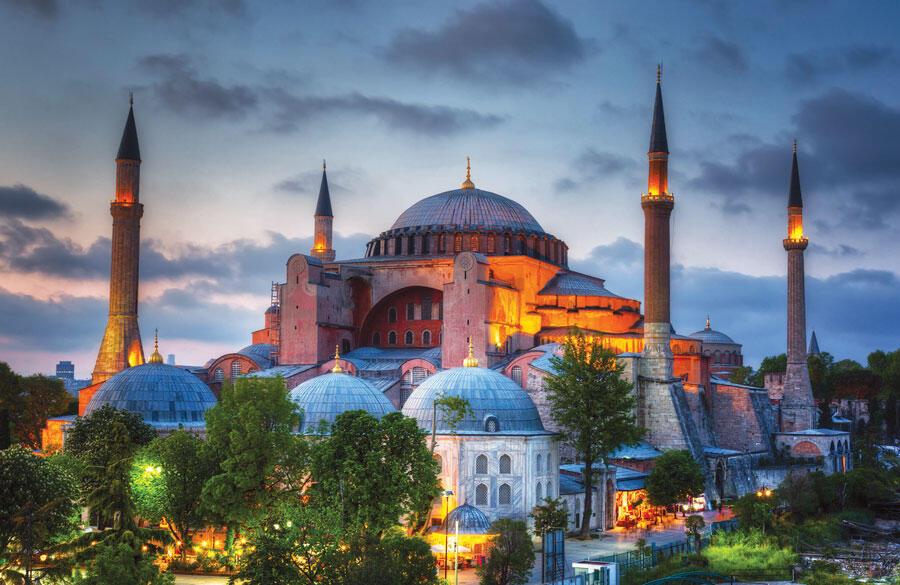
Constantinople, which had never been sacked or taken since its foundation in 330 AD, had an abundance of ancient buildings and monuments in the year 1200. Many of structures the above video shows, like the Forum of Constantine, the auqeduct of Valens, the Hippodrome, the Hagia Sophia and the Blachernae palace, were built between the foundation of Constantinople and 600 AD. No wonder then, that they reek of ancient Roman architecture! Even though the last two decades of the 12th century were tough for the Byzantine Empire and Constantinople, there's no reason to assume that important buildings in the city would've been in disrepair in the year 1200. At this point in time, Constantinople was still known around Europe for it fabulous wealth and huge population, to which no European city could compare. Crusaders accounts' of the city during the sack of 1204 show how impressed they are by its splendour, riches and art.^(1)
Anyway, Byzantine architecture was indeed quite different from medieval Western European architecture, which is what most would consider as stereotypical 'middle ages'. The (orthodox) churches in the Byzantine Empire were domed, in contrast to the spired churches of catholic Europe. Also, Orthodox Byzantine churches were (generally speaking) not as elaborately decorated on the outside as catholic European cathedrals were. On the inside they often had large and detailed mosaics, in a style not unlike that of Ancient Rome. Architectural styles in the Byzantine Empire were remarkably consistent: compare the Hagia Sophia (6th century) to this 8th century church, this church from the 11th century and finally this one, built in 11th-12th centuries and then extensively altered at the start of the 14th. While it's not fair to say that there was no innovation, Byzantine architecture still cherised a lot of elements of ancient Roman architecture in the 12th century.
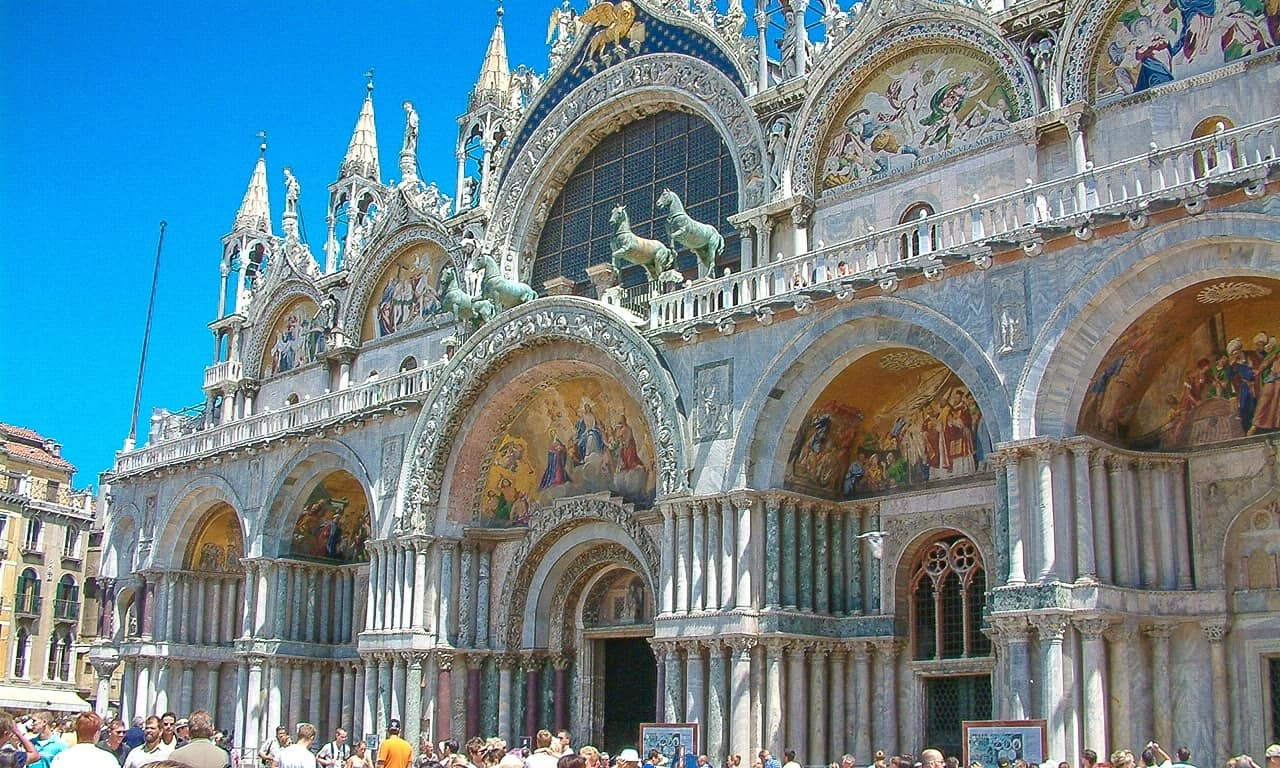
So what about Roman statues and iconoclasm? Well, the Byzantines in 1200 would've considered all statues in the city to be Roman, since they considered themselves to be Roman. Anyway, the episodes of iconoclasm in the 8th en 9th centuries AD it were mostly concerned with religious icons and imagery. There is no reason to assume that all statues were fair game; while the distinction between what is and what is not a religious statue might not always be crystal clear, many ancient statues survived iconoclasm just fine. Probably the most famous surviving Roman statues are the Horses of Saint Mark in Venice. Manufactured in the Roman Empire^(2) , they were long part of the Hippodrome in Constantinople. During the sack of the city in 1204, the Venetians took the statues to their home city, where the horses were placed on top of St. Mark's Basilica, which gave them their current name. The current statues on the Basilica are replicas of the originals, which have been emoved from the building to protect them from degradation.
Your question about the Roman general is a little vague, but I'll assume you are talking about the large statue, prominently placed on the Forum of Constantine, shown around 5:14 in the video. This is a statue of Emperor Constantine, the founder of Constantinople, who ruled in 4th century AD, converted the Roman Empire to christianity and designated Constantinople as its new capital. It is known that he placed a large statue of himself on an obelisk on the forum, though the statue itself did not survive into modern times. Since the statue was erected in the 4th century, it makes sense that it has an idealized ancient Roman style. Byzantine dress did evolve considerably over the course of centures. Images from the 11th and 12th century show that the Byzantine emperors of that era had a very different ceremonial dress compared to your typical ancient Roman emperor getup.
1 - Two well kown accounts of the 4th Crusade by Latin crusaders are Robert de Clari's The Conquest of Constantinople and Geoffrey of Villhardouin's On The Conquest of Constantinople.
2 - The exact date manufacture is not known