Pearl Harbor (and the Philippines) were examples of where rows of neatly parked planes became easy targets for enemy fighters. However, now when you fly into civilian airports that share tarmacs with military air wings (ex. Charleston) then you notice the planes are in neat rows. I realize that cruise missiles and other modern ordinance probably renders spacing of planes (and bunkers and revetments) irrelevant but when did that change?
Why do you think its something that was ever stopped all together even in WW2?
Yes in the threat of air attacks having dispersed revetments and aircraft shelters is great. But its costly, makes maintenance more time consuming, and makes it a slower process to get aircraft in the air. And often the need to use a base to support a large number of aircraft that may not be there very long, combined with concerns over time and space mean that having tons just out on the flightline or in large parks was never going to stop. Doubly so on the many small, rocky, or damnably tight islands across the Pacific there was often barely enough room for a runway, taxi way, and enough buildings for the occupants.
Heck we can even just look at the bases on Oahu as the war continued.
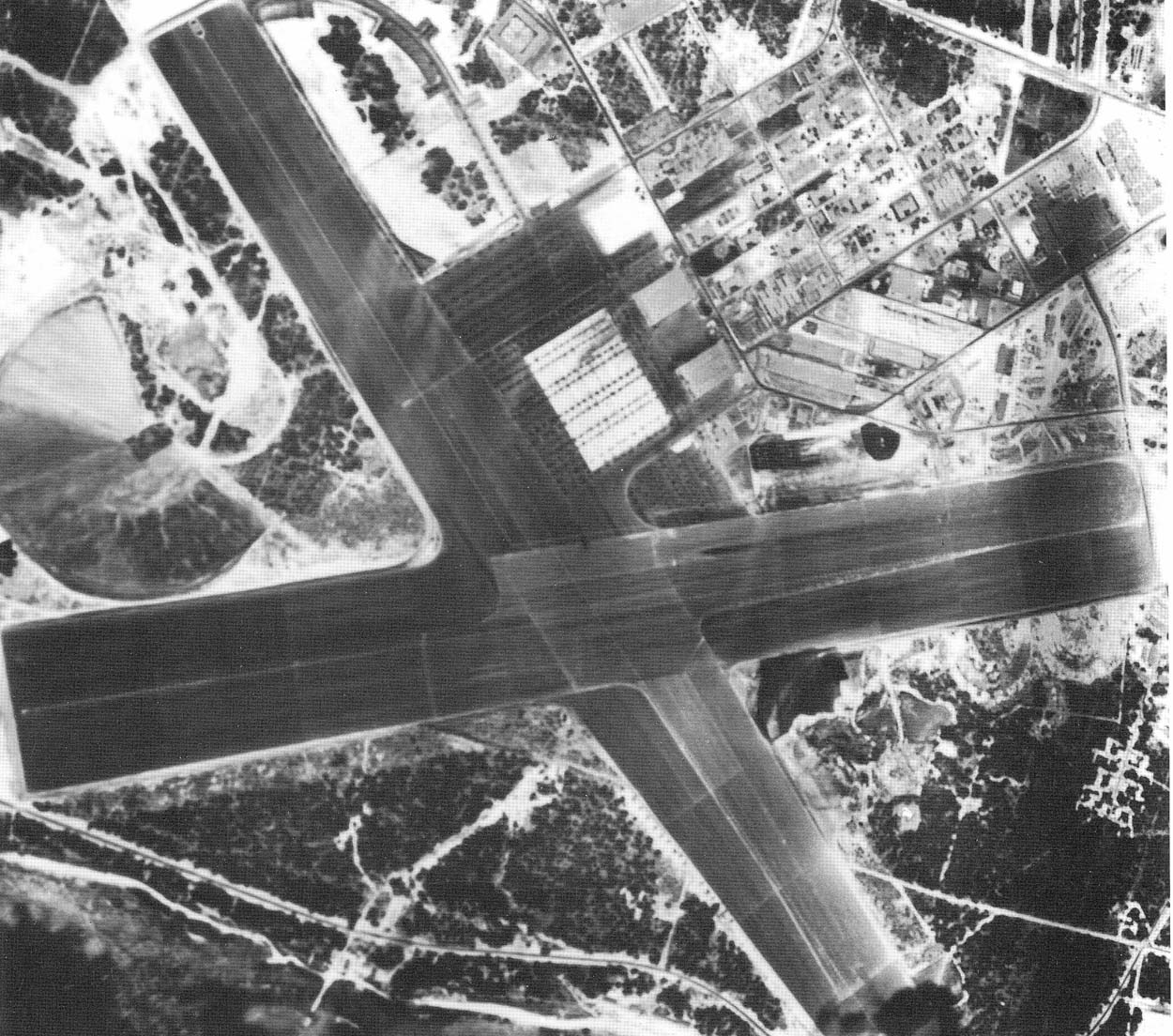
Here is MCAS Ewa in 1943. Picture Note that while there are numerous shelters, there are also a good number out parked. Hawaii especially hosted so many temporary visiting squadrons on their way to and from the fighting that space was almost always an issue from 1942 on as production and training ramped up to get new units forward.
Here is the former NAS Barber's Point. Picture is from 1944 and you can see all the black dots in the center of the picture are aircraft parked there. One of the big reasons that the Naval Air Stations in particular could get really crowded was that when carriers enter their home port their air groups typically fly off to a shore base for the length of time they will be in port. Add to that the locally assigned squadrons for defense, and training/replacement units, and things could get tight.
But better early warning, and static defenses, along with a more robust setup for alert fighters could at least give defenders a chance to get into the air.
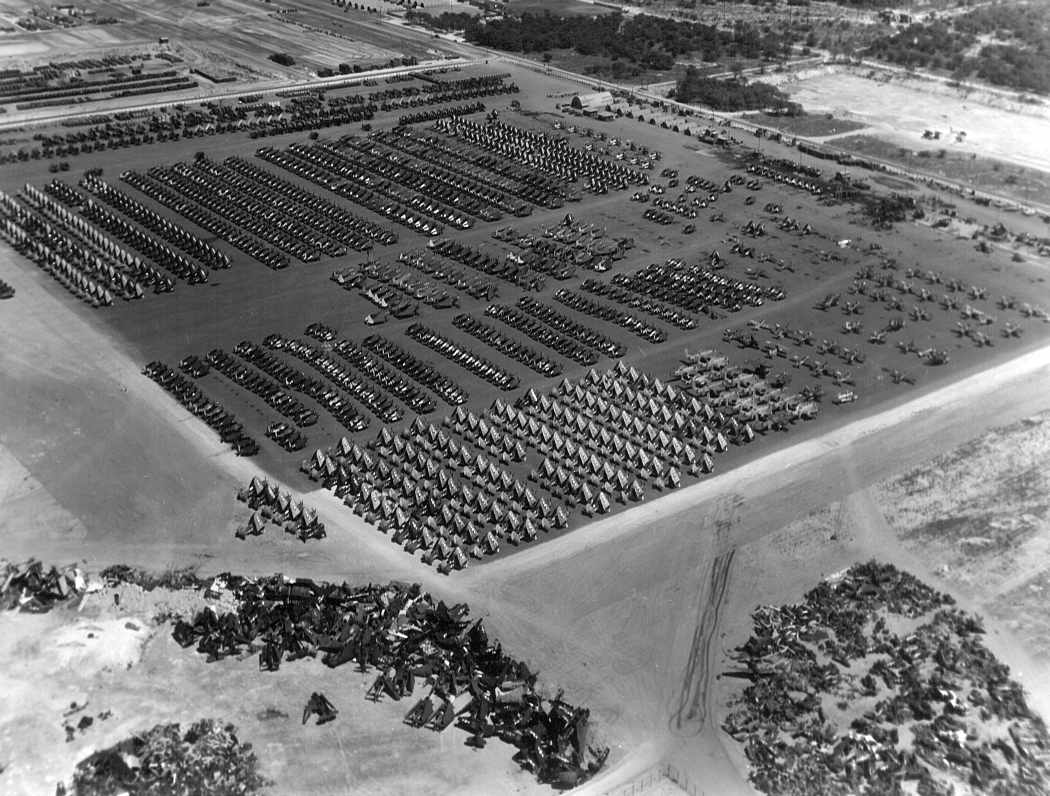
This is a post war photo but illustrative I think.Here are scores of now surplus fighters at Barbers Point waiting scrapping or to be returned to the states as surplus.
And to get the Army into the game here are P-47's lined up for inspection in 1944 at Bellows Point airfield! Though we should of course note this is a special occasion, and they even brought out a film crew with camera on the right! The aircraft belong to the 318th Fighter Group
Now to some airfields that would actually be closer to the front.
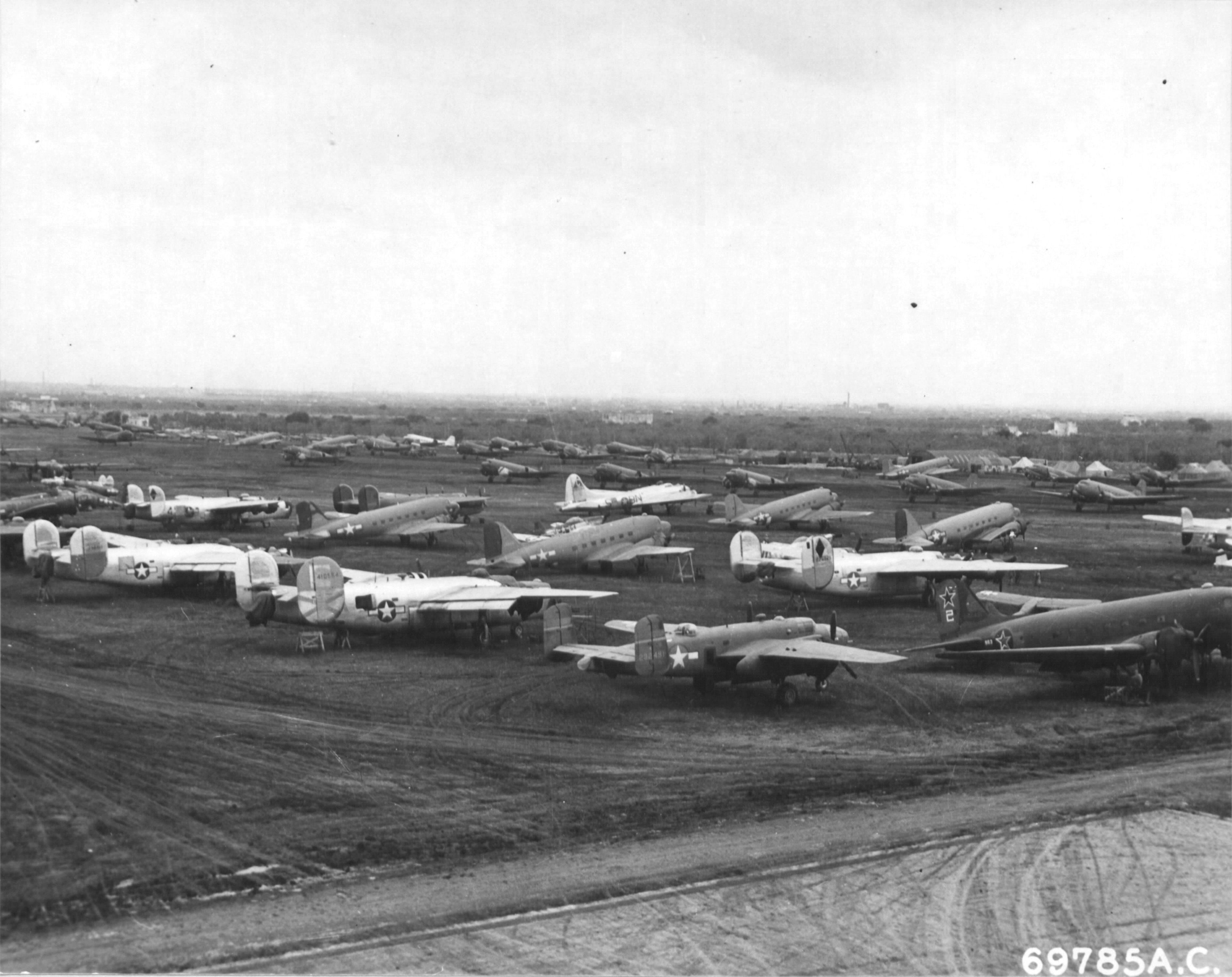
One I will touch on in the ETO. Here is a field of replacement aircraft at Bari in Southern Italy. Picture is from Oct 1944. Notable too because 10 months prior in December 1943 a German massed attack on the port of Bari destroyed 28 ships and closed the port for most of a months. Included in that tally was the SS John Harvey which was carrying a load of Mustard Gas bombs to have on hand in event the Germans used gas first. The release of the John Harvey's cargo caused additional suffering and added to the casualty toll and was kept very hush hush, harming the medical care to victims.
And finally we can take a look at famed Henderson Field on Guadalcanal. Capture in early August 1942, it was under on and off bombing, attacks, and raids for the next 3 months and intermittently into 1943, as the Japanese forces on the island were checked, and eventually forced to withdraw in January-February of 1943. For about 3 months the island faced near daily afternoon air raids and the CACTUS Air Force was in a constant 3 way war against the environment, their own material and mental fatigue, and the Japanese themselves. A picture showing the assortment of aircraft that found their way to Henderson Field in this time from this picture dated October 1942
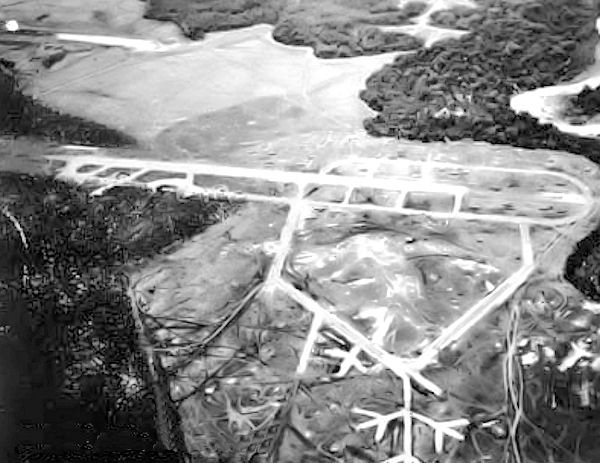
The base was home to a mixed gaggle of Marine, Navy, and Army pilots, including squadrons left behind by damaged Navy carriers to bolster the defense during a critical stretch. It would also grow to eventually include a second airfield and numerous dispersal points. Here is the new runway, dubbed Fighter 1, and some of the larger complex in mid 1943 after the fighting had shifted North towards Rabaul.
Here though is a gaggle of Wildcats on the flightline, cant see well enough to say if Navy or Marine, in December 1942- January 1943. During this period the US took increasing Japanese movement to be preparations for another attack and was on high alert and an effort was made to be prepared. This would actually turn out to be the operation to evacuate the remaining Japanese forces on the island though, which was completed in the first week of February.
Hopefully this was illustrative, its all a cost benefit decision in the end and is still one.