This question emerged from my reading on early modern sexuality and law. I'm wondering how the concept of rape was understood by Europeans of this time period (c. 1300-1600). Nowadays we have a definition of the term tied very closely to the concept of consent. But as far as I understand it this wasn't the case in Europe during the period in question. For example, I've read that spousal rape was not recognized as such, and that prostitutes in some cities could not legally be raped, as they were regarded as belonging to the community. Clearly, consent was not necessarily the main factor that went into determining what was and wasn't rape. So how was rape actually defined? What language was used to refer to it (presumably this varies by region)? Was the concept contingent upon the law - i.e. in the case of the above-mentioned prostitutes, would acts of violence against them be thought of as "legal rape" or would they, because they were legal, not be defined as rape at all? What, if anything, was "consent" understood to be?
In effect, I want to try to get an understanding of how the men and women of this period defined and made use of these concepts.
Consent absolutely was the definitive factor, then as now. The big, big difference lies in what "consent" means. Even just in the last decade, we've shifted from a No Means No to a Yes Means Yes paradigm--meaning that today, silence from fear, ambivalence, or chemical substances can't be reasonably taken to mean consent.
...Now go back six centuries, four waves of feminism, access to higher education, 90% of the literacy rate, the concept of human rights, and knowledge of biology.
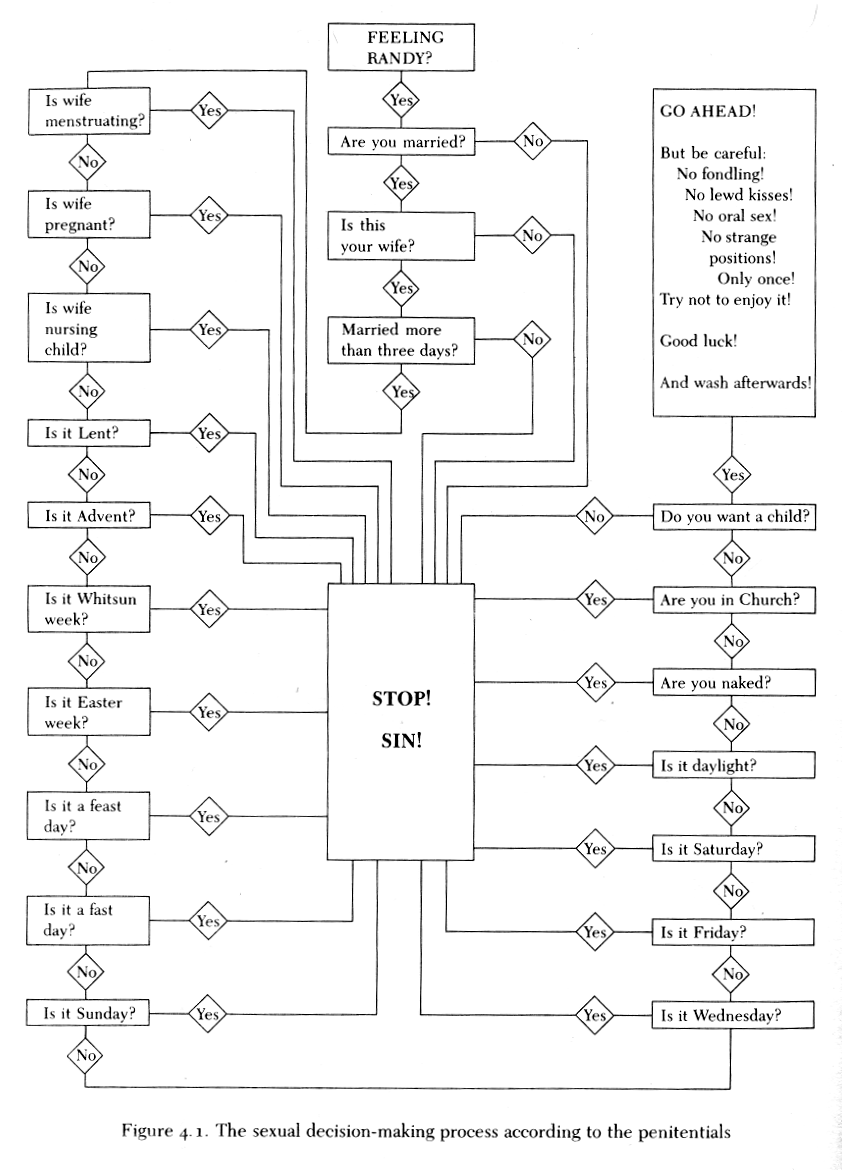
"Spousal rape" could not exist as a concept because medieval people believed--and canon (Church) law asserted--that marriage was synonymous with sexual consent. for once and for all. Theologians described the "marital debt" or "marriage debt," in which couples actually owed each other sex on demand. Well, as long as it was within the bounds laid out by the Church. [Chart by James Brundage in 'Law, Sex, and Christian Society in Medieval Europe']
Uncontrollable bodily responses such as orgasm or pregnancy were also generally taken as consent. In some cases, the absence of evidence of resistance was obviously consent, right?
As far as prostitutes goes, you're correct, Ruth Mazo Karras notes that some cities protected them(or tried to) with inclusion in rape laws. In other cities, accepting money for sex from even one man was considered general/universal consent on her part.
Rape is and was nonconsenual sex (...that seems like way too mild wording). But "nonconsenual" had an unrealistic and far more restricted meaning than it does today.