I was just browsing around on ancient Roman Wikipedia pages, and I see a lot of historical people have a bust or statue as their portrait. It seems that in most cases they know who the bust represents. But how? Is there a name etched on the bottom or something?
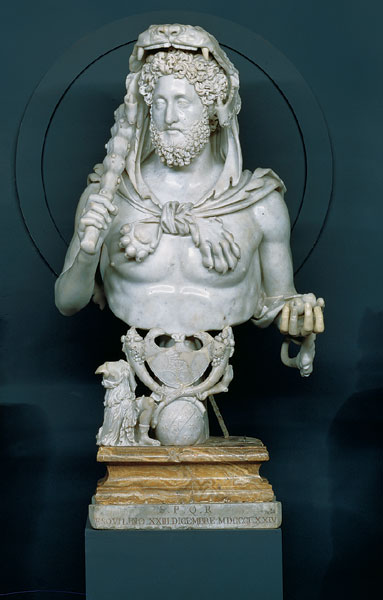
Often there is an established art-historical tradition for the person, meaning we have their likeness preserved in multiple different mediums and examples. For instance, we have many representations of Alexander the Great in statuary and coinage, and many representations of Augustus. Other times, we find the representation in an archaeological context which links it to a specific person--for instance, a head or statue fragment in the vicinity of a major monument (like a triumphal arch) which we know from inscriptions or other evidence to be linked to that historical person. In the ancient world, statues were often (if not usually) linked to an inscription which directly referenced the person, but most of time the statue and the inscription have become separated through the millennia. Often, the princes and popes of the Renaissance carried away the statues to their palaces, but did not bring the bulky bases with the inscriptions. Sometimes it is easy to know who the statue is because of other examples and evidence (like the awesome bust of Commodus as Herakles), but other times we are left with little real clue as to the identity of the person. If you walk around the Vatican or the Louvre, you will see many ancient statues of individuals (especially women) for whom there is no secure identification. Adding to the confusion is the tendency of Renaissance popes and princes to guess at (and then label) antique statuary, sometimes incorrectly, and to rework statue fragments into "restored" states (with arms, legs, or entire bodies replaced by Ren. sculptors). The Uffizi gallery in Florence, for instance, generally does a good job of labelling these conglomerate pieces and identifying to the layman what parts are ancient, what parts are Ren. restoration. Other museums are not so meticulous.