Unfortunately, we can't say for certain, but we can speculate a bit. My answer here will focus on depictions of fencers in the late 15th century through fencing treatises, and some other medieval depictions. It's a lot of guesswork and extrapolation, and I'll point out the precautions we should be aware of with each type of evidence. Hopefully, someone with more pointed knowledge of this specific subject will come along.
I'm going to take some time to talk about a man named Paulus Kal. Kal was a fencing master who wrote a treatise on the knightly arts, and had a long career as a knight in various capacities, served some civic functions for Nuremberg, and was sworn in service to a couple of dukes. In the 1480s (probably), he wrote his treatise, which contained a fair amount of art.
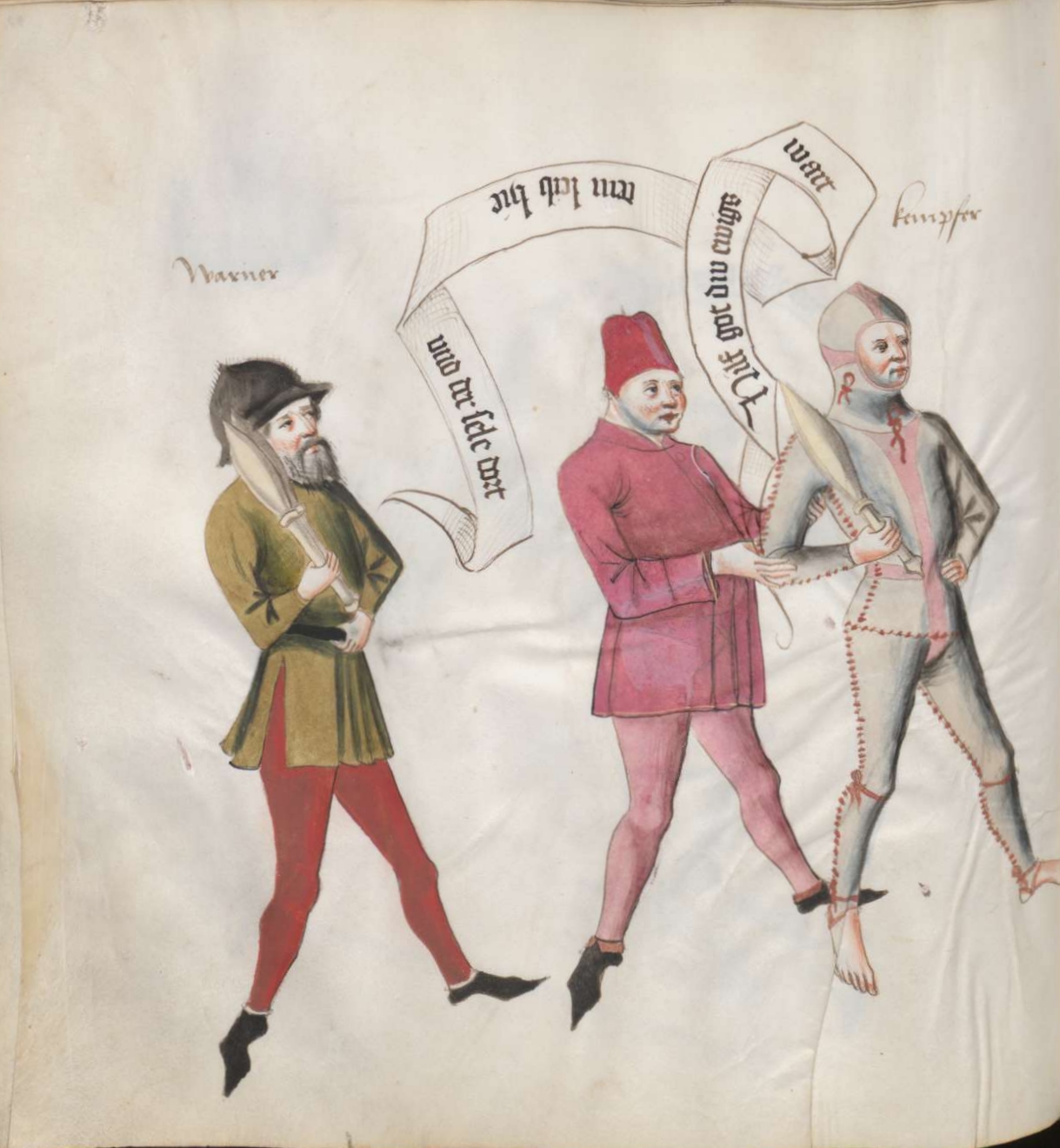
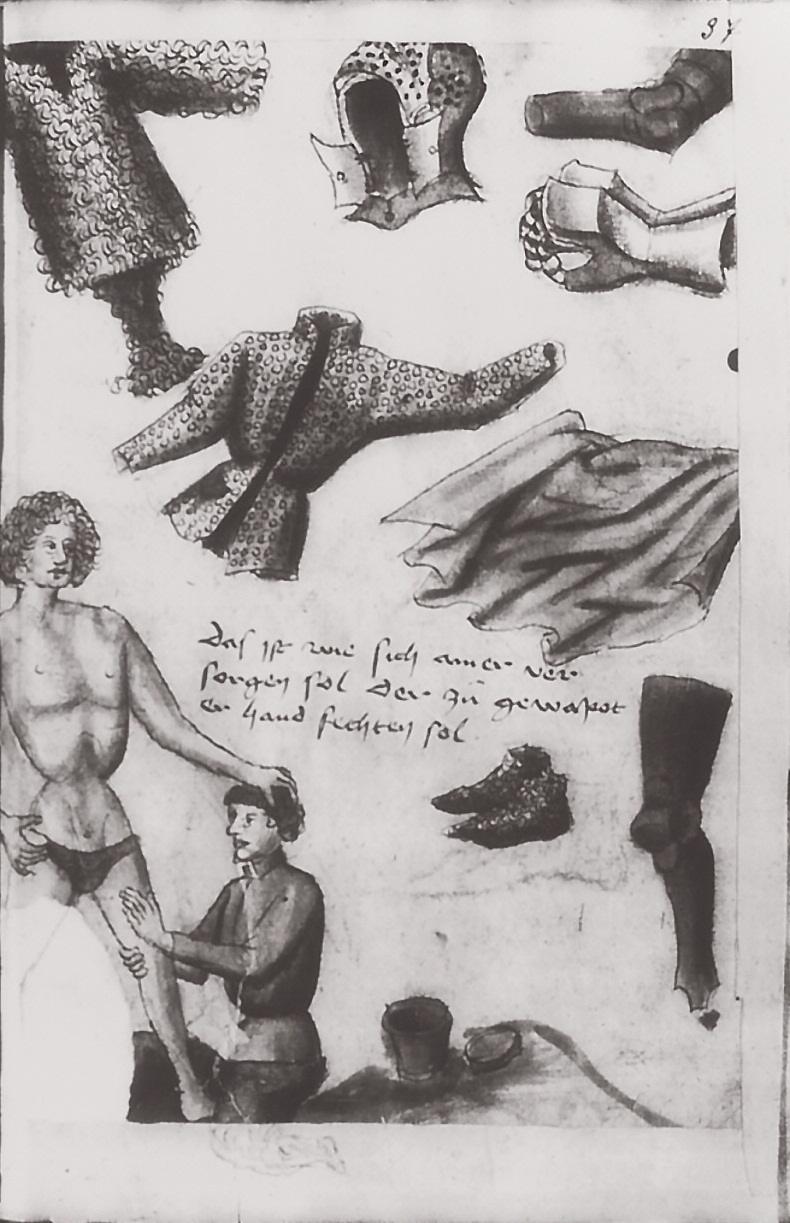
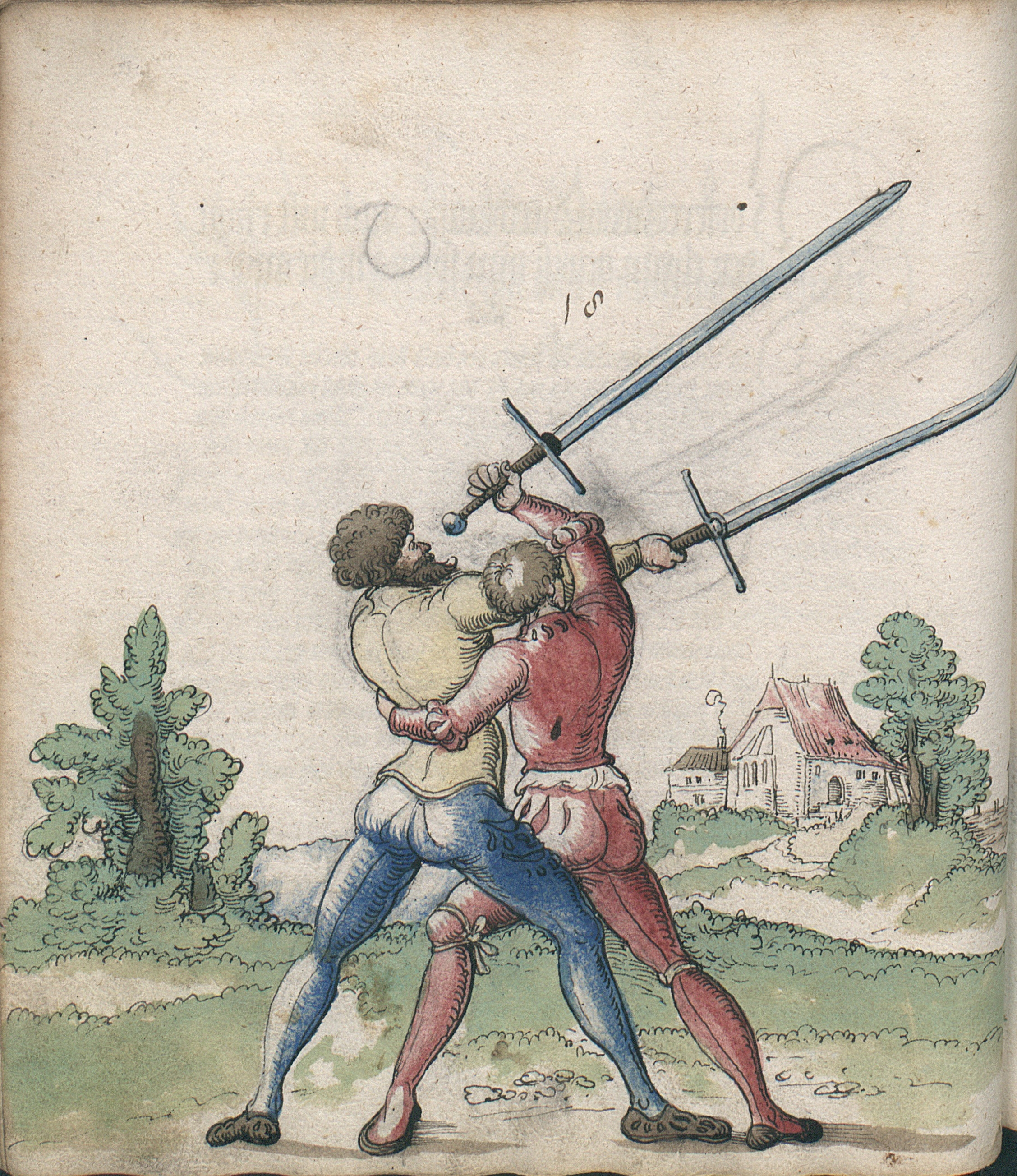
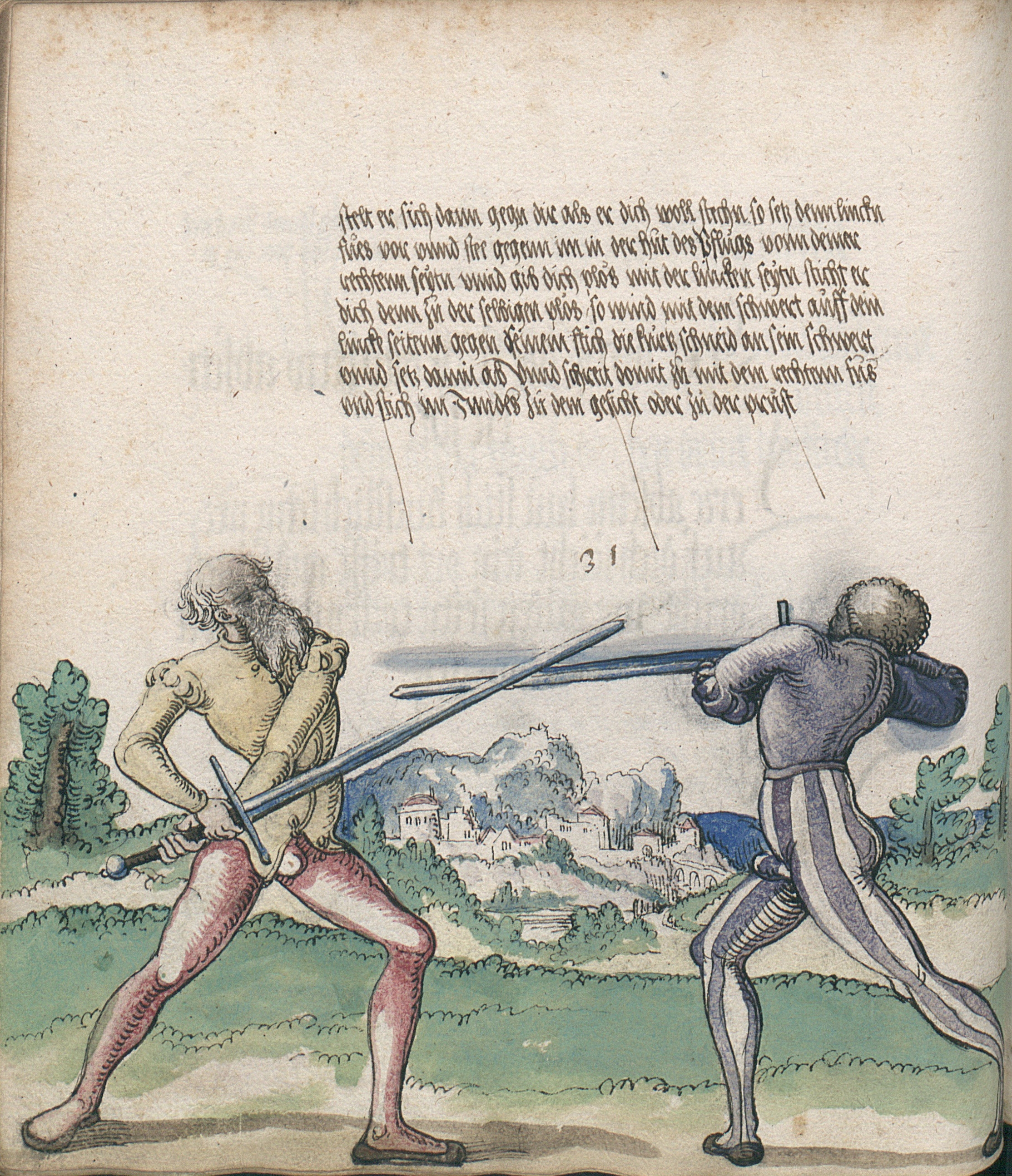
We think Kal depicted himself in the middle here, wearing the red/pink suit. He's helping a knight (right) prepare for a duel. Take a look at Kal and a look at the anonymous knight for a moment. Kal doesn't look the way we think of as "fit" today. He has a noticable belly, no definition of arm muscles, stout legs. He looks very similar in other images, even from (possibly) different artists. Now take a look at the arming knight: again, no muscle definition, the man in fact looks quite thin. It's the same in most of the images throughout the treatise.
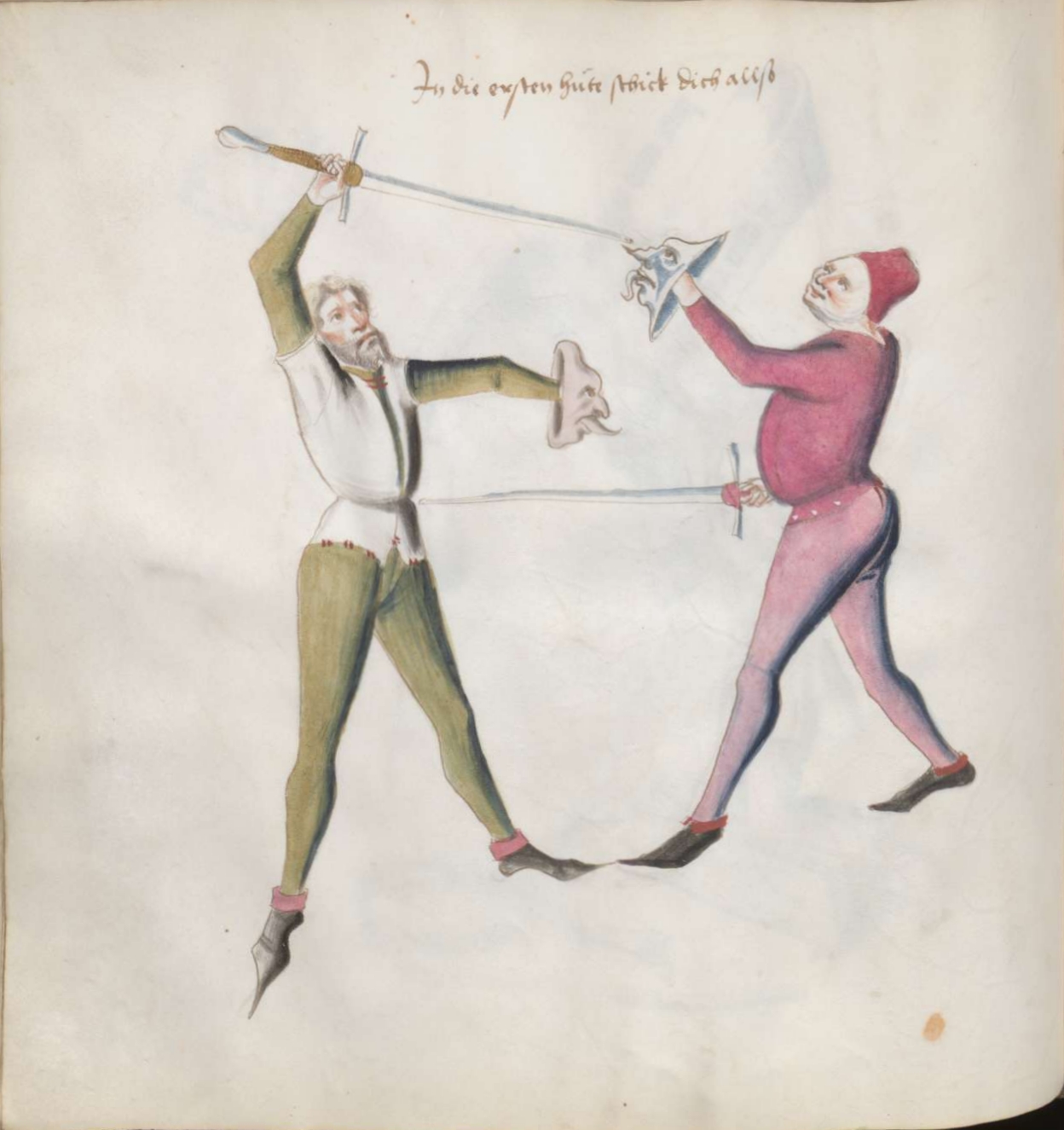
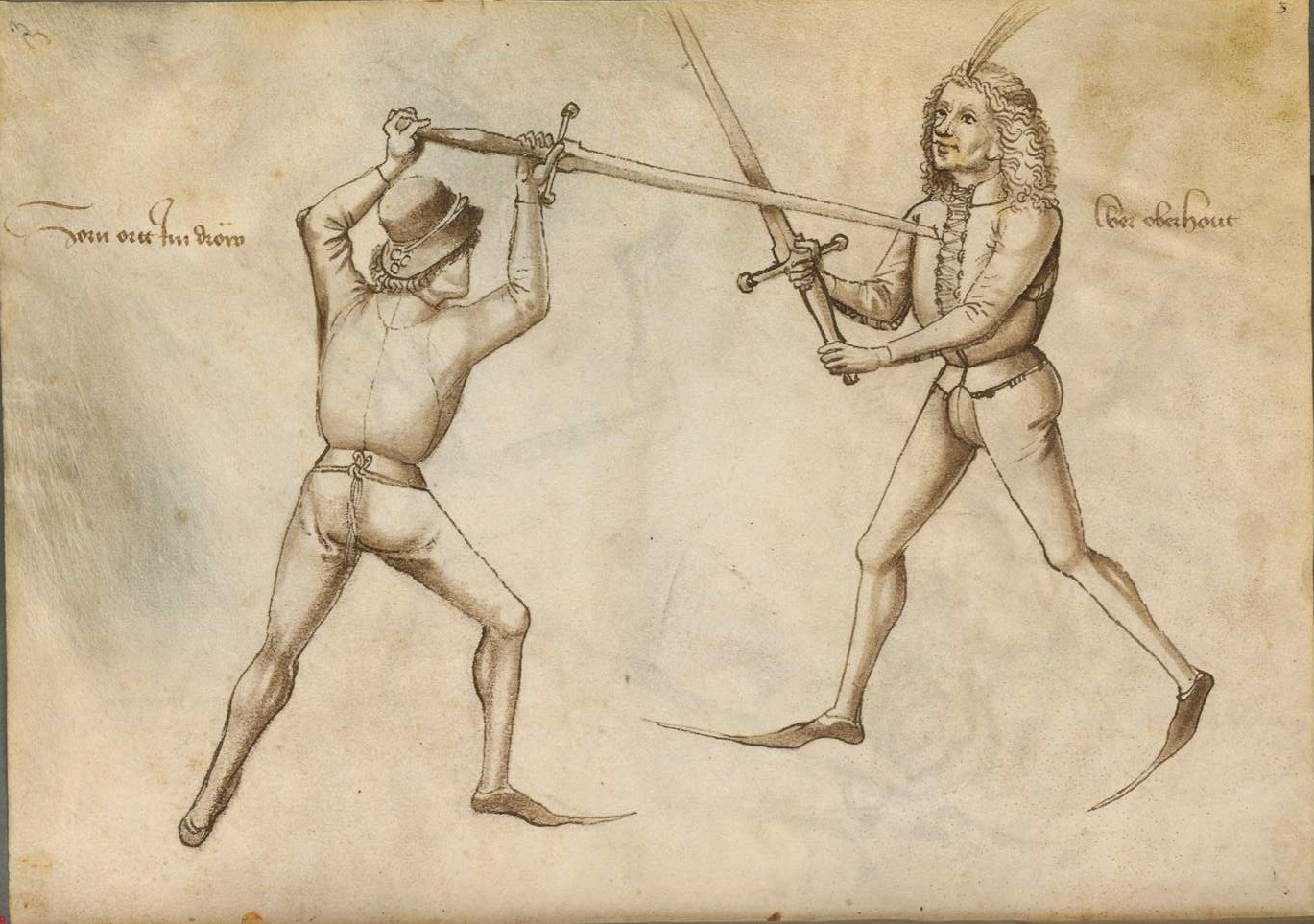
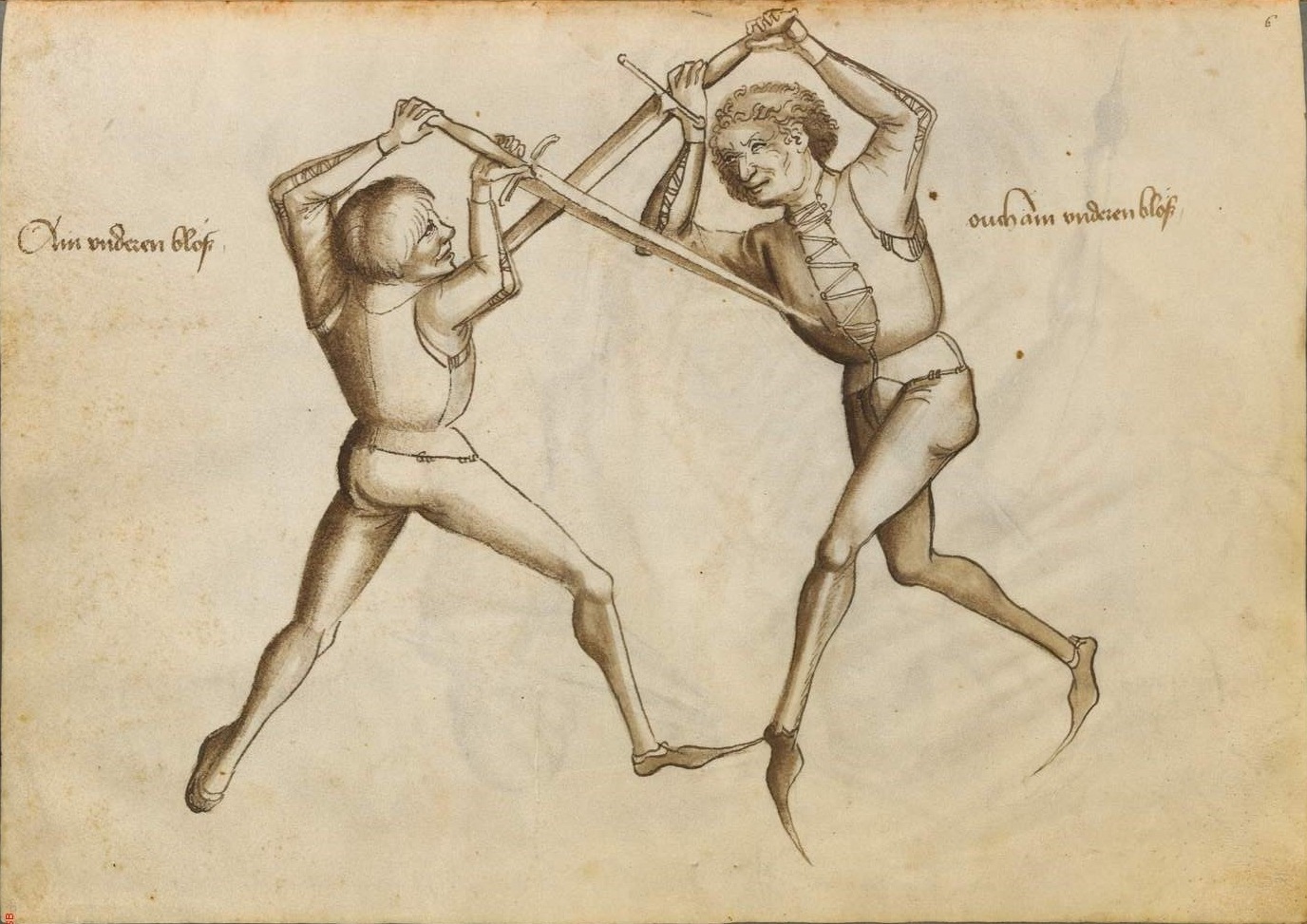
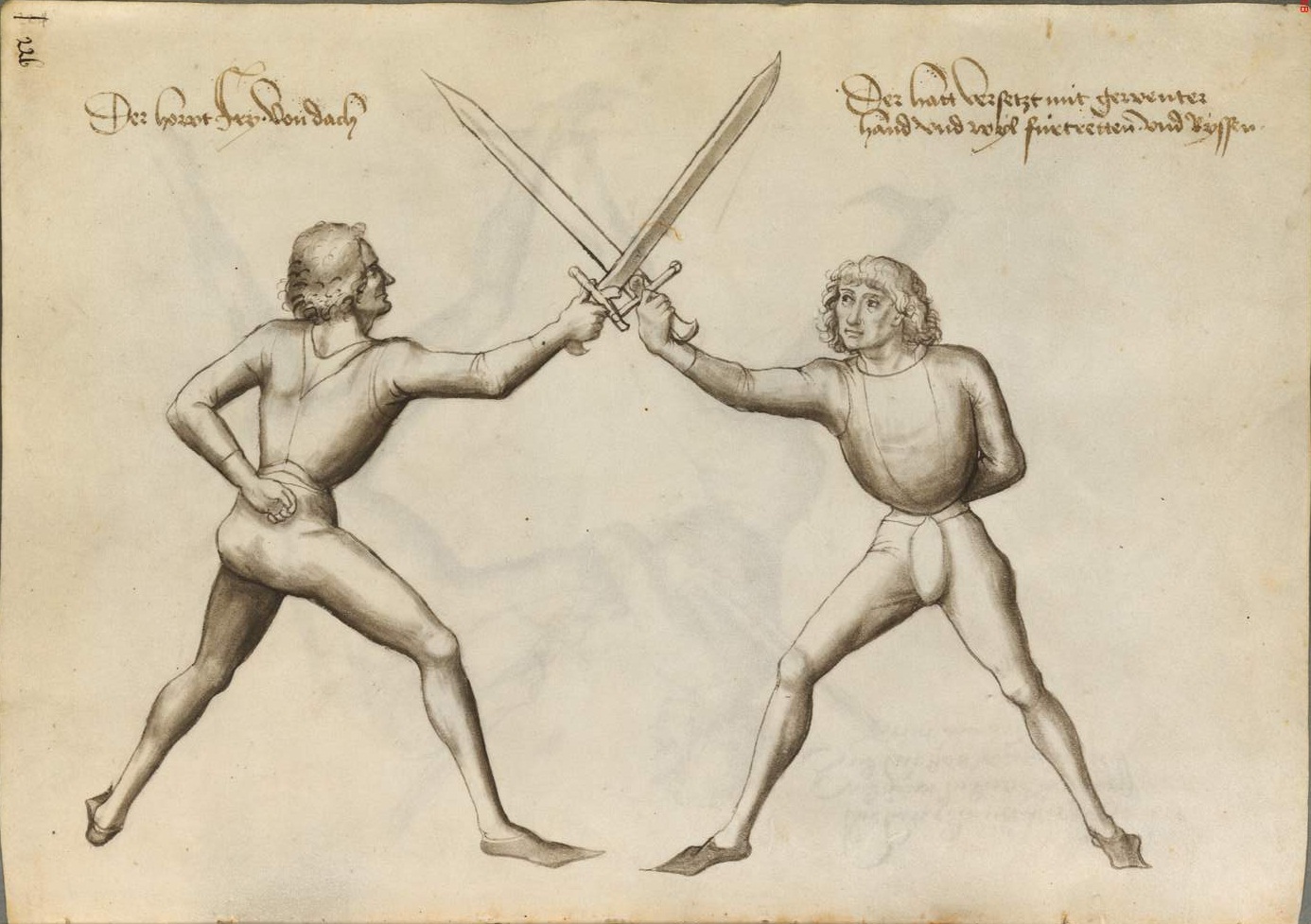
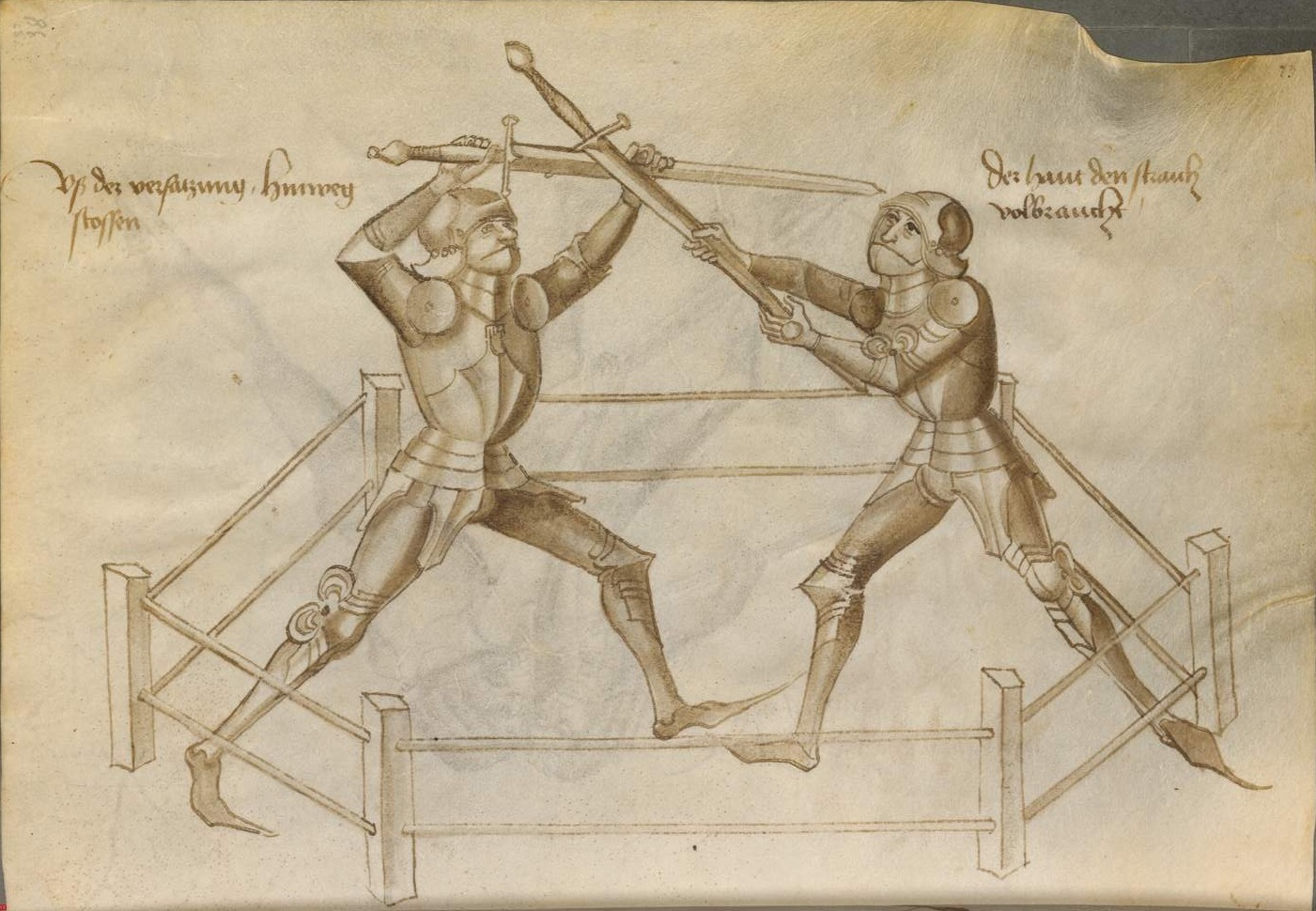
This could obviously be artistic convention, a simplification of figures to make them easier to depict, or even a visual code to help identify aspects of their fencing. Certainly, Kal's fencers are depicted similarly in other fencing treatises, like this image from Hans Talhoffer. Here's another. These images are much more richly detailed, the quality of the art is clearly much higher. There's more textural quality in the depictions of the clothing, of the fingers and details of the joints. WE see obviously muscular calves and glutes. We also see exaggerated waists, even of men in armor.
Fencing takes fitness. Medieval writing often suggested a fitness routine that was summarized by fencing treatises as supplemental not only to fencing, but to the education of young knights. Jorg Wilhalm Hutter, writing in the early 16th century, summed it up as:
Throwing stones, pushing staves, fencing and wrestling, dancing and jumping, stabbing and jousting...
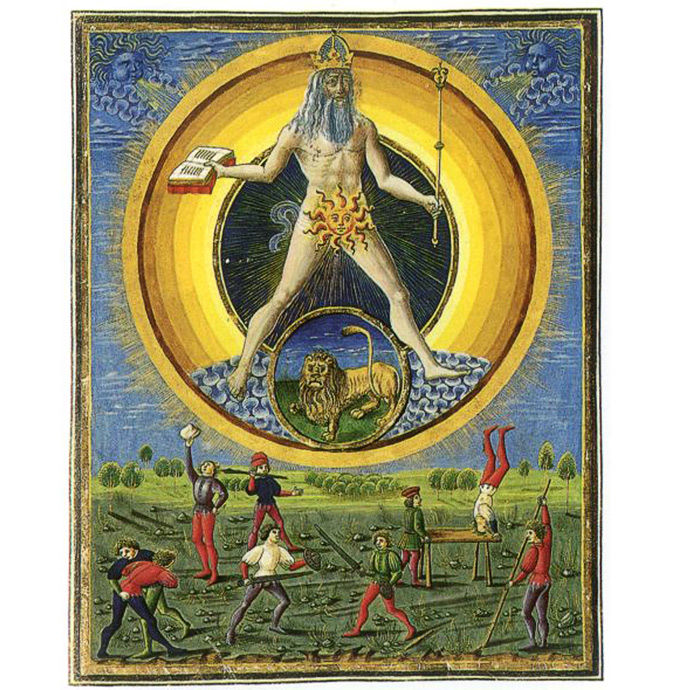
An Italian manuscript from the 15th century illustrates some of these. Notice, again, the cinched waists, the general thinness of the figures, the muscular detail concentrating on the legs. The sun, above them, is ripped, though nott shredded to the degree of hollywood stars, he is noticably more muscular than any figure we've looked at so far, with defined abs and chest, and detailed musculature of the arms and legs.
This particular image is part of an astrological concept called "planetenkinder" or "planetary children," a way to categorize people as taking personality traits from the various planets. Both the image above and this one depict "children of the sun," and show the men there partaking in some of the exercises listed by Hutter. By now, you should be able to pick out the important details.
Back to Paulus Kal. He obviously wants to depict the ideal of the fencing and fighting man in his treatise, because these treatises are, in some part at least, meant to promote his own skills and knowledge. He makes sure to place himself in the lineage of "The Society of Liechtenauer," a group of men whose knowledge of fencing, wrestling, and other martial skills descends, like the men exercising under the light of the Ripped Sun, from a possibly legendary fencing master of old. It's safe to say that Kal had an interest in depicting the figures in his treatise as ideal, or close to ideal. Same with Talhoffer. What's Kal's ideal?
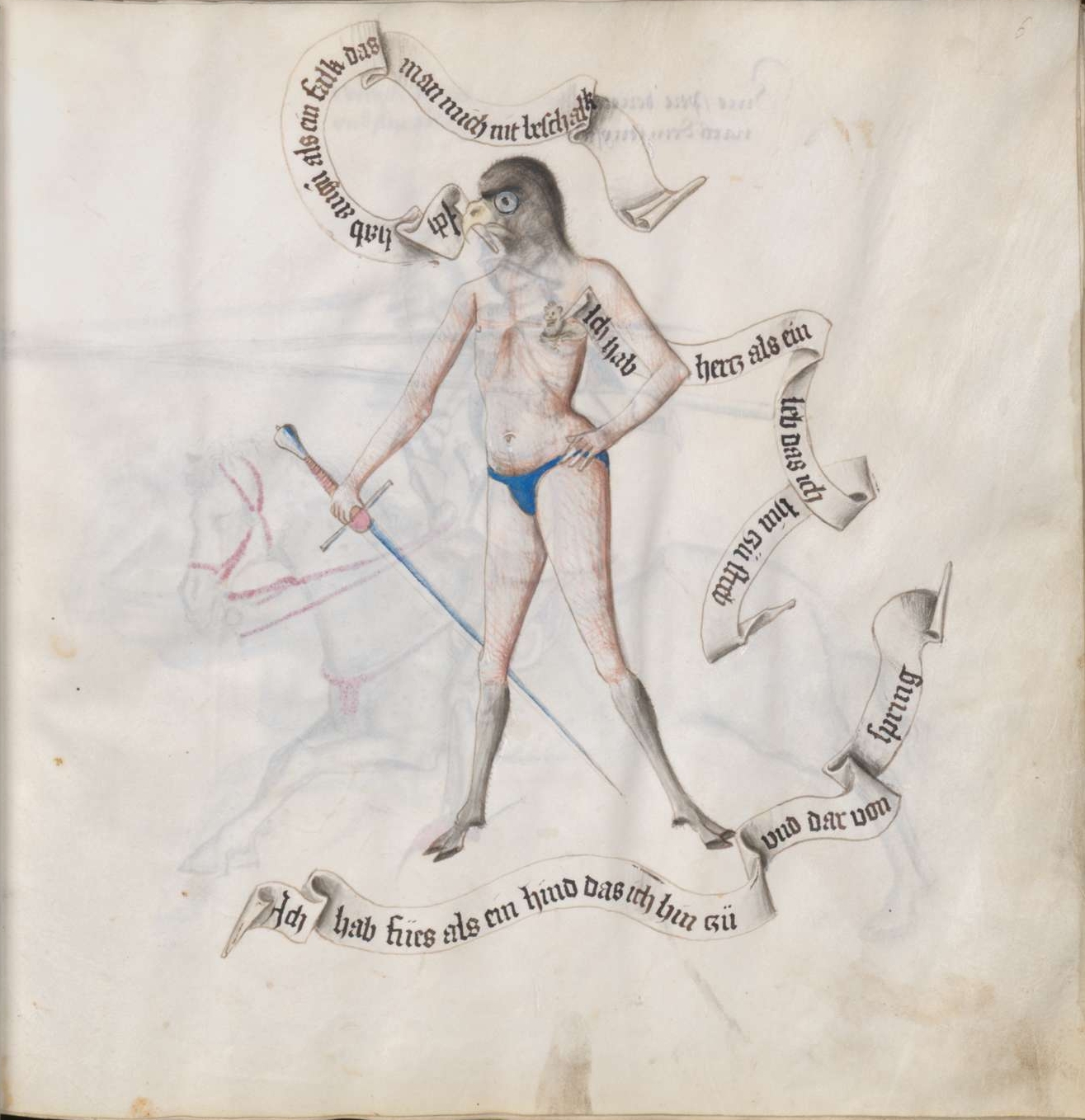
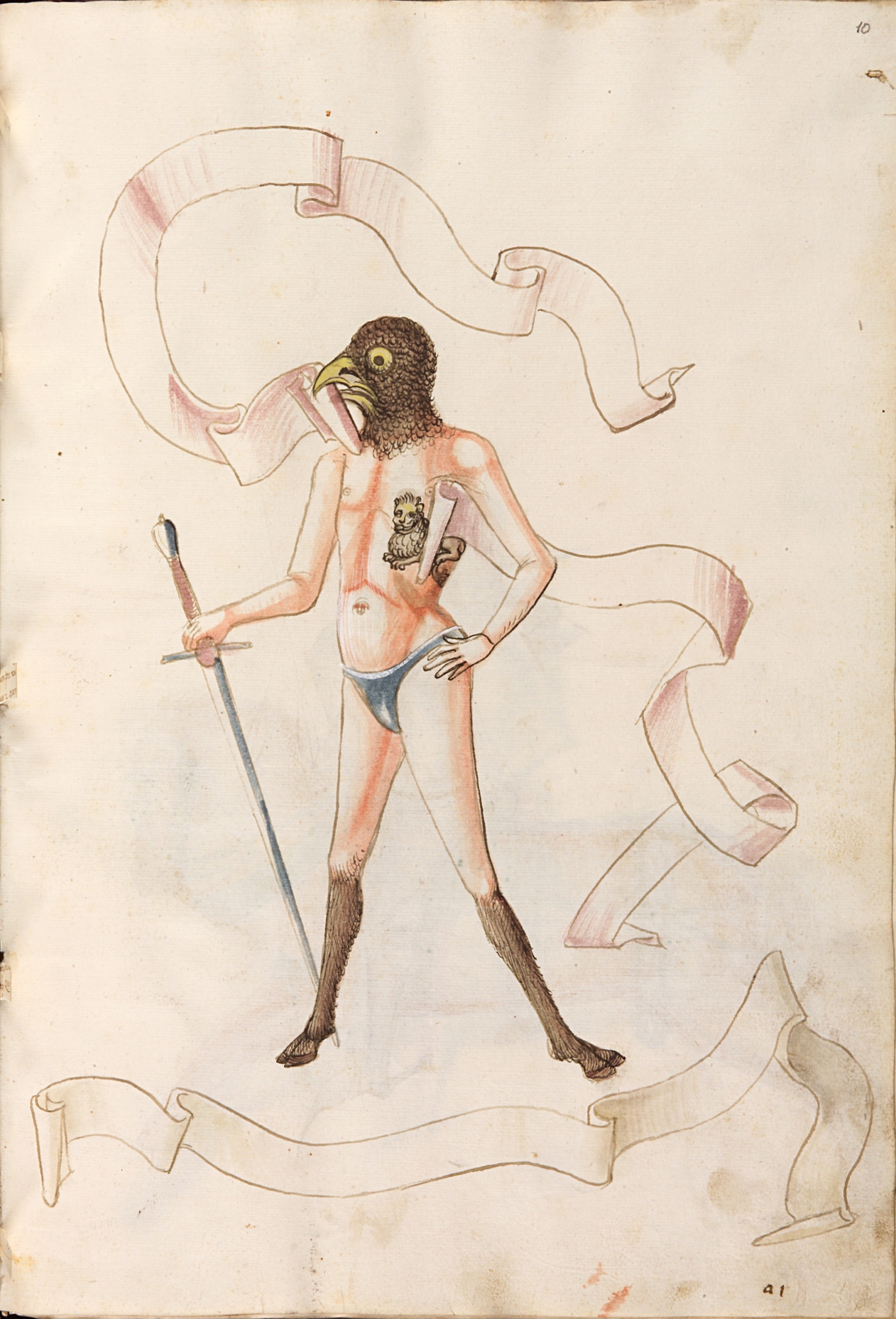
He gives us what we call "Kal's birdman."
The writing says:
I have eyes like a hawk, so you do not deceive me.
I have a heart like a lion, so I strive forward.
I have feet like a hind, so I can spring to and fro.
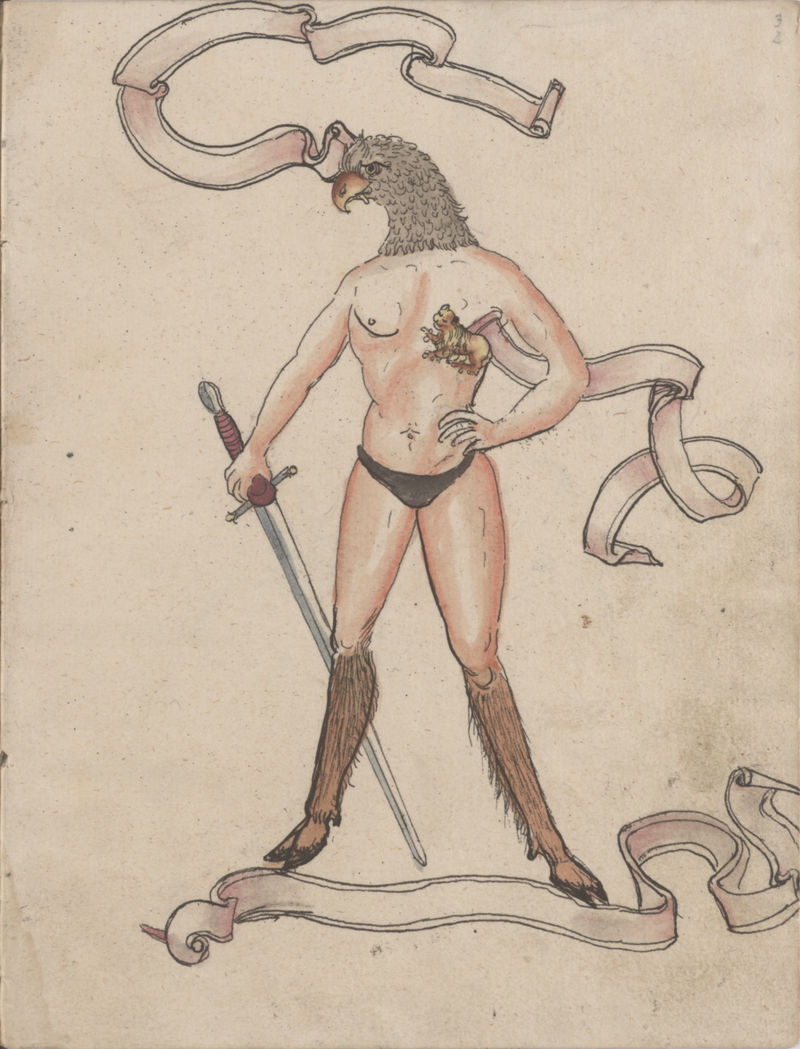
Obviously the ideal man is not an exquisite corpse or a nightmarish fusing of animal with human, but we are supposed to understand the animal-like features of the ideal fencer. Eyes that can't be deceived, courage that won't falter, quick feet. But look at the body of this ideal man. No muscle tone, nearly anywhere. An exaggerated waist even with a bit of a gut, thin arms, tapering legs. And just so you know this isn't just one artist's version, here's a copy of Kal's treatise with the same figure, similar in all details. This is similar to that way a Talhoffer manuscript showed an arming knight, as well: skinny, an impossibly narrow waist, little definition of muscle.
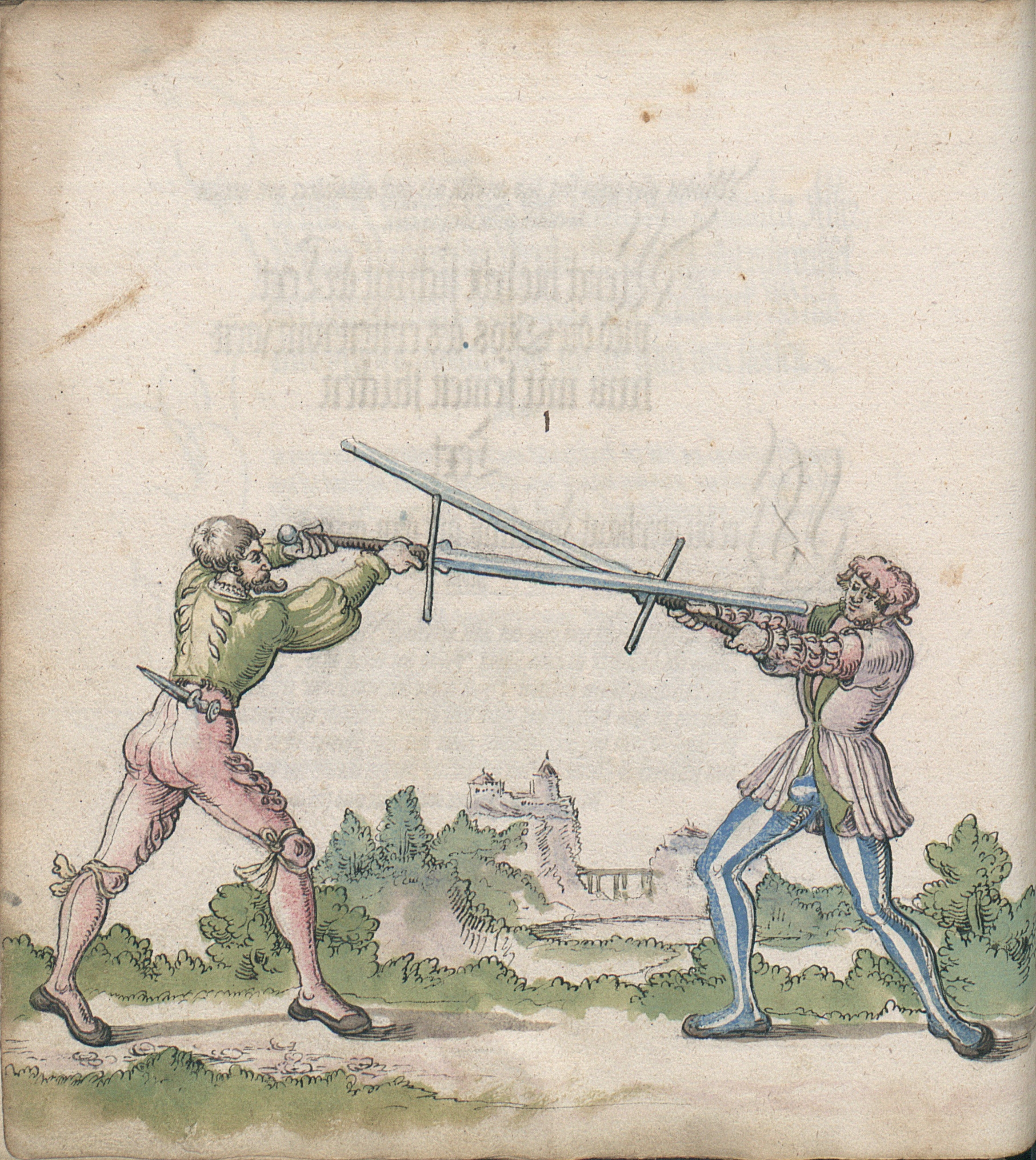
Another Kal figure, this time from the mid 16th century. This one differs in that the arms and legs are thicker, and there's obvious muscle in the core and chest, which maybe argues for changes in the idealization of the male figure during the 16th century.
Certainly, at least by the early 16th century, depictions of the male body at least got more sophisticated and detailed. The "Goliath" fechtbuch, a compilation of various earlier fencing treatises likely published between 1510 and 1520, is notable for its beautiful illustrations that give incredible detail about the fencer's bodies.
So what would the average body type of a medieval fighting man be? We don't know for certain. We can say that, at least in the late 15th century, the depictions commonly emphasize a narrow waist more than any other feature, but also emphasize strong legs and glutes. By the 16th century, we start seeing more consistently muscled men, but the small waist is still highly emphasized, not only by figures that show the body unclothed, but also by the clothing itself and the armor. Fitness was emphasized as a whole-body affair, and young knights were encouraged to engage in a wide variety of activities that would encourage suppleness, dexterity, and strength in equal measure.
Sources Most of the fencing images came from Wiktenauer, an online repository of historical fencing treatises. The main ones here are
And our sources on Kal's career largely come from this blog, which is well cited.
[Goliath](https://wiktenauer.com/wiki/Goliath_Fechtbuch_(MS_Germ.Quart.2020)
Its difficult to know to be honest, but no particular physique was expected of knights i.e. the French knight Geoffroi de Charny in his "Book of the Order of Chivalry" (written sometime in the early 1350s) argues that you can be dubbed a knight so long as you're not morbidly obese, permanently crippled or have a physical deformity (i.e. a clubfoot). But, like modern soldiers, knights were expected to maintain a good fitness regime i.e. Jean le Maingre (1364 - 1421), according to his chivalric biography, would go on long distance runs, vault over horses in full armour and climbed up the backs of ladders in full armour. In other words, whilst you didn't need to look like a body-builder in order to be a knight you needed to have a good level of physical fitness.