In Bertrand Russell's "The Bomb and Civilization" (1945), Russell calls for the creation of an international authority to hold control over all the world's atomic bombs to prevent a potentially apocalyptic war. However, he admits this is optimistic and that neither the US nor the USSR (once they got it) would voluntarily disarm. He then theorizes that the next best alternative to ensure world peace may be for the US to essentially establish a global empire, forcibly disarm all other nations, and declare war on any nations that resisted.
If America were more imperialistic there would be another possibility, less Utopian and less desirable, but still preferable to the total obliteration of civilized life. It would be possible for Americans to use their position of temporary superiority to insist upon disarmament, not only in Germany and Japan, but everywhere except in the United States, or at any rate in every country not prepared to enter into a close military alliance with the United States, involving compulsory sharing of military secrets. During the next few years, this policy could be enforced; if one or two wars were necessary, they would be brief, and would soon end in decisive American victory. In this way a new League of Nations could be formed under American leadership, and the peace of the world could be securely established. But I fear that respect for international justice will prevent Washington from adopting this policy.
Did any high-ranking American officials hold this view? Was there ever any effort to push Harry Truman or Congress into starting a preemptive war with the Soviet Union before they could develop their own bomb? Did the Soviets see this as a real possibility?
Nobody prominent that I know of. Why not? Several reasons:
The US nuclear arsenal was not very large during the period of American monopoly. The USAF thought the US would need on the order of 500 nuclear weapons to take out the entire USSR with nukes along. The US didn't have that number until 1950 or so. So without a lot of nukes, a war against the USSR looks more like WWII than some kind of one-sided WWIII. Sure, a few nukes would be used, but the USSR would respond with massive conventional forces, probably take Europe, and the whole thing would be ugly and bloody. And you still need to get the nukes to your targets deep in the USSR — which wouldn't be a straightforward thing at all.
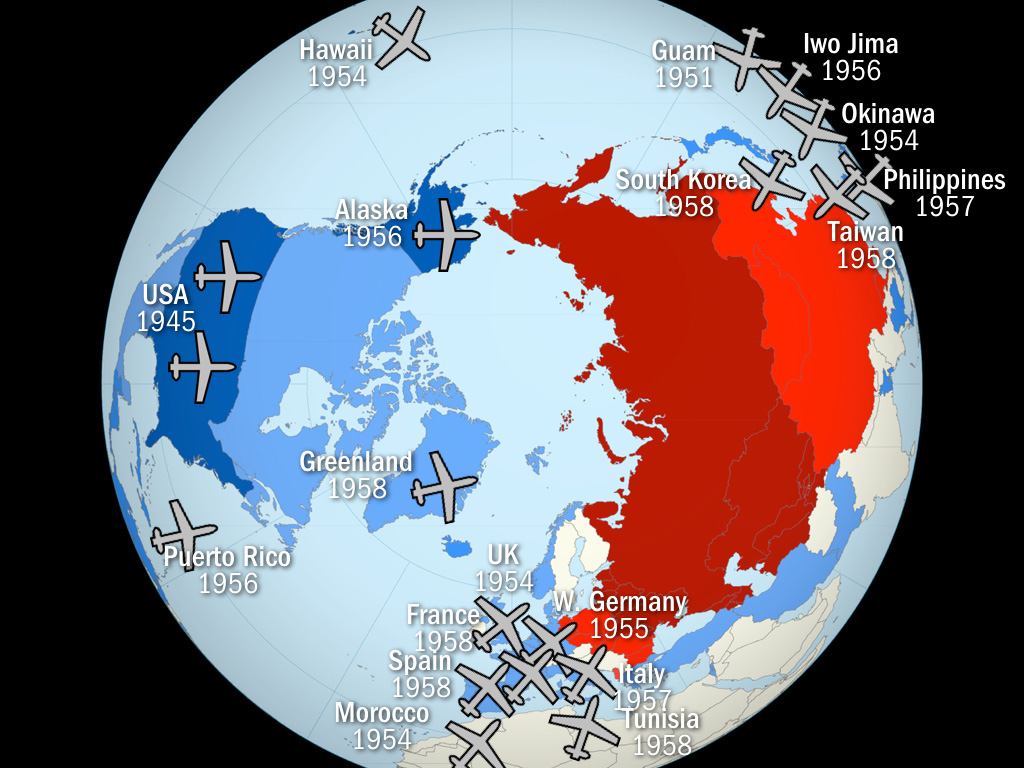
Along those lines, one might note that neither the US public nor the Western European public had any intense appetite for another European war at that point. The European democracies were still recovering and rebuilding. The US public was happy to have some peace (short-lived as it would be). This would have been political suicide nationally and internationally — US allies would have likely regarded the US as being tyrannical. Add to the fact that the US would need to use foreign bases as jumping off points for any attacks — nuclear and otherwise — in this period (the US lacked intercontinental striking power at this point; its nuclear deterrent, even well into the 1950s, was based almost entirely on foreign bases) means that even if the US officials had wanted this, it wouldn't have flown without active support by European nations.
Lastly, it cannot really be understated how "head in the sand" US officials were about the prospects of a Soviet bomb. They had made the estimate that it would take the Soviets 5 years to get a bomb in 1945. In 1946, they thought it would be... 5 years. In 1947... 5 years. In 1948... 5 year. In 1949... 5 years. So when the Soviets did set off a bomb, they were "5 years early." The US had almost no policy in place to deal with a Soviet bomb; it wasn't until 1949 that the US even started trying to detect whether they had tested one, and that was done with great reluctance. I just bring this all up to note that the idea that the US policymakers really accepted that the Soviets were going to get a bomb, and soon, is false. What is interesting about this is they had every reason to suspect the Soviets could do it, and probably were doing it (they scuttled all ban-the-bomb discussions in the UN, for example), but preferred to believe they weren't doing it, and the lack of hard intelligence on the USSR made this fiction easy to maintain, until they detected the test.
All of which is to say: while there may have been a few outside voices who thought this was a good idea, there were major systematic conditions pushing against it, and ultimately the US policymakers didn't take the possibility of a Soviet bomb as seriously as they arguably ought to have. The idea that they would mobilize that possibility into a deeply difficulty and bloody war, one that would have been dramatically unpopular at home and abroad, is kind of implausible.
One could imagine the US policymakers taking a totally different position and trying to sell the public on it, I suppose — very hawkish, much more mobilization, much more aggressive, far more anti-Soviet — but that was definitely not the path of least resistance. And it's unlikely they would have gotten much if any European buy-in, given how the Western Europeans would really lose out in that scenario (while the continental US would probably be unscathed).
Instead, during the time of US monopoly, the major policymaking battles were about whether the US could slash its military back to peacetime levels, and avoid further significant entanglements abroad. All of that changed after the detection of the Soviet test, of course. But it can be easy to overlook how dramatically different the "consensus view" of US politics pre-1949 and post-1949.
There isn't one book that covers all of the above but Michael Gordin's Red Cloud at Dawn gives great context for the monopoly period and the way in which the detection of the first Soviet test punctured that bubble.
The more interesting period in a way is the early 1950s, after the Soviets had demonstrated a nuclear capability but before they had many weapons and lacked the means to deliver them on the USA (they could probably deliver a handful to Western European capitals, which is a form of deterrence, but not quite the same thing), and after the US had started deploying nukes in Europe and Asia. That still would have taken political will that was lacking, and European cooperation that was lacking, but you do get some people in that time period who said, essentially, if war is going to come, why not start it now, while we have the upper hand?