What happened to the people who live in western rome teritory after the fall of rome? What change happened in the society and how their life affected?
The change to society and their life was relatively large, there was for sure a decline in quality of life. However, this does not mean that there were no similarities between pre-Barbarian rule and post.
Firstly we should look to the continuities in leadership, we have Kings such as Childeric, Gundobad and Euric who's families had all dealt with the Roman empire for a long time. Childeric the ruler of the Franks at Tournai for example, acted as an ally of the Empire in 450s and 460s helping to defeat Attila in 451 AD and helped Aegidius to defeat the Visigoths at Oeléans in 463 AD. We can also look at the goods found in Childeric's grave in 1653, example 1, example 2, looking at the goods suggest that he was a King but also a Roman official. So the Kings themselves had experience of the Roman system however, they did not adopted it, while there are some similarities, there is much less continuity then we can see in the Eastern empire when it 'fell'.
A major issue that caused trouble for the Roman citizens left under Barbarian rulers was the problem of land. Land needed to be found for the Barbarian's rank-and-file warriors to live on. This land would therefore have to come from the Roman aristocracy and would create a "new social order of landowners":
Importantly, throughout this world, landholdings granted to soldiers and military retainers were exempted from taxation and other public burdens: consequently, the sources reveal the emergence of a new social order of landowners whose freedom [i.e. ‘status’] was exemplified by the absence of tax and expressed through public military action.
^1
However this did not mean the aristocracy were pushed aside, the Barbarians still had to rely on the influence and expertise of the Roman aristocracy. This was especially the case in the early period of Post-Roman rule within Gaul due to the 3 major powers, the Franks, Visigoths and Burgundians who were all vying for power. Here we can look to Sidonius Apollinaris for some context, hisa Panegyrics and letters are revealing. One letter to Lampridius (viii.9) Sidonius showers Euric with praise likening him and his empire, as the replacement to the once mighty Roman empire. However, Sidonius complains of having to show reverence to a barbarian in some of his other writings, his actions are not unlike those that he would have had to of shown the emperor of Rome. H. Sivan has noted that the routines of Euric and the past Roman Emperors probably didn't differ all that much. Which is very intriguing, as this should make us wonder why Sidonius is mortified that he is having to show such reverence when he did the same to the Roman emperors. Couple this with his letters it is clear there is some anti-Barbarian sentiment from Sidonius for his issue is having to show reverence to a Barbarian. Having said this, Sidonius adapted to his "barbarian overlords" nevertheless as A. Cameron puts it.^2 Again this should bring some inquiry to mind, if the aristocracy society had been transformed so much from its original state would Sidonius had accepted his new position?
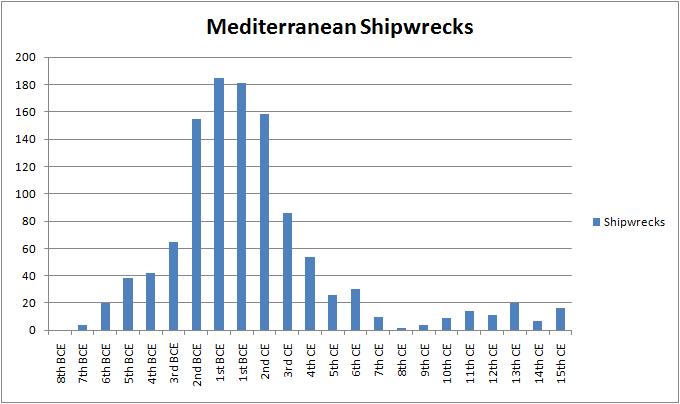
Here I will look to Heather who plainly states that it was the property that the aristocracy held that was what secured their social standing.^3 The initial transition from Roman to Barbarian rule was not that dramatic, with the majority of Theodoric's subjects being Roman aristocracy to maintain his administrative power.^4 However, society transitioned, the role of the aristocracy became one of a more militant nature a "new military aristocracy" as M. Humphries calls it.^5 Which should make clear to you, that the initial Roman society quickly changed and we can see many descendants of the aristocracy fighting and dying for Barbarian rulers later on which is a complete transformation from the well-educated and connected elite that flourished under the Roman system.^5 The simplification of the Roman system by the Barbarian rulers can be seen in multiple ways. Firstly we can look at the pottery the reduction in pottery such as African red slip ware declined in presence and the decline in types of pottery, but we also start to see drastic changes in the building. The once normal roof tiling on buildings now became rare and the more common introduction of post-holes clearly shows a marked decline in the life of many. The shift from a coin based economy to a bartering one occurred also, with small coinage transactions becoming rare. Coupling this with the reduction in trade, as I have highlighted in another post of mine with linkage to the reduction is shipwrecks graph, some industry and professions just stopped being sustainable on a local level at the size that it once was, and it is said that we did not reach the same quality and output of the Romans in terms of pottery till the industrial revolution occurred. This all also links back to the aristocracy, before the fall of the west there were trans-regional landowners and this seems to become rare if not non-existent after the fall in the West, apart from the Papacy.
Jumping back to the idea of land, land was no longer a way to start gaining power, it was power in the new societies. To this extent the aristocracy in some places experienced major blows. As aforementioned the granting of land to the rank-and-file was key for the Kings, and to this extent the land was taken from the Roman aristocracy, such an example was in the Burgundian kingdom were it is said in the Book of Constitutions complied around 517 AD, that the King Sigismund sub-divided many estates so that the rank-and-file soldiers received 2/3 of the land and 1/3 of the labourers of the land. However, if we look to the Franks, they were much more lenient towards the Roman aristocracy and instead used the fisc to procure land for their soldiers:
Chilperic [king of the Franks] took away the villas that he had granted to [Godin] from the fisc in the territory of Soissons and conferred them now on the Church of St Medard.
^6
Therefore, it is clear the standard of living fell, the options for livelihood reduced due to the reduction in centralisation and trade, and the shift of the aristocracies life was one from educated elite to militancy.
^^^^^^^^^^^^^^^^^^^^^^^g
^^^^^^^^^^^^^^^^^^^^^^^g
^^^^^^^^^^^^^^^^^^^^^^^g
^1 Peter Sarris, Empires of Faith: The Fall of Rome to the Rise of Islam, 500-700 (Oxford, 2011), page, 66-67.
^2 Cameron, A. M., The Mediterranean World in Late Antiquity, AD 395–600 (London, 1993), esp. chp. 2, ‘The Empire, the Barbarians and the Late Roman Army’ page 49.
^3 Heather, P. J., ‘State, Lordship and Community in the West (c. AD 400–600)’, in A. M. Cameron, B. Ward-Perkins, M. Whitby (eds.), The Cambridge Ancient History, vol. 14, Late Antiquity: Empire and Successors, AD 425–600 (Cambridge, 2001) page 441.
^4 Humphries, M., ‘Italy, A.D. 425–605’, in A. M. Cameron, B. Ward-Perkins, M. Whitby (eds.), The Cambridge Ancient History, vol. 14, Late Antiquity: Empire and Successors, AD 425–600 (Cambridge, 2001) page 531.
^5 Humphries, M., ‘Italy, A.D. 425–605’, in A. M. Cameron, B. Ward-Perkins, M. Whitby (eds.), The Cambridge Ancient History, vol. 14, Late Antiquity: Empire and Successors, AD 425–600 (Cambridge, 2001) page 539.
^6 Gregory of Tours, Ten Books of Histories , v.3
I answered a similar question here specifically looking at events in the Italian peninsula, which you might be interested in.
The end of the Roman Empire was a time of serious crisis and turmoil. But attributing the fall of the Empire to a sudden and catastrophic event is a rather dated notion which has little following in modern scholarship. Rather, it is more widely held that the Empire began to end when the institutions it represented (or rather, the institutions it was represented by) were no longer adequate for the people who needed to use them. In short, the institutionalized Western Empire had been falling apart for a long time before reading the deposition of Romolus Augustulus.
At least in Italy, Flavius Odoacer was generally perceived as a bad ruler in a long succession of bad rulers, not the usurper that narratives written much later would paint him as. And while much of our evidence documenting this fact can be perceived as propaganda supporting Theodoric's monarchy which followed Odoacer, it is also supported by the lack of any evidence that the deposition of Romolus Augustulus carried any significance beyond the umpteenth deposition of a weak ruler manipulated by his feuding advisors. And it is even possible to successfuly argue that the turbulent lives of people living in the Western empire at this time slowly improved under Theodoric, further invalidating the thesis that the end of the empire was characterized by sudden changes for the worse.
But is is true that Odoacer stopped using the title Imperator, and Theodoric made no effort to revive it. It possible, or even probable, that both rulers still perceived Italy (which they governed with the title of Consul) as still being part of their concept of Empire and merely did not think there needed to be an Imperator seated in Italy. This interpretation is in-line with the concept of Empire as the Romans had understood it for centuries: the Empire had no borders as we would define them, only places where they had not yet introduced the Roman way of life. The universality of the Empire would indeed be a notion carried over by many western monarchs who appropriated the title Emperor, and influence the notion of universality in Christianity. In fact, there was no small degree of tension when Charlemagne's enormous polity came to call itself Empire in the west several centuries Romolus Augustulus' deposition; there still was, after all, an Empire in the east.
This is not to say that contemporary observers were indifferent to the practical concerns which rendered imperial institutions so ineffective. But it is precisely because of this that they were very happy to see these institutions revitalized under Theodoric's monarchy, who made a point to closely follow imperial rules and protocol. Theodoric's reign was actually characterized by an increase in trade and prosperity, in part thanks to the lack of war and turmoil, but also thanks to mired policies favoring stability. This could prove that shedding the pretexts of Empire was, at that point, useful and beneficial for the Italian leadership and the sacrifice of a single construct could in fact impede further social, political, and economic turmoil. "Everything must change for things to stay the same," so to speak.
The crippling blow to what we could label "Roman Society" or "Roman Life" in Italy was in all probability delivered by the Empire itself, although we must also remember that traditional habits and customs which we attribute to the Roman Empire had already been slowly changing for a long time, with and without Theodoric and his policies. This crippling blow would be administered by the Emperor Justinian, who embarked long and arduous war to reclaim direct control over Italy, and just as it seemed this control was being consolidated a warrior class migrated into the peninsula and resumed the conflict.
How can we accept Theodoric was a thuggish barbarian if a large part of Italy sided with his successors in the conflict against the Emperor in the East? Certainly, Justinian's forces had great success occupying coastal cities, especially in the south where ties to the East were strong and traditional institutions were more intact. But it is also true that the Lombards, a foreign population, arrived soon after the conquest was completed and fused almost effortlessly with the old Senatorial class. Explanations for this event are numerous and almost all are unsatisfactory. We do not have records explaining to us how or why the Lombards migrated into Italy. We can even postulate they were a frontier people recruited to fight on behalf of whomever was left on the Italian peninsula, much as the frontier legions had been recruited the previous centuries. The Lombards themselves left us few records, and only made a small impact on existing laws, vernacular language, and politics.
So the dynamics of power changed somewhat, but not entirely. Changes might have actually been more dramatic in the coastal cities where the Eastern Empire's garrisons were stationed, cut off as they were from the rest of the peninsula. This could lead to tensions between settler-soldiers, loyal to the empire until they received their promised plots of land and their interests flipped, and merchant-navigators whose fortunes dependent on strong links to the East. On the other hand, in the Italian interior military leaders called Doux fought against each other and the Empire in every conceivable combination, while the interior cities understandably experienced depopulation as fields were trampled and trade links disrupted. It is in the seventh and eighth centuries, then, that we really see the manifestation of characteristics which are commonly ascribed to the end of the Roman Empire. But we must also be careful to ascribe any territoriality to the Doux, or Dukes, and create clean-cut changes where the old Roman way of life supposedly existed and did not exist. While the Doux could build regional power bases, they were not by definition regional administrators as the later Carolingian Margraves were intended to be. Their territoriality was consequence, not cause, of a weak political superstructure. They were, in a way, more similar to the feuding Roman generals of previous centuries than governors of political subdivisions. However, it is also true that at this point in time we find a political class with little need or understanding of ancient political functions, whose most pressing concern was defending a peninsula against an entity purporting to be the Roman Empire (when not fighting each other). With the benefit of hindsight it is here that we can say, without any real counter-argument, that the Western Empire has finally ended.
But its also true that many aspects of roman life could still exist under these conditions. Although cities shrank, some of their institutions survived. The senatorial class had more difficulty managing diverse portfolios of estates, but they didn't stop managing estates altogether. If anything, the estates they retained were those closest to the aforementioned cities, allowing them to keep participating in public life and guaranteeing some continuity in politics and business. The Italian cities also continued to be centers of religion much as they had been in previous centuries. So in a way, it is difficult to say "What changed after the Roman Empire ended," because when we commonly mark its end a great effort was made so that nothing would change at all.