Yesterday, I went to see the Michael Wadleigh documentary 'Woodstock'. It was a wonderful experience and I would recommend it to anyone, but there was one thing that made me curious. The famous guitarist Jorma Kaukonen wore a swastika necklace, which made me really confused. After digging up some info on the internet, I found out that it was only meant to be interpreted as the original peace symbol and that Jorma actually got some strong backlash. Seems right and fair to me, but there's one more thing. He wasn't the only person wearing it. There was a shot of a couple walking away and the guy had this leather jacket with a swastika on his back. Maybe it was also meant to be the peace symbol, but that explanation doesn't seem right. I feel like there's a difference between the symbol being shown on a necklace and a BLACK LEATHER JACKET.
Am I wrong (I hope so)?
Were they really only worn as peace symbols?
I felt like there might be a Charles Mason connection, but connecting these two things feels a bit too silly.
Sidenote: If this question seems too ignorant, I am from central Europe and 19YO so I am completely unaware of those times.
Before the rise of German National Socialism in 1920s, the swastika was quite popular sign in the West. It was commonly used by aviators of various nations, it was the official sign of the Finnish and Latvian air forces (more on that topic can be read in this response by u/Platypuskeeper), Carlsberg Brewery used it as logo, so did the Swedish ASEA Electric Company and British National War Savings Committee. It was also very common folk ornament among the Polish highlanders and became a part of the official badge of the Podhale Rifles (although it took a form more similar to that of a fylfot cross) and several other Polish pre-war units as well as the Federation of the Polish Unions of Motherland Defenders (a veteran organization belonging to FIDAC). In the United States, swastika was commonly used by Native Indians, appearing e.g. on the school outfits of Chilocco Indian School in Oklahoma or State Route 2 markers in Arizona but also on the badges of 45th Infantry Division. There were also at least several places with the word 'Swastika' in their name. I'm mentioning this to demonstrate that before its adoption by volkists and then the National Socialists in Germany, the swastika was universally considered a sign of luck in many Western countries (it still retains this status across Asia).
On a curious note, basically all these swastikas were square (i.e. mimicking the typical Indian swastika) rather than rhomboid version used by Nazis with rare exceptions, such as the swastika on the Thor's belt presented on the painting 'Thor's Fight with the Giants' painted by Swedish painter Marten Eskil Winge in 1872, where it looks exactly like the Nazi variant (clockwise, rotated 45 degrees) that is additional inscribed within a circle, like in numerous Nazi badges.
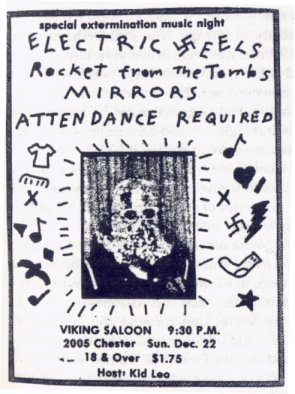
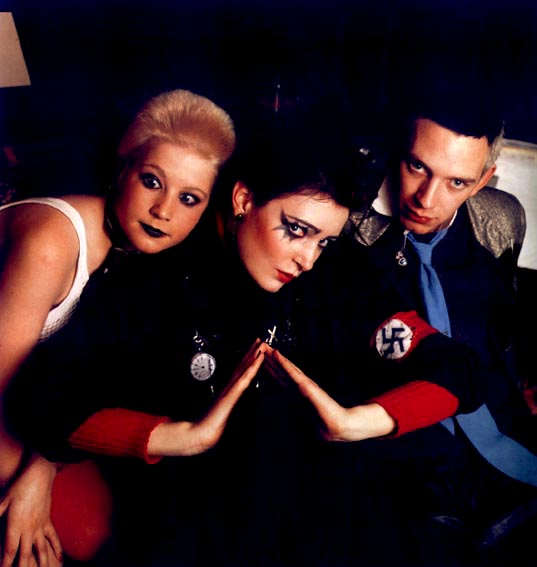
Some rebellious young people involved in the counterculture movements adopted shocking and provocative behaviour as their trademark. Usually being the kids of people who fought in the Second World War, the German Nazi imagery was a safe bet to be very provocative, what resulted in the rise of short-lived proto-punk bands like 'The Sieg Heils' or 'The New Fourth Reich' in the late 1960's. Other contemporary bands, like 'The Electric Eels' sometimes used swastikas in their hand-made advertisement (you can see an example here) for pure shock value. This was continued in the punk subculture well into 1970's and 1980's, as seen in the examples of Siouxie Sioux, Sex Pistols, The Child Molesters or Chronic Sick with the same intent as evidenced by the strong anti-authoritarian agenda in their lyrics.
The case of Jorma Kaukonen is quite straightforward, as he addressed it himself on numerous occasion. On the Jorma's official page, someone asked about the necklace, and this is the response published there signed 'Jorma', most likely written by Kaukonen himself:
"Dom… this has been asked and answered so many times. That is not a swastika… That is a very old piece of Navajo Pawn Silver that I got back in the mid 60’s when I, and many of my S.F. pals were collecting such things.It now rests in our Psylodelic Museum in Darwin, Ohio. When I looked at that piece as well as others from other cultures… Egypt, Tibet, India, etc., etc., the mindless and perverted excesses of Nazi Germany is not what I saw.
Would I wear it today? No. Why? Even though it is not a ‘Swastika,’ obviously it is more often than not apprehended in that way. It is hard to put one’s self back in time and recreate that state of mind that plays back as self centered excess of youth so the question, ‘What were you thinking?’ is valid, but not readily answered. That particular twisted cross was a beautiful piece of hand wrought Native American silver and I loved it as such, nothing more.
Would I wear it, or something like it today? No. Why? Because I am 73 years old and I have learned that even though it is not my business what other people think of me it is not well thought out to obscure who I am with symbols that send so many powerful messages." [quoted verbatim]
I was unable to find the scene with the person in the swastika-adorned black jacket in the documentary mentioned, but there is another possible angle here. The counterculture of 1960's, especially the Hippie movement adopted numerous elements from the Eastern cultures, predominantly Tibetan, Indian and Chinese, popularising activities like yoga, meditation and Buddhism. It is possible that the swastika, being an ubiquitous symbol of peace in India (but found throughout Asia) could have found its way into the West when it was used in its original form and meaning.
:format(jpeg):mode_rgb():quality(40)/discogs-images/R-11862030-1523663590-4736.jpeg.jpg)
