Hello dear historians,
So I was visiting Liège and there inside the St. Denis church I saw a wooden art work that displayed the passion of the christ. And in there I was very much puzzled about the way the Roman Soldiers were designed and shown.
Wide and close up shot: http://imgur.com/a/JGnLtU9
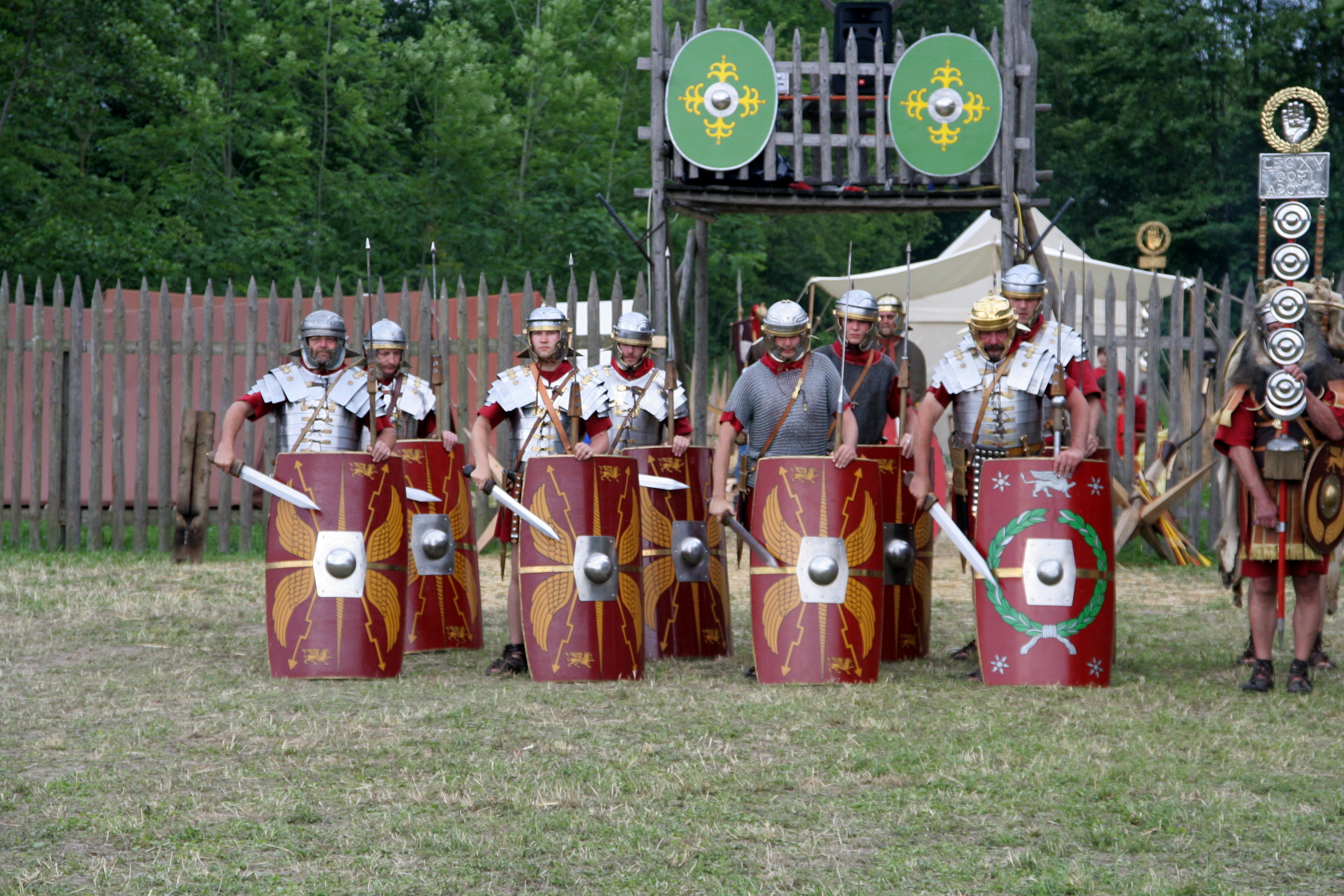
I guess when I think about the common Roman Legionary I had this in mind: the typical plate armour and rectangular shield https://upload.wikimedia.org/wikipedia/commons/4/4c/Roman_soldier_70_aC.jpg
My question is I guess: How do we know the uniform of a Roman Legionaries "really" looked like? Is the image I have in mind a common misconception? And do you know of an explanation on why the armour in this display is so "odd"?
Thanks ahead for your input!
I guess when I think about the common Roman Legionary I had this in mind: the typical plate armour and rectangular shield https://upload.wikimedia.org/wikipedia/commons/4/4c/Roman_soldier_70_aC.jpg
This is the iconic Roman soldier. Not a misconception, but a snapshot in time of a Roman soldier whose dress and armour, and weapons, changed over time. u/eLoudOne1 and I discussed how this particular Roman soldier from the multitude of possibilities became THE Roman soldier in https://www.reddit.com/r/AskHistorians/comments/apzyyv/picture_a_roman_soldier_odds_are_that_youre/
As for the particular depiction you're asking about, see the discussion by u/eLoudOne1 on Medieval art showing Roman soldiers. Medieval art often showed Roman in typically medieval equipment, great helm and all. In the Renaissance, we see art with a sense that Roman soldiers weren't dressed and equipped like the Renaissance soldiers, and we see Romans done in a style like sword-and-sandal film Romans, as noted by u/hborrgg in the linked discussion.
My question is I guess: How do we know the uniform of a Roman Legionaries "really" looked like?
Roman art, at least where it shows the common soldier. But for some periods, good art is relatively rare (which is why Trajan's Column has such huge influence). Beyond art, we have archaeology, at least telling us what kinds of armour and weapons were in use, if not more perishable items of dress.