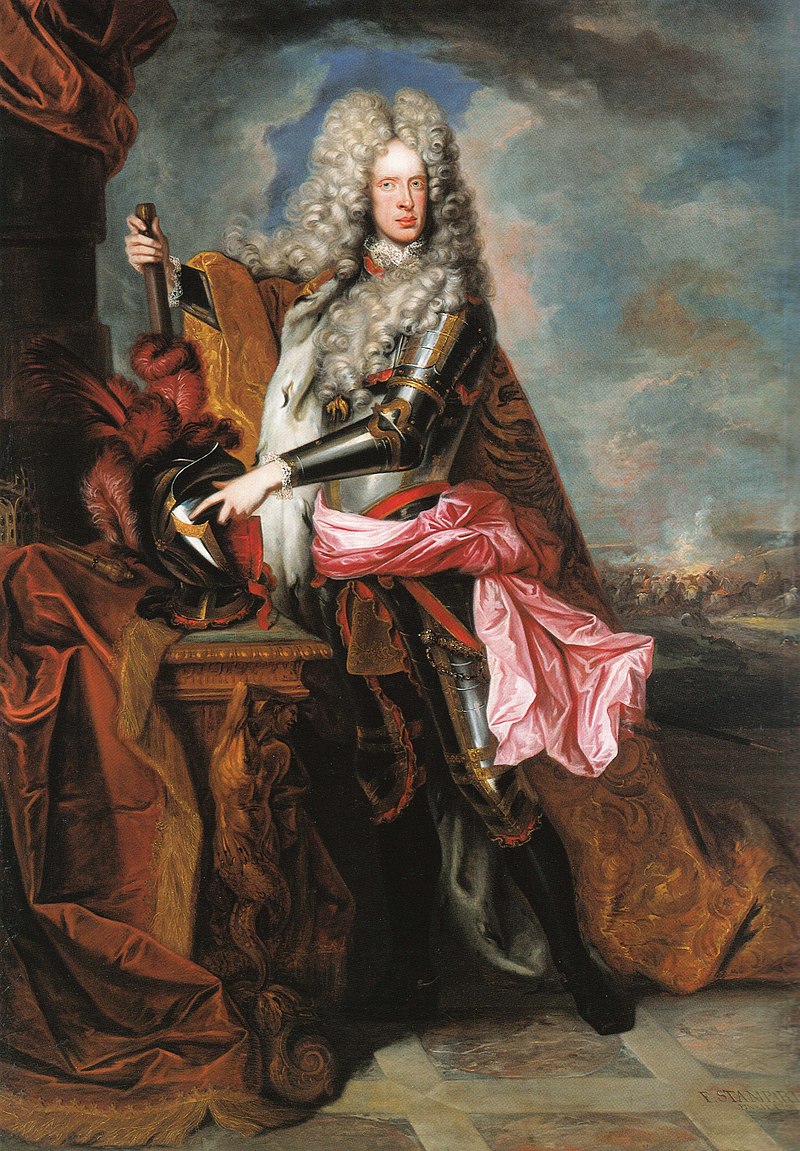
Hello Everyone!
I am Alexander Burns, a historian who studies late-seventeenth and eighteenth-century warfare in Europe and North America. In addition to writing my dissertation I run the historical blog Kabinettskriege, one of the largest sites dedicated to the study of this era of warfare.
So far, my publications has examined the British, Hessian, and Prussian armies during this time. My dissertation specifically examines the armies of the British Empire and Prussia, from 1739-1789. I am the editor of a forthcoming volume or Festschrift, which celebrates the career of noted historian Christopher Duffy with new research on this period of warfare.
Since folks are still commenting, I am going to extend this AMA until 12pm EST today, September 24, 2019. I'll be in and out, responding to your comments as best I can.
If you have further questions on this era of warfare, check out my blog at: http://kabinettskriege.blogspot.com/
You can also reach out to me via twitter @KKriegeBlog and via email at kabinettskriege@gmail.com if you have pressing questions which you need answered!
Which widely-held misconception about this period would you choose to dispel?
What are the differences between the warfare in your period in comparison to the late 30 years war and the napoleonic wars?
Are there any records of soldiers experiencing PTSD after returning home from war? And if there is, how was it treated if at all?
I’ve often heard that the Americans in the Revolutionary War used guerrilla warfare-style tactics like targeting officers, firing from behind cover, ambushes, surprise attacks, snipers, and so on.
Were these tactics really seen as dishonorable for the 18th century? Obviously the British didn’t like them as they were on the receiving end, but how were they viewed by the rest of the world? When did other armies begin adopting these tactics? When did the stigma of these tactics being “ungentlemanly” go away?
How big of a difference was there between the European home armies and the armies used in colonial territories? Was there a skill gap between the soldiers and officers used in Europe and those over seas or were they all mostly the same (excepting the locally raised colonial forces)?
In your view, what was the common understanding of a militia in the US, after the Revolutionary War?
Did people understand the 2nd amendment as referring to militias under governmental control, or individual citizens owning weapons without oversight?
What was the European consensus on the American War of Independence? Was it seen as a big deal or just a minor blip on the radar for the great European powers?
How did European armies supply their troops during this period? Were hundreds-of-miles long supply lines common? Was foraging common to help supplement that? Were local alliances necessary to help protect behind-the-front-line activities?
I've got a couple of quite different questions:
Helmuth von Moltke is said to have dismissed the American Civil War as a brawl between militia rabble, but what of European observers at the time of the American Revolution? Did commentators in France, Austria or Prussia see any lessons worth drawing on?
The War of the Spanish Succession seems to be in a somewhat chronologically awkward spot, situated between the distinctly 'Renaissance' character of the Thirty Years' War and the 'Enlightenment' sort of warfare of the Seven Years' War. Was warfare at the turn of the eighteenth century in a sort of 'transitional' state, or were the essential features of the later mid-18th century conflicts already reasonably solidified?
Linked to the Spanish Succession, the two great generals associated with that conflict are of course the Duke of Marlborough and Prince Eugene of Savoy, but what made them as successful as they were? What did generals actually do?
Were the tactics and equipment of this period of warfare radically different than what was being used in China and the rest of Asia at the time? Had Asia already fallen behind?
I'm a native Virginian, and never heard anything but lauds and praise for George Washington since birth. But I'm reading Ron Chernow's biography of Alexander Hamilton right now, and he alludes to the fact that there were some who were concerned (even Hamilton himself) that Washington was not a competent general to lead the revolution. What does history tell us?
Also, while Washington was famously reserved in public, Hamilton's letters complained of his temper in private. Do you have any insight or specifics accounts ?
Lastly, i realize I'm exposing myself as a complete novice here, but in the musical Hamilton, Washington says, "I led my men straight into a massacre; I witnessed their deaths firsthand." Can you tell me to what battle he was referring, and how to learn a little more about it -- just enough to get a sense of it?
Hello Alexander,
I assume weather had a big impact in a lot of wars. In your opinion was there a war, or a single battle, that the outcome was heavily influenced by unexpected weather conditions?
Thank you so much for doing this. Fantastic read so far!
Many hessians were captured at the Battle of Saratoga. Some of those were transferred to prison camps in Virginia.
How many Hessians stayed in the Colonies and how many returned to Germany?
What is the best source/book to learn how the armies did perform evolutions - for example, deploying from column to line, from line to square?
Are there many accounts of women pretending to be men, and fighting as soldiers at this time?
I'm curious why the time period is 1688-1789 -- why that start year, and why that end year?
What was the biggest change, not just in terms of technology, but in strategy, tactics, or even the philosophy of warfare itself -- from 1688 to 1789?
When were grenades used, how often did grenadier units use grenades in combat and when was the use of grenades phased out, turning grenadier units into elite line infantry?
I took a “Warfare in Early America” class for my history major in college. My professor used Robert Middlekauf’s “The Glorious Cause” as the gospel for the course. Are Ph.D candidates using that book as well to cover the Revolutionary War?
As an undergrad deeply interested in military history and history academia in general I gotta know, what are your plans after your finish your PhD career wise? I've wanted to peruse academic history for the longest time but from everything I've heard there are mountains more history PhDs than there are professorships for them. I've even had 2 or 3 of my history professors flat out tell me not to enter the field because of this.
Hi, I have an interest in the topic of warfare from an academic standpoint, have been for years. Which colleges do you recommend that have a focus on or great military history programs?
Prussia seems like it was able to punch far above its weight/size during this period, why is that?
I asked this question on here the other day, but didn't receive an answer; The second War of the Polish Succession involved the major European powers with the exception of the United Kingdom, in contrast to its participation in the Nine Years War and the War of the Spanish Succession. Despite an alliance with Hapsburg Austria, the British sat the war out; why did Britain stay uninvolved?
Thank you for coming to r/AskHistorians! My question for you:
Did the British military during the period have foreign influences in terms of arms, uniform, and tactics? (That is, did they substantially base aspects of warfare on those of other countries - shape of bayonet, adaption of tactics or mustering systems, etc.)
Old Fritz is given a fair amount of credit by writers for Prussia’s military success at the time of his reign but how much of that actually had to do with him vs his father and/or the Prussian military (soldiers and officers)?
Why did you pick this specific period? When did you develop an interest in it? How did you find programs for your specific fields of interest?
Portraiture and military art from this period often shows officers and soldiers wearing armour. Did these arms truly remain in use?
In all that time of study, did you have a "holy shit" moment? Something that really surprised you?
When are you coming to hang out with us at old Ft. Dobbs?
Hello! Are there any interesting tales of lazy or insubordinate soldiers you've come across? As a vet I'm always interested in "joe" stories where someone hides or shams from work. How did this play out in the age of conscription and pressgang, when there were incredible levels of difference in class and background between enlisted and officer?
I have a few questions regarding American warfare (which I know next to nothing about) that may be odd, but I’d be super happy if you could answer them.
How much use did cavalry see in early Colonial warfare? Did early settlements employ mounted troops? If so, did they use dedicated horses, or farm or draft horses?
When the American Revolutionary War ended, how long did it take for all British forces to leave, assuming they did? What were the attitudes towards defeated soldiers after the war? What about mercenaries?
I know there were German mercenary forces during the American Revolution, were they commanded by English-speaking officers or commanders? Or did their commanders speak only German? Did this have any effect on communication between English and German-speaking elements?
Thanks in advance!
A bit of a more "pointed" question, but why do you think so many historians (it often feels like a disproportionate amount) focus on warfare / wars in particular? What led to you deciding to focus on this topic?
How quickly did (any, I know there are many) Native Americans react to and incorporate guns into their warfare style?
What exactly made the Prussian army (specifically that of Frederick the great) so powerful.
Do you feel that the Native Americans ever had a chance of driving off the colonists during the early days of North American settlement? It seems like we won the revolution by making the British keep an army with a unpractical supply chain the field for far too long, do you think the natives ever had a chance of that sort of victory?
Hope I'm not too late to the party! In 1709 there was a substantial siege of the fortified city of Tournai. The siege lasted upwards of 60+ days with bombardments by Cannon and mortar fire, as well as assaults on the city walls. How could one imagine these assaults on the walls in this time period? Rank and file up to the walls with muskets and gear? Specialized gear for assaulting walls? There were also trenches in order to get closer to the walls but still be protected from musket-fire. Would there be an over-the-top type of assault when leaving the trenches?
Thanks!!
How was Prussia able to hold its own against three European countries (France, Austria, and Russia) during the Seven Years War? Would it be inaccurate to refer to the Seven Years War as World War 0?
How would troops be called up to serve in armies during this time period?
Thank you so much for doing this AMA; I love the Kabinetskriege blog!
What do you think of the Military Revolution concept? Admittedly, this is pushing sort of towards the edges of your area of expertise, but context and framing is always important.
Do you think warfare across the Early Modern period is fundamentally different than the medieval warfare, or is there no clean break until the wars of Louis XIV, or is it a case of three periods [medieval, 16th and early 17th century, and 18th century as separate eras of warfare], or a 'boiling the frog' situation where there is only continual incremental change? Was the 18th century as defined by siege warfare as the 16th and 17th centuries in your judgement, or was there already a general shift away from positional warfare during the mid 18th century?
From the other end of the stick, to what extent did the French Revolution usher in a revolution in warfare? People like Paddy Grifftih would argue that the key changes during the post 1789 period were the fruits of seeds planted during the Ancien Regime, and that the big departures that did happen were of doubtful utility. Others would point to the degree to which France's enemies were forced to adapt the changes they brought as evidence there's a 'there' there.
First, I love your blog and I'm glad you do this AMA. My question is regarding the doctrine of the use of the bayonet in the Prussian Army. I remember to have read that Frederick II advocated for some time for attacks with bayonet only, but after the battle of Prag he reversed his position and after this firepower would be more important. So, how changed the attitude towards the use of the bayonet in the Prussian Army?
The Prussian Army today is often considered extremely capable, almost magical in its achievements. What made them so effective compared to contemporary armies? What disadvantages did they have to overcome?
During battle, units and soldiers would invariably run away and rout. Where would they go? Would they run desert to be never seen again, or would they collect somewhere to be eventually reintegrated?
In history education in the US, a lot of hay is made of the American Revolutionary's forces adapting to and exploiting the terrain and the environment in ways that the British did not. Were the strategies & tactics of the British in the Americas during the Revolutionary and French & Indian Wars carbon-copies of their contemporary approach to warfare in Europe, or were their divergences and attempts to adapt to local conditions? To what extent were they successful or insufficient?
Were there any significant differences or evolutions in British warfare between the time of the French & Indian/Seven Years' War and the American Revolution? To what extent did George Washington's experience in the former translate to the latter?
I have often run into a long standing bit of doctrine that cavalry was not really used against infantry formations only ever used against broken units. What were the standard tactics of cavalry usage during pitched battles?
How often was the fighting continuous throughout the day. Not the routing or chasing.
But the actual clashing, sword on sword/shield/armor fighting. With rotations and all. Were there "breaks"? How long were the individual "skirmishes" usually, and was there ever or often cases where there was literally a fight spanning hours or all day?
How common were trenches in this period? And how were they used?
Specifically in regards to the European Theater, do you have any recommendations for a detailed summary of the Seven Years War, preferably in English?
On another note, How are you? How are things?
What particular American militia unit(s) and English units punched above their proverbial class in effectiveness? Or did performance tend to be more situation based than unit ability?
Are there any good sources on the sizes, compositions and organisational structures of the armies at the time? e.g. I want to know the outstanding numbers of soldiers France had in say... 1745, are there any sources for that?
I searched your blog for wargames and was not disappointed. What are your favorite wargames on this period and why? And are the games just a hobby or something that also ties into your studies?
Where large numbers of POW's taken during the period, and how were POW's kept during war?
What caused the Prussian army to be the thing it was? Why was it the army with a state? Why are they seen as a military powerhouse when Canada has never lost a war?
In American documentaries about the Revolution, commentators have been known to call the British army the best in the world at that time, is this true? How did they compare with other European Armies like that of Prussia?
Was there an evolution in tactics over the course of these few centuries? For example, the 20th century saw the birth of combined arms combat. These centuries still had cavalry, artillery, and varying strengths of infantry, did nuance evolve with their use or did the concept of line-up-and-shoot pretty much stay the same?
What did urban combat look like in these times?
How did the militia of the American Revolution come to overshadow the continental army? It’s such a common thing I encounter in conservation that people believe the colonies were successful because of guerrilla warfare that the British supposedly couldn’t adapt to; if course the reality was very different
When exactly did the concept of entire fronts come around? Was it in your period of expertise?
Did war settings change after the invention of steam engine? If so, in what way?
In the 1770's Ireland, were young men conscripted into the British Army and force to the Americas to fight against the Colony's? What was the desertion rate for the Irish soldiers to the American Army? What happened if they got caught? Thank you!
Can you say much about armies' use of latrine pits and such battlefield sanitation practices? Thanks.
How good was field medicine at the time? What was the likelihood a wound was fatal?
What is the current thinking on the causes of the Three Kingdom's wars? It seems that the combatants were particularly "touchy" and prone to violence when it wouldn't seem strictly necessary. Was there something intangible, like an inflated sense of the value of "honor" (or something), that made all sides particularly prone to war?
Who were the leading battlefield strategists during this period and did they write down their philosophies? How much of their ideas still have relevance in the battlefield today?
Perhaps this is a bit speculative, but I’m curious as to the answer. How impactful were uniform designs to militaries, really? We’re there particularly innovative or particularly disastrous uniforms, cases of confusion, or anything of note?
No question for me, but I just wanted to say that you look really cool in that soldier uniform.
What are your thoughts on the recent find in Canada of (what I’ll call) the Spratt Book?
It’s a handwritten book, or battle journal, that’s from the 1700’s. Here’s the new owner and an expert going over it.
What were the impacts, if any, on the general economy of a nation after a significant loss in battle in this time frame. Could national populations absorb the economic loss of workers, goods and/or lands, or was the economy of a smallish nation ruined by a major military loss?
A little more recent, but:
Why did the United States stop expanding South? I guess it was not out of respect of Mexico as the U.S. has taken already almost half its territory. And why not expand to the North? I mean, Canada wasn't a threat, was it? When did they say "yeah, New Mexico, Montana: these are great borders; that's it"?
What made the New Model Army so effective (aside from its mutinies) and how much impact did it have on the British success in the War of Spanish Succession and beyond?
To what extent did the introduction of firearms change warfare tactics?
This is going to touch on sightly before 1688, but hopefully not too far and it still touches on your stated period. I've heard that in early colonial Virginia's conflicts (with native peoples mostly) they faced continuous problems with manpower because chronic labor shortages meant landowners did not want to give up laborers for war, which makes me wonder, how did military recruitment work in early colonial America? Was the later militia system more or less there from the beginning? Did they ever maintain anything like permanent garrisons? Was every person expected to be able to fight if need be, and how did it work with widespread indentured servitude?
What part did logistics play in battles and warfare. What was the part of officers in maintaining and guiding logistical caravans, how many troops would be used to protect goods?
Also, Why did you choose for the period 1688-1789?
What are the major differences between the warfare at the start of the period, during ongoing colonisation, and the end of the period with nations like the US emerging and the colonial powers shifting focus to elsewhere?
I'm interested in events that lead up to war, which is particularly interesting, for example, in WWI.
What were the events (political, social, economic) that led up the American Revolutionary War? Why did that war even happen? Thanks.
It is my understanding the British offered freedom to some slaves. How many slaves did they free? How was this perceived in colonies like Virginia? Are there any examples of former slaves fighting for the British against slaves fighting for the Colonies? How were the freed slaves perceived and treated after the war?
Spain was experiecing a notable decline during that time period, no longer being the world power it used to be. How did this reflect on its armies?
The Nootka Crisis famously saw Spain and Britain nearly go to war over an incident that happened on Vancouver Island in 1789.
I've always been fascinated how local conflict happened with lines of communication that were weeks or months long.
What agency did local commanders have to engage in conflict? And how did the lack of communication affect decisions made on the ground? How much importance was placed on maintaining contact between far-flung outposts and central decision makers?
Nootka is one example of this situation, but I'm sure it's not at all unique.
Maybe this is a bit outside your scope, but it seems like European warfare changed dramatically after 1789. AFAICT, technology, in terms of guns and bullets, did not change dramatically.
On a strategic scale, did wargot bigger in large part because ideological difference was re-inserted back into the equation? I.e. 1688-1789 European wars seemed to be purely dynastic disputes.
What change warfare on a tactical level?
Did European armies of this period commit atrocities (mutilations or massacres) similar to those committed by colonials in frontier war?
(I ask because I find it unlikely that these frontier behaviours had no precedents in Europe)
Do you have any book recommendations on the military history of Hesse-Kassel and more specifically Hessian troops in foreign service?
I'm not very well versed in Colonial North American History and I don't know if this is in your area of study but I've always felt the American Colonists being unable to (legally) move into the Ohio River Valley even after the Seven Year's War was one of the more overlooked events that led to the Revolution. Is this a naive understanding of events that created the events for revolution or would you agree?
Hi Alex! Two questions,
First is as far as logistics goes throughout the American Revolutionary War, what difficulties did the British face when trying to maintain supplies while trying to chase down Washington or hunt down Francis Marion (the swamp fox)?
Second is a bit more on a personal level. I am also planning on going to college for a history major. I am a senior in highschool what exactly can you get a carreer in with that kind of degree? (I plan on becoming a professor teaching american history but im having second thoughts. I love history so im trying to look at other options with that degree).
Thanks for doing the AmA!
Hi,
This kind of pertains to most periods of war, but what was the deal with Calvary charges. I heard some people say that horses would never charge into a wall of bayonets/pikes/shieldwall if the men held their ground. Is this the case or does it just vary depending on individual charges?
After Benedict Arnold betrayed General Washington, did he do anything petty to the Americans?
Tim Blanning has described Frederick the Great as a great warlord but not a great general, certainly when compared to his brother Prince Henry. Would you agree with that assessment?
This might be a stupid question, but what was the biggest military technical advancement in those 100 years? Was there any sort of innovation that happened that changed the tide of warfare during that time?
So I've often heard that when Revolutionary France began mass conscription, it was a huge change in warfare for Europe. My question is, why exactly did no one else try a levée en masse before then and in addition, what recruiting methods were used by the militaries of this time period? Were they limited by money or fear of arming too many people who might overthrow them?
Could you recommend any books on this? I love this time period and am desperate to find a good book about anything I euros this time period
What was the role of dueling among the warring armies in this period?
Why did armies of the time period fire in volleys and from a line. Would it not have been more effective to fight from trenches or cover?
Two questions of you please.
One, within the period of 1688 to 1789 what would you say were the greatest advances in military technology/tactics? With black power weaponry being limited as it is how did this period learn and advance with its technology?
Second, how effective was American naval power during the revolution? I’ve always admired John Paul Jones raiding British and Irish coasts but how seriously was this taken? I imagine having your ships raided so close to home could sway political pressure but like many characters of the Revolution I fear this has become mythologized.
For common folk living in the colonies during the American Revolution, how easy would it have been for them to fight? Did the average man have any kind of formal knowledge or training in any form of fighting/warfare with which to fight the British once the revolution started? Or was their fighting more learning on the job?
Can you tell me anything about the Spanish war dogs.also were there other war dogs back then?
Given that crossbows and longbows were all-weather weapons with plenty of ability and capacity and reloading, why were they displaced so easily by muskets and primitive guns?
My understanding was that guns in the 18th centuries could only be fired once or twice, were not very accurate, unreliable and could be expensive. Why, and at what point, did armies decide to switch from arrows to bullets?
Can you give us an overview of what conflict between European settlers and Native American peoples in the Appalachian backcountry was like from the late 17th through late 18th century?
My main interests in history have focused on ancient Rome and the world wars, with a bit of the medieval period as well. Obviously, a lot happened in between those times. What material would you recommend studying to begin to understand the time between the medieval period and early modern age?
I’ve heard about the Swedish Caroleans often relying on melee combat more than other nations. What I picture during this is using pike, sabre, and bayonet while two lines smash into each other. How often, if at all, were soldiers fighting in hand-to-hand combat like this? From a complete outsiders perspective, it seems far from the reaches of “gentleman’s warfare” which is stereotyped in the era.
How and why did armies switch from the mercenary armies of the 30 years war to the national standing armies of this period? And how did this effect warfare and the state?
It seems like, for much of this period, Louis the XIV and XV spent an ENORMOUS amount of blood and treasure on war and seemed to have accomplished very little for it, is this accurate or anglo-centric bias? If it is true, why'd it happen?
Warfare from maybe 1530-1650 seemed to have mostly been about sieges, with comparatively few battles, how does the period you study compare? Why did it differ?
How did armies at the time balance the need for conscripts and agricultural laborers? Was there a significant seasonality to campaigning?
Dear, Mr. Burns
As for the Prussian military had suffered at the hands of Napoleon, Did the Prussian military influence the armies of Napoleon when it comes to organization or was this at the hands of the french after the american revolutionary?
Flintlock muskets dominated warfare during this period, was there any meaningful change in the quality/effectiveness of them over this period? Because the late 17th century muskets seem basically the same as the one's during the napoleonic era.
During this period, the pike seems to have finally fallen out of fashion as the bayonet became more popular, how did this impact the relationship between infantry and cavalry?
What conditions changed in the HRE that enabled smaller states to hire out such substantial numbers of their soldiers without fear of needing them?
Why were so many germans, esp Hessians, abroad as mercenaries? What pushed or pulled them to do this?
This is kind of broad, but what was the state of field medicine at the time? How did European techniques and those used in North America differ? The line about the US Civil War is that there were more deaths to disease than to combat, but was that just a truism in warfare before then as well?
Thanks for answering our questions and sharing your knowledge!
Would you be able to talk at all about how rape was used/approached as an aspect of warfare during this time period?
It's great to see someone specializing in this period, which I've really started to dig down on. I've just ordered Lynn's Armies of the Sun King. While I'm waiting on that, I've been very curious about why it wasn't until the War of the Spanish Succession that the Prussians introduced marching in step to European tactical systems. Is this simply because "close order" had only become shoulder to shoulder after the widespread adoption of the firelock? Until recently I had assumed marching in step would be necessary for Pike drill to function at all. It's obvious that some later movements like marching oblique and facing movements as performed in the 1791 manual required it, but what battlefield effect did in-step marching have when it was first employed, and what advantage did it offer before more complicated evolutions of the line had developed around it?
Were civilians considered acceptable targets?
Good Morning / Afternoon Mr. Burns.
I have a general question in regards to the variance of unit strength based on experience in this time period, as well as how these units stacked up against Native American war parties of greater or equal strength.
To explain, I understand there were relatively few engagements where a European fighting force engaged with an organized Native American force of equal or greater manpower - however in engagements where this did happen, what were the relative odds for an equally sized Native American force to engage a European unit?
What were the key differences between green and inexperienced units compared to those who have already served a tour either in continental Europe or in the new world? Would these units be mixed with veteran soldiers to spread experience around, or were there real differences between different platoons/detachments/fighting unit organizational units based on previous fighting/combat encounters?
How were the European colonial aims of Asia different than those they had for the new world. Which ones did they focus more on ?
How much were soldiers paid relative to their normal incomes?
Was being conscripted an economically favourable or economically disastrous event?
Was the killing of captured non-officers the norm? If not, how were the eventual POW managed?
Have you seen Barry Lyndon (1975)? A Kubrick epic set in this time period.
The King Philip's War is often glossed over in US textbooks with little to minimal mention.
How important was this war to the Colonial era period? What effects did this war have for the Colonists, the Native Americans, and especially the British, back home?
How effective was cannon/artillery fire during this period? I've heard it was relatively inaccurate and its low mobility made it more practical for sieges but on the battlefield was the role of artillery significant enough to turn the tides of battle, or was this something that came more about in Napoleonic warfare? Also what was the Prussian military's view of artillery during this period? Later in its history Prussia seemed to place a large importance on field artillery with its tactics, did this trend start in this age of warfare or did it come about later?
One of the things I never understood about colonial warfare, how did governments in Europa coordinate and communicate with their armies fighting on the other side of the world, when it took months to travel the oceans and relay war updates and news.
For example during the Revolutionary War how did the UK Government monitor how the war effort was going or how could a general for example request extra troops?
How widespread was hearing loss or damage for soldiers during that time? Any differences between infantry, artillerymen and navy gun crews?
In popular media we often see the Officer ranks and how they were respected and considered gentlemen. How did society view the average foot Soldier fighting for Britain at the time?
The period you study is also one of immense changes in the academic world. Technology is the obvious one; but anything from physics and medicine, to political and ethical philosophy changed a lot during this period. What are some of the interesting ways in which you see these changes reflected in the practices or cultural reaction to warfare?
Native Americans feature prominently between the wars of the French and the British (and then with the colonists) but did Spain in her wars in North America make strategic alliances with Native Americans in order to combat her enemies in the area around Spanish Florida?
What are some sources that describes their most advanced weaponry.
In doing some family tree research, we came across an ancestor from Scotland, who fought in the French and Indian War, specifically at the Battle of the Monongahela in 1755, and then stayed in the colonies and was with George Washington's army at Valley Forge.
I'm curious if you know much about the Monongahela battle, as it seems like an interesting one, and if it was a common thing for British soldiers to stay and settle in an area after having served abroad, rather than return home. Would they have been given land or would they have been paid enough salary to afford to live there?
I don't know enough about the time, so is there anything cool or really interesting that you wanted to share that hasn't come up in another question?
Revolutionary France's use of levee en masse allowed France to field many more much larger armies. Before that, what was general social class and situation of people who made up the bulk of European infantry during the 18th century?
Did the British Army employ rifle skirmishers during this period or was it too early for that?
We hear a lot about bows being used alongside Muskets in the 1500s why did this practice stop?
This seems to already be answered, but why did you exclude the English Civil Wars (1642-52) from your analysis? Was it because firearms were not as widely used like their universal application in later conflicts?
How universal were light infantry/jaeger tactics in the training of the 60th Royal American Regiment during the Seven Years War? Were they confined to the named Light Companies, or, as is hinted at, to the entirety of the battalions of Bouquet and Haldimand, or even, as J.F.C. Fuller suggested, to the entire regiment?
Also, given Thomas Gage's commanding of the 80th Light-Armed Foot, do you have any insight on why he so completely neglected the light infantry of the North American garrison in the years leading up to the American War of Independence where they became dumping grounds for misfits, and almost wholly neglected training in their intended role, having to be revitalised by Howe when war came?
Hello, I am personally curious as to whether there were any beliefs or military practices in the British Empire shaped by Classical Empires, especially since Victorian Britain was also a period where interest in Hellenistic culture was rife.
Thank you!
Beyond the strategy, tactics, and battles themselves, can you talk a bit about the importance of logistics, and which things armied focused on or ignored at their own peril?
What of providing food and medical care for instance? Were there any general weaknesses that you could successfully exploit, and what were the big, and perhaps obvious ones? Not to mention the way sieges worked to deplete armies of resources perhaps more so than men.
I always like reading about Ancient Rome's abilities in this regard where the battle only plays so large a part of the war effort itself.
What would you say was the most conventionally used tactic during this era and how it effective it was compared to modern warfare tactics. Also if you had to choose a specific tactic to fight in a hypothetical war against modern troops with modern weapons (restrictions on navy and aerial warfare of course) choosing any setting you would like to set the battle realistically where the two armies have an equal number and moral; would you win or could you get close to winning??.