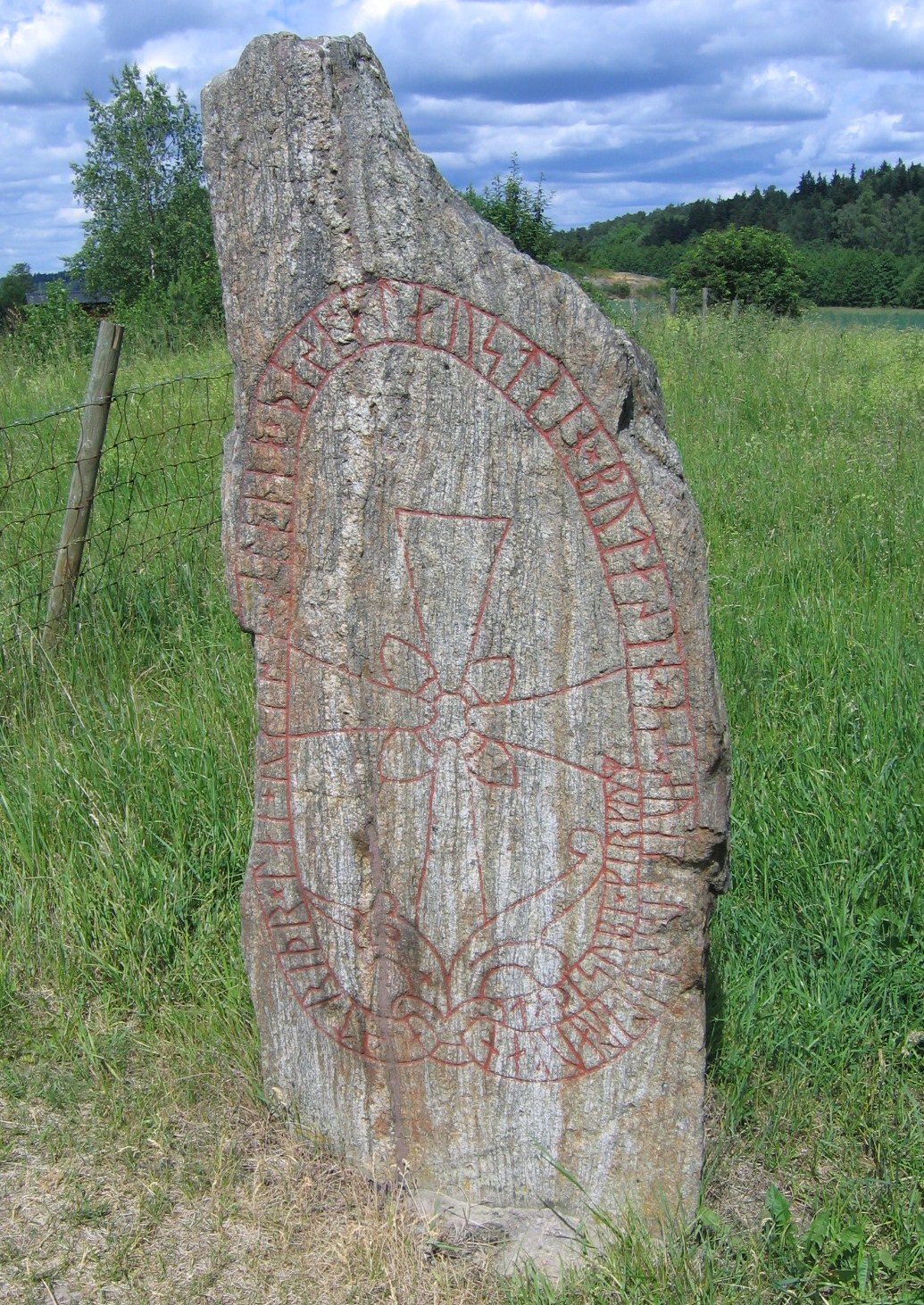
The year 1066 is an eve of the famous Investiture Contest aka Gregorian Reform that was a crucial turning point for the formation of Europe as a Catholic-Christian community under the leadership of the increasingly institutionalized Roman Papacy, so it is a bit difficult to chart the exact range of Western Christian at the very time.
Bartlett states: 'From around 1050 Rome thus created a new institutional and cultural uniformity in the western Church' (Bartlett 1994 (1993): 250), but the actual sphere of influence of Pope Alexander II (r. 1061-73), or the means to intervene the local politics across Western Europe was still limited, as I briefly touched in this question thread, Why did Pope Alexander II support William's claim to the English Throne?. He dispatched Papal legates, include Hildebrand (future Pope Gregory VII), to promote the moral reform of the clergy mainly in France and in Germany, and once in Iberian Peninsula and England after the Conquest, but even in these areas, the new, more rigorous demands from the Pope met with certain resistance. It was one of such 'disobedience' of the local episcopate in Germany that triggered the first serious rupture between Pope Gregory VII and King (not Emperor at that time) Henry VII in ca. 1075, just before the famous 'Walk to Canossa'.
On the other hand, some rulers in the periphery of Europe increasingly, though sporadically, got in contact with Papacy, often on their initiative. Their motive could be various, but some of them, especially surrounding two 'big powers' of the 11th century, i.e. England and Salian Germany, prefer to establish the more relationship with Rome rather than by way of the metropolitan of such superpowers, avoiding their possible intervention to their kingdoms/ principalities.
The following are some examples of such attempts of contact between the peripheries and these Rome (Cf. Schimmelpfennig 1992: 142-50):
- Iberian Peninsula: Succession as well as Political Division of the Peninsula under the Christian rule, in addition to taifas (petty kingdoms) in al-Andalus, was very unstable around the middle of the 11th century. Among them, kings of Aragon, newly independent from Leon-Castile, were known to be eager to ally with the Papacy: While the exact political significance of the act can be debated, King Sancho I would take a visit in Rome soon (in 1068) and make a pledge to the Papacy against neighboring Leon-Castile (Schimmelpfennig 1992: 145-47).
- British Isles: As I explained in detail in How true is it that England was briefly Orthodox before the Norman Invasion?, Archbishop Stigand (d. 1072) was certainly persona non grata for Pope Alexander, but the relationship between Late Anglo-Saxon England and Rome was generally OK, as exemplified by the visit of King Cnut in Rome in 1027. After the Conquest, however, new Archbishop Lanfranc of Canterbury (d. 1089) would begin to centralize the ecclesiastical hierarchy of the whole British Isles under the authority of Canterbury. On the other hand, King Macbeth of Alba, Scotland (d. 1057: Mac Bethad: yes, historical model of famous protagonist of Shakespeare's drama), possibly following the example of Cnut that he had submitted in ca. 1030, made a pilgrimage to Rome in person in 1050. It was Pope Gregory VII wrote to a ruler of certain petty kingdom in Ireland, Tairdelbach Ua Briain, at the first time (Hudson 2006 (original 1991): 217), so we don't have any positive evidence for the nature of relationship between Ireland and the Roman Papacy during the pontificate of Alexander.
- Scandinavia: Adam of Bremen, spokesman of German archbishopric of Hamburg-Bremen, inserted the letter of Alexander that reprimanded King Harald hardrada of for his disobedience against 'Archbishop Adalbert (d. 1072), the rightful vicar of the Roman Church'. This letter, the first papal letter sent to Norway, seems to be written in the early 1060s, but recent researches cast some doubt about whether the Pope really intend to regard Hamburg-Bremen as an only hub between Scandinavia and the Catholic Church. If ever such a temporal problem existed (rather I doubt), though, at least the death of King Harald in England in 1066, the relationship between Norway and Rome (not by way of Hamburg-Bremen) seemed to improved rather quickly: According to Hungrvaka, the life of early bishops of Iceland written in ca. 1200, Bishop Bernhard of Selja (-Bergen, Western Norway) who had took asylum in Iceland during the reign of King Harald was said to return to Norway and also made a pilgrimage to Rome (Hungrvaka, Kap. 3, ÍF XVI: 12) . Hungrvaka also narrated the journey of Gizurr Ísleifsson (d. 1118), future bishop of Skálholt, the first and southern bishopric of Iceland (established in 1056), allegedly occurred before 1066 (Hungrvaka, Kap. 4, ÍF XVI: 14). As I briefly mentioned in here,
To what degree World the early church of Scandinavia be connected to the church of the continent and the papacy?, however, King Sweyn Estridsen (d. 1076) of the Danes sought to get in direct touch with the Roman Papacy the earnest among all the Scandinavians: While he had established some contact with Papal Legate Hildebrand even before his ascension to the Pope, King Sweyn sent one of his younger sons, Magnus, together with a bishop to Rome to be ordained as a future king, though he died on his way to Rome (Adam of Bremen, Scholion 72 (83)). This event happened also during the pontificate of Alexander (1061-73). On the other hand, Christianity could still meet almost the last resistance from non-Christian locals in some areas of central Sweden in the 1060s and 1070s, represented by the notorious description of the pagan temple of Gamla Uppsala by Adam of Bremen (Adam, IV-26f.). The nature of the uphearval in Sweden exactly at that period could be political as well as religious, and runic inscriptions erected by the Christians instead suggests a bit different picture, characterized by the mixed populations of Christians as well as non-Christians: one of Jarlabanke Runestones, erected probably in the second quarter of the 11th century in the central Sweden, U 136 narrates the commemorated husband's journey to Jerusalem, possibly of religious pilgrimage: The inscription states: '× astriþr × la(t) + raisa × staina × þasa × [a]t austain × buta sin × is × suti × iursalir auk antaþis ub i × kirkum (Astrid made this stone erected in memory of her husband, Eystein, who took a visit in Jerusalem and died among the Greeks)'.
- Slavic lands: Except from the possible case of central Sweden, as I illustrate above, NE Germany was the forefront that Christianity went back and forth about that time. In the very year of the 1066, Prince Gottschalk of the Wends who had been well-disposed to the missionary activities of the Germans, such as those of Hamburg-Bremen, was killed in possible pagan revolt, and his young son had to seek asylum in his mother's homeland, Denmark (Adam, III-50 (49)). 'Christianization' of the region, aka full re-establishment and expansion of the church organization in Nordalbingia, and further, in the Isle of Rügen, must wait for the 'Wendish Crusade' at least until the middle of the 12th century (Cf. Fletcher 1997: 417-50).
- Eastern Europe (Russia): Contrary to general assumption, as I touched briefly in the thread, What were the relationship of Rus' principalities after the 10th century with Latin Europe?, we don't have any positive evidence that the rupture between Eastern and Western churches affects the political as well as religious map especially of Russia: King Henry IV of Germany re-married with the princess from Russia (though widow of German prince), Evprakia Vsevolodovna in the end of the 1080s, and Pope Gregory VII also wrote two letters to the prince of the Rus' around 1080s. These two were indeed the first evidence(s) of the direct contact between the Rus' and Rome, however, and we don't really know the exact nature of their relationship before then, i.e. during the pontificate of Gregory's predecessor, Pope Alexander II.
References:
- Bartlett, Robert. The Making of Europe: Conquest, Civilization, and Cultural Change, 950-1350. Harmondsworth: Penguin, 1994.
- Berend, Nora (ed.). Christianization and the Rise of Christian Monarchy: Scandinavia, Central Europe and Rus', 900-1200. Cambridge: Cambridge UP, 2007.
- Fletcher, Richard. The Conversion of Europe from Paganism to Christianity 371-1386 AD. London: Fontana, 1997.
- Hudson, Benjamin. 'Gaelic Princes and Gregorian Reform'. In: Id., Irish Sea Studies 900-1200, pp. 216-29. Dublin: Four Court Pr., 2006.
- Raffensperger, Christian. The Kingdom of Rus'. Kalamazoo, MI: Arc Humanities Pr., 2017.
- Schimmelpfennig, Bernhard. The Papacy, trans. James Sievert. New York: Columbia UP, 1992.
- Smith, Julia M. H. Europe after Rome: A New Cultual History 500-1000. Oxford: OUP, 2005.
(added): adds missing references, fixes the style. fixes typos (sorry).