Today:
AskHistorians is filled with questions seeking an answer. Saturday Spotlight is for answers seeking a question! It’s a place to post your original and in-depth investigation of a focused historical topic.
Posts here will be held to the same high standard as regular answers, and should mention sources or recommended reading. If you’d like to share shorter findings or discuss work in progress, Thursday Reading & Research or Friday Free-for-All are great places to do that.
So if you’re tired of waiting for someone to ask about how imperialism led to “Surfin’ Safari;” if you’ve given up hope of getting to share your complete history of the Bichon Frise in art and drama; this is your chance to shine!
This is a response I wrote to a question that ended up getting deleted. It asked what ships were considered so revolutionary they changed all ships that came after them.
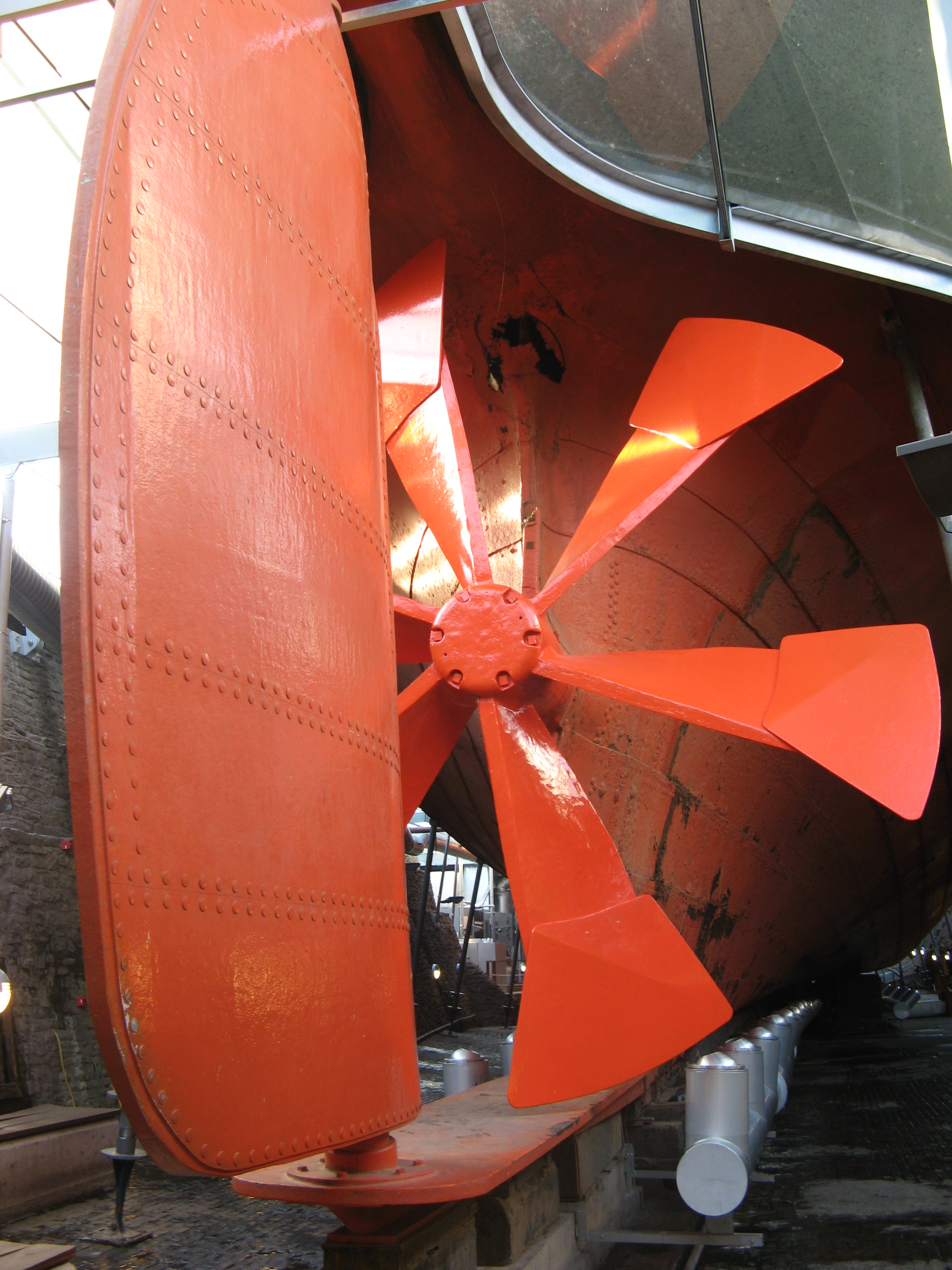
The SS Great Britain, commissioned in 1845, crushed the record for largest ship ever built. A trans-Atlantic passenger liner, she was 322 feet long, and over 3,600 tons displacement fully loaded. She beat SS President, built five years earlier, which was 243 feet long and wooden hulled. The Great Britain used a steel hull, and forwent traditional steam-driven paddlewheels for a relatively new method of propulsion: the screw propeller. People were skeptical of such a massive ship using a propeller, with the Scientific American magazine quoted: "If there is any thing objectionable in the construction or machinery of this noble ship, it is the mode of propelling her by the screw propeller; and we should not be surprised if it should be, ere long, superseded by paddle wheels at the sides." SS Great Britain served as a proved the strength and possibilities of both steel in shipbuilding and the propeller, paving the way for ships we know today.
SS Turbinia, commissioned in 1894, was the first ship driven by steam turbines. At over 34 knots, she was the fastest ship ever built. She was demonstrated to the Royal Navy and Queen Victoria in 1897 when she showed up unannounced to a fleet review, and outracing the naval ships and any pursuing vessels. Without reduction gears, her turbines were connected directly to the shafts, which spun at 2000 rpm. To fix the cavitation issues caused by this, she had three propellers on each shaft, for a total of nine propellers.. The Royal Navy built two turbine-powered destroyers to test the concept in 1899, and soon after the Admiralty wanted steam turbines on every new ship built, starting with HMS Dreadnought.
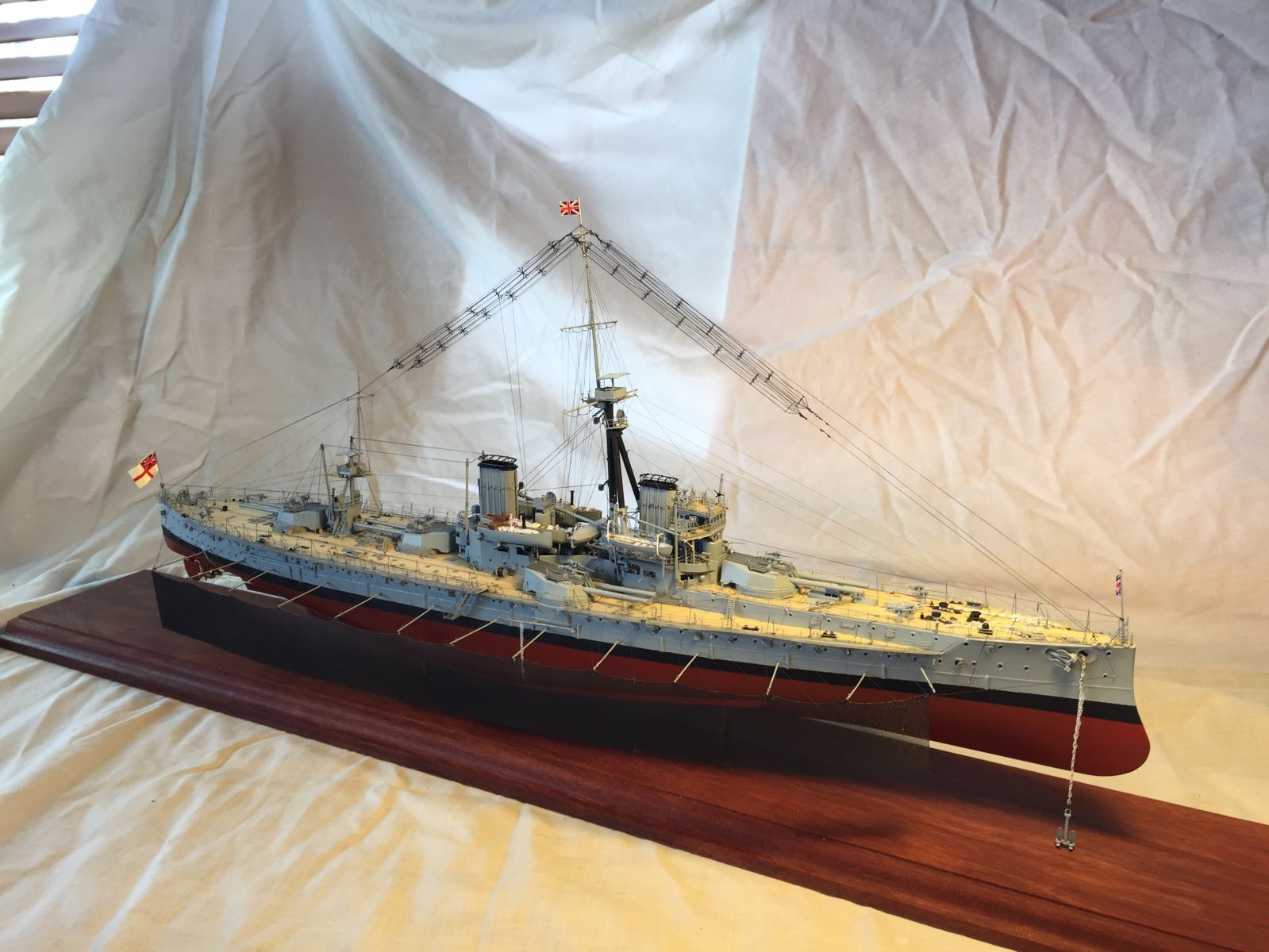
The HMS Dreadnought, commissioned in 1906, had such an impact on the world of ship design that the battleships before it were labeled pre-dreadnoughts, and ships imitating her were also called dreadnoughts. A great explanation from u/thefourthmaninaboat is found here. The quick version is she was the first steam turbine powered ship, as opposed to traditional expansion steam engines. This gave her a few more knots or speed than her contemporaries. Instead of mounting assorted sizes of cannons, she had a concentrated armament of ten 12-inch guns. She sparked a battleship race, with size, speed, and armament spiraling higher and higher, until the Washington Naval Treaty imposed a 10-year moratorium on battleship construction, as well as limited sizes and amount of battleships each country could build.
RMS Titanic, commissioned in 1912, was at the time the largest ship afloat (883 feet and 52,000 tons displacement). She was most famous for sinking, and the resulting lessons learned. Her sinking resulted in the creation of the International Convention for the Safety of Life at Sea (SOLAS). Rules regarding watertight subdivision, communications, lifeboats, fire safety, and other design practices were adopted. It also resulted in the creation of the International Ice Patrol, tracking icebergs and warning ships transiting the area. Both SOLAS and the International Ice Patrol are still around today.
In 1862 the Battle of Hampton Roads saw the CSS Virginia (formerly USS Merrimack) facing off against the USS Monitor. This was the first battle between two ironclad warships, and in the days prior to their meeting Virginia had fought the five ship wooden-hulled Union fleet blockading Norfolk. Three ran aground at the start of the battle, and Virginia sunk one and forced another to run aground rather than sink. Virginia emerged only lightly damaged, proving the obsolescence of wooden-hulled warships. Monitor also pioneered the idea of a turret, allowing cannons a much larger arc of fire than previous emplacements.
The USS Albacore (AGSS 569) was a small research submarine built by the US Navy in 1953. She tested the body-of-revolution hull for submarines. Previous submarines, though streamlined, still had a wedge-shape to them because they had to run on the surface frequently. The Albacore hull, as it became known, is disadvantageous on the surface, but provides the least underwater hull resistance. Albacore set the underwater speed record, and then recaptured it later after more upgrades. The USS Nautilus and the Skate-class were built with traditional hulls, but after that every submarine build by the US had Albacore hullforms.
The USS Nautilus (SSN 571), the first nuclear powered submarine. Commissioned in 1954, she was the first submarine that didn't have to surface to recharge batteries. While the WWII era Balao-class could remain submerged for 48 hours, and snorkels were being adopted to allow underwater recharging of batteries, the Nautilus could stay submerged for weeks at a time, and unlike diesel-electric subs had plenty of power to spare while submerged, enabling long periods at flank speed as well as more powerful electronics (such as sonar). She proved herself when she became the first ship to reach the North Pole, sailing under the ice to do so.
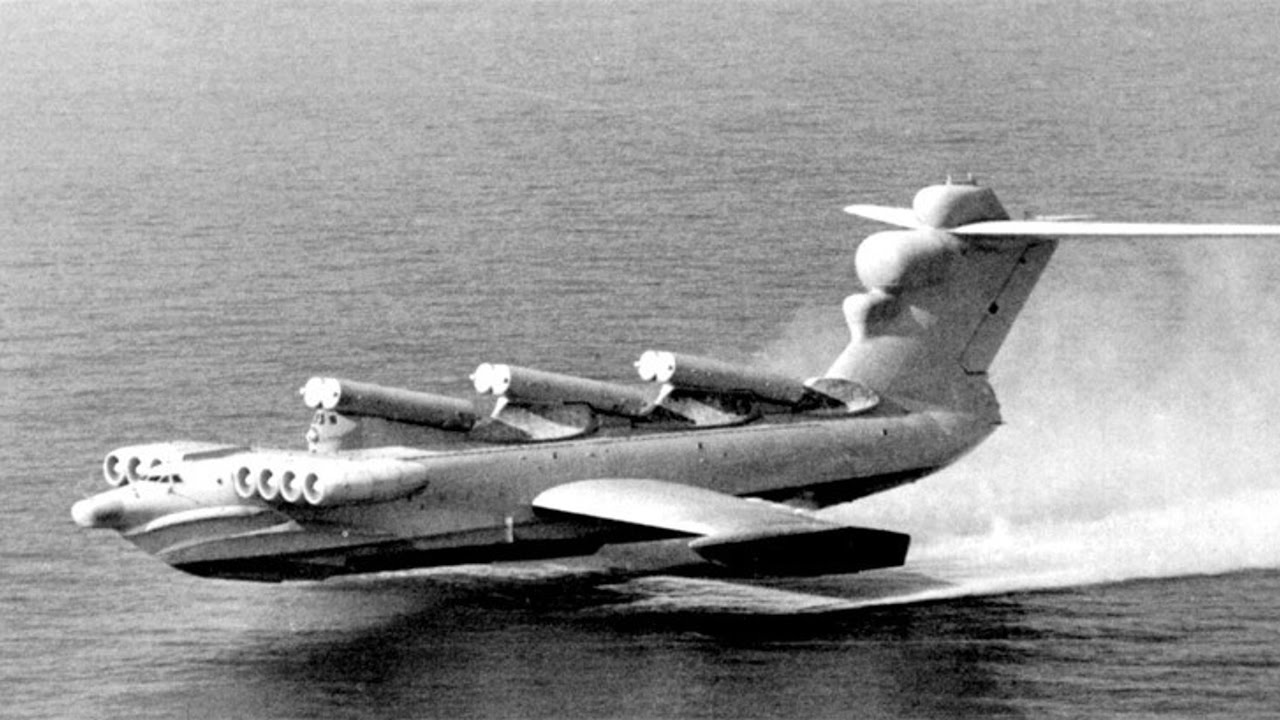
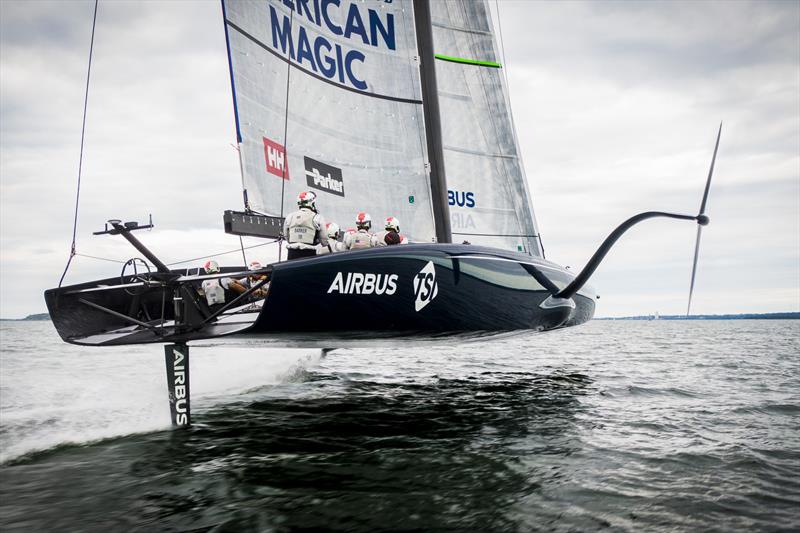
Of these, Great Britain, Turbinia, Albacore, and Nautilus are still around today as museum ships. There are plenty of other ships that are notable, and I could go on and on about ships such as USS Forrestal (CV 59, first supercarrier, commissioned in 1955), SS Marine Electric (sinking in 1983 prompted revamping of marine inspection standards and creation of Coast Guard Rescue Swimmer program), and Caspian Sea Monster (largest surface effect ship ever built, essentially an altitude limited seaplane). There are also a bunch in the sailing world, which I am not too familiar with. The Australia II pioneered the winged keel, ending the New York Yacht Club's 132-year undefeated run in the America's Cup. The AC72 class in the 2013 America's Cup sparked a revival in hydrofoils on both racing and recreational watercraft. The AC75 will be used for the 2021 America's Cup, and will feature a foiling monohull.
Week 103
We are running late here. Italy is pacing for the elections of November 1919 and D'Annunzio has been sitting comfortably in Fiume for a month, while we are still stuck on the reopening of the Italian Chamber in mid July 1919 – and we aren't leaving soon either. It's at least a safe place to observe the widening river of renovation, transformation and innovation that under the mounting tide of the past appears ready to sweep the banks and pour its waters into the future. It's also the opening of a brief interlude when – after the end of the conflict and the removal of formal and informal constraints on individual freedom – the Italian political and parliamentary system appeared to entertain at last genuine talks of “democratization” and “liberalization”.
War, like a deluge. As Giovanni Giolitti had confessed to his audience in the Summer of 1917, lifting the metaphor from Lloyd George, unless he came up with it himself, which wouldn't be too hard. War - “the greatest catastrophe since the Deluge” - was an event destined to produce substantial transformations of Italian society and – why not? - that “movement towards the left” of the constitutional forces that represented, according to Frassati's La Stampa, the true legacy of the “Piedmontese tradition”, quite generously credited of “wide democratic views”.
And despite those – like L. Einaudi (August 18^th 1917) – who felt compelled to observe that “these are the things one says to inspire those peoples of a more imaginative kind, but that everyone who lived and will live through the upheavals caused by great wars are likely to share the same sentiment”, and that “we've better hope that Italy's history will continue after the war”, the idea of an irreversible transformation resulting from forces too powerful to be contained had by the end of the Great War taken hold, if not of all political minds, of most political speeches.
An atmosphere of change, a wakeness to crisis, alert to the appearance of critical masses of social, political and economical phenomenons – an expectation as well, for resolution, for a final movement, one last leap forward, one decisive action; echoing somewhat unfortunately the refrain of the high commands. And yet, at the same time, a longing for peace and respite, for satisfaction and composition, a restlessness for sleep. Contradictions apparent in the Italian society, from the grand non-revolutionary “Bolshevik” festival of the much advertised scioperissimo of July 20^th and 21^st to the persistent lack of political composition of the many fractions of the narrowing liberal world, from the dramatic urgency of the many reforms and corrections to the need of enacting well thought out, effective measures to stabilize a violently rocking political vessel. The need to build for the future, perhaps not yet under a flood, but to keep an eye on the mounting tide, unsure whether you should attempt to hold it back or to plan for life in land of water.
It would be too much to ask for a Ministry to display full conscience of (its own) political instability and a precise understanding of its causes – an understanding that, aside from rhetorical arguments, is usually reserved for our interpretations of the past – let alone be able to remedy them, nor to account for it and lay the ground in preparation for a state of things which is necessarily more remote and difficult to conceive the more urgent and traumatic the transition to prepare appears.
At the same time, critical transitions or not, a Government – especially one which intends to pursue a “political” and not merely “technical” action – will have a hard time dissociating its own existence from some long term perspective contributing to the general meaning of its day to day action. So that it's unlikely to observe the action of a Government which has a precise conceit of its temporariness – outside, again, of rhetorical arguments. And, in these at least, a Ministry must still represent the Nation, the journey of which extends far ahead into uncharted seas, so that the captain, if he wants to serve honorably in his command, should extend his duty accordingly.
Why – new Prime Minister F.S. Nitti had asked in his final remarks on July 9^th – at the end of our past struggles, should we falter in the face of new adversities?
Nor could the new Head of Government learn much from the Socratic examination of the new Government made by Marco Ciriani – leader of the small Christian Democratic fraction – given how Nitti (especially after profusing, as his contemporaries were often fond of remarking, much effort into securing his new position of national leadership) was unlikely to recognize himself as the “President of a transition Government, of a Government whose only purpose is to open the way for the Country to obtain the one Government they deserve and demand”.
Ciriani had various grievances to share with the Parliament – first among them, but last in his exposition, the recent news of a massacre in his hometown of Spilimbergo (taking place on July 10^th in the early morning), a town not far from Udine, subject to enemy occupation and currently transitioning from military to civilian administration. The nature of the events (with the military opening fire on the crowd causing, according to Ciriani's information, five dead and fifteen wounded – other reports claim three dead and two seriously wounded) has remained somewhat controversial, due to the diverging reports on the first shooter's motivation (whether they opened fire to prevent the looting of their store or merely fired at a passing crowd). The incidents had nonetheless occurred in concurrence with the attempts to form the committee responsible for the execution of the new price regulations in town. In addition to the widespread character of price unrest, they also revealed the general state of tension of those regions which had been under foreign occupation and expected to be allowed to return to ordinary life – a point, this one, where Nitti didn't require much persuasion as his desire to limit the scope of military administration to the Italian occupation zone was well known
A resolute interventionist, Ciriani could not abstain from stigmatizing the attitude of those who had voted in favor of the intervention and were now applauding speeches such as those of Enrico Ferri, “mocking all and any fervent energies which supported the victorious war”.
It's not enough to blame on the war, like someone did before me, all the misfortunes we have now to suffer. […] One should prove that it was possible to remain neutral indefinitely, and more so that by staying neutral all the present damages, pains and dangers could have been avoided.
His defense of the intervention did not translate into approval of the new Ministry – rather, it appeared that the new Government was suffering from a fundamental ambiguity in its relations with the past Great War. A flaw apparent since its inception, when “Orlando had come to the Chamber to resign”, yet his fall had not resulted from a proper parliamentary debate, but rather from a “pseudo-parliamentary” crisis, where Nitti - “one should not be ashamed of holding certain aspirations” - had stepped in at the right moment to ensure his succession.
This was a not uncommon recrimination around the constitution of Nitti's Ministry at the time, with many of Nitti's more resolved political adversaries (see for instance S. Crespi's memoirs) arguing that Orlando should have moved with more energy to prevent Nitti from taking his place. Here Ciriani appears to share the view that Nitti would not have obtained the designation if a proper parliamentary crisis had taken place.
The King should have heard the voice of the Country, and therefore he could not entrust the composition of the Ministry to Hon. Nitti.
The Country – argued Ciriani – was “far from favorable to Hon. Nitti”. And yet he had been called to “cast his net” to draw in his ministerial catch.
Whatever political conceit may have driven you in the resolution of the crisis, Hon. Nitti, I can't see nor recognize one. I do understand nonetheless that a man such as you are, with all the qualities and the titles to be a Prime Minister, fifty years old and not eighty, would not risk to see the end of his political life with a failed ministerial composition […]
A little reference – with a bit of malice perhaps – to one, alleged (but likely to have occurred), of Nitti's infamous crude remarks, that it would have been laughable for him to “serve as the standard bearer for an eighty years old”. This one – which Giolitti appeared to believe and to take quite poorly (the words would apply to the other candidate to the Ministry, the old Luigi Luzzatti, a choice allegedly supported by the French Embassy in Rome) – had likely come as an answer to those who accused him of being a placeholder for the eighty (seventy-eight to be precise) years old statesman, who had managed to secure a place for more than a few of his men in the new Ministry.
But the presence of so many diverse political groups – liberals, radicals, democrats, clericals, fascists (as in the members of the national-nationalist Fascio Parlamentare) - did not appear to result from a genuine loyalty to a program of government.
At a certain point, you found yourself surrounded by so many who wanted to be with you, while, if one pays attentions to the rumors […] they should conclude that no one wished to go with you.
By special request:
I did an answer on Medieval ideology and faction that wasn't Medieval enough so now it's here. I changed the wording slightly to fit the context and added a little more to it.
Modern parties and political ideologies first started in the 17th and 18th century, but factional groups in European courts could have ideological leanings. I'll be using examples from late 16th/early 17th century England because that's main area of speciality for me.
The ideological difference on war policy that occurred in the factional divide of Robert Cecil and Robert Devereux, 2nd Earl of Essex in the 1590's is well known, for example described in John Guy's Elizabeth: The Forgotten Years (2008). As the 1590's went on, the most intense period of English military since the Hundred Years War with naval front in the Channel (there were two new armadas in the 1590's), France, the Netherlands and Ireland became increasingly important as they pulled out of France. The faction of Essex were largely supportive of further military activity and focused on France as a Protestant cause and for glory, which meant they were generally more representative of aristocratic mindsets, reinforced by Essex's status. The Cecils were social-climbing gentry, and while they had noble allies they were understood to represent more the gentry and bureaucrats. Their mentality was defensive rather than aggressive and they were more concerned with preventing rebellion in Ireland. So there were essentially peace and war factions, which were also somewhat class factions in a related way; as Pauline Croft put it, it was "the common Renaissance antithesis between the sword and the pen" (Reputation of Robert Cecil 1991). There were fundamental tensions in Europe in the Late Medieval and Early Modern period between the aristocracy with more military investment and the gentry who were associated with developing bureaucracy.
A major part of this was patronage. As Pauline Croft mentions the Cecils, rightly or wrongly, were suspected of using their influence to prevent most of the nobles, except for certain allies, getting any real power. Patronage is a huge part of relations at Late Medieval and Early Modern courts, particularly in the 15th and 16th centuries. In a similar way to how people network to get info on job openings, advice on applying, and recommendations from an insider to ease their entry, who you knew was the biz at courts, even more so. Social networks in general were an extremely important part of society and without telecommunications or particularly fast travel family and neighbours were crucial to everyday life. Villages shared an oven or two for communal bread making, neighbours would get involved in marriage arrangements, family would be your go-to intermediaries and parents exercised formal authority over their children. In the same way the court was it's own social network; a series of people with formal or informal co-work who move in a similar geographic circuit often visiting the same important locations and with a degree of shared background and interests. You can see where the class associations of the Cecil/Essex factions came from because subgroups within these are naturally going to form some degree of subnetwork, especially in a very formally stratified society. And if you favour some policy, you're going to get more luck pushing that policy to the Monarch if you can find someone who also supports it. Furthermore add the fact that some gentlemen were themselves attached to the land and households of nobles or more important gentleman, so some have pre-existing association as retainers. These ties of loyalty and mutual aid were taken very seriously, as were the family ties. See Linda Levy Peck "Court Patronage and Corruption in Early Stuart England" for more on patronage and “Family Networks: The Sidneys, Dudleys, and Herberts” by Michael. G. Brennan for an example of significant family ties and how they stretched well beyond one's own nuclear family unit.
Of course in the 16th and 17th centuries religion was also a factional factor, although it does not usually divide into polar religious factions because others ideologies and personal ties complicate it. There were usually conservative (Catholic leaning) and Evangelical(protestant leaning) factions at Henry VIII's court as the dimensions of the Reformation were most open to contention then. And there were Catholic parties later, such as the trinity of Henry Howard, the Earl of Arundel and the Earl of Oxford who were Catholic supporters of the Anjou marriage (as dealt with by Anna Christine Caney, Patronage, Public Spheres and the Problem of Female Rule: Henry Howard and the Politics of Writing In Sixteenth Century England 2013). The Cecils and Essex were both associated with aiding Puritan dissenter so that makes it less clear cut but Essex's faction was less religious given he attracted various Catholic nobles while the gentry were the core of Puritanism as they were often the most zealous Protestants.
Basically, there are definitely factions, and they clearly have ideological influences, but their organisation and goals are both loose. So it would be anachronistic to understand them by considering them "conservative" or "progress" except as a form of comparative understanding, but they do not work that way even if they can be pigeon-holed as such in hindsight.