I heard that the celts (around the time of the Romans) had "trias", 3 gods melted into 1. Why did they do this? And what are some things I need to know about this religion?
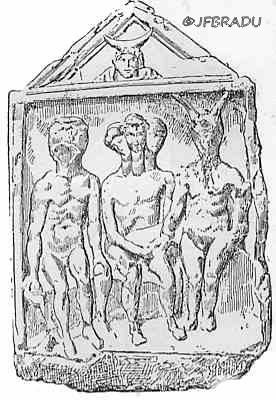
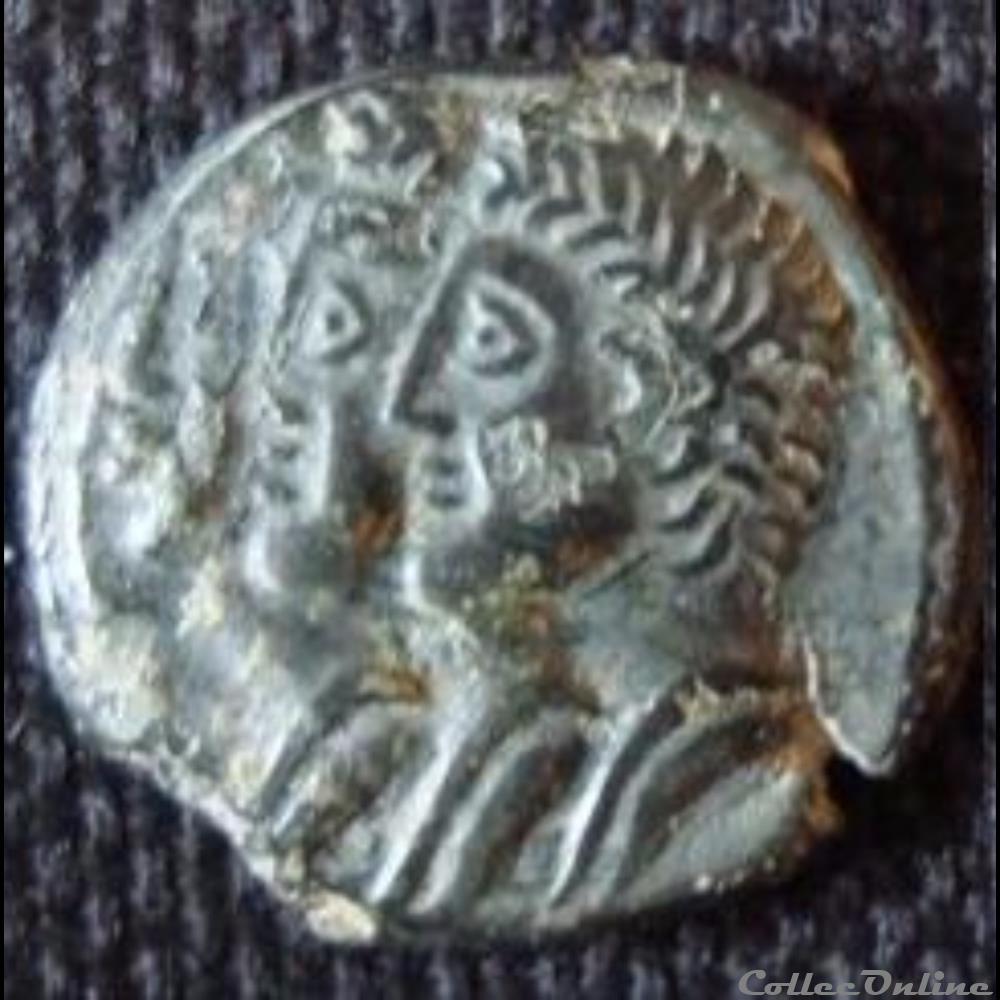
One of the most important type of three-headed gods are mostly found in Northern Gaul; particularly in the region of Reims (the civitas of Remi) and outside, found along the Via Aggripa : they represent three partly fused faces, bearded or mustached, almost exclusively with two eyes (although there's example of non-fused eyes) and almost exclusively in stone, with accompanying animal representation. These are considered being familial religious figures rather than public giving their small size.While rare, other representation can be found elsewhere in Gaul, for example the "God of Condat" or the "Godess of Cébazat", both from the Roman period.Although an identification with Cernunnos is probable (himself identified to Mercury, maybe Mars), due to the presence of animal attributes especially antlers, this remain more or less disputed by scholars arguing each face is a distinct god, or that the tricephalic god is altogether different deity.
What's generally agreed on, however, is that these representation should be understood trough the Romanisation in Gaul, a process of creolization of provincial society which began even before the conquest itself : rather than "Celtic", these would be in a first case, reinterpretation and re-creation of pre-Roman deities or motifs in the new provincial society (Epona or Sucellus, as heavily romanized gods), or even brand new divine figures such as Mars Mullo, Mars Camulus or Mercury Arvernus.
Cernunnos himself isn't systematically represented as a three-headed god, contemporary representation might even distinguish an horned God from the three-headed God, and tricephalic representation could be rather the demonstration of new local importance and balance of power between romanized peoples (Matrones, important deities of Northern Gaul and Roman Germania, being represented as surmounting the tricephalic God in some displays)
It doesn't mean that these elements borrowed by the new divine figures can't be traced back to Gaulish art and motifs before the conquest, while it tended to be strongly aniconic for most of the LaTenian period, elements of comparison can be found : the tree heads of the grave of Orval (a bearded figure with two young heads at his side), the tricephalic and phallic figure found in Bais (which could be compared with the tricephalic Head of Corleck Hill in Ireland),the three young "equites" of Remi coinage at the time of the conquest; Travor Triganarus, the divine bull mounted by three cranes, etc.Overall, tripartite and triple representations might have been a part of the Gaulish imaginary, comparable to what existed in Ireland; but didn't necessarily represented a same deity or even a deity at all : what was carried in Roman Gallic religious representation is not necessarily a direct continuation of Gaulish religion, and giving the lack of continuity overall is probably not the case.The tricephalic God present in Northern Gaul appears mostly in the IInd century, centuries after the conquest, and disappear in the IIIrd as many religious representation in the Empire, rather than being the sign of a "de-gallicisation" of religious life.
- L'antique statuette tricéphale et ithyphallique de Bais (Ille-et-Vilaine); Jean-Claude Meuret; 1990
- Cernunnos le tricéphale Gaulois et Géryon et les triades celtiques; Gérard Poitrenaud; 2014
- Nouvelles combinaisons, nouveaux statuts. Les dieux indigènes dans les panthéons des cités de Gaule romaine; William Van Andringa; 2005
- La Religion en Gaule Romaine. Piété et politique, Iè-IIIè siècles; William Van Andringa; 2002