I had the impression that (and correct me if I’m wrong) for those 300,000 years we were essentially stagnant and while there were obviously advancements in technology, those advancements came at an absolutely glacial pace. What I mean is, a human from 250,000 years ago would not be out of place if they traveled forward in time to 225,000 years ago.
Then it seems like modern civilization got a foothold and, boom, everything starts to change at a rapid and accelerating pace.
If that is indeed the case, was there something that caused this to happen? Did, for example, the population reach some critical size necessary for civilization? Or perhaps did a weather/climate event force us to become better toolmakers?
You're generally correct, though I would push that inflection point back to around 11,000 years BP, give or take a couple thousand in different parts of the world. Prior to that we had seen various developments in material culture and social organization, many of them very significant, but the advent of agricultural and pastoral practices around that time facilitated urbanization, massive social stratification, and a host of other snowballing effects.
It's not a coincidence that agriculture cropped up (ha) at that time. A short glacial period called the Younger Dryas was abruptly ending right around 11,500 years BP, and with it came a host of ecological effects around the world. Because it's the area in which I am best versed, I will speak to the Middle East. Where during the Younger Dryas the climate was distinctly moderate, what came after was characterized by significant seasonal swings between hot, dry summers, and mild, wet winters, what is classically referred to as a Mediterranean climate. One of the effects of this change was that it disadvantaged perennial plant species, which mature over multiple years and now had a difficult time surviving through the brutal summers, and gave an advantage to annual species like grasses and grains. Forests diminished, grasslands expanded, and humans started more consistently relying on and interacting with the plant species that would eventually become domesticates.
Domestication itself was not likely deliberate, as it's an extended evolutionary process. Rather, as groups of humans consistently returned to certain areas, certain populations of plants, they began to have a selective effect. Those individual plants that could more readily attract and benefit from human cultivation (which is the more basic practice of caring for plants rather than governing their whole life cycle) could reproduce more successfully and spread relatively rapidly.
As cultivation grew more involved and morphed into full agriculture, people became increasingly rooted to where they were growing their food. They also, because of the extreme summers, had to build up stores of food, which would also keep them tied to one location. All in all that's a very nice recipe for the start of urbanization.
Stores of grain are also a fundamental form of wealth accumulation, and from this we start to see increasing stratification between the wealthier members of a community and the poorest because the upper limit of wealth is increasing. The wealthy then have the means to pay others to do specialized tasks leading to the rise of craftsmen and artisans. Wealth and larger populations also lead to changes in leadership structures, both civic and religious. Commerce and government start to demand greater records-keeping capabilities, and that likely contributed to the rise of writing. Writing amplifies the ability to transmit culture and knowledge between areas and between generations massively, and suddenly we're learning not just from those immediately around us but from anyone whose writings we have access to.
Put all of those together and you've got an engine for sustained cultural and technological advancement: the wealth to fund experimentation and achievement and the systems of knowledge exchange to disseminate the results. This explanation is definitely oversimplified, and the particulars of each region of the globe varied significantly, but you're right about there being a relatively recent acceleration in our rate of advancement, and the evidence seems to indicate that it was no coincidence that it happened when it did.
A major component in the matter was the advent of agriculture. See this recent response for a brief summary of why agriculture is believed to have been adopted so widely. Scholarship is currently uncertain as to why agriculture became so widespread, however from my understanding much of it is due to growing populations no longer being able to sustain the mobile lifestyle of the hunter-gatherers.
Agriculture provided a few advantages for the development of what we consider "modern civilization", which is essentially bureaucratic administration (or similar forms of). Being able to cultivate mass amounts of food without needing to physically move geographic locations meant that a surplus of food could be produced. This surplus had various roles, but two are most significant in this case: 1) Exchange and 2) Redistribution (Boyd et al. 2017 and Schloen, 2001).
But who would determine how the surplus would be traded? What would it be traded for? How would it be redistributed? Who would receive it? In Greece, this eventually led to the development of the "palatial economy", where the "palace" controlled most of these decisions (Dickinson 2012). In the Southern Levant, more patrilineal styles of political formation were constructed, who maintained similar roles at a lower degree of bureaucratisation (Master 2001). These forms of stratification assisted the growth of wealth as a result of agricultural surplus.
As many peoples were sedentary, specialised skills and roles were more necessary than ever previously. Craftsmen and builders, for example, were now sole professions as opposed to communal roles. Traders were vital as the acquisition of goods became somewhat more important.
We understand agriculture as being a driving force in contributing to "modern civilization" due to the Late Bronze Age Collapse in the Mediterranean, a period where agriculture was no longer sustainable and many of the established redistributive political structures reverted to more mobile settlements. This period, which many (but not all) scholars attribute to climate change, is considered to be a "halt" in political and industrial progress, with many political programs and construction ceasing to occur (Moody 2009).
Hopefully this helps. Essentially, agriculture allowed for humans to remain in one given location, which required new forms of political structures to be developed. These were early forms of what we would consider "modern civilization". Becoming sedentary then meant that specialised professions then arose. These professions are an early version of commercial work, with greater opportunities and trading networks to allow for the creation of new things.
I would just note that there are several other "phases" in between the physical modernity of homo sapiens (e.g., in which fossil humans appear essentially indistinguishable from modern humans) and the urbanization that starts ~10,000 years ago. It isn't just a "jump." There are a variety of schemes for partitioning this up. The one I teach when I do my overview courses on the history of science and technology is basically:
The Neolithic period marked a major shift in how human societies operated by itself (a shift from hunter/gatherer to pastoralism and horticulture, along with the first sedentary villages and domestication). Why did it happen? Because the environment was changing and humans were affecting it — by this period humans had spread themselves across the entire planet for the first time, and had over-hunted many major mammals, and were reducing the carrying capacity of the land. The end of the period Ice Age meant that some major change was going to be necessary to survive in any event. The result was an important shift from food-collecting to food-producing activity.
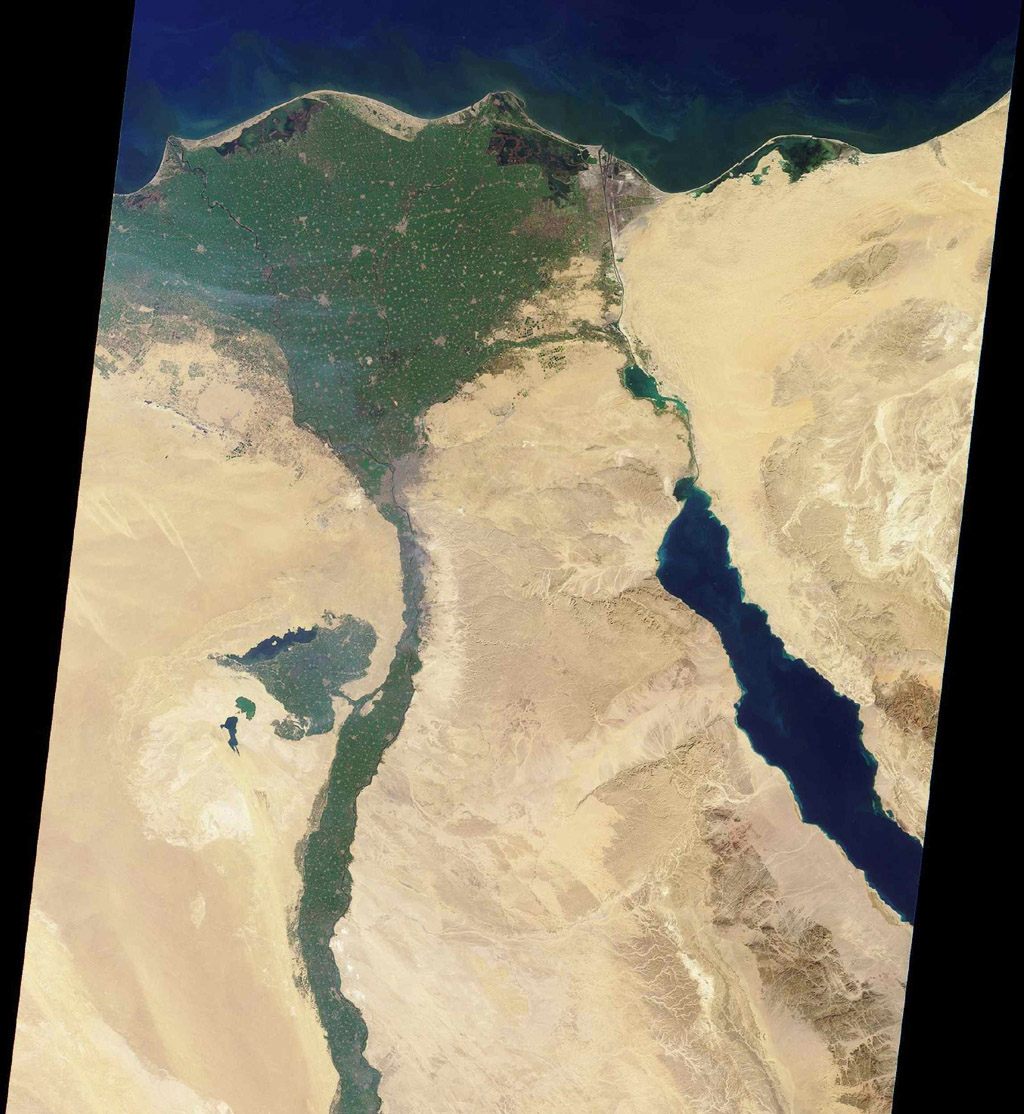
The Urban Revolution, which is what you are calling "modern civilization," was another big shift. This is when you start to have walled cities, intensive agriculture, bureaucracies, and the invention of writing (and thus the transition from pre-history to history). This shift did not occur universally at the same time; it first occurred in a few distinct places on the planet as a different orientation towards human activity, and proved very powerful. There are a variety of theories as to why it occurred where it did when it did, but there are commonalities between the various "primary" sites of urbanization (Fertile Crescent, Nile River Valley, Indus River Valley, Yellow River Valley, Andean Highlands, Mesoamerica): they all were geographically constrained areas (there were areas of intense fertility surrounded by very difficult terrain — the Nile is the most obvious example of this), and they both involved a lot of difficulties with water management (either too much or too little or too unpredictable water). There are various theories, argued over by scholars for decades, complicated by the fact that the dates here are kind of fuzzy. But basically what you see in these areas are the rise of relatively concentrated forms of state power created by resource surpluses, often supporting very complicated irrigation systems and monumental architecture (think: pyramids, ziggurats, etc.), capable of producing intensive resources and sustaining high (for the time) population densities.
This "mode" of human activity has several downsides to it compared to a neolithic lifestyle but it is very good at controlling territory, marshaling armies, exporting surpluses, sustaining trade empires, etc. So one sees this mode of life spreading from these "starting" points to many other "secondary" civilizations nearby, and from there the entire world.
So instead of seeing this as a magic "snap" where civilization comes out of nowhere, see it instead as a story about the human animal gradually growing in numbers and geographical spread, coping with changing environmental circumstances (some of which it caused, like over-hunting), and adapting towards different modes of food production. It's not magical; it's part of seeing the human-environmental relationship as something that is essentially not static. The only reason it looks "static" for a long time is because there were not that many people and humans were, for most of that history, still in sub-Saharan Africa, which was (and still is) a daunting environment for any kind of agricultural change.
Super caveats: the dates above get moved around a lot by archaeologists. There is huge uncertainty involved in asserting something like "behavioral modernity." There are deep disagreements on all of the above, and there is a lot of variance between different peoples and regions that tends to get smoothed over in such descriptions. Don't take what I've written as gospel, but as a rough way to think about the periodization of the prehistoric past beyond "primitive" and "civilized." Our knowledge of this stuff is growing all the time.