In the the TV-show Mad Men, the 35-year old (roughly) Don Draper is shown to be able to afford a lavish life style, with a very large home, a good car, constant drinking and eating out as well being able to pay a rather handsome amount of cash to his estranged brother as well as supporting a family of four.
Given the fact that Don is fairly young, not a partner in the firm, having inherited no money and that taxes on income in 1960 could be very punishing... is it reasonable?
This could be argued in various ways because it's fiction and we don't have a lot of details. But I don't think the depiction of Don Draper's lifestyle-to-income situation is unrealistic. Here's one take:
Don Draper is a creative director at a top-five advertising agency in New York City. (And he does eventually become a partner. But we'll put that aside.) The salary information we're given is that Don earns $45,000 a year plus a $2,500 bonus.
Inflation adjusted from 1961, that's about $350,000 in today's dollars. It's a lot for the time (1960 median annual family income was $5,620) and also a lot by contemporary New York ad executive standards: According to Ad Age, a creative director in a New York advertising firm today (2016 data) with 10 years of experience would likely earn a median annual salary of $220,000. I can not immediately find any reliable data about 1960s compensation in the field, but Don is well-paid relative to contemporary standards.
For expenses, let's focus on housing first: The upper east side home he lives in would cost a median $75,000 in 1960 -- but Don's home seems nice, let's call it $95,000, or 200% of his annual income. A typical mortgage interest rate at the time was about 5% (low by historic standards). So Don and his family's housing expenses are quite comfortable relative to his income. (And, given the spike in housing prices since then, much more comfortable than it would be for a current executive in his position. A comparable 2019 NYC ad executive with $350,000 annual income would struggle to afford the same upper east side home with its current price tag of $3 million and up, or 850% of his annual income.)
Another major expense for the couple would be saving for their childrens' college -- which was much more affordable in 1960 than today. On average, accounting for inflation, public college costs have risen about 213% just since 1987 (most recent data I could easily find). So Don has much less trouble saving for college than his contemporary counterparts.
Healthcare was likely not a major expense for Don's family in 1960, even including Betty's therapy. In 1958, per capita annual health expenditures were $134 ($1,162 in today's dollars).
And general cost-of-living items vary depending on their nature and category. (TVs are substantially cheaper compared to what they cost in 1960. Average automobiles are about the same. Baseball games and movies are substantially more.) I'm going to ignore this and call it a wash unless anyone has an argument that it needs to be dug into in more detail.
A reminder that much of the "constant drinking and eating out" you mention was likely on his agency's expense account and not paid for from his personal funds. But lunch at Le Pavillon in 1962, then considered the best restaurant in America, was $7.50 (about $65 in today's dollars and what a comparable place would cost now). I'm going to ignore it for our purposes.
In conclusion: Relative to inflation, the major expenses that have shifted over the decades are housing, education, and healthcare. Don and his family are on the beneficial side of the equation in all three cases.
I don't see a problem with the way Don's lifestyle is depicted in the era given his high income and likely expenses. We could argue about some details, but it doesn't seem unrealistic or problematic for a work of fiction.
Data from the Pew Research Center, the U.S. Census Bureau, American Institute of Economic Research (AIER), Zillow, and the College Board.
"taxes on income in 1960 could be very punishing"
I'm going to specifically push back on this part, because it's something of a myth, and I suspect it has to do with some misconceptions about how the US tax system works. Especially regarding marginal and effective tax rates.
The top federal income tax bracket in the United States in 1960 was 91% on anyone earning $200,000 a year or more ($400,000 for married couples filing jointly: marrying your secretary had tax benefits). What? Who's running this country, Stalin? You're telling me if I earn $200,000 then I pay the Feds $184,000? Clearly anyone earning any sort of money should be telling Grace to get on the phone with the travel agent and get a PanAm Flight out of the country!
But not so fast there, partner. Pour yourself a Canadian Rye and have a smoke, you need to understand what's happening here before you pack your Samsonite.
US federal income tax works according to tax brackets, meaning that different amounts of your income are taxed at different rates. In 2019, for example, your first $19,000 of income is taxed at 10%, and your next $58,000 or so of income is taxed at 12%, and so on. In 1960, the United States had quite a lot more tax brackets than today, and yes, once you hit higher income that income in the bracket gets taxed at the higher rate. In 1960, anything over $32,000 in a year got taxed at 50%, and the rates went up from there, which admittedly is much higher than the marginal rates today and no small change.
But, and this is a very important but: tax brackets do not account for inflation. Someone earning $200,000 a year in 1960 is a very different person socially and economically from someone earning that money in 2019. According to the US Bureau of Labor Statistics, $200,000 a year in 1960 is equivalent to over $1.7 million in income in today's dollars. Off the top of my head, I don't recall what Don is supposed to be earning at the start of Mad Men, but I do recall Peggy being offered a princely sum of $19,000 a year when she leaves Don's firm and starts making it big in the advertising world, which would be something like $160,000 in today's dollars. $19,000 instead of $20,000 might have been intentional, by the way, since $20,000 would put her in a higher tax bracket of 38%, instead of 34% for income from $16,000 a year to $19,999 a year.
I think even that might not convey just how much $200,000 a year in income was in 1960. According to the US Census Bureau, the average family in the United States earned $5,600, and only the top 4% earned more than $15,000 a year. Heck, less than 1% earned more than $25,000 a year, so we are talking about high marginal tax rates kicking in on a very, very few people - I've seen estimates of 10,000 households, but don't hold me to that. It's admittedly from years earlier, but as a point of comparison, Charlie Wilson of General Motors was the highest paid CEO in the United States in 1950, and earned some $620,000 in salary, cash bonuses, and stock options. I wish I could find figures for what David Ogilvy earned in 1960, because that's a more relatable standard for a Madison Avenue executive in the 1960s, but it would be less than what the CEO of the most powerful company in America would be earning (and I get the impression from Mad Men that the various outfits that Don Draper is a partner in are smaller tier than Ogilvy).
OK, last point is back to effective tax rates versus marginal tax rates. Part of this is that when looking at tax burden, you don't look at just federal income tax, but state and local taxes as well, and you include payroll tax (this is what funds Social Security and Medicare, the latter of which was only created in 1965...it's a regressive tax by the way, meaning that once you hit a set level of income you stop paying it), corporate tax, capital gains tax, property tax, inheritance tax, sales tax, etc. Taxes, taxes taxes! But effective tax also takes into account that not everyone is paying the sticker price: if you earn more money, you will look for more means to exploit loopholes. Thomas Piketty, Emmanuel Saez and Gabriel Zucman in fact looked at the effective tax rate paid by the top 1% of earners in the US by year, and found that while it is higher than the current effective rate, it's still around 45% of pre-tax income (you can see in Figure IX here).
So, in short: the tax rates on an earner like Don would be higher in the 1960s than today, as the federal income tax rates were much more progressive. But the effective tax rate, while still higher than today, was not necessarily "punishing".
With that said, I think that Don's income gets a bit detached from reality the further into the show we go: he starts out as accomplished talent living an upper-middle class lifestyle at a medium-sized Madison Avenue firm, but his lifestyle and implied wealth further on in the series seems to be much beyond even what a partner in such a size firm would be putting down. It's more Elvis than Ogilvy.
Sources
Piketty, Thomas, Emmanuel Saez and Gabriel Zucman. "Distributional National Accounts: Methods and Estimates for the United States". September 25, 2017, available here.
Piketty, Thomas and Emmanuel Saez. "How Progressive is the US Federal Tax System? A Historical and International Perspective." National Bureau of Economic Research. July 2006. available here.
Edit: I didn't specifically use it for this answer, but if you want to see how executive compensation in the United States has changed over time, Carola Frydman and Raven Saks' ”Executive Compensation: A New View from a Long-Term Perspective 1936-2005”, published by the Federal Reserve Board, is probably a good item to check out. The data appendix for the paper (a PDF) is here
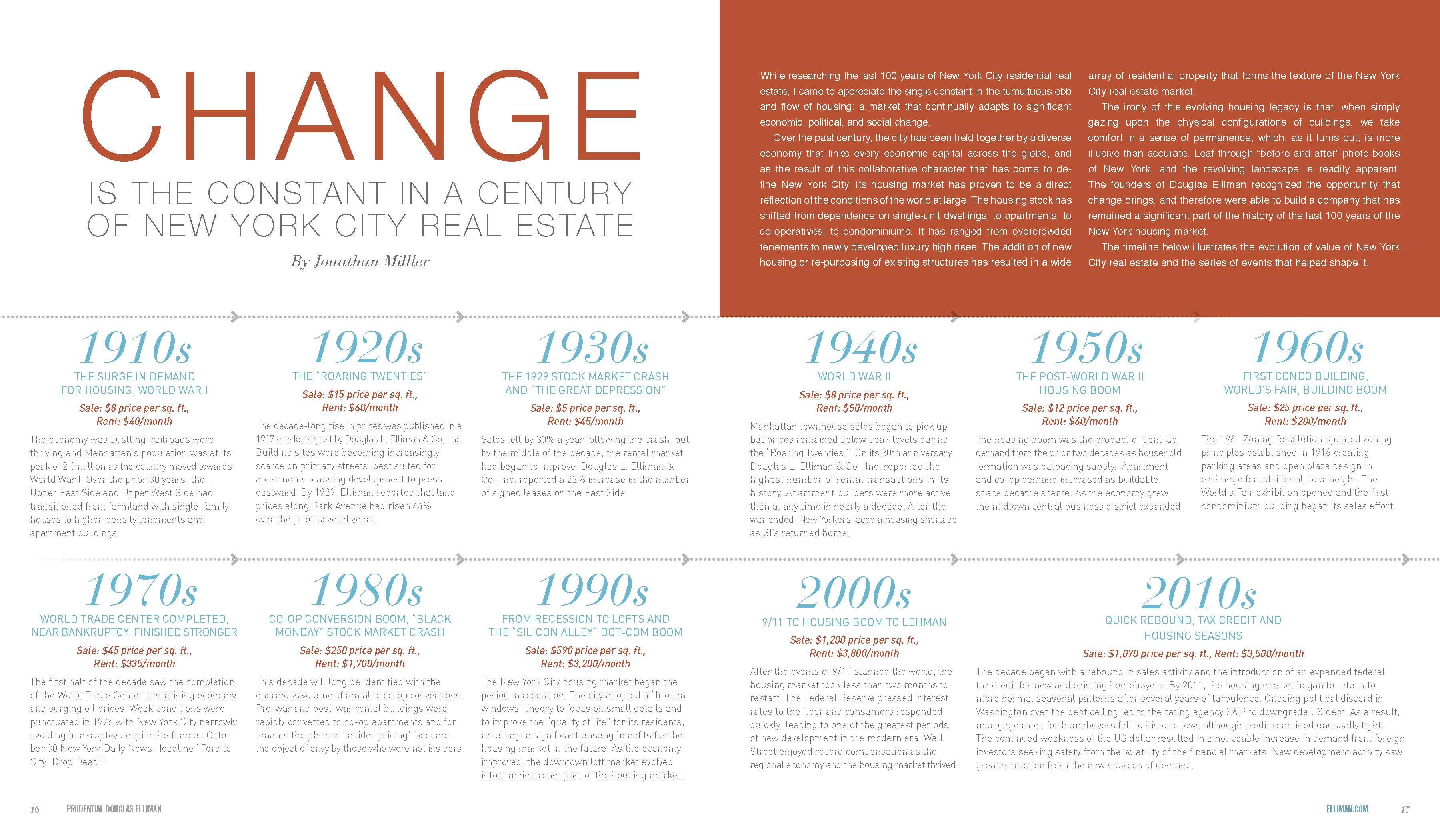
In season 1, episode 9, which takes place in 1962, Don Draper (1) negotiates a salary increase from $30,000 to $45,000 to stay with his current firm. He does in fact become partner later in the show during season three when they reorganize the firm. However, back to your question... Adjusting for inflation into today's dollars that $45,000 would be approximately $385,138.50 according to the BLS calculator for inflation (2). Unfortunately, the house where they filmed the Drapers living at is in Pasadena and not Westchester County NY (3) but looking at the average price per square ft in NYC area of the time (4) it is around $25/Square foot. The house they used in Pasadena is 2,654 sqft. 2,654 x $25/sqft yields us a price of $66,350 in 1962. This is less than twice his annual salary. The total value of that house in today's dollars would only be $567,865.32 according to the BLS calculator.
Now, lets assume they saved approximately 20% of the house value for a down payment which is $13,270.00. Taking the numbers of $66,350, our down payment of $13,720, the prime rate of 1962 at 4.5% (12) and plugging that into a 30 year mortgage calculator gives us a monthly bill of $421.00/month. I would say the Drapers are doing pretty good at this point but one caveat is I did not factor in marginal tax rates on Don's income.
According to this (5) Don's tax rate would have been 59%. So Don's real income would have been closer to $18,450 which gives us in today's dollars a salary of $157,906.79.
Correction: With Don married and filing jointly, he would only pay that 59% tax on his last $1000 of income. His first $4000 would be taxed at 20%. His next $4000 at 22%, etc., etc., all the way up to that last $1000. Throwing this into Excel real quick gives Don a take-home income of $27,650 (equivalent of about $235K today), and making his actual effective tax rate about 39%, even though his top marginal tax rate is 59%. - /u/JesseKeller
So onto the rest of your question. First the cars. (6)
Even if the drapers bought all cars new without negotiating, there most likely would not have been a problem affording them on a loan. Which is calculated out in the bottom.
Onto the drinking and eating! According to bankrate.com (8) Rogers 3 cocktails cost him $1.80. Since Don drank Old fashioned, which is generally a more expensive cocktail, lets assume his 3 drinks cost him $2.50 or $21.40 in today's dollars. Pretty reasonable for downtown Manhattan I would say. As with any problem the alcoholism is a major driver of plot points throughout the show but I do not doubt that they couldn't afford it. Looking at the price of drinks, its reasonable to assume that food would probably have not have been that expensive either. Adjusting for inflation for a restaurant that would have been open in Manhattan when Don's life took place (The Grand Central Oyster Bar-Opened 1913) for a standard meal (Crab cake sandwich (9)) at $14.95 in today's dollars nets us a meal of $1.75. Adding that with his drinks at $2.50 gives us a decent working lunch or dinner at $4.25. Lets say he did this 8 times a week, this gives us a total spend of $1,768 per year or $15,131.66 in today's dollars. Lets not forget that many of these lunches/dinners were most likely included in his client allotment or slush fund to attract new business and retain old business.
Finally, the kids. Looking at the USDA data for the Northeast, the current cost of raising a child from birth to 18 is $264,090 (11) or $30,856.56 in 1961. Multiply that times two and you get $61,713.12 over 18 years or $3,428.51/year. This does not factor in the fact that Betty was a stay at home mom for many of those years. Which some sources say is actually closer to $25,299 in 1960 because of this fact. (12)
So before Don becomes a partner we have the following stats:
Which honestly would allow our protagonist to have an incredibly lavish lifestyle. Cheers and thanks for reading! Also thank you u/JesseKeller for the correction.
Sources:
(1) https://www.slantmagazine.com/tv/mad-men-fridays-season-one-episode-nine-shoot/
(2) https://data.bls.gov/cgi-bin/cpicalc.pl?cost1=45000&year1=196101&year2=201909
(3) http://www.iamnotastalker.com/2009/06/22/don-drapers-house-from-mad-men/
(4) https://www.millersamuel.com/files/2012/02/DE100yearsNYC.jpg
(6) https://web.stanford.edu/class/polisci120a/immigration/Federal%20Tax%20Brackets.pdf
(11) https://www.usda.gov/media/blog/2017/01/13/cost-raising-child
(12)https://247wallst.com/investing/2011/06/24/the-fifty-year-soaring-cost-to-raise-a-child/
(13) https://www.forecast-chart.com/interest-prime-interest.html
Edit Using u/JesseKeller 's added corrections for marginal tax rate. Thanks for the correction. Also thank you for the gold strangers. Please donate your funds to a local charity instead.
Spoiler: >!If I remember correctly Don was also supporting Draper's actual wife as well or helping!< Would Draper have received any sort of pension from the Army or once he was out would that have stopped?