I was listening to a recent episode of In Our Time about Napoleon's retreat in Russia and one of the historians being interviewed mentioned essentially the exact phrase in the title--that, in the late 18th and early 19th centuries, the Cossacks made this transformation. She didn't elaborate as it was kind of a tangential point, but it got me thinking. What caused this change? I've always kind of wondered what the Cossacks are all about.
In a word? Yekaterina. In three? Yekaterina the Great.
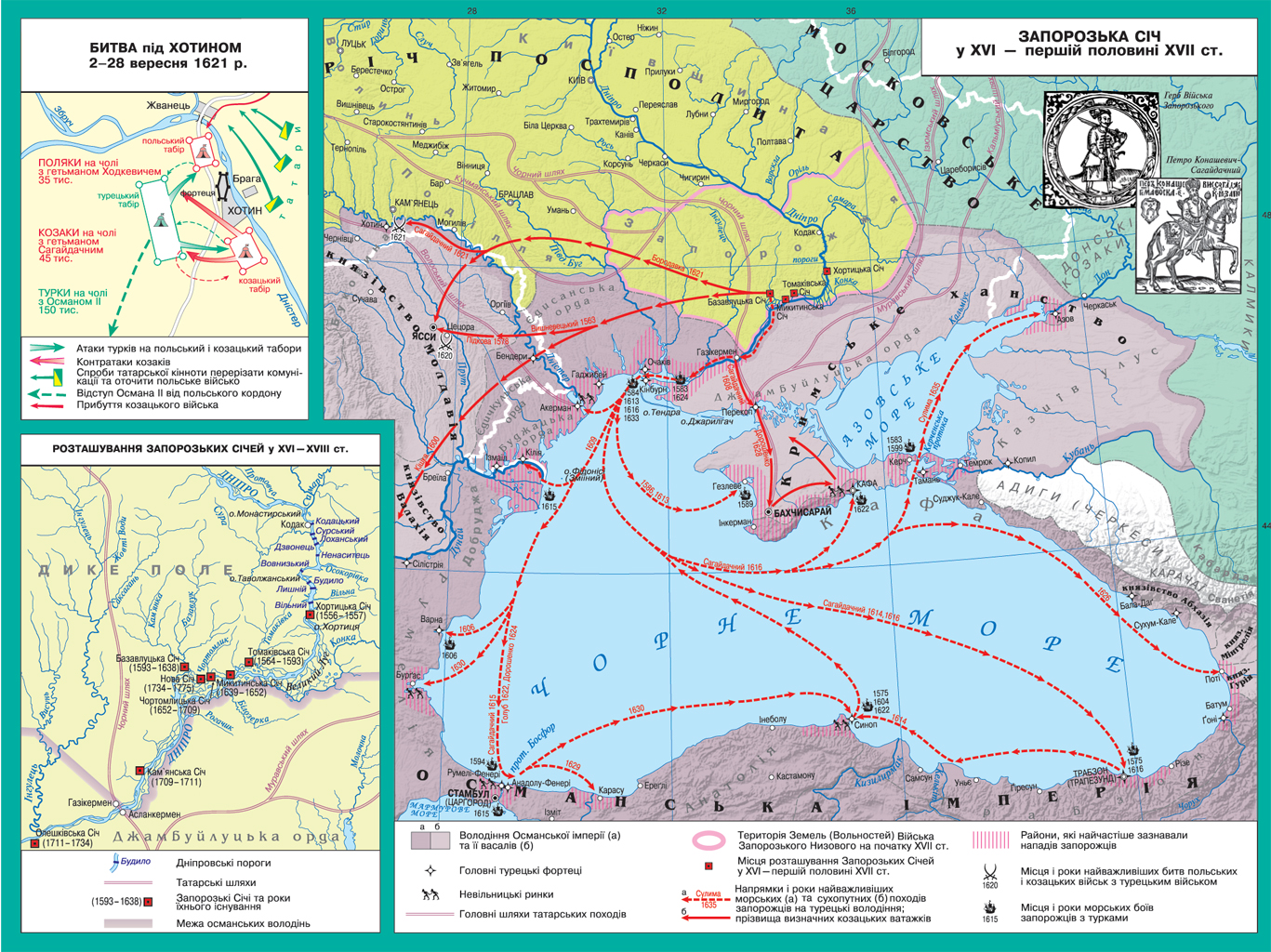
From the beginning of their relations with ethnic Russians, the Cossacks were always far more independent than other vassals (such as the Vepsians/Veps or Muromians who were largely integrated into the ethnic identity 'Russian') due to their military prowess and general disdain for centralized authority which resulted in a penchant for semi-successful armed insurrection. Their affiliation with the imperial throne goes back to the Pereyaslav Rada (1654) during the reign of the second Romanov Tsar Alexei I (born Alexei Mikhailovich Romanov) whereby the former promised their allegiance to the latter in exchange for material Russian protection from the Turkic Crimean Khanate encroaching into their ancestral homeland. You can see a snapshot of that phenomena on this map which shows the sort of aubergine-shaded Crimean Khanate pushing into the yellow-shaded Cossack territory. The Moscovy Tsardom-- progenitor to the Russian Empire-- is shown in green.
A subgroup of the ethnically diverse people generally referred to as Cossacks had been living in the region for centuries fighting off various other Turkic, Mongolian, and Turkic-Mongolian conquerers (such as the Golden Horde of Batu Khan-- grandson of Chinggis Khan-- and the Timurid Empire under Tamerlane) from the south and east as well as Slavic and Greek conquerers from the north, south, and west in the form of the by then-defunct Byzantine Empire and Kievan-Rus' federation. The ethnic make-up of the Cossacks themselves is thus a combination of all of these groups, but distinct from each.
Being surrounded by such powerful nations, as the Cossacks were, required that they ultimately pick a side-- they chose the Russians. According to Ukrainian historian Volodymyr Panchenko, this was not done out of any kind of loyalty or preference for the Russians, but rather as a necessary evil. That's really the story to ultimate Cossack capitulation (if you could call it that) to the Russians:
The myth that [the Cossacks] were doing nothing but striving to [...] 'reunify' with Muscovy have long been exploded [sic]. It was once a revelation for me that Bohdan Khmelnytsky, who still managed to see in horror that the 'reunification' was quickly leading to the annexation of the Cossack state, was trying to break free in some way out of the brotherly embraces. ^([)^(1)^(])
Panchenko is a part of the common school of thought in Ukraine which traces the ethnicity of Ukrainians (as distinct from Russians) from the Cossack peoples so his perspective here is a bit biased given the nature of Russo-Ukrainian relations today and in general, but it is nonetheless an accurate assessment of the rock and hard place between which the Cossacks found themselves.
Regardless of that though, this decision obviously did little to change the fiercely independence-minded Cossacks, and within 20 years (16 to be exact) in 1670, the Don Cossack Stepan Razin had assembled an army of personal loyalists and began sailing up the Volga River conquering each settlement along the way in the hope of reestablishing an independent Cossack homeland. The revolt was crushed, Razin was executed, and the Russians founded a brewery in 1795^([)^(2)^(]) which produced a beer named after him that is still available today. Unfortunately, the overall taste and body of this rather cheap lager, much like the results of Razin's uprising, lack a certain something to be desired.
So we have established that the Cossacks were affiliated with the Russians and that they weren't particularly happy about it: between Raznin's uprising in 1670, which opens the chapter of Cossack rebellion against Russian rule, and Pugachev's uprising in 1774, which closes it, the Cossacks launched no fewer than five other similar insurrections against their Russian overlords with varying degrees of success.
None were even close to as successful as the one led by Yemelyan Pugachev in 1774 though. When Princess Sophie of Anhalt-Zerbst succeeded the Romanov throne as Yekaterina II after her husband Pyotr III was deposed and executed, the aforementioned Pugachev launched a huge rebellion ostensibly in honor of Pyotr's divine right to rule. Fully analyzing Pugachev's rebellion is outside the scope of your question and that synopsis I provided above is a big oversimplification of the entire ordeal but I've done so because the revolt itself isn't as important to the answer to your question as the result of the revolt.
Essentially, Pugachev was able to consolidate widespread dissatisfaction with imperial rule: Orthodox Christian heresies, discontent non-Russian subjects, opportunists and rakes, homesteaders, as well as genuine freedom fighters flocked to his banner only to be crushed by the massive Imperial Russian Army within two years. Like Razin before him, Pugachev was executed before a Moscow crowd-- but instead of tightening restrictions upon and increasing repressions of the Cossacks as Alexei I had done a hundred years earlier Yekaterina II conceded a few of the points which instigated the revolt (such as restrictions on religious freedoms) accompanied by a few token overtures to the Cossack people. The one that mattered though was the establishment of the military outpost and territory Yekaterindar (translated roughly as The Gift of Yekaterina) in 1794.
By establishing and officially incorporating the erstwhile homeland of the Kuban Cossacks under Russian rule and then granting the territory some nominal operating autonomy in exchange for the same imperial protection afforded the Pereyaslav Rada-era Cossacks, Yekaterina was able to ally with her former adversaries against the advancing Ottoman Empire. See this map, which shows the Ottomans (labeled Persia) pressing all the way up to the border of the Russian Empire in the early nineteenth century. Yekaterindar went on to become one of the most important frontier cities in the Russian Empire and its current incarnation Krasnodar (translated roughly as The Gift of the Reds-- renamed by, you guessed it, the Communists in 1920) is still home to a large amount of ethnic Cossacks.
So you basically have the same conditions as established by Alexei I, established a century and a half later by Yekaterina II but in the case of the latter, they stuck. That begs the question: what was the difference? Well again, I'd point you to the establishment and recognition of at least a portion of the Cossack homeland as just that. The Cossacks were brought into the fold, given some nominal autonomy, and expected to contribute to the greater Russian Empire as subjects-- powerful subjects sure, but subjects nonetheless. Joint Russian-Cossack military defense of the Cossack homeland under the aegis of Russian rule was responsible for repulsing Ottoman Turkish advances several times during the 19th and 20th centuries until the coming to power of Bolshevism saw the Cossacks once again violently and ruthlessly suppressed as a dangerous band of nationalists.