We know that from the 30s, soviet film started taking a more active role in soviet culture. Circus is cited as being massively popular, especially with regards to how well known Wide is my Motherland became as a song. Solzhenitsyn's One Day makes a reference to an Eisenstein film.
After the war, more blatant propaganda films like the Fall of Berlin were produced. All in all, soviet film was rather well funded from the 30s onwards, despite the country only being widely electrified in the very late 20s.
So how available was film and cinema to the soviet population? Was there a notable division between the presence of film in rural and urban popular culture (I assume yes)? Did any cinemagoer culture develop?
In Stalin's time, significant care has been given to giving acces to cinema for the people. Especially in the world before TV, the cinema represented the single most powerful persuasive and accessible medium for disseminating ideas and feelings. And while Hitler put special significance on radio, Stalin put more of the emphasis on film. There's a very popular quote by Lenin: "Out of all the arts, the most important for us is the cinema" ("...and circus", as attentive historians add; but the popular version of the quote was precisely about how cinema is super important to the USSR, and it was used as such, regardless of the clipping). It meant that this was a priority. It meant that each Soviet Republic immediately went on to establish its own film studio and national cinematography, seeking out talents and putting them to work. It also meant that even without cinema theatres, USSR pushed for more and more cinemagoers.
Of course, older Pre-Revolution theaters, like House of Hanzhonkov / Mezhrabpom and Khudozhestvenny, continued working under new regime. But it wasn't nearly enough.
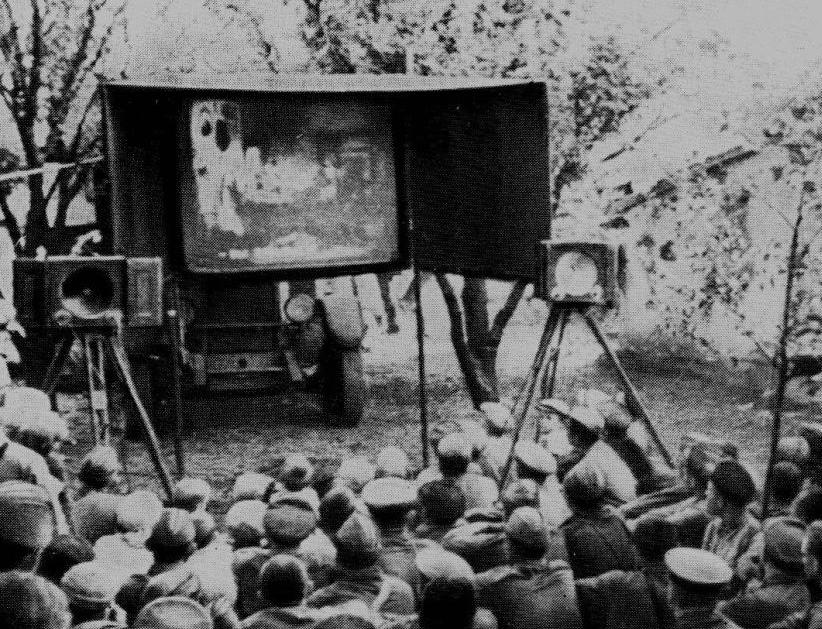
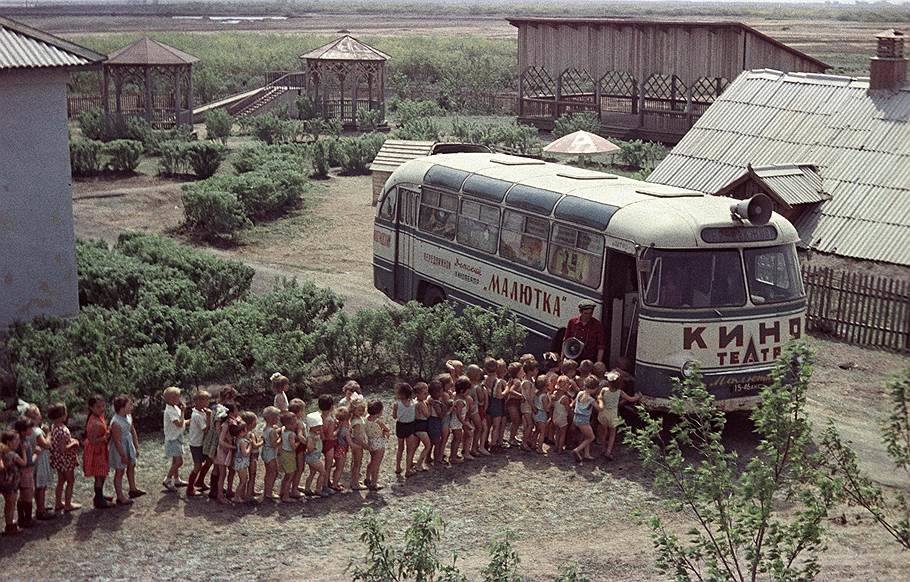
So there are some numbers from the cited article, a preface to the Soviet 1948 overview book on architectural solutions for building cinemas (with floor plans and all). At some point between 1917 and WWII (there's a typo in the text), there were 28 200 "cinema projection sites" in USSR, compared to the 1913 figure of just 1400 "city-based projection installations". You can guess that the terms are different for a reason: that's because they are. With not enough theatres, every suitable place became one. Movies were projected in village clubs and halls by mobile projection teams. Kino trucks and kino railcars criss-crossed the country, giving matinees outdoors or inside the cabin. In fact, these ways of showing films to village and very small town audiences continued way past the War into the 60s. Here's a 50s one.
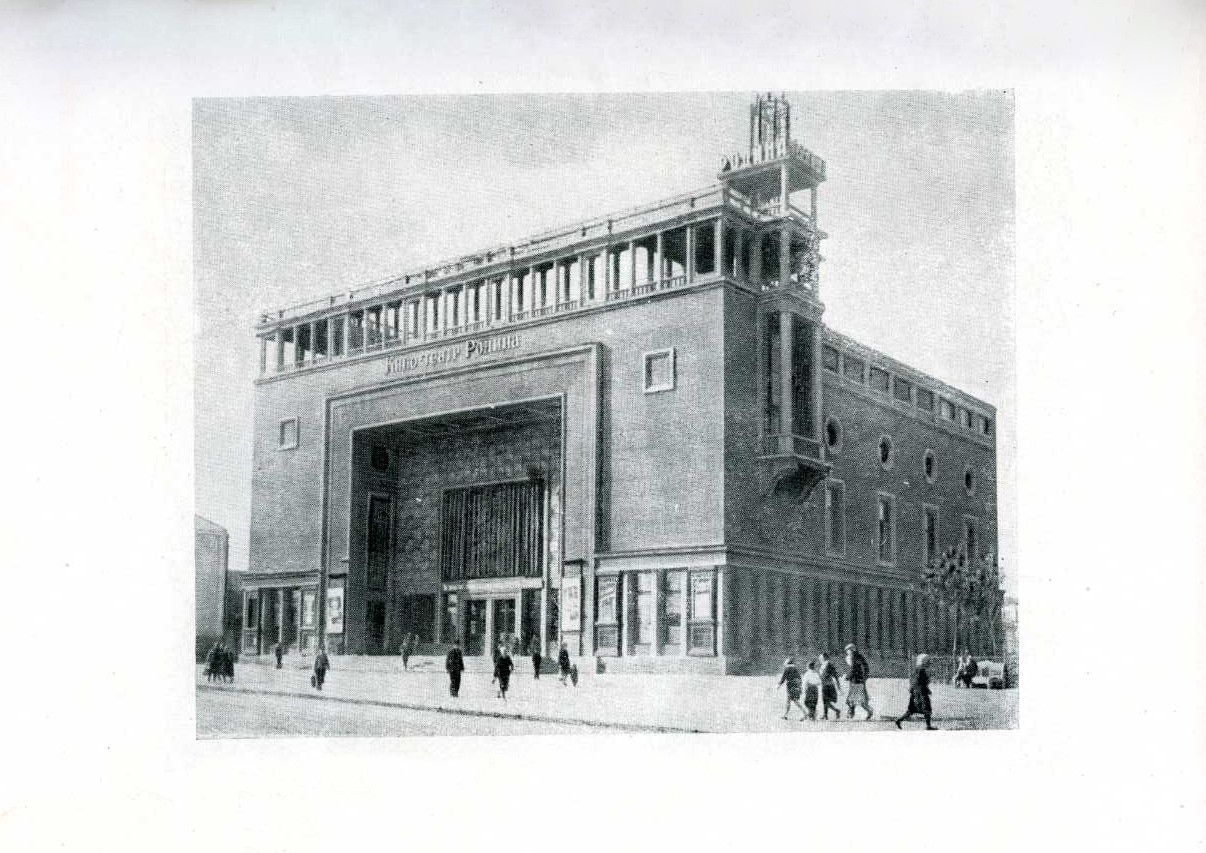
Meanwhile, as the book about building cinema theatres says, USSR began building cinema theatres. And a lot of them. And they were big. Like DKs — Houses of Culture and Palaces of Culture, multi-function halls that housed hobby, education, arts, crafts and concerts, Soviet theatres were palatial and grand, giving the people a glimpse of the future lofty way of life, where palaces are for everyone (you can see some photos from the book at the article link). Of course all DK halls were cinema theatres as well. As the book boasts, up until 1948, USSR built at least five "central" theatres with 1200-1500 seats each. At the end of the war, with a large portion of cinemas destroyed, USSR still had 375 cinemas and 15200 projection sites. The total attendance in 1945 is cited as 573 million people, compared to 130 million for all other public entertainment like concerts and circuses. The book then gives a projection for increasing the number of cinemas to 10000 dedicated and 30000 projection sites by 1950. So from this, you can definitely see that Stalin's USSR took cinema and its availability VERY seriously.
==
As an aside, I'd add that this posed a weird problem: due to unpredictable purges and the devastating war, along with unrealistic demands for the films (to be absolutely perfect ideologically, but still very entertaining - on the level of brilliant pre-war and wartime masterpieces) and severe economic hardships, the film industry was almost deserted of talent, resources, and ideas after the war. This led to "malokartinye" (pictures-dearth) — despite free studio time and government-paid budgets, meager couple of dozens of movies came out every year, with a low point of 17 (compared to nearly 50 a year even pre-war). This caused a large amount of ire from up top, but nothing could be done, and it lasted until Stalin's death. The help came, in part, from an unexpected direction — Soviets after the war got used to watching "reparation films": German movies and even American cartoons that passed muster and were cleared for showing.
Finally, in your overview of must-mentions for the 30s cinema, I think I'd be remiss not to add Chapaev. It was THE most popular Soviet film hands down until the blooming of Soviet cinema post-war; it served as a yardstick for comedy, drama, and action at the same time for an entire generation; and it left an impression mile deep in Russian culture that lives even now.
Architecture of the Land of Soviets Series: Cinema Theatres (Architectural Academy of the USSR Publishing, 1948) (link) (The brochure introduction is sourced from the website of an architectural publishing house; the brochure itself mostly exists online now, I've encountered it before when researching cinema architecture)