I ask because of two factors.
We have records of sexual activities between slaves and their same-sex owners from China, Greece, and Rome.
We have records of sexual activities between males slave-owners and female slaves in the United States.
This answer is going to discuss a lot of topics that some readers may wish to avoid. It will discuss sexual assault, psychological trauma, torture, racism, and contemporary homophobia and transphobia.
This is a complicated question, one that intersects with certain homophobic discourses in certain contemporary black nationalist circles, and one without a rich, well-trod base of sources, but the short answer is that for the United States we have little explicit documentation of male-male sex acts between slaveholders and men they enslaved, though we have plenty of very suggestive evidence. My answer is going to exclusively discuss men, because that is where I have the most substantive knowledge, though slaveholding women often sexually assaulted the people they owned.
First off, I need to do a little mythbusting. This tweet from popular twitter account Tariq Nasheed makes the following claim:
In slavery, there was a tactic called Buck Breaking where slave owners would sexually violate African males to break them down psychologically.
Nasheed alleges that male slaveholders raped enslaved men in an effort psychologically "break" them and make them docile and compliant. He then goes on to allege that contemporary activism from LGBTQ people is an echo of this "tactic," a further attempt by a malevolent white ruling class to emasculate and weaken contemporary black men.
There are no known records of this "buck breaking" practice, and despite the fact that Europeans understood sexuality differently in the early modern world, dominant sexual norms did not allow for public displays of male-male sex acts (please forgive my somewhat awkward language. I am refraining from using modern terms like "gay" and "homosexual" because they would be anachronistic), even for the purposes of labor discipline (a big concern in slave societies in the Americas, for obvious reasons). LGBTQ activism is not a legacy of slavery.
However, there is a small nugget of truth in Nasheed's claim, one important enough to expand upon. Slaveholders across the Americas used highly eroticized forms of torture to terrorize, humiliate, and discipline enslaved men. This painting from the 1840s, depicting the torture of an enslaved man recaptured after an escape attempt in the French Caribbean, illustrates some of the ways in which slaveholders eroticized torture to make its psychological impact more severe. The subject of the painting is nude, his wrists and ankles tied to posts leaving him in a spread out position lying on his stomach. His buttocks and genitals are exposed and extremely vulnerable. Without a French Caribbean slaveholder writing that this was his intention, we can see how this method of torture tapped into sexual humiliation when they targetted enslaved men. Many more examples can be found in the records of slavery across the Americas. Thomas Thistlewood, a sadistic sugar plantation overseer in 18th century Jamaica, enjoyed forcing enslaved men to defecate in each other's mouths to punish them for mistakes, misbehavior, or attempted escape. Sometimes he would gag the victim of this torture to force them to hold it in their mouths for hours at a time.
Solomon Northrup, author of the famous memoir 12 Years a Slave described the humiliating experience of being examined, nude, by a potential purchaser. Epps, the man selling Northrup, encouraged Bass, the potential purchaser, to "just feel of him... you don't see a boy very often put together any closer than he is." Northrup grimly narrates how Bass "felt of me, turned me round, and made a thorough examination. [emphasis added]" Enslaved women too regularly faced such treatment and much worse while their enslaves sought to sell them.
So we can see that however sparse the records of male-male penetrative sex between slaveholders and enslaved men are, issues of sexuality were very present in the painful experiences that enslaved men endured.
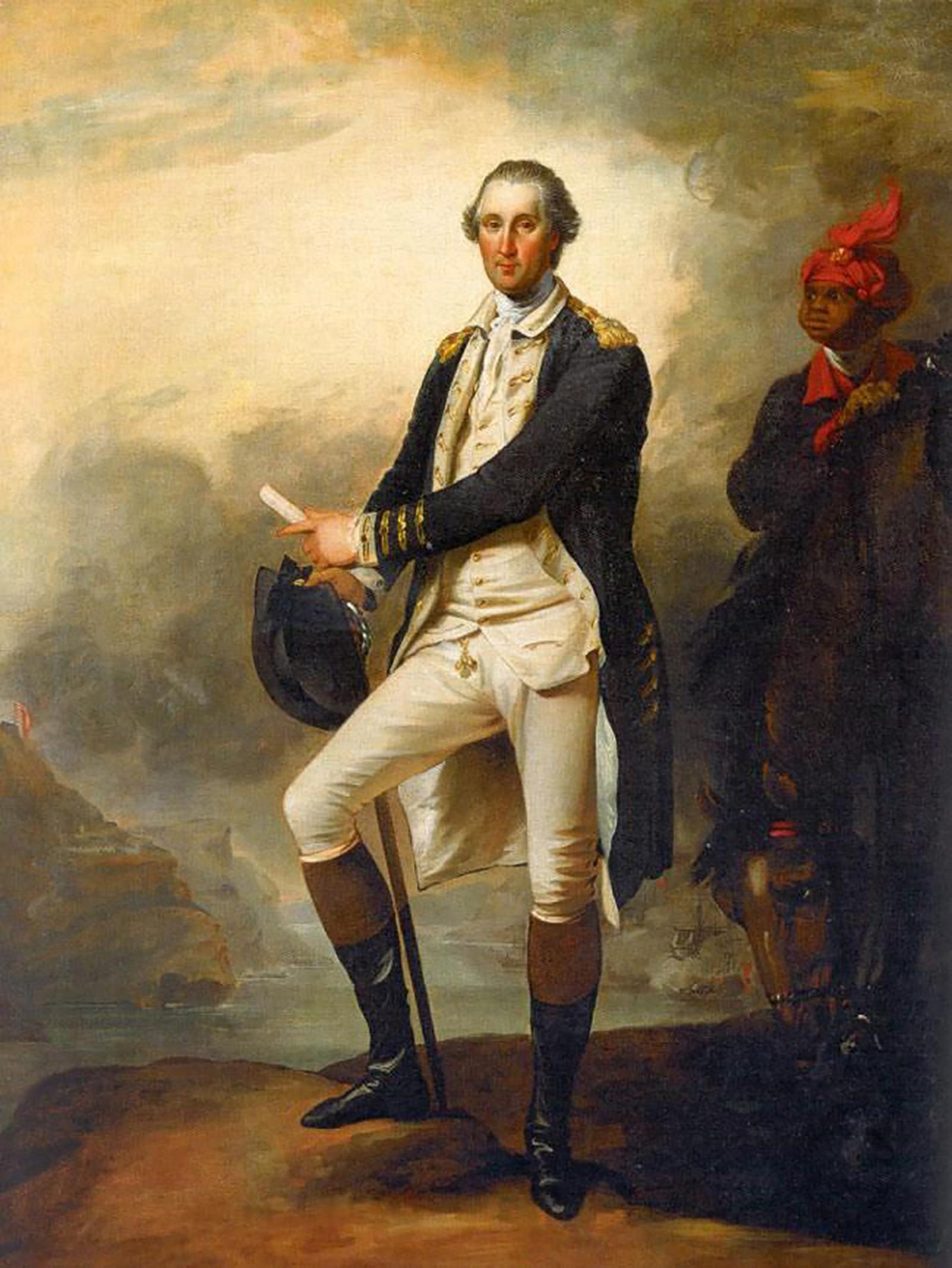
Thomas Foster, in his recent book, Rethinking Rufus: Sexual Violations of Enslaved Men, finds the most suggestive evidence of male-male sex and possibly "romantic" or at least long term relationships, comes from the relations between male slaveholders and enslaved "valets." Valets, or body servants, or waiting men, were in sustained, intimate contact with their enslavers. They often dressed them, shaved them, and sometimes slept in the same bedroom. Some valets were assigned to serve at very young ages, based on the belief that a strong, length relationship encouraged "loyalty." Some of these relationships were celebrated and idealized by contemporary Americans, such as that of George Washington and William Lee, depicted here in the background of a stylized painting by John Trumbull. But, as Foster points out, even the most idealized and romanticized bond between slaveholder and valet "took place in a cultural context that objectified, eroticized, and dehumanized the bodies of enslaved men, whose bodies and genitals were long a site of exploitation and fixation by European American cultures."
One suggestive account of such a relationship concerns Virginia Senator John Randolph and his enslaved valet, also named John. Randolph had a reputation as eccentric and effeminate, and said of John, "his attention and attachment to me resemble more those of a mother to a child, or rather a lover to his mistress, than a servant's to a master." Of course, we must take this narration with some pretty huge grains of salt. We do not have John's perspective on this relationship (valets, perhaps owing to greater likelihood of being educated and having connections, or perhaps because enduring such intimate contact with an enslaver was particularly unbearable, attempted to escape frequently), and slaveholders like Randolph had a stake in depicting themselves as benevolent and loving towards the people whose labor they stole with violence and the threat of violence. We also run into a problem with sources from this period, which is that men in platonic loving friendships often used very romantically charged language in expressing their affection for each other. Historians call these "effusive friendships." This is quite vexing, and many more recent historians have complained that the label "effusive friendships" and the (in my view admirable) resistance to impose modern categories on long dead people have helped to erase the presence of loving, erotic, romantic male-male relationships in the premodern world. That's a debate for another day, but worth bringing up because it's relevant to how we interpret sources like Randolph, and this topic in this period. Most of our evidence for sexual interactions between slaveholders and enslaved men looks and reads like this, at least for the United States.
Another suggestive source, one that is much less concerned with stressing the humane benevolence of a slaveholder, comes from the famous slave narrative, Incidents in the Life of a Slave Girl by Harriet Jacobs. Jacobs describes a young enslaved man named Luke, valet to a sickly enslaver, The bedridden slaveholder, who in Jacobs's words "became prey to the vices growing out of the 'patriarchal institution'" forced Luke to wait on him in his sickroom. "Some days he was not allowed to wear anything but his shirt, in order to be in readiness to be flogged," reported Jacobs. She goes on, with some notable restraint, to describe Luke's miserable situation:
The fact that [the slaveholder] was entirely dependant on Luke's care... seemed only to increase his irritability and cruelty. As he lay there on his bed, a mere wreck of manhood, he took into his head the strangest freaks of despotism; and if Luke hesitated to submit to his orders, the constable was immediately sent for. Some of these freaks were of a nature too filthy to be repeated.
Jacobs's memoir is quite unsparing in its depiction of slaveholders as sexual predators, so it is notable that Luke's abuse was too awful in Jacbobs's eyes (or perhaps what she perceived to be her audience's eyes) to be noted explicitly. But it remains only strongly suggestive int he absence of more explicitly testimony.
CONTINUED IN PART 2