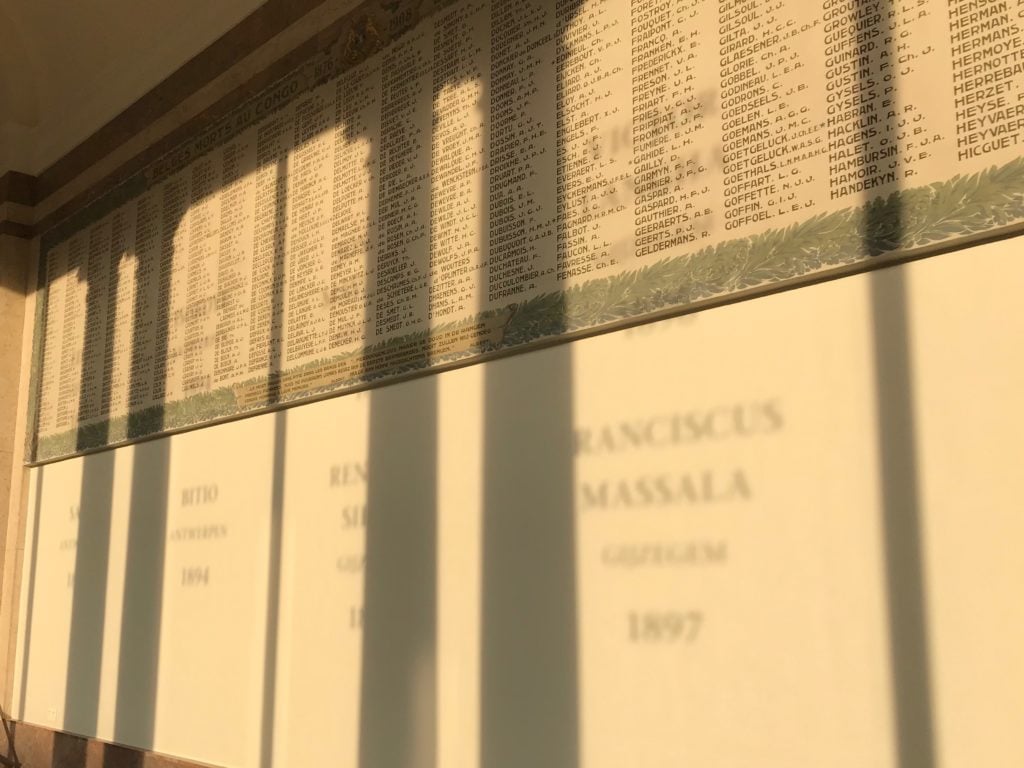
I know that they are not directly descended from him, since he had no children. And I also know that Belgium as a whole hasn't been great about reckoning with its past in the Congo. But since the Congo was technically Leopold's own pet project for a while, not under the administration of the country, how much of a reckoning has the Royal Family gone through, publicly and privately? I assume that any republicans/anti-monarchists in Belgium would use this as Exhibit A in their case against having royalty in the first place.
Let's start by examining the profile page for Leopold II on the website of the Belgian monarchy. Statements like:
1890: In July, during the Brussels International Conference, a treaty was signed against African slave trade and slave smuggling. This treaty forms the basis of a campaign against slavery in Africa.
and
1904: Following the excesses committed by the Europeans in Africa, Leopold's reputation and his overseas venture were questioned. The King set up an International Commission of Inquiry, which recognised the merits of the royal action in Congo, while pointing out abuses and shortcomings.
and this statement in the passive voice:
1908: The law of 18 October made the independent State of the Congo a Belgian colony.
All give the strong indication that the Monarchy as an institution continues to engage in obfuscation and denial about the legacy of Leopold II. No mention is made of what these "excesses" were, and the Royal website is quick to assert that there were "merits as well as shortcomings".
We can also look at the renovation of the Royal Museum at Tervuren palace which occurred from 2013-18. Tervuren was initially a private institution of the Belgian monarchy, but was turned over to the Belgian government in 1908. Therefore, this renovation reflects Belgian government efforts to recognize Leopold and later colonial history, and not specifically the Royal Family's efforts.
From establishment by Leopold II in 1898 up until 2013, the royal museum promoted a national myth of Congolese primitivism and Belgian heroic role of bringing civilization. Additionally, the displays of the museum displayed a heavy emphasis on natural history of Central Africa with many taxidermy animals on display, as well as anthropological "human evolution" displays. One exception would be this fountain sculpture installed in 1997 which plays with classic colonial tropes, while also mocking them and exposing the dark side with subtle nods.
The renovation deliberately sought to change distance the museum from this history of glorifying and justifying the Belgian colonial enterprise. The Museum website states that the museum explicitly rejects and condemns this brutal history. Statues commemorating Leopold II depicting him as a paternal figure for Africans have been removed. The Museum has also made an effort to include contemporary art from DRC, in order to balance the "tribal art" which had been the majority of the collection with art that demonstrates African artists as engaging with the contemporary art world.
However it must be noted that some parts of the museum, including a memorial wall commemorating every Belgian who died in colonial service in Central Africa (Congo, Rwanda and Burundi) remains.