I really started to think about this a lot because I had a disabled friend. He has osteogenesis imperfecta (glass bones). He's a little person, wheelchair bound, and extremely low mobility. So even though he has the chair daily tasks can still be hard. He refused a common surgery for his condition where they place metal rods in your limbs so the bones grow straighter. Because he refused it as he grew his bones would break causing hims limbs to be angled and jutting at many places. Making them shorter and it even harder for him to grip things.
If he had been born in an era without a wheelchair wtf would he of done?
I saw a thread on askmorbid questions about how autistic people would of been treated in midevil times and it really made me want to start this thread. Which I think could be interesting.
I think my friend would of been completely reliant on a tribe to help him live. Someone would have to pick him up to move him around but this it's self would of been hard af because of the glass bones. Lifting him in theory could cause all his bones to break. Although he told me it had been done before.
Discuss.
So when it comes to people being severely disabled there is definitely a lot to unpack. In general, disability would be something that would have been a part of Medieval life overall. This being the case, and the point that someone severely disabled would have unlikely been able to do things extremely remarkable in their life, this leads to the issue of not much of disabled people being specifically documented during this time period. Also, due to the lack of standardized medical practices, it would be hard for people during this time period to always know exactly what was occurring, and could even sometimes be determined to be due to sin or the like, at least within Christianity.
However, there are some cases that would have been documented cases of jesters and fools that were mentally disabled or at the very least mentally challenged or had some form of learning disability. As an example later on in time, not specifically the Middle Ages, court dwarfs also became a thing. There are even paintings of these court dwarfs.
So, with regard to your question, in particular, I would say it depends. In general, for a commoner, life would most likely be a lot harder for those with disabilities in the Medieval era than those who did not have disabilities. If they were severely disabled, say, like your friend that you mentioned, life would definitely have been extremely difficult, and he would have to have relied on family, charity, find work some other way aside from what most commoners would have done, etc.
If your friend was born to wealth, however, life would have been a bit easier and manageable. We see in later periods where kings who had issues would still be able to move around due to the help of servants, so with enough wealth or ingenuity, a severely disabled person could still live at least somewhat comfortably.
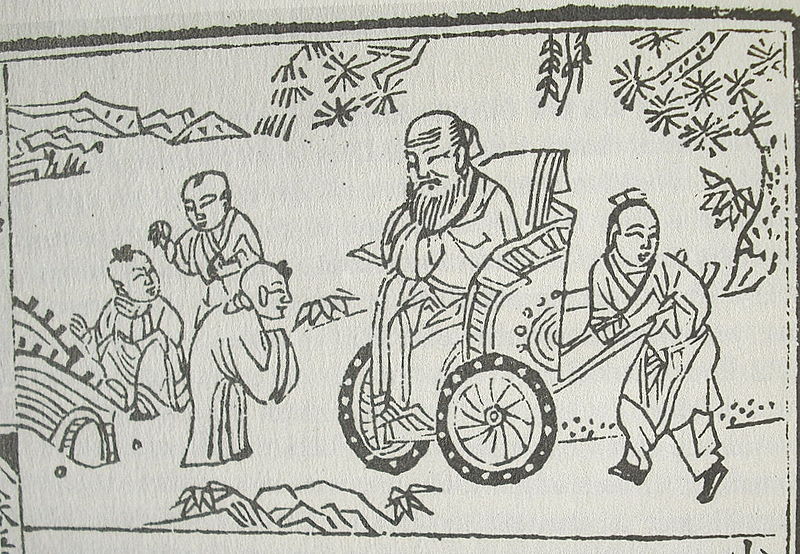
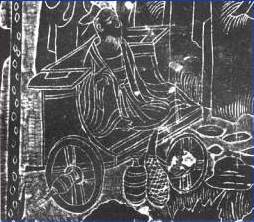
You did mention the lack of wheelchairs. While that's partially true, it's not entirely accurate. So although the first true wheelchairs (things that you can push yourself) didn't come around until after the Middle Ages, there are examples of wheeled chairs of a sort earlier. For example, there is a Chinese engraving of what seems to be similar to a wheelchair back in the 6th century. There is a depiction of Confucius in a wheelchair as well, but this was made during the 17th century, but I thought I would mention it as well, even though it was after the Medieval era. As another example after the Middle Ages, King Philip II of Spain had a custom-built wheelchair in order to move around during the 16th century and Stephen Farfler in Germany built himself a self-propelled "wheelchair" for himself so he could move around in the 17th century. Also, wheeled devices existed for thousands of years before the Middle Ages as well as during the Middle Ages, so someone who could not walk would not necessarily have to be carried around, even if they were poorer or just an average citizen. At the very least, they could probably use a wheel barrel and a family member or friend could push them in that, just as a thought.
As for those who have severe disabilities and perhaps not a support network of family to help them, wealth, nobility, or the like, there was always begging and charity as a possibility. This definitely doesn't seem to be ideal, but begging would have occurred for those with disabilities, as they may not have the ability to do something else. Charity from the church would have most likely been an asset to those who were severely disabled as well. But I would like to mention that Christianity during the Medieval era had various different views sometimes on the disabled. I will link to a chapter I from a book I was looking through to help with this answer at the end. The author discusses primarily blindness but goes into a lot of the culture surrounding blindness and disabilities as a whole, as well as discussing the differences of beliefs within Christianity with regard to disability.
So overall, I would say that life would not have always been absolutely horrible for many disabled people. Most disabilities probably would have still allowed the person to at least fend for themselves, such as mental disabilities that were not too extreme, dwarfs, deaf people, etc. When it comes to more severe disabilities, such as the one you mentioned that your friend has, yes, life would have been a lot harder, but with family, charity, and potential to have wheelchair like options, life would still be possible, if not difficult.
I hope this helps answer your question, let me know if you have any questions or anything else you have with my answer, I'd be happy to help in any way I can ^-^.
(Also, one last thing I forgot to mention earlier. As a reminder, just because wheelchair-like devices may have existed, it does not always mean that commoners would have had access to them, actually, it would be less likely I would say. However, I mentioned all these examples as to show that the technology did exist for wheelchairs, and although commoners may have not had access to the best of the best, wheeled devices existed and commoners would have at the very least had access to some kind of wheeled device to use to help transport themselves with the help of others if they were physically disabled and unable to walk.)
As for the sources I used, here are some images as well as the book chapter I mentioned that I found when looking into this topic:
Chapter 1 Of The Book I Mentioned: https://www.press.umich.edu/pdf/9780472117208-ch1.pdf
Confucius In A Wheelchair: https://vignette.wikia.nocookie.net/safehold/images/a/af/Confucius_wheelchair.jpg/revision/latest?cb=20140315185212
Chinese 6th Century Engraving: http://history.physio/wp-content/uploads/2019/01/Ancient_Chinese_engraving_of_wheelchair_c._525AD.jpg
Philip II Of Spain In A Wheelchair: https://cdn.shopify.com/s/files/1/0037/3424/1378/files/King_Philip_Wheelchair_large.jpg?v=1574145968