I know this question might be "dumb" but I just keep wondering as that would be the weakest point ...
Are there any specific instance you're thinking of? Classic medieval castles lost most of their defensive value by the time of cannons; in the early 15th century, bombards like 'Lazy Grete' were smashing even the strongest castles held by local nobility, like the infamous Quitzows of Brandenburg.
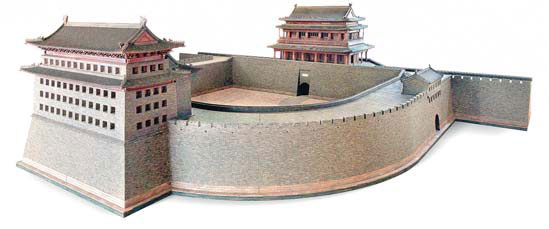
Generally, when the gate was a viable target, armies with artillery did target it for breaching. This was especially common in China, as the walls of Chinese cities were often too thick to even attempt breaching with artillery. During the Honwu Emperor's rise to power establishing the Ming Dynasty, he took the key city of Suzhou by blasting open the gates with bomb-throwing catapults. However, Chinese cities had an extra foible, as their gates were typically nested; an attacker could not get a line of sight on the inner gate without entering a courtyard where he could be hit with overlapping fields of fire. These usually had to be taken by assault before the inner gates could be breached. It took the Hongwu Emperor ten months to reduce the fortifications of Suzhou, in which time the garrison had begun to starve. Finally, a multi-pronged attack took the inner gates, probably by ramming, and the city fell.
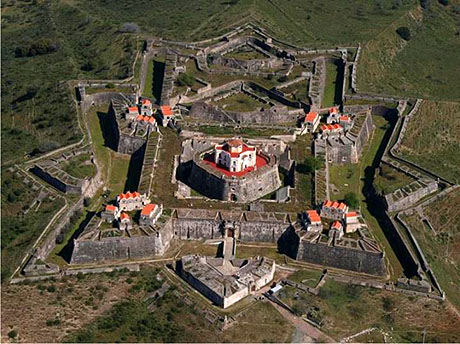
European fortresses from the age of gunpowder also denied attackers angles on the gates, though they tended to only place gates in the main circuit of the walls. Instead of an enclosed courtyard with entrances at right angles with the main gates, they instead put a large detached fortification in front of the gate, called a demi-lune or ravelin or redoubt. The attacker could not get an angle on the gate, as the other bastions projecting from the walls would obstruct their field of fire.
Moreover, even if there was an open gate or a breach in the walls, that still wouldn't help the besieger much. We tend to think of cannon as anti-fortification weapons, and there's some truth to that; traditional castles were quite vulnerable to bombardment, and there's no way you're taking early modern fortresses without artillery. However, by the beginning of the 16th century, siege engineers came to understand that however good cannon were at busting down fortresses, they were even better at defending them. Cannon sited in the bastions of a star fort subjected every inch of its trace to overlapping fields of fire, which could shatter even the sternest infantry assaults.
This was most powerfully demonstrated during Charles V's Siege of Metz in 1552. Despite massive superiority and a breach in the walls, Charles could could not take the city, as the bastions on either side of the breach swept his approaches with heavy fire. Eventually, he was forced to abandon the siege as the sick, dead, and wounded piled up. Between the shielded design of Early Modern gatehouses and the protection of heavy firepower, there were few alternatives to the arduous work of digging and blasting that characterized Early Modern siegecraft. A formal siege required systematic entrenchment of the attacker's artillery to shield them from the defender's guns, which generally had to be suppressed or destroyed before the fort could be taken.
The other methods were infantry assault (usually using ladders), bombardment of town structures without attempting to breach the walls, starvation, and stratagems like bluffing your way in or securing traitors inside the fortress. However, these were either less reliable or even more time consuming than a systematic siege, reducing the bastions and curtain of the fortress to rubble before either assault or surrender.
Hey there,
Just to let you know, your question is fine, and we're letting it stand. However, you should be aware that questions framed as 'Why didn't X do Y' relatively often don't get an answer that meets our standards (in our experience as moderators). There are a few reasons for this. Firstly, it often can be difficult to prove the counterfactual: historians know much more about what happened than what might have happened. Secondly, 'why didn't X do Y' questions are sometimes phrased in an ahistorical way. It's worth remembering that people in the past couldn't see into the future, and they generally didn't have all the information we now have about their situations; things that look obvious now didn't necessarily look that way at the time.
If you end up not getting a response after a day or two, consider asking a new question focusing instead on why what happened did happen (rather than why what didn't happen didn't happen) - this kind of question is more likely to get a response in our experience. Hope this helps!