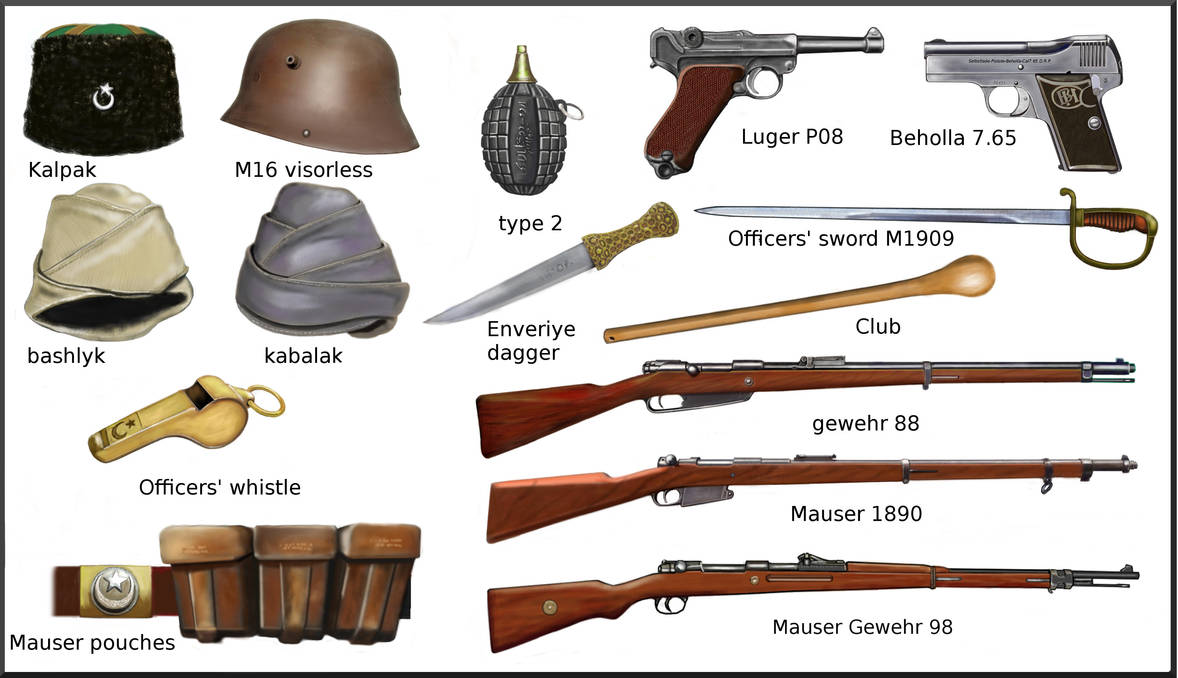
Hey guys :) I am writing to ask for some research help for a project! My friend and I are working on recreating a figure of a Turkish soldier from the Gallipoli battle, but we aren't sure exactly what the uniform would have been at that point in time. Would anyone be able to provide me with some information as to what the standard uniform and equipment would be and potentially some photos if you have them? This is a passion project for me, so I would like it to be as historically accurate as possible! :)
The Ottoman Empire really tried multiple reforms and updates to their army in the 19th and early 20th century, initially they tried to rely on French influence on their army but eventually switched to a more German style model. Now, there are some arguments as to why they switched to the German model, some people point to the Crimean War and some people claim that maybe it was because Germany had no interest in the Middle East; regardless, it's important to know that Sultan Abdulhamit II and the Ottoman government was really in a back and forth state about whether to change the way their military should run or not and in the end not much was done about it at all. Reforms never really happened under Abdulhamit II and after the revolution in 1909 you saw a sense of urgency in modernizing the Army and the Navy. New conscription laws, training centers for not only new conscripts but also vets and medics were introduced and now even non-Muslims were liable for military service. Part of the new conscription law was also used because now for decades there had been an influx of immigrants from the Northern side of the Balkans where Muslims were being expelled, this was causing a very peculiar situation and the Young Turks needed to figure out what to do with some of these people and the military was a good answer.
Too little was too late though as 3 years was not really enough time to fully train the military and once the First Balkan War broke out it spelled disaster for the Ottomans. Any of those governmental figures that initially opposed reforms for one reason or another were probably now convinced that the reforms were needed. Once the Second Balkan War broke out the Ottomans did see some success such as regaining Edirne (Adrianople). This proved that not only were the reforms needed, but at least somewhat successful, so the Ottomans really continued with the German model and brought in a fellow named Liman Von Sanders a Prussian gent that came from a military family. One of the immediate changes made by this fellow was to retire senior officers and retrain younger officers in the Prussian way which will turn out to pay off well in battles against the British such as Gallipoli which you are showing interest in.
As we all know, Archduke Franz Ferdinand was assassinated by Gavrilo Princip and war broke out. The Ottomans undertook a massive mobilization of their army when compared to their population and many died; in fact, so many died from the war, disease, starvation and massacres that it prompted the Ottomans to really dig deep and call on their reserves.
What changed for the soldier in 1909 though?
The soldiers were already looking more modern during the Crimean War but there were even more changes after the Young Turk Revolution. The old blue uniforms that were introduced thanks to French influence during the time of Abdulaziz were now gone and replaced by a very basic looking khaki uniform. The fez which is the tall red hat in the first image I posted that had become very well known and recognized as a staple of the late Ottoman military was now replaced by a hat depending on region(The hat depended on where and when you were). The standard can be narrowed down regardless, the kalpak was often used when not in combat...this particular headgear is very recognizable and seen worn in pictures by Ataturk. But while at war, especially in wet areas the kabalak (especially in Gallipoli), you can see that hat here. The Arabian portion of the army would have worn something more akin to their traditional headgear such as the gent on the left in this picture here (notice the man on the right with the kabalak).
Equipment is a whole different animal. We can even start with clothing where typically it was made locally in the Ottoman regions depending on which front you were on, so in this case, for Gallipoli the boots and uniforms were modeled after German uniforms but typically made in Istanbul (Constantinople) unless you were a higher ranked officer then you probably had your stuff imported from the other Central Powers.
Double goes for small arms, Mauser manufactured by the Germans were the standard; however, I don't want to give you any wrong impression, though they received equipment from the Germans it is known that in the latter part of the war the Ottomans were suffering from under equipment. So, even though they were supplied nice items such as these we have sources claiming that late in the war 1,000 rifles were distributed among 8,000 men.
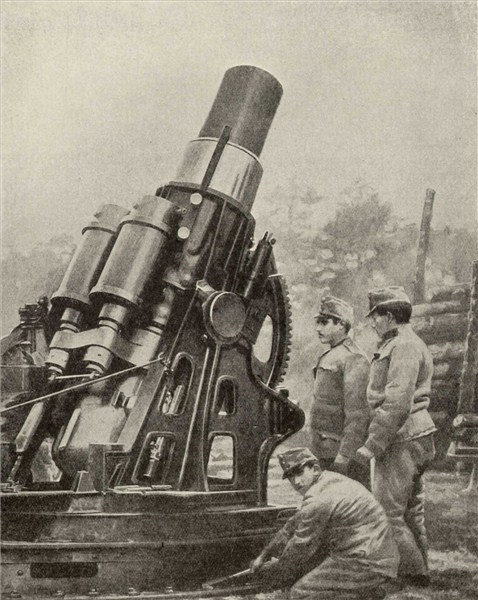
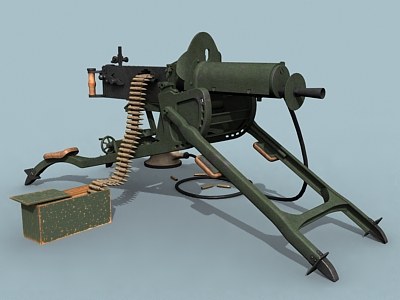
Big guns was a big problem period for the Ottomans in WW1. Sources claim that during the battle of Gallipoli the Ottomans resorted to using old mortars from the Istanbul Army Museum, if that doesn't spell desperation I'm not sure what does. With the fall of Serbia though, the Ottomans were able to gain some howitzers from Austria directly and though that helped a bit on the European front it didn't do much at all for them in the Eastern armies. The other big guns would have been machine-gun weapons like the Maxim and land mines that were found after the Balkan Wars in Bulgaria, but both of these were few.
I hope this helps and good luck on your project. My main source for this was Guns for the Sultan: Military Power and the Weapons Industry in the Ottoman Empire: Cambridge University Press. I also used some images from The Ottoman Army, 1914-18 by David Nicolle.