My first academic job was as a postdoc researcher in a European Research Council project called “Religious Minorities in the Euro-Mediterranean World, 5th-15th Centuries” (or, since the ERC loves its acronyms, RELMIN). Religious minorities in the crusader states in the Near East are a big part of my thesis and my research and work since then. My colleagues on the ERC project were studying minorities like Jews and Muslims in Christian Spain, Sicily, England, France, the Byzantine Empire, or Jews and Christians in Muslim Spain, Egypt, Persia, etc.
The definition of “minority” we used (a typical academic definition, worth recalling here) was any population that was not the ruling class in their society, even if they were actually the numerical majority of the population. This was definitely the case for the crusader states, where a very small number of European Latin Catholics ruled a much larger population of non-Latins. I’ll call the crusaders “Franks” here - they usually had some connection to Charlemagne’s Frankish empire centuries earlier, so that’s what they typically called themselves, and what Greeks and Muslims called them as well.
Minorities from the Frankish perspective
The Franks were fascinated by all the different kinds of Christians they encountered in the crusader states. They knew about Greek Orthodox, Syrian Orthodox (or “Jacobites”), Maronites, Armenian Orthodox, Georgian Orthodox, and Nestorian Christians from further east in Asia. They also knew about other Christians who didn’t live in the crusader states: Copts in Egypt and Nubian and Ethiopian Christians.
The Greeks, Syrians, and Armenians already had their own social hierarchies with their own leaders and aristocrats. They found it easy to intermingle with their new Frankish rulers, and they could own property, serve in the crusader army, work as doctors and merchants, and they often also married Franks. The Armenians had a particularly high status because an Armenian princess, Morphia of Melitene, was married to King Baldwin II of Jerusalem. Their daughter, the half-Armenian Melisende, succeeded Baldwin as queen. Other kings of Jerusalem married Greek princesses, so Franks, Greeks, and Armenians were all a part of the royal dynasty.
In contrast to all the Christian groups, the Franks were almost totally uninterested in learning anything about their Muslim and Jewish subjects. There were various sects of Sunni and Shia Muslims, as well as Druze and Ismailis and their offshoots. There were various Jewish sects as well, including Karaites and Samaritans. The Franks had no interest in any of these groups, except for one - the Samaritans, presumably because of the story of the Good Samaritan in the Bible.
A good way to see how the majority and minorities interacted is the legal system. The crusader legal system, of course, favoured themselves above everyone else, and there was sort of a hierarchy of rights for everyone else. If there was a court case involving two Frankish crusaders, Franks could always testify with no restrictions. So if, for example, a Frankish knight assaulted another knight, ideally the court wanted Frankish witnesses. If there were no Franks around, the court would then accept eastern Christian witnesses. If none could be found, the court would begrudgingly accept testimony from Muslims or Jews.
If the case didn’t involve Franks, but it did involve violence or significant property damage/theft, then it would be brought before a crusader court. Right away the non-Frank parties were at a disadvantage standing before Frankish judges, but the crusaders tried to keep things fair by setting out who could testify against whom in cases like this. Let’s say, for example, a Muslim assaulted a Greek. Who could the Greek person call into court to testify on his behalf? Well he couldn’t bring fellow Greek witnesses, because they might lie for him. It would be unfair to the Muslim! The Greek would have to find two Muslim people to testify. Presumably, if two Muslims said they witnessed a fellow Muslim assaulting a Greek, they would be telling the truth.
Whoever the witnesses were, they would probably have to swear an oath that they were telling the truth, and Frankish courts allowed them to swear on the own holy books. Franks would swear on a Latin Bible, eastern Christians could use Bibles in Greek, Syriac, Arabic, Armenian, or any other languages they spoke. Likewise, Muslims and Jews could swear on a Qur’an or Torah.
If the case was only an internal community dispute, or it didn’t involve violence or damage to property or anything else that would draw the attention of the Frankish ruling class, then the eastern Christian, Muslim, and Jewish communities could handle it in their own courts. The Franks let local courts function on their own, as they had done under the Muslims before they arrived. The native inhabitants might never even directly encounter a Frankish crusader at all.
So far this has been a top-down look at the minority population. But the purpose of this feature is to look from the bottom up! So how did Muslims and eastern Christians see their new Frankish overlords? It’s hard to find accounts from people who actually lived in the crusader states, but here are a few from inhabitants and from visitors:
The Will of Saliba
Saliba was a wealthy eastern Christian merchant in Acre, the capital of the crusader kingdom. His name is Arabic for “cross” so presumably he was an Arabic-speaking Syrian Christian. He seems have made his fortune selling wine. He was also a lay brother, a “confrater” of the Knights Hospitaller, one of the major military orders in the kingdom. The Hospitallers typically provided care for the sick and protected pilgrims who were coming to visit the holy sites, and they also owned enormous amounts of property in the cities and built castles in the countryside. And as we can see from Saliba’s will, not all the Hospitallers were European Franks, eastern Christians could also join them.
In 1264, Saliba fell sick and wrote a will, in which he left some of his money and property to the Hospitallers. The value of this property was “475 Saracen bezants” - apparently quite a large amount, since he left only fractions of this to his friends and family. He names some of his family members in his will, including his sister Nayma and his brother Stephen, and various children and nieces and nephews, such as Catherine, Leonard, Thomas, Agnes, and Bonaventure. These names sound pretty European, so it’s likely that they were actually a mixed Syrian-Frankish family.
Saliba also owned several slaves, some of whom are named in his will:
“...to Maria, my baptized slave, [I leave] forty Saracen bezants. Likewise, I emancipate Ahmed and Sofia, my slaves, and I command that the aforementioned Ahmed and Sofia become Christians.”
Another baptized slave, Marineto, is named later as one of the witnesses. Slavery was a normal part of crusader society, and it’s one of the ways we can see how the minority perceived the ruling class, so it’s worth taking a deeper look.
I thought that I’d write about an antisemitic incident in American history that I only became of aware of during grad school. What happened was President James Madison and Secretary of State James Monroe fired a diplomat and claimed they had done so because he was Jewish. They apparently believed firing him for being Jewish was a more politically acceptable reason to fire him than to admit their real reason, that they thought he was bad at his job. It is also a story that involves pirates, which all the best stories do.
The Diplomat
Mordecai Manuel Noah, the diplomat in question, was an American Jew born in 1785. His father had immigrated from Germany, and his mother came from an established New York Jewish family. Noah had worked a variety of jobs, as a peddler, a playwright, and a newspaper writer. Noah got into politics, campaigning for the Jeffersonian Republicans and writing pamphlets. For his political work, Noah was appointed a major in Pennsylvania’s state militia.
By the 1810s, Noah resolved to become a diplomat, and as was typical for the period, he called in favors. In 1811, he was appointed by President Madison to the post of consul in Riga. But he never got around to going there. Instead he hung around Charleston, composed a play and fought a duel. Later that year, Noah met with Madison, explained he did not want to go to Riga, and asked to be transferred to be consul in Tunis.
Captured by Pirates
President Madison made Noah consul to Tunis in 1813. At the time, the United States had hostile relations with Tunis and the other Barbary states, which were technically part of the Ottoman Empire but were largely self-governed. The Barbary states often engaged in piracy, and they would enslave American and European sailors. The United States had fought a war with the Barbary states from 1801 to 1805 and was anxious to avoid more conflict. The United States already had a history of paying the Barbary states tribute to keep them from attacking American ships.
In 1812, the Dey of Algiers captured the Edwin, a brig sailing from Salem, Massachusetts. On board the ship were eleven white Americans, who were enslaved by the Algerians and sent to work in harsh conditions quarrying rocks. America wanted its citizens returned, so it tried to buy their freedom.
Noah was given a secret mission from Secretary of State Monroe; on his way to Tunis he was supposed to devise a way to ransom the Edwin’s crew. He was told he could spend up to $3,000 a man, but was warned by Monroe: “Whatever may be the result of the attempt, for obvious reasons, [do] not let it be understood to proceed from this government, but rather friends of the parties themselves.” The United States government did not want the Barbary states to know they were willing to spend large sums for their citizens; lest higher amounts be demanded, or it encourage the taking of more captives. They also did not want it widely known in America they were willing to pay off the Barbary pirates.
America’s Secret Agent
Noah was less subtle about his mission than the American government might have hoped. On route to Tunis he was intercepted and detained by the British off the coast of France and forced to send nine weeks in Britain (remember this was during the war of 1812). He was eventually released by the British, reached Cadiz, and spoke with the American consul there.
The consul in Cadiz told Noah to see a merchant named Richard Keene for help. Keene had been an American but had renounced his citizenship as part of an effort to create an Irish Catholic colony in Mexico. Keene was particularly suspect to the Madison Administration because when he was an American, he had been a member of the rival Federalist party, and a known smuggler who had violated Jefferson’s embargo. Noah assumed that as an American he risked being enslaved if he made the trip to Tunis, but Keene, as a Spaniard, was probably safe.
Noah drew up a contact with Keene for Keene to serve as a go-between to negotiate for the American captives. Keene would get $1,000 immediately for expenses, and a further $3,000 and any unspent ransom money if he was successful. Keene was not supposed to let anyone know he was connected with the American government.
Mission Failed?
The Dey of Algiers had heard Keene represented the U.S. government and would not negotiate for the captives. Word had leaked either from Noah, Keene, or someone else. The Dey wanted to hold out for more tribute from the United States.
Keene enlisted the help of the British ambassador, despite the fact that the US and Britain were at war. The British ambassador, as part of repayment for another dispute, was able to get the Dey to ransom two members of the Edwin’s crew for $6,000. Keene used the American money to repay the British for their help.
As he was negotiating, British ship was captured by the Algerians. On board as crew members were four French speakers, who claimed to be Americans from New Orleans who had been forced into British service. Keene’s instructions didn’t cover this situation, but he negotiated their release for $3,000 each.
Noah and Keene sent the six captives back to the United States. Noah billed the American government $25,900. For Noah, it seemed a bargain, as in the past the United States had spent hundreds of thousands in bribes to the Barbary states and produced fewer results. The American government was enraged Noah had spent so much and had revealed their involvement.
Fired for Being Jewish
Monroe decided to remove Noah from his post, trying to cover up his concerns about the amount of ransom payments by claiming he and President Madison were upset that Noah’s Judaism had made him a bad diplomat to a Muslim nation. Monroe wrote: “At the time of your appointment, as Consul at Tunis, it was not known that the Religion which you profess would form any obstacle to the exercise of your Consular functions. Recent information, however, on which entire reliance may be placed, proves that it would produce a very unfavourable effect. In consequence of which, the President has deemed it expedient to revoke your commission”
It's pretty shocking that Madison and Monroe both thought that claiming they were removing Noah for being a Jew was more publicly acceptable than simply explaining the situation.
Evidence suggests that Madison and Monroe conspired to claim that they were removing Noah due to his Judaism, even though that was not the case. Madison wrote Monroe: ““It may be well to rest the measure pretty much on the ascertained prejudices of the Turks agst. his Religion, and its having become public that he was a Jew, a circumstance wch. it was understood at the time of his appt. might be witheld.”
Though antisemitism was a pretext for firing Noah, the incident reveals that Madison and Monroe had a great deal of prejudice against Jews. Madison frequently referred to Noah in correspondence as “the Jew” for example, rather than by name. For all their dedication to religious liberty, they weren’t without prejudice.
Noah was enraged and said that there was a real risk the precedent set by his removal would be would block Jews in the future from being employed by the American government. He would publish a book defending his actions in Algiers. He lobbied for the government to restore his consular rank, but to no avail.
Noah’s removal does not seem to have had lasting consequences for American Jews. Madison employed another Jewish American as a diplomat shortly afterward. But it does show the limits of religious toleration in the early Republic, and that the United States was not always a land of equal treatment for all faiths.
Recommended Readings:
“Mordecai Noah’s Mission to Algiers: Spanish-American Relations and the Fate of a Jewish Consul in Madison’s Administration, 20 February (Editorial Note),” Founders Online, National Archives, https://founders.archives.gov/documents/Madison/03-09-02-0009. [Original source: The Papers of James Madison, Presidential Series, vol. 9, 19 February 1815–12 October 1815, ed. Angela Kreider, J. C. A. Stagg, Mary Parke Johnson, and Anne Mandeville Colony. Charlottesville: University of Virginia Press, 2018, pp. 10–15.
Leiner, Frederick C. The End of Barbary Terror: America’s 1815 War Against the Pirates of North Africa. New York: Oxford University Press, 2006, 5–38.
Sarna, Jonathan D. Jacksonian Jew: The Two Worlds of Mordecai Noah. New York: Holmes & Meier, 1981.
It's generally well-known that rulers within the Muslim world had, for the most part, policies in place respecting the rights of religious minorities. Violence against minorities was much rarer within the Muslim world, with flare-ups under Almohad and Almoravid dynasties of the Maghreb and al-Andalus (North Africa and Spain) being the exception rather than the rule. With that said there were still strict restrictions in place on religious minorities/dhimmi, though it's a matter of debate how much these restrictions were actually enforced.
A notable increase in violence against religious minorities took place in al-Andalus during the ninth century. The Martyrs of Cordoba were forty-eight Christians executed by authorities in, wouldn't you know it, Cordoba. The martyrs were not members of the Christian population targeted by Muslim authorities for their religious practice; for the most part, Muslim rulers were content to let their religious minorities practice their religion quietly, and it could even be a point of pride that you had People of the Book (Jews and Christians) living within your domain. These martyrs intentionally brought attention to themselves by blaspheming against Islam and Muhammad.
Some of the martyrs had been converts to Islam who practiced their old religion in secret. As seen in the fifteenth and sixteenth century under Christian rule with secret Jews and secret Muslims (called marranos and moriscos derisively), religious authorities often have less tolerance for reverters than for those who claimed themselves as members of a minority to begin with.
It's easy for those of us living within largely (ostensibly) secular worlds to wonder why forty-eight people would so publicly try to get themselves killed for the sake of their religion. After all, the authorities were not actively persecuting them and many Christians were integrating well into Muslim life. Scholar Ariana Patey has suggested that laws governing public Christian practice were strengthened following the martyrdoms and had largely gone unenforced before. This integration is probably a large part of what spurred the martyrs to do so. As mentioned before, some of the martyrs were converts or secret practitioners of Christianity. Others might have been motivated by stories of earlier Christian rule in Iberia, which had ended less than two centuries before. To these people, the integration of Christians into Muslim society might have seemed like an insult and a failure. While Christians were tolerated, it was certainly not encouraged to be Christian; Patey notes that public acts of devotion like the sign of the Cross might have been avoided by those hoping to fall "under the radar" in wider Muslim society.
Christian leaders in Cordoba did not encourage these martyrs. In fact, most Christian leaders throughout Christian history have discouraged intentional martyrdoms. An intentional martyrdom is when a person acts in a way to draw the attention of authorities toward themselves. In the early years of the Common Era, martyrs within the Church gained great acclaim after their death, and with a martyr's death acting as a guarantee to get yourself into Heaven, it's understandable that some would find the idea attractive. Polycarp of Smyrna, who lived in the second century, seemed very eager in his letters to go to his death. But martyrs can be problematic. The attention doesn't stop when the intentional martyr is dead. Authorities might begin to look with more scrutiny on their fellow practitioners, and that's dangerous to everyone. Church leaders in Cordoba would certainly be against the execution of their flock, but they're not trying to rock the boat. You don't usually get to a position of power by being a rulebreaker, especially if you're a religious minority. The explicit co-operation between religious and state authorities in the Muslim world makes this even more the case there.
That might be exactly why the martyrs acted, though. Co-operation between religious and state authorities seems nice, but if you believe the state to be evil then it just makes them seem complicit. Attention paid to their community by authorities might result in more martyrs-- and more anger from within and without. It might motivate your fellow Christians to reject Muslim rule as they did. Executions can also be a quick way to rile up members of a community that might otherwise be against your radical actions. If a group that's gotten comfortable living under another group's rule sees that people close to them are dying for practicing the religion they share, they might fear for their own lives and rise up even if the state doesn't want to step up efforts to quash the dissidents.
Patey notes that many of the martyrs were monks and nuns or were otherwise connected to monasteries. These monasteries were largely rural, which changes their relationship with the Muslim rulers significantly. The Muslim world was considerably more urban and cosmopolitan than that of the Christian West in the medieval era. Those living in monasteries would have been outside of the setting where different religious groups were interacting most often-- the cities. To devout, orthodox, and stringent monks and nuns outside of those cities, urban life might have looked sinful and corrupted by comparison. We see this same tendency in some of the more radical groups of the Second Temple period of Judaism, including the Essenes, who rejected Roman-dominated Jerusalem in favour of the harsh desert.
Patey, Ariana. “Asserting Difference in Plurality: The Case of the Martyrs of Córdoba.” Studies in Church History, vol. 51, 2015, pp. 53–66.
This will be a more personal, journal entry of sorts post than the other fantastic writings here, so, apologies for the informal, meandering writing! I will confess this has turned out to be not so scholarly or academic, and only barely manages to relate to the topic.
Recently I've been reading up on Islam in China, especially in regards to Hui and Uyghur peoples. It's relatively well understood that there are tensions and negative relations between these two groups. Broadly speaking, they identify more towards their ethnicity than to their religion. Hui very much share their culture and ethnicity with the majority Han, while Uyghurs are Turkic people with more in common to the Stabs in the west.
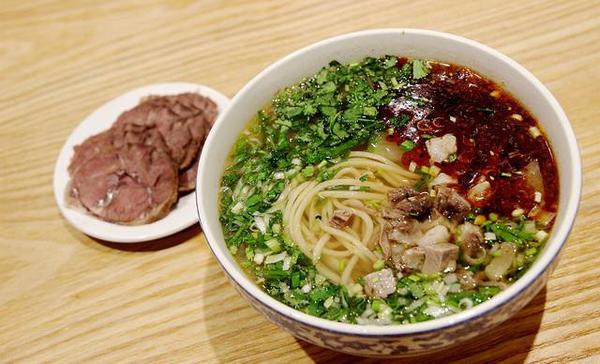
What I found particularly interesting was how this manifests into food culture. Without getting too off track, I'm a big foodie and cooking world cuisines is a big hobby of mine. Halal food has always been one of my favorites, but its iterations in Central Asia and China are especially fascinating to me, further spurred by my more concrete academic studies of the regions and their history. As an ethnic Han Chinese residing in America, I'm always trying to find out more about China and "Chineseness". I feel the nation and country is so widely misunderstood, especially on the fundamental social level. China's so diverse and massive, people seem to only be vaguely aware of the urban east and south, especially in the context of the political apparatus. Corruption, surveillance, human rights abuses, authoritarianism, these are a few words that are associated with China, for many valid reasons and especially in regards to Xinjiang, which I shall get into later. However, on the anthropological, human level, there's so much I appreciate about China and its society and people. I think back fondly on each of my trips to China. The most recent was in the breezy coastal city of Qingdao, famous for its beer and colonial history. I was in Qingdao University for a language program (exactly one year ago in fact), and just about everyday I'd take a ten minute walk from the classroom building to a little qingzhen Lanzhou Lamian restaurant, and pick from the massive menu some variety of a noodle dish, maybe with a side order of roujiamo.
These restaurant stores are everywhere it seems. I've them in Shanghai, Beijing, Hanzhou, all with the relatively same storefront with big bold signs, usually in green and sometimes with a scenic mountainscape. When I strolled through the various subdivisions of Qingdao, without fail I'd see a Lanzhou Lamian store somewhere. They all promise the same thing, cheap, no-nonsense noodles, soup or soupless, and other qingzhen staples like dapanji (大盘鸡), aka big plate chicken. I like to think of them as the equivalent of the Chinese Take-Out in America, run by small independent families of ethnic minorities serving a spin on ethnic-food that's cheap, tasty, and filling. And like Chinese take-out, it's not particularly authentic.
First off, the stores' name Lanzhou Lamian (兰州拉面) is problematic in itself. Locals of Lanzhou name their signature dish Lanzhou Beef Noodle Soup (兰州牛肉面). The real stuff has strict requirements, as one chef put it, the soup must be clear, the noodles golden, the chili oil crimson, the radish white, the beef slices brown, and the cilantro/scallions green. A perfect blend of color, fresh ingredients, and purely made soup and noodles. The noodles I dined on daily... were not that. Here's a picture of my farewell meal I had. The soup was, like always, a muddy murky brown affair. As I've made stock plenty of times, I believe they didn't skim the surface of scum and bits as much as they could've. Other dishes I ordered were not what I initially hoped. Hui mian (烩面) or braised noodles is this lovely bowl of noodles from Henan province, with a milky white soup, this was the result I got. When I ordered a dish called Xinjiang mixed noodles (新疆拌面), I was expecting laghman, stir fried meat and vegetables in a tomato paste sauce over thick hand pulled noodles. Instead, I got this, too thin a sauce with too wide a noodle to be considered Uyghur laghman. The roujiamo I mentioned earlier was not quite as rich as its true Gansu and Shaanxi originals, instead using unmistakably repurposed meat from the soup. Like how General Tso's Chicken has little to do with the historical Zuo Zongtang, these products are a result of cheaper ingredients, simple and standardized preparation, catered to an audience with localized and inoffensive flavors.
So, what gives?
Let me state that just about every meal I had there was excellent, satisfied my wallet and my appetite. They simply just didn't serve the real, authentic dish I was hoping to have. More importantly, what does this reveal about food customs and this micro-culture of China? Well, it illuminates a degree of "food appropriation" in China, broadly incorporating qingzhen cuisine into a singular concept, and filling up a menu with them. Think of it like this, an Italian restaurant in America might simultaneously serve risotto and cannoli, Nothern Italian appearing on the same menu as Southern. That's... misleading, towards a country and its culture. It neglects the complexity and differences of regions, and the varying stories each place as to tell.
Thus, these diverse cultures are reduced into the bare minimum qualifier of sameness, diminishing the nuances of identity and diversity. Alternatively, it can be thought of as a borderless categorization of ethnic food, associated with religion than with location or ethnicity. Halal Heji Hui Mian/braised noodles made with lamb is thus considered the same food as Xinjiang big plate chicken. A group of friends may say "let's get some qingzhen food" rather than "wanna eat some Henan food" or "how about Xinjiang today". I can appreciate that, a grander way of unifying identity, but it gets into the problems I mentioned just above. And this is where things become murky and confusing, and where I'm going into the main discussion of religious minorities, and the issues they experience today.
Many years ago, when I was still very young and not as culturally aware of China or the world, I was visiting the heart of Shanghai in the Jingan neighborhood of my dad's childhood home. Right next door to his house a new Xinjiang restaurant had opened up, and we were given coupons to eat there. At this point I could not point Xinjiang on the map, nor had I ever clue of who the Uyghurs were. For the meal we ordered laghman, tawa kewap (馕包肉), and dapanji. Halfway through, my father asked the waiter where he had come from, the art of blunt Chinese small talk I'll never grasp fully. When the waiter replied Ningxia, little me did not understand the greater implications this had. The fellow diners there were young people, engaging in the hip trend of eating more "foreign" and underexposed cuisines. Absent were any Uyghurs.
The reading I mentioned in the beginning is Consuming Identities: Food and Resistance among the Uyghur in Contemporary Xinjiang. In this quarantine time, away from campus, I've been perusing jstor and saving interesting titles to read in my spare time, keep me grounded and sane if you will. The first real class I took in college was on anthropology in post-socialist China. That was what truly opened me up to appreciate China, as I mentioned before. And for that class, the final I did was on the situation in Xinjiang, and how the Uyghurs were facing various suppressive and abusive policies. I'm quite glad I chose that as my little research topic, as it allowed me to be informed on one of the great tragedies happening in our modern world this very moment.
While I have not followed the developments in Xinjiang closely and daily since then, I have continued my research on the region, and of Uyghurs in China. As such, it is increasingly clear how ethnic groups such as the Uyghurs are the "other" of China, culturally, linguistically, ethnically, religiously. While in Republican China, all Muslim minority groups may have been conveniently put under the "Hui" label, we now understand today's Hui as the ethnically Chinese people, ethnically shared with the Han, differing in religion. It is these culture and ethnic separations that cause tensions between Hui and Uyghurs. As far back as the Dungan Rebellion (speaking of General Tso!) was there violence between the two groups. Hui today fully identify as Chinese, and it is their Chinese qualities that give them favorability in Chinese society. After all, it is easier to live and function amongst a majority group that shares your appearance and many of your customs. Uyghurs see this as a betrayal against fellow Muslims, with the Hui being complicit and unhelpful in the plight the Uyghurs and other Turkic Muslim minorities such as the Kazakhs might face.
Welcome to the twelfth installment of ‘History Upside Down’, our Spring 2020 Floating Feature and Flair Drive Series. This series it intended to shine a light on people often left out of the ‘standard’ histories, and give voice to the subalterns of history.
Today’s theme is Histories of Religious Minorities, and we welcome anyone and everyone to share histories that fit the theme. Stories of triumph or tragedy, or cheerful or sad, all are welcome.
Floating Features are intended to allow users to contribute their own original work. If you are interested in reading recommendations, please consult our booklist, or else limit them to follow-up questions to posted content. Similarly, please do not post top-level questions. This is not an AMA with panelists standing by to respond. Such questions ought to be submitted as normal questions in the subreddit.
As is the case with previous Floating Features, there is relaxed moderation here to allow more scope for speculation and general chat than there would be in a usual thread! But with that in mind, we of course expect that anyone who wishes to contribute will do so politely and in good faith.
Coming up next in the series is The Migrant and Diaspora Histories Floating Feature on June 3rd. Make sure to mark it on your calendar!