When you say Mongol soldier, I am going to have to assume here that you mean the typical thought of Mongol Empire warrior – the horse archer.
Weapons
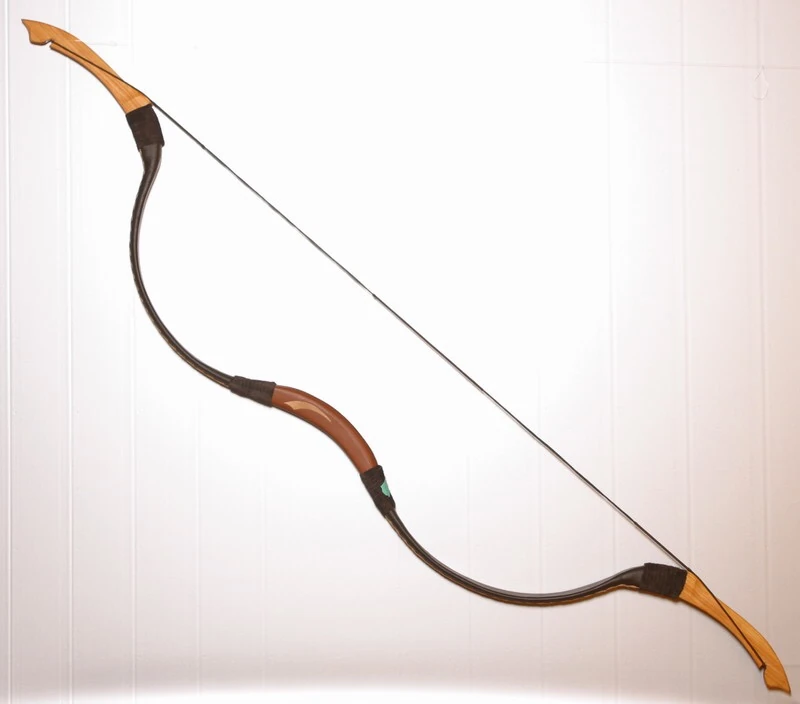
Since most of the Mongol military was indeed light cavalry archers the first thing to mention about a 13th century Mongol soldier is the staple compound bow of the steppe. This was typically made by layers of horns that were then sewn on a wood frame. Although this bow was intended to be used from horseback it had a very stiff pull, but it gave it quite some power which translated to penetration and even range. Although many people like to claim that the use of a compound bow was rendered useless by early guns, this is actually incorrect; it will take the guns some time before they overtake horse archers as proven by the Tatars in the Crimea who had been used in Europe by the Ottomans as late as the 17th century.
I said I would focus on the horse archer but it would be a crime to not mention the heavy cavalry of the Mongol army, and it will tie into the horse archer regardless. One of the lead Mongol historians, Timothy May, mentioned that in his research of the Liao Shi a history of the Liao Dynasty in Northern China in the 10th and 11th centuries that the Khitan heavy cavalry was to carry the following equipment: 9 pieces of iron armor, saddle clothes, leather and iron barding and other items required for their hoses, four bows with 400 arrows each, a long spear, a short spear, a club, axe, and even a halberd. On top of this other equipment depending on your role was a banner, hammer, knife, buckets, rations, grappling hooks and even umbrellas. This is all important information because the Khitans will be absorbed into the Mongol military. Now, the problem here is we are kind of uncertain as to whether this was issued equipment or equipment that the hierarchy expected to have for their military. Regardless, John of Plano Carpini gives us an account of the Mongol soldier in the 1240s:
They all have to possess the following arms at least: two or three bows or at least one good one, three large quivers full of arrows, an axe and ropes for hauling engines of war. As for the wealthy, they have swords pointed at the end but sharp only on one side and somewhat curved and they have a horse with armor, their legs also covered and they have helmets and cuirasses.
Some accounts claim that the Mongols were poorly equipped. No doubt the difference in accounts could be linked to the seniority of the Mongol warrior or even luck. What I mean by this is often during pillaging the Mongol warriors would keep stuff also for themselves, so if I get luckier than you, I may have a fancy armor; also, if I had been serving in the military for longer than you, I may have just had more opportunity to raid than you.
So, we mentioned the compound bow which is the primary weapon for the Mongols; however, although this bow proved to be better than early guns, different long bows and even crossbows it suffered greatly from weather such as rain; thus, the Mongols possessed close range weapons as well. These weapons would include something like a spear, or even a spear with a hook on it (which was used for dismounting other horse riders), and of course the Mongolian saber. Another used weapon was the lasso, which is not to be confused with the American lasso, the Mongolia one looked like this.
Armor
Quoting John of Plano Carpini once again:
Some have cuirasses and protection for their horses, fashioned out of leather in the following manner: they take strips of ox-hide or the skin of another animal, a hand’s breadth wide, and cover three or four together with pitch, and they fasten them with leather thongs or cord; in the upper strip they put the lace at one end, in the next they put it in the middle and so on to the end; consequently, when they bend, the lower strips come up over the upper ones and thus there is a double or triple thickness over the body.
The Mongol armor was preferably lamellar as it provided better defense against arrows than even mail. They also preferred this armor because it was simple to manufacture. Not every Mongol soldier had armor though, especially early on so many of them would also wear their popular coat known as the deel which was actually carried by all of them anyway as it was good protection from bad weather, so even an armored warrior could throw it on. Some historians have noted that this coat was an inspiration for the 14th century European brigandine jacket.
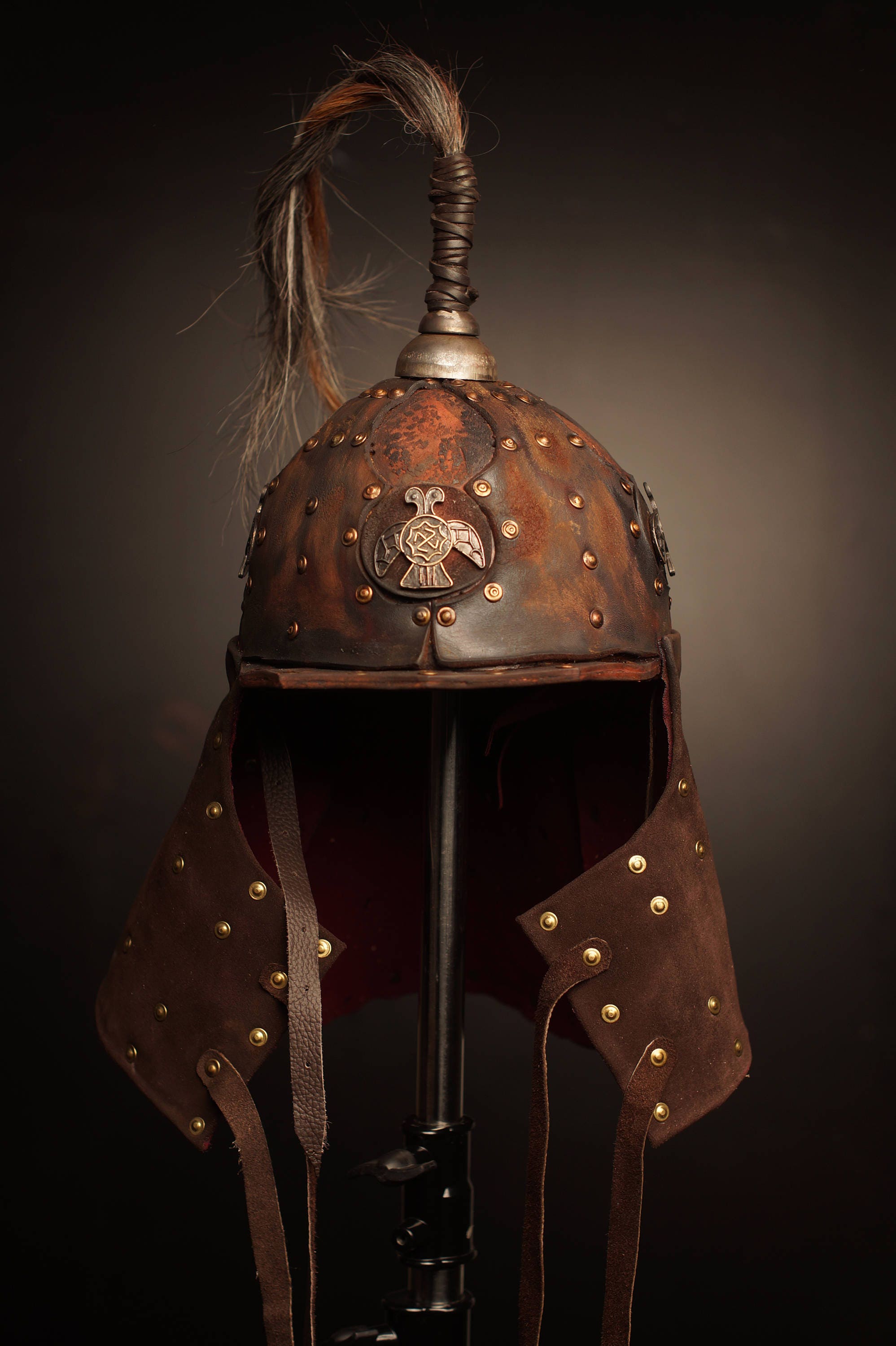
The Mongol helmet was generally for the most part the one you’ve always seen, I heard it best described as an upside-down part of the acorn, this is the helmet. These were either bronze or iron.
The Mongol Art of War by Timothy May
The Mongols, whom we call the Tartars by Giovanni di Pian del Carpini