This is a tough one - and I don't see a lot of good references to this. The excellent compendium, Jacqueline Simpson and Steve Roud, A Dictionary of English Folklore (Oxford: Oxford University Press, 2000) indicates that the earliest recorded reference was in the novel by Tobias Smollett (1721–1771), The Adventures of Peregrine Pickle (1751), but they also indicate that it was apparently a motif before that time.
I do not have references to the motif in actual nautical folklore, but that speaks more to the deficiency of my library than it does to the absence of Davy Jones in actual tradition. On the other hand, there wasn't a lot of careful collecting of nautical folklore in the eighteenth century, so documentation is likely scarce. That said, there is no question that it became a popular literary motif with ample expression in film.
Much of this can be regarded as what Michael Dylan Foster and Jeffrey A Tolbert (eds., The Folkloresque: Reframing Folklore in a Popular Culture World, Utah State University Press, 2016) refer to the "folkloresque": that is, an expression in culture that feels like folklore, but isn't really an expression of folk tradition and belief. In other words, what appears to have been a real motif in the language of sailors has become a popularized motif in media. It's not clear to me that sailors actually believed in "Davy Jones's locker" or whether is was simply a way to describe the deadly deep of the ocean. It smacks of being a circumlocution - a way of referring to a thing without addressing it directly. Either way, print and film media ran with the concept and made it into something that appears to be far greater than it may have been in actual oral tradition and belief.
edit: /u/orangemars2000 has done some excellent work here by identifying the earlier Defoe reference (1726). I suspect that Simpson and Roud did not include that because it was little more than a brief "name drop" - important as a benchmark, but not clear as to the intent. Smollett's 1751 reference is more complete as fleshing out what seems to have been a contemporary reference to nautical tradition.
With regards to your examples, a cursory search turns up the earliest reference of Davy Jones' Locker in Daniel Defoe's The four years voyages of capt. George Roberts. Written by himself written in 1726. (And yes, same Daniel Defoe that wrote Robinson Crusoe). Although Defoe only uses the term to designate the bottom of the sea, as early as 1751 Tobias Smollett referred to Davy Jones as "the fiend that presides over all the evil spirits of the deep," continuously present in times of misfortune. So Davy Jones' Locker referred both to the bottom of the sea and to Davy Jones as a sort of 'sailor's devil' long before the advent of Hollywood.
Fiddler's Green is more recent, but not by much. The earliest mention is in Frederick Marryat's 1856 novel The Dog Fiend; Or, Snarleyyow as part of a sailor's song, where it's a sort of after-life for sailors after they've served their duty. And Herman Melville's (the writer of Moby Dick) posthumous Billy Budd, Sailor also makes reference to Fiddler's Green as a 'sailor's term' for a paradisaical place on land.
So both terms that you mention pre-date Hollywood by a fair bit-not only their origin, but their meaning, are fairly well established by heavy-hitters of 18th and 19th century literature. Although Hollywood and pop culture have undoubtedly embellished parts of it, we can clearly see the roots of both in actual folklore, or at least in the actual literary tradition. Whether these are only literary devices and not 'actually folklore' (whatever that may mean), or what other stories may have actually been invented by Hollywood, I'll leave to the professionals. As the other commenter addressed, there's clearly a very important meta-discussion to be had about what constitutes folklore and what is just imagery used by writers of the time.
I have one thing to contribute, but it's hard to give a source on this since it's local folklore.
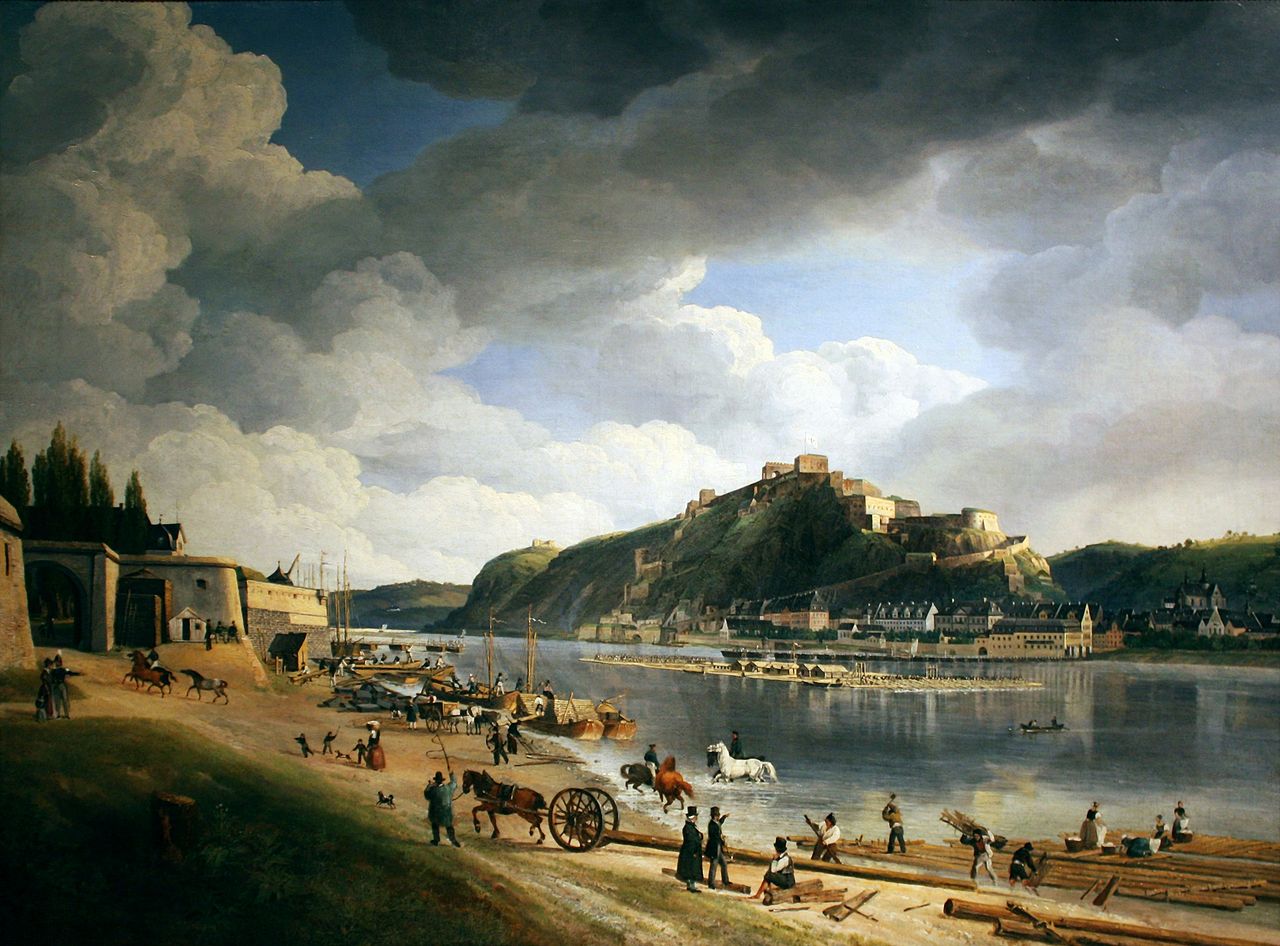
I'm a tour guide in the Black Forest, and the region has been a source of a specific kind of trees for a very long time, the European silver fir tree(Weiß-Tanne). The trees were cut in the Black Forest, moved down the rivers very carefully, collected in the Rhine, tied together into huge rafts and very carefully moved down the river to the Netherlands, where they were used for building ships, the foundations of Amsterdam and casks.
The silver fir was one of the main sources of income for the Black Forest region and since most of the trees went to the Netherlands, the nickname Holländer-Tanne or simply Holländer(Dutchman Trees) was widely used.
The Black Forest is a region where a lot of myths have their origin, local folklore is pretty interesting and one of the more popular myths is [Das kalte Herz](https://en.wikipedia.org/wiki/Heart_of_Stone_(German_fairy_tale)), in it one of the main characters is known as Holländer-Michel(dutchman Michael), so you can see how the trees were a rather important part of local folklore.
Here's where this connects to nautical folklore: When moving the Dutchman Trees down the rivers in spring, they cleared the sides of the rivers as best as possible because the logs were very dangerous. Traditionally, the Black Forest lumberjacks built lakes that filled over the wintertime, so in spring they could open the reservoirs, turning the small streams into rapid torrents for a few days to deliver the logs down the flanks of the mountain. As you can imagine, having 50 foot long logs go down a mountainside in overflowing rivers was dangerous and sometimes the Dutchman Trees jumped out of the river, those were known as "Fliegende Holländer", or Flying Dutchmen.
I cannot say how the term became part of nautical folklore I'm afraid, but my best guess that it was ferrymen from the Black Forest that swapped stories with sailors in Amsterdam.
I know this will not satisfy he rigorous standards of the sub, but since we had a few good answers already, maybe we can leave this up?