Please Be Aware: We expect everyone to read the rules and guidelines of this thread. Mods will remove questions which we deem to be too involved for the theme in place here. We will remove answers which don't include a source. These removals will be without notice. Please follow the rules.
Some questions people have just don't require depth. This thread is a recurring feature intended to provide a space for those simple, straight forward questions that are otherwise unsuited for the format of the subreddit.
Here are the ground rules:
Top Level Posts should be questions in their own right.
Questions should be clear and specific in the information that they are asking for.
Questions which ask about broader concepts may be removed at the discretion of the Mod Team and redirected to post as a standalone question.
We realize that in some cases, users may pose questions that they don't realize are more complicated than they think. In these cases, we will suggest reposting as a stand-alone question.
Answers MUST be properly sourced to respectable literature. Unlike regular questions in the sub where sources are only required upon request, the lack of a source will result in removal of the answer.
Academic secondary sources are prefered. Tertiary sources are acceptable if they are of academic rigor (such as a book from the 'Oxford Companion' series, or a reference work from an academic press).
The only rule being relaxed here is with regard to depth, insofar as the anticipated questions are ones which do not require it. All other rules of the subreddit are in force.
Were British politicians known primarily by their name or their title (or both, somehow)? Would people in the bar complain about "that darn Lord Marquesbury"? What about other nobles and politicians?
I remember hearing that some ancient cultures had no knowledge of purple colors because there was nothing purple that naturally occurred in their regions. Is there any truth to this.
I'm aware that deep blue and purple pigments were difficult to obtain for artisan works, but would a culture have a complete lack of knowledge of purple (or other colors)?
What happened to the soldier who accidentally arrested General Omar Bradley?
I've often heard that U-Boat crews had the highest casualty rates in WW2 (around 75%). Recently; however, I read somewhere that German fighter pilots actually had the highest casualty rate of any group during the war, and it explicitly stated that their casualty rate was worse than U-Boat crews. I can't remember where I read it, and I can't find much information on the internet regarding this. Can somebody please provide me with the casualty rates of German fighter pilots?
Also, if there is another group that somehow had an even higher casualty rate than either of the two, please let me know. (By group I mean a "profession," not one specific unit for example.)
Why did German voters begin voting more for the NSDAP instead of the more “”””respectable”””” far-right reactionary parties like the DNVP?
Did the Aztecs “predict” that their people would be destroyed by people on boats (read: Spain)?
Heard this from my teacher today, not sure if it’s true.
Hi - I think this is a simple question, haven't found an answer after 1-2 hours of online searching though... (hope it's okay to repost this from the previous thread)
Why is it that in Japanese classical & medieval literature, some female given names feature the prefix O- while others don't? For example, in various readings I came across women named Okiku, Ohana, Okita, but also women simply named Tomoe, Masako or Yaeko. Considering the social status of these women and/or context in which these names were mentioned, as far as I can remember, I'm guessing the former were often commoners of low rank while the latter were nobles... if that is indeed correct, I'm curious about the origin of this naming convention & how it works exactly.
I have some vague memory of an AskHistory question about slaves or peasants becoming rulers. One answer in particular, I think I remember it being about a common folk who looked a lot like the ruler and was able to convince a lot of people that he actually was him. I've spent a while trying to google this and nothing's come up, so I'm asking for some leads.
What sources do we have on turf (peat) cutting in the early Anglo-Saxon period?
I am wondering what happened to Mehmed VI's daughter Sabiha Sultan in her later years. Wikipedia says:
...as soon as the female members of the Ottoman family were allowed to return to Turkey in 1952 she moved to Istanbul. She rented a small flat in Kuyuku Bostan Street in the district of Nişantaşı, and the few things she still had in Egypt were sent to Istanbul.
...
Sabiha Sultan died on 26 August 1971 in her mansion in Çengelköy, Istanbul...
Which is a little confusing. What happened between 1952 and 1971?
How hot did gothic cathedrals get in the summer? (greenhouse affect from those big-ass windows)
Or were they constantly cold from the cave affect of the thick stone walls?
What is the number of casualties (KIA and, if available, WIA) suffered by the various countries actively fighting in WWI by the end of 1914? I can't seem to find a breakdown by year.
Did Europeans settlers crossing the great plains across America know about Tornados? Were there stories, warnings, were they common knowledge? If not what did they make of them?
Did the Gracchi brothers ever comment on the servile wars?
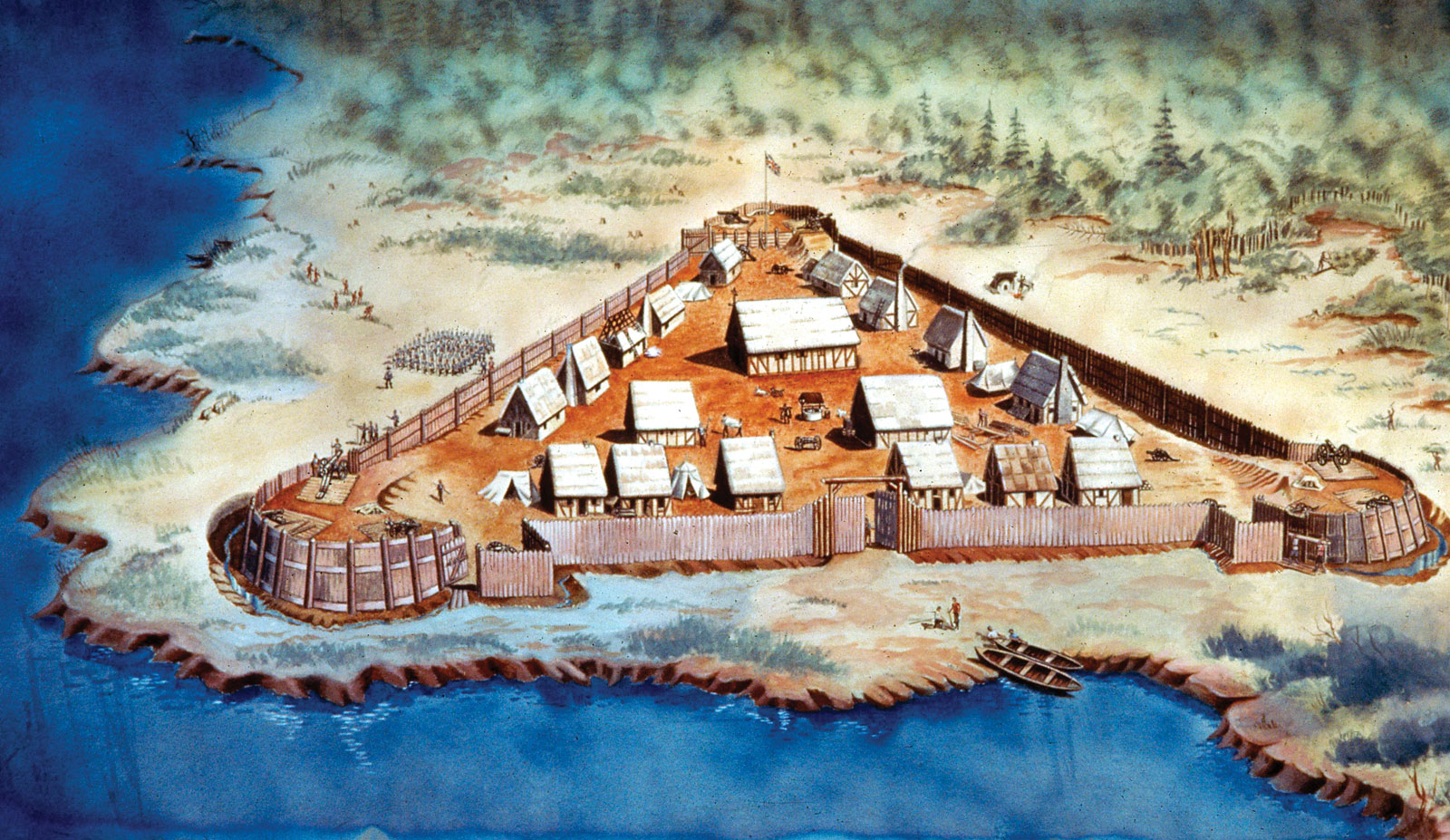
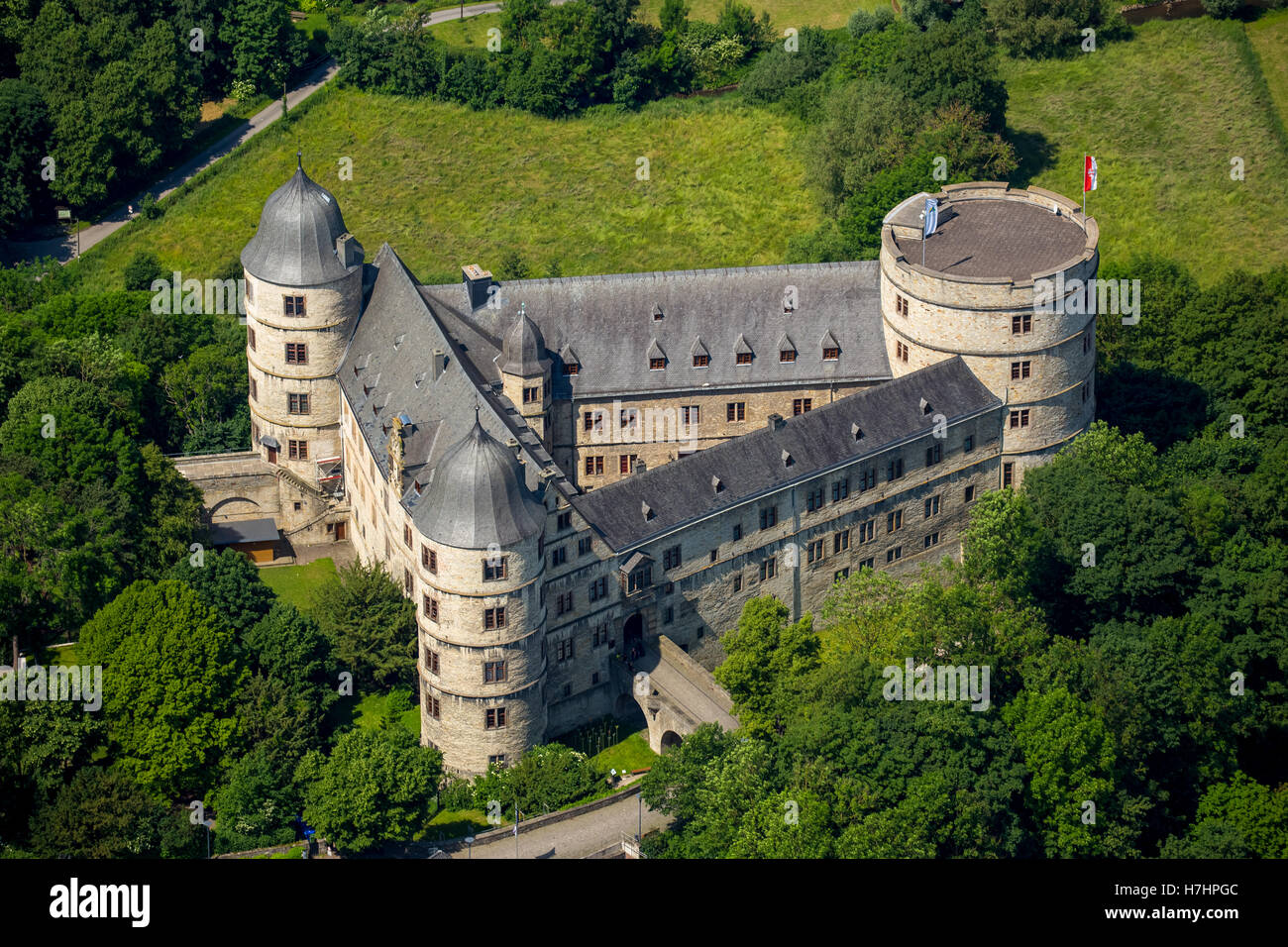
It seems like triforts like Jamestown or tricastles like Caerlaverock or Wewelsburg are kinda rare despite being a resource efficient design.
Do we know if there were more timber triforts throughout Europe during things like the Baltic Crusades where the Teutonic Order built an extensive castle-line.
Or is the lack of internal space too much of an issue?
Was the Confederacy within their constitutional rights to secede?
Looking for a nice readable history of dynastic China. I've got The Open Empire by Valerie Hansen, which seems to be a serviceable survey, but I'm looking for readable texts on the Tang. Do people still like The Golden Peaches of Samarkand? Finished my PhD and left academia, and now I'm following up on the interests I had but could never chase down because there was always another book to read about medieval Italy.
Is there a way to quantify the amount of change or turbulence going on in a culture? Say a culture is “stable” vs one in flux due to war, climate, etc - how do historians measure that?
Is there any online resource, like a wiki, but for military history, science, strategy and tactics? Particularly I'm interested in pre-modern/early modern stuff.
Hello, are there any good books about gladiators spartacus?
Why isn't the abolitionist John Brown considered to be an important hero?
Did the Roman Emperors have anything equivalent to a harem, in an official capacity, rather than informal mistresses?
What was the price of Mummy Brown paint in the 1800’s? I imagine it had to be quite costly.
What was the populations of the States when the USA was first founded?