I have been observing Roman coins for quite some time, and can't fail to notice that at some point in the byzantine period the imperial diadem looks more like a crown. On this coin, we can see Justinian wearing a classic diadem, for example.
https://assets.catawiki.nl/assets/2017/11/9/e/7/5/e7588ceb-7f0b-4006-ad55-6e38d4dcd18e.jpg
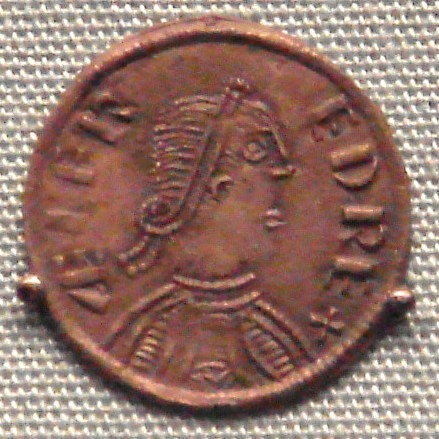
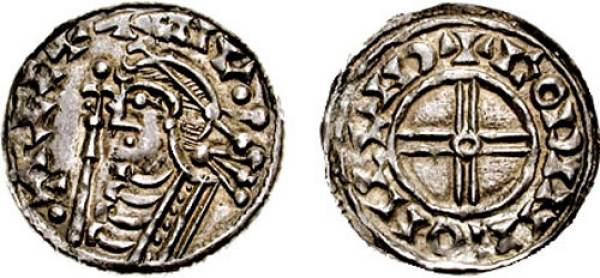
This and other representations make me think that what we see in Ravenna is not a crown, but rather an imperial diadem. For what I understand, the diadem is some sort of symbol of romanitas, and I have even seen diadems in Frankish, Anglo-Saxon, and Danish coins.
Coin from Alfred the Great, with diadem
So, when were diadems phased out and substituted by the crowns we associate with royalty?
I wrote this answer a little while ago on the adoption of crowns, and then different kinds of crowns, among Roman emperors. What you're describing as 'crown' rather than 'diadem' might be the move towards the 'radiate' crown, which was used in iconography on coins but for numismatic reasons had to exist alongside the diadem - because the type of crown used reflected the value of the coin.
The Early Medieval stuff is outside my area of expertise, but I'd venture that part of it came down to which image (and perhaps therefore which emperor) e.g. Alfred and Knut were trying to imitate.
ONUBA (Huelva). El sufijo Uba, agua, indica origen indoeuropeo no céltico. Estaba poblada desde el siglo VIII a.C. Era llamada Olba por los tartessos. Se trataba de un activo puerto por donde salía hacia el mar el mineral de Riotinto. La existencia de acrópolis, necrópolis y palacios sugieren la existencia de una clase distinguida de tipo monárquico. Albergó una zona de comercio de los griegos focenses. Acuñó ases y semiases.
https://historiadelasmonedas.wordpress.com/moneda-antigua/la-moneda-hispanorromana/