My great Aunt is one of these 300 men, women and children, who were murdered as soon as they arrived in Auschwitz. She might be in this film, but I don’t know what she looked like. My grandparents had children quite late, as did my dad, so they died long before I was born so I could never ask them questions. (Edit to add: my aunt would have been in her 30’s here)
I discovered the film last year when looking into my family history.
Like in so many other cases of deportation, they would have been told that they would be resettled to somewhere in "the East" as it was called by Nazi German officials with only a vague sense of what that meant concretly.
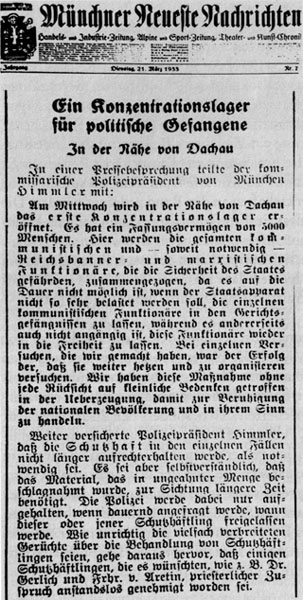
People, including the Jewish population, knew about concentration camps. As early as 1933 aft er the founding of the Dachau camp, Concentration Camps and the Concentration Camp system were referenced often in decrees issued by state agencies as well as by the news media, which hailed the development as a bold and necessary step (Himmler giving the press conference for the opening of Dachau). Here are some examples: Münchner Neueste Nachrichten reporting the opening of Dachau; a newspaper from Brandenburg reporting about prisoner transfers to Oranienburg; the Sindelfinger Zeitung reporting arrests of communists and their transfer to the Heuberg Concentration Camp in March 1933. Similarly, people were aware during the war that the Soviets and especially the Jewish Soviets were treated very badly and even murdered. We have documents such as diaries and letters starting in 1941 that talk about relatives returning from the front or writing from the front about the Einsatzgruppen murdering Jewish commissars, Soviet PoWs starving to death and so forth.
Similarly, with the deportations from Germany starting in 1941, there was a certain awareness that the conditions in "the East" were not very good for those deported and that people died. However, the first deportations of German Jews in the winter of 41 mostly went to Ghettos in Minsk and the Baltics where the previous inhabitants – the Jews of these areas – had been murdered prior to their arrival in order to make space for the German Jews. Many of these deported Jews died to the intentionally poor conditions but with the German Jews, the policy of killing them on arrival only came in 1942. One indication that Auschwitz as a destination did not necessarily hold the horror it would, say, two years later when German spouuses of German Jews took to the streets in the Rosenstraße protests knowing that deportation meant death, comes from a letter by Clara Grunewald – German schjool teacher and pioneer of the Montessori paedagogical system. In August 1942 Grunewald wrote to her friend Clotilde Schewnck zu Schweinsberg: "The people went to Auschwitz near Krakau, that's a transit camp. And if you mean Hetta Meyer [another friend of theirs who had been deported]? She went to Theresienstadt. YOu can tell her relatives that it isn't that bad. The old and sick are well taken care of there." They weren't. Hetta Meyer died after a couple of weeks in Theresienstadt while Clara Grunewald was also deported to Auschwitz where she was murdered in 1943.
And while many German Jews lacked concrete knowledge of the horror that awaited during and after deportation, others had a stronger awareness that it meant nothing doog when compared to Grunewald. Adolf Guttentag, a medical doctor fromn Breslau writes in his diary prior to deportation to Theresienstadt in September of 1942 twrites about his elderly neighbour of 87 who said he was not going to bow and therefore killed himself. He also writes about considering killing himself together with his wife and supplying his elderly mother with enough sleepping medication to do the same – something he would do barely a month later shortly before his final deportation.
A similar awareness of the situation can be gleaned from a document in the files of the Düsseldorf Gestpo from October 1942 concerning the case of Anne Baum. Baum had married the Jewish company owner Mayimilian Baum in 1917 and had had several children with him. While their youngest son had already been evacuated from Germany on one of the so-called Kindertransporte to Great Britain, their duaghter Irmgard, born in 1919, had not left Germany and was regarded as a Jew by Nazi German authorities. And while Maximilian Baum remained spared from deportation due to his "Ariian" spouse, their daughter did not and was deported to the Izbica Ghetto in April 1942, where she was murdered. In October 1942, Anne lodged severl inquiries with her local Gestapo in Düsseldorf concerning location and fate of her daughter.
In the protocal recorded by Hermann Waldbillig, Waldbillig writes that the Gestapo will not give her any information concerning the location of her daughter, that further inquiries with any sort of official burecratic institution is senseless and that her daughter will not be returned to Germnany. In her original letter, Anne Baum had mentioned severl things she had heard about those resettled:
When shopping in the bakery of Mr. Ehrmann I overheard a nurse and civilian talk about how the Jews in the east had to dig their own graves and then were killed with a shot to the nape of the neck. Other Jews had been placed in an ambulance that was then filled with gas in order to kill them. [...] I am convinced that those rumors are not true and I demand to know about my daughters fate in order to disprove such vicious propaganda.
All of these things Anne Baum had heard were true. But Waldbillig warned her to never repeat those rumors for that would consititue a crime.
The fact that while there was knowledge of what happened to deported Jews floati9ng aropund Germany in 1942, people still went to assigned place in order to be concentrated, hearded into a train and sent off to an uncertain and very dangerous fate has to do with the fact that after all, it is very hard to shatter a person's relationship to state authority. When organizing these deportations, the letters and declarations people received were steeped in legalistic police language and splattered with official seals and signatures. It came from the police after all. While there were people who took active steps to avoid deportation – not going to the synagogue, staying with friends and so forth – there were also people whose faith that while the state they lived in might discriminate against them, they would not outright murder them and their families was strong. In the modern world we are conditioned to follow laws and directives and to asusme good faith on behalf of "our" state, "our" country, "our" government. Hence, people – often despite existing knowledge – would bow to faith, surerender to the police and go and do what they were told – up to wlaking into the gas chamber on arrival still clingin to the hope that it really was only a shower.
At the same time the Nazi regime used all this in order to make everything seem less threatening and more legitimate by couching it in the symbols and language of odfficial state buisness – from letters of deportation sent by the police to giving everyone a ticket on their journey to "the East".
It's these things coupled with assurance from people in unfiforms, people who had the air of being officials that lead to so many deportations running so smoothly.
What would food supply systems in Germany have been like during the latter half of the war? Would allied bombings of transport networks have had an effect on food and crucial aid supplies to the camp?
I highly recommend that you read the diaries of Victor Klemperer, I Shall Bear Witness (especially the second part in the English translation, 1942-45, sometimes sold as To the Bitter End). I regard these diaries as a revelation; they are full of details of what happened in Dresden, including the names of Jews (and their persecutors) and the various steps taken against them. By the time of Hellerberg, the existence of Auschwitz was well known to the Dresden Jews, and being sent there was regarded as effectively a sentence of death.
Prof. Klemperer describes (among much else) how the Hellerberg barracks were built and how they were very bad (the Russian POW barracks were "luxury hotels" by comparison) but weren't quite a prison (the inmates were let out to work and at times for necessary business). I would assume that the video here shows the collection of Jews from the "Jew's Houses" (the apartments they lived in, which in Dresden were just on ordinary residential streets) to go to Hellerberg. That was, according to the diaries, not seen as a death sentence at the time.
However, when the Hellerberg residents were rounded up and deported to Poland, that was seen as a death sentence. Prof. Klemperer said on his diary entry for that day that he counted those being deported as being on the rolls of the dead, and that they would not be seen again (and, sadly, he was of course correct). He had no access to privileged information, and I feel sure that was the general feeling (or else he would have reported that too).