I would say it's complete lack of interest from the audience. When people talk about Middle Ages, they usually think about knights participating in crusades, maybe they will think about the Hundred Years War, ma-a-aybe they will think about landsknechts, but they will virtually never think about medieval Poland or Hungary. It just so happened that great amount of literature from the West had been focusing primarily on West, including Shakespeare and many other authors. Since West is generally more wealthy than the East (why this happened is not important in our context) and more eager to produce media surrounding their history, it's much more prevalent in the info field. Majority of books are written on western European castles, armour and weapon types, military and governing systems, and it comes full circle when people only want to know more about them, thus increasing demand for new literature and movies on this topic and continuing to ignore the outskirts. Scientific literature on Russian, Hungarian and Polish medieval societies are relatively uncommon and rarely translated (Roman Khrapachevsky's superb work on Mongol Empire's conquest of Russia [1] has yet to be translated, and some Russian works only go as far west as Poland [2]).
Even when we consider looking at the "Western" Europe, it's important to understand that majority of this part of the continent also tends to be overlooked. Media content regarding this period mainly comes from the Anglosphere since Hollywood has both the money and the enthusiasm to film huge, engaging movies with big battles and or sprawling Medieval city set pieces, and Hollywood (and other companies) is generally interested in showing history adjusted to the Anglosphere market. If you take a look at it closer, there are a lot of movies describing either English or "general" history people are accustomed with - Middle Eastern crusades (Kingdom of Heaven, Arn, Knightfall, although Arn is Swedish), Hundred Years War (too many to list), War of the Roses (The White Queen, The Hollow Crown), wars of England with Scotland (Braveheart), "fantasy" stories happening in Middle Ages (endless iterations of Robin Hood, the Black Death). The only movies and series I know that focus on, say, Italy or Italian characters are Medichi, Marco Polo and Flesh+Blood, and I doubt that their overall quantity is bigger than topics I mentioned above (just in case, I don't say it's bad or that people should drop their Western European books and movies and go watch something else, it's just how things are).
Eastern Europe is usually quite distinct in terms of societal norms, technologies, warfare and especially the looks, they also didn't have much involvements in "big" European wars, such as Hundred Years War, Italian Wars, Reconquista, etc, preferring to deal with their neighbours. They also often possessed less developed technology and population that didn't allow them to play big roles in comparison to France, for example. Usually nobody is interested in, say, filming history of these countries and, let's face it, Eastern European cinema is often poor quality in comparison to the West. Russia is especially notorious for that: both "Alexander, battle of Neva" (2008) and "Viking" (2018) were pretty big movies with relatively (for Russia) big budgets, but they were completely shred to pieces by critics, so nobody expects anything of quiality on the subject anymore.
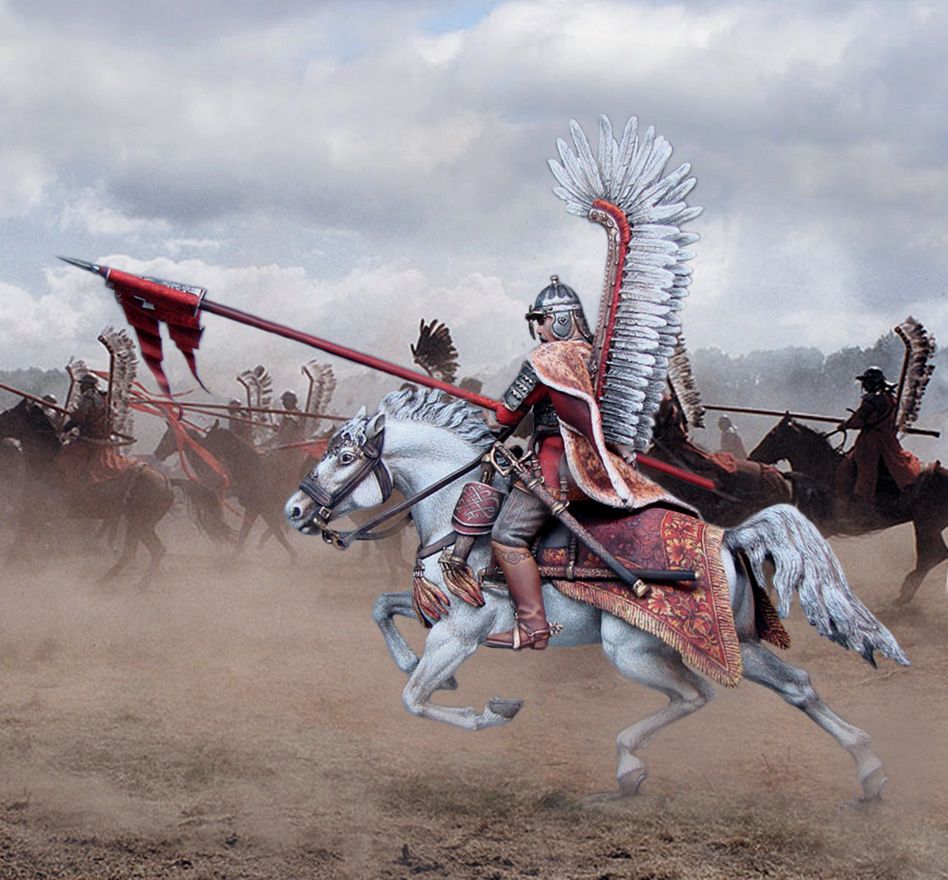
Majority of the Westerna Anglophone audience (again, I don't blame them) who have even slight interest in history will probably know something about medieval England and Spain, they definitely heard about the Crusades (all the Jerusalem memes), probably they are aware that landsknechts existed or that Holy Roman Empire was actually a conglomerate of different factions and counties. But their knowledge of medieval Russia starts and ends around Mongolian Invasion (thanks to multiple Youtube pop history channels that've been talking about the subject lately), after that Russians disappear from the radar until they suddenly reemerge as a huge empire in 18th century. Their knowledge of medieval Hungary doesn't even start, and medieval Poland usually begins only when the winged hussars arrive (because Sabaton who popularize history in their songs). Literally the most well known events of Eastern history are crusades (that don't even touch Eastern Europe and deal with Arabs) and the fall of Constantinople. Everyone in Anglosphere heard about battle of Agincourt (1415), but much fewer people know about battle of Grunwald (1410). Everyone is familiar with the crusades aimed at the Holy Land, but northern crusades (and crusaders' wars with Lithuania, Poland and Novgorod Republic) are much less prevalent, I know several people who were geniunely surprised these things happened. Everybody heard about long history of French-English conflicts, but I doubt that even one out of a hundred can name at least three battles or sieges of Russian-Lithuanian confrontation which spanned centuries. Ottoman Empire, despite being huge political power with possessions and wars in Europe is often overlooked.
This doesn't end with movies and books too, since videogames have as much prevalence as these too mediums (possibly even combined). When was the last time you played as Eastern European character in non-typical western medieval setting? Kingdom Come: Deliverance (2018) happens in relatively eastern lands, but Bohemia is still largely Western-influenced. Mount&Blade series has Eastern European-inspied factions despite being fantasy. There also was Medieval II Total War expansion focusing on wars of Teutonic Order in north-east. Ancestors' Legacy has Slavic factions. Otherwise people usually play as or want to look at western soldiers in full plate mail, maybe with some additions of Middle East (Assassin's Creed as by far the most popular example).
So, in short, I'd say it's lack of interest on the subject. Not that it's too bad, it's just how things are.
In addition to a great response by u/SgtBANZAI I completely agree with, I would like to point out two more reasons for this state of affairs that are quite strongly related to what has already been said. Please note that I'm referring here to the relative scarcity of popular discussions concerning Central and Eastern Europe and not the scholarly work that fares pretty well, although is not well known for the reasons we are discussing in this thread.
Although the term 'Eastern Europe' suggest that this is just another territory in Europe that is well described and depicted, it is far from truth. Cultural and historical differences between Western, Eastern and Southern Europe (with Central Europe being a kind of mix between the three) are substantial and not that far from differences between e.g. Western Europe and Middle East or China.
The prevalence of English history is likely caused by the prevalence and later domination the Anglophone media have in the Western World. Given that the English and especially American movies and series are now one of the most popular if not the most popular international media, it only stands to reason, that the history of the Anglophone countries will play a prominent role. Thus, as most of said countries are modern colonies of England and thus their portrayal can hardly go back past early 17th century, anything that happened earlier must by necessity focus on England and, by extension its surroundings. This, of course, does not mean that the popular media portray only England, but they primarily reference all territories and even linked to the latter, such as France (a common antagonist in the Middle Ages) or Holy Land (English knights formed a large part of crusaders).
Another thing is the prevalence of the Western (read: English and French) tropes in the historical segment of the Western noosphere upon which the bulk of fictional portrayals is base, both in case of historical fiction and fantasy. This makes these tropes well known through sui generis cultural osmosis what in turn makes it easier to understand any history-related subjects. In a way, it resembles usage of language for communication, as to understand what is said, you need to know what specific words mean in a given context. Thus, if one speaks of some historical phenomenon, the ability to both ask the question and provide the answer requires at least some understanding of the topic at hand. This is easy, if it refers to well-known events and concepts but becomes much harder when the concepts are not that familiar.
In case of Central and Eastern Europe (but to a large extent also the Southern part of the continent) this is far more complex. Development of these territories did not follow the patterns present in Western Europe, making understanding of many concepts far harder to grasp. Christianization occurred on the former only around 9th-10th century, what with almost complete lack of written accounts from pre-Christian times makes it very hard to trace what actually happened there. These are also territories of 'Barbaricum', what means that Roman influences were basically non-existent, and the tropes associated with 'Church' are also completely different, given that Eastern Europe and a part of Central Europe adopted Orthodox Christianity, what became an important difference both before but especially after the Great Eastern Schism. Most westerners, even those not subscribing to any faith, are more or less familiar with Catholicism and Protestantism. Few can say that in regard to Orthodox Christianity, especially when political and cultural impact is discussed.
Furthermore, the events forming the historical experience of the Central and Eastern Europe themselves are quite different and not easily relatable, making the reception harder. For example, the Crusades and territorial struggles against Christian neighbours largely define the warfare in the Western optics, while in Central and Eastern Europe it largely lacked the former while incorporating defense against the Asiatic peoples, mainly Kuman-Kipchak confederation and later also Mongols that managed to subjugate most Russian principalities since mid-13th century, with these elements being completely absent from the Western history. Likewise, the landscape of the Western Europe in 16th and 17th century is marked by the religious wars, reformation and rise of the colonial empires, Polish-Lithuanian Commonwealth developed specific brand of democracy and fought territorial wars with all neighbours and Russia freshly emerged as a new state under last Rurikids, built its specific form of bureaucratic absolutism and started expansion to the east, while the foreign policy of the entire Central and Eastern Europe was marked by more or less peaceful relations with Ottoman Empire that rose to be a prominent power in that region and the struggle for the control of the Balkans became an important bone of contention between the Ottomans and Christian states. Thus, to speak relatively freely of the events in that part of continent, one needs to also know a bit of Ottomans and Asia as well as develop an at least cursory knowledge of the political system largely unrelated to anything that was going on in the West. And this might be a bit too much for a casual reader, especially given hat relative scarcity of these topics in the readily available fiction and popular history means the necessity to use scholarly work that is often considered difficult (whether this is the case or not is another thing).
And this forms a vicious circle - you can't readily present the history of Central and Eastern Europe without explaining the differences first, and you can't explain them without presenting the history of the region. It doesn't mean that it can't be done, but as there are significant differences, the educational approach might work better than the works of fiction and thus it would require more interest in educators presenting such topics (I'm not speakig about official education but rather about high-quality internet podcasts, logs or videos that are more accessible and may be more interesting to anyone who wants to know something about Central and Eastern Europe).