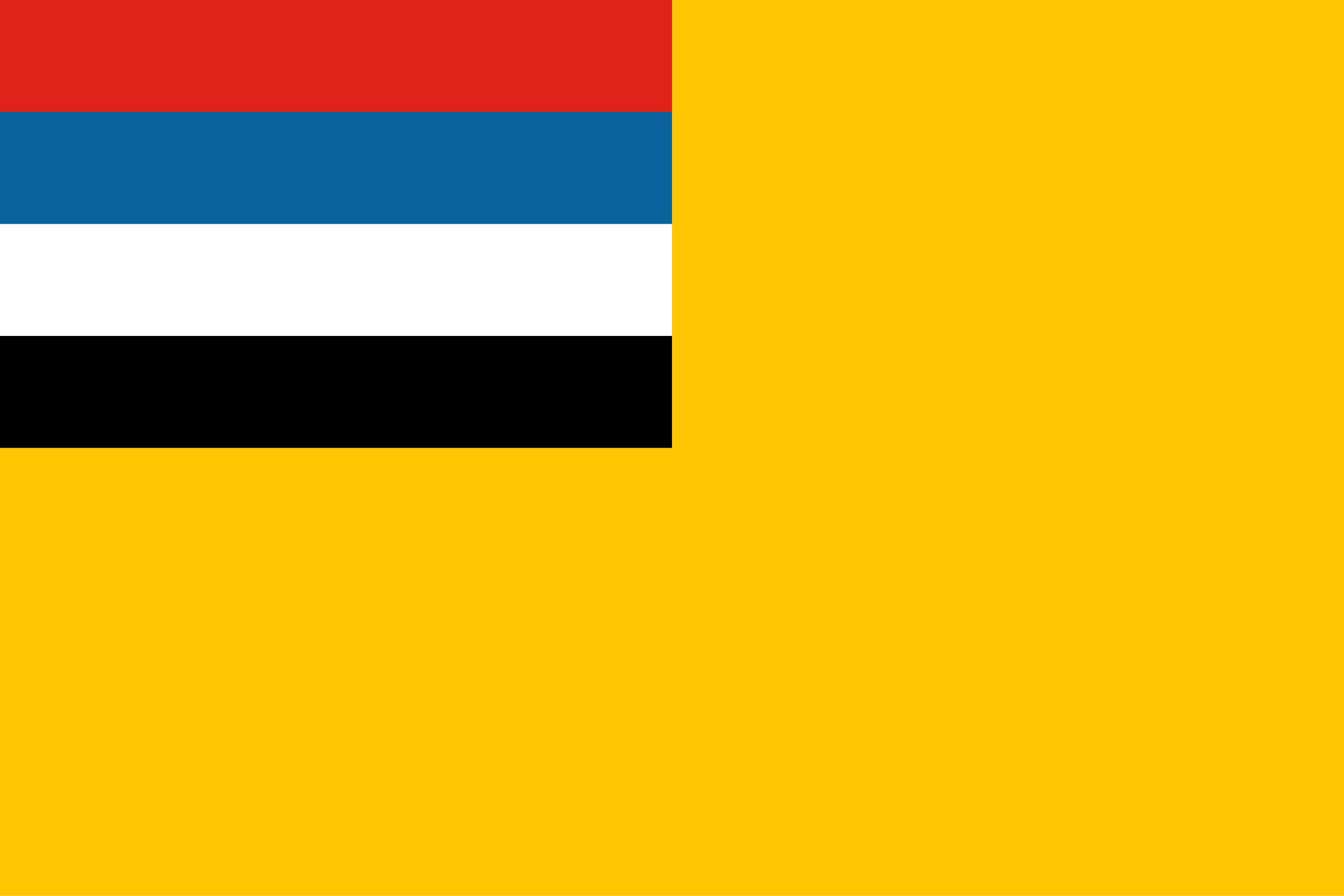
I will only be addressing this question from the perspective of the Reformed Government - would be great if someone could jump in and write about the Provisional Government or Manchukuo!
Scholarship that directly examines the decision of the Reformed Government of the Republic of China to adopt the five-coloured flag is sadly lacking (or simply because I couldn’t find it!). Unfortunately, collaboration in the Second Sino-Japanese War is an understudied subject, and even more so for the Reformed and Provisional Governments. These two collaborationist bodies are often overshadowed by their more famous counterpart, the Wang Jing-wei led Reorganised National Government of China. The essential primary source to the period, A Preliminary Collection of Important Materials for the History of the Republic of China (中华民国重要史料初编), has around 40 pages of material on the Reformed Government, compared to 1600 pages of material on the Reorganised Government (though this can also be attributed to the fact that the compilation of sources in the collection was drawn from Guomindang archives - more on why this is relevant later). Research on collaborationist regimes is also a touchy subject for scholars in mainland China. When I typed in the keyword of ‘Reformed Government’ (维新政府) into the Chinese-equivalent of JSTOR, only three articles turned up. This excessively lengthy preface is to highlight the fact that I don’t have the smoking gun, so to speak, as to why the Reformed Government adopted this particular flag. That said, I will try my best to address the ideological basis of the Reformed Government, which will hopefully give some indications to the reuse of the Beiyang Government flag.
By now, I have probably utterly confused the general audience with the sheer amount of governments I mentioned (not you, u/EnclavedMicrostate, you can skip this bit). So, a quick summary:
The linkages between these five governments are essential towards understanding why the five-colour flag was adopted by the Reformed Government.
We can start with the Japanese recruitment of Liang Hong-zhi from retirement in 1938. Liang was a member of the Beiyang Government in the 1910s under the patronage of the warlord Duan Qi-rui, and held various governmental positions until the Guomindang’s Northern Expedition in 1928. Long associated with the pro-Japanese Anfu Club, Liang was a natural, if somewhat uninspiring, candidate to lead a pro-Japanese collaborationist regime. Japanese choices were rather limited anyway, with an intelligence report describing the candidates as “a queer amalgam of survivors of the old northern Anfu clique and of southern Guomindang dissidents.” A common denominator was that all candidates had fallen out of favour with the Guomindang government in the 1920s, either due to the Beiyang-Guomindang transition or disagreements with the Guomindang leader Chiang Kai-shek. The Reformed Government was therefore packed with political figures who objected to the rise of the Guomindang, or more specifically, the rise of Chiang Kai-shek. If there was one word to describe this group, it would be conservative. In the ten-point political programme put forward by the Reformed Government in 1938, one point emphasised the need to sweep away "the shallow education and principles" that had derailed the development of China (clearly a pointed critique of the Guomindang government), to be replaced by a foundation of "China’s traditional moral culture." As I said, rather uninspiring figures.
The ideological identity of the Reformed Government is hard to pinpoint - I would say rather than being defined by what it was, the Reformed Government was defined by what it was not. It was, as a conservative government, naturally anti-communist. The second point from the ten-point political programme was to "Stamp out Communism at all costs...to stabilise the country and eliminate the origins of chaos." Interestingly, anti-communism was also linked with an anti-Guomindang position. In an declaration made at the Anti-Communist National Salvation People’s Conference held on 30th Novemeber, 1939, the Guomindang was critiqued for ‘leading the wolf into the room’ by allying with the Chinese Communist Party in the first United Front of 1924-1927. The Second United Front from 1936 onward was also subject to criticism. Blame was laid squarely at the feet of Chiang Kai-shek, with the claim that following the Xi’an Incident of 1936 (where Chiang was kidnapped by the warlord Zhang Xue-liang and was forced to form a united front with the communists against the Japanese) Chiang had become totally subservient towards the Chinese Communist Party to save his own neck. The Declaration further accused Chiang of leading China to her own destruction in an unwinnable war against Japan. Thus emerged the curious slogan ‘Anti-communism, Overthrow Chiang (反共倒蔣)', which must have amused the famously anti-communist Chiang. This declaration was collected in a booklet on important speeches and declarations from the Reformed Government, published in 1939 by its Ministry of Information. The booklet is especially useful as a primary source, as it shows us how the Reformed Government wished to present its ideology to the populace. Not surprisingly, anti-communism, anti-Guomindang, anti-Chiang, and the linkages between them were major talking points in all speeches and declarations included.