From an earlier answer of mine
One anecdote about Bismarck was that when someone asked him about the possibility of Austria joining the newly-minted German state, the Chancellor declared he would declare war on Austria to prevent such a union. Not only does this anecdote convey Bismarck's brand of dark and sarcastic wit, it also underscores the complicated nature of German national unity. While Bismarck did certainly assert the unification of Germany was Prussia's destiny, what exactly constituted "Germany" was more plastic in Bismarck's formulations.
It is important to note that Bismarck did not invent German nationalism or debates on national unification, but rather was a player in a complex political process. Broadly speaking, the debate over unification in the first half of the nineteenth century ranged between two poles called Kleindeutschland (lesser Germany) and Großdeutschland (greater Germany) solutions. In general, the Kleindeutsch position stressed that Germany should unify as a political entity consisting of the core German states. These central European states were allegedly ethnically and linguistically homogeneous (on the ground, the various German states were far more diverse, but nationalist activists often overlooked this). The partisans of Großdeutschland argued for a larger expansion of Germany into regions where there were large German minorities like Bohemia. The political conditions in Europe in the mid-nineteenth century tended to favor the Kleindeutsch solution. Incorporating Austria into a future German state would have meant adulterating this new German polity because in addition to Austrian Germans, the Austrian Empire contained many Slavs and other non-Germans. One of the big sticking points of the Paulskirche debates about German unification in 1848 was whether the Austrian empire could be incorporated into a new German union given the size of its non-German population in places like Bohemia. The only real practical solution to this impasse would have been a real or de facto dissolution of the Austrian empire, which the Habsburg emperor would not permit. Therefore Großdeutschland or pan-German activists in the nineteenth century often saw the old imperial house as a barrier to their aspirations to unite the whole German cultural sphere.
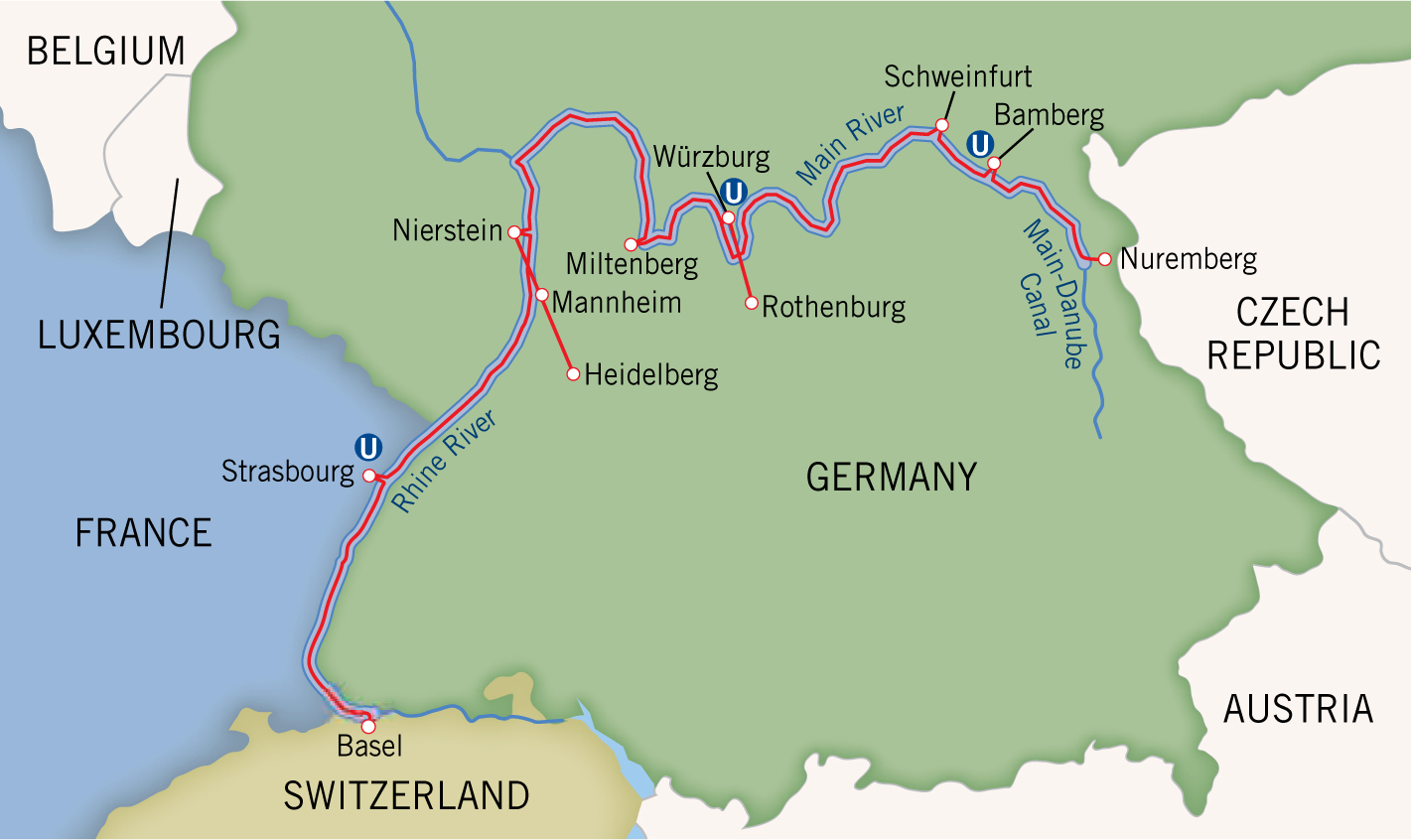
Bismarck favored the Kleindeutsch parties not only for practical reasons- it was the more manageable position and the one with the greatest political support- but also because it aligned within his own biases. As a staunch Lutheran, Bismarck was leery of incorporating too many Catholics into a Prussian-dominated polity. One of Bismarck's schemes during the Crimean War was a proposal that Austria and Prussia divide up Central Europe along the Main River leaving Prussia with the mostly Protestant northern half of the German Confederation. While this proposal went nowhere, it does speak to Bismarck's initial reluctance to include sizable numbers of Catholic Germans under Prussian control. Even though Luther was very distant history in the nineteenth century, the Protestant German cultural milieu had a strong streak of anti-Catholic prejudices and many Protestant ideologues associated Catholicism with retrograde thinking and ultramontainism. Bismarcks' public rhetoric both before and after unification played up on these Protestant stereotypes of Catholics' backwardness and Protestant modernity. One of his more common phrases likened Catholic Austria to "a worm-eaten galleon" compared to the "trim Prussian frigate," which was an image that played on notions of the modernity of German Protestants and a Catholic power trapped in the past. While Bismarck did allow southern Germany to join in the German union, he was incredibly leery of Catholic politicians like Windthorst and the Zentrum, the Catholic party, was one of Bismarck's initial opponents in the Reichstag.
Although the process and experience unification lessened confessional differences over the long-term, these were not minor demographic challenges in the 1860s. The political system in Prussia was already rigged against Catholic political mobilization and the presence of Catholics in the post-1871 political order was a disruption to the political system. Incorporating the Austria, even if just Cisleithania or areas like the Sudetenland would introduce a confessional balance favoring Catholics that neither Bismarck nor many of his contemporaries would have been comfortable dealing with. Bismarck's experience with the Zentrum in the early decades of the Kaiserreich did show him that a Catholic minority was a difficult proposition, so incorporating more Catholics would have been a dead letter. By tacking to a Kleindeutschland position in the 1860s-70s, Bismarck became the champion of a type of German nationalism, even though the imperial structure he created privileged Prussia and the Hohenzollerns. For Bismarck, Prussian nationalism was the nationalism of Kaiserreich; he saw the two as complimentary, not as fundamentally oppositional.
Added to the domestic complexities of confession, pushing for an Austro-German union was also a bridge too far in terms of international Realpolitik. While Bismarck could corral the lesser German princes to accept the authority of the Hohenzollerns, he could not apply the same mixture of veiled threats and inducements to a great imperial house like the Habsburgs. Nor was simply deposing the Habsburgs a practical possibility either since that begged the question what to do about the rest of the Austrian empire. Leaving Hungary and the Balkans up to their own devices invited trouble with the Russia filling in the vacuum. The Wars of German unification had already disrupted the European balance of power. Removing Austria from this balance for a Großdeutschland would have been a geopolitical leap into a very dangerous unknown.
In the end, Bismarck did not really have a terribly coherent vision of where Austria fit within his post-1871 system. While it was clear that he wold fight tooth-and-nail against the incorporation of the "worm-eaten galleon" into his frigate, he had little idea of where Austria would go after the end of the German Confederation. Some of his writings and speeches indicated that he hoped the Habsburgs would reform along German lines to become a more modern entity after their defeat in 1866, but Bismarck's alliance system was predicated on Habsburg subordination to Berlin. The nationalist rhetoric inside Germany that celebrated Wilhelm I's unification of Germany, a cult of personality Bismarck certainly encouraged, undermined the domestic position of Franz Joseph as pan-Germanists in Cisleithania often incorporated this material to the detriment of their loyalty to the Habsburgs. While both international circumstances and domestic considerations precluded any serious Großdeutsch policies by Bismarck, the option remained on the table and would survive the wreckage of both the Hohenzollern and Habsburg dynasties in 1918.
Sources
Pflanze, Otto. Bismarck and the Development of Germany 1. Princeton, NJ: Princeton Univ. Press, 1971.
Steinberg, Jonathan. Bismarck: A Life. New York: Oxford University Press, 2011.