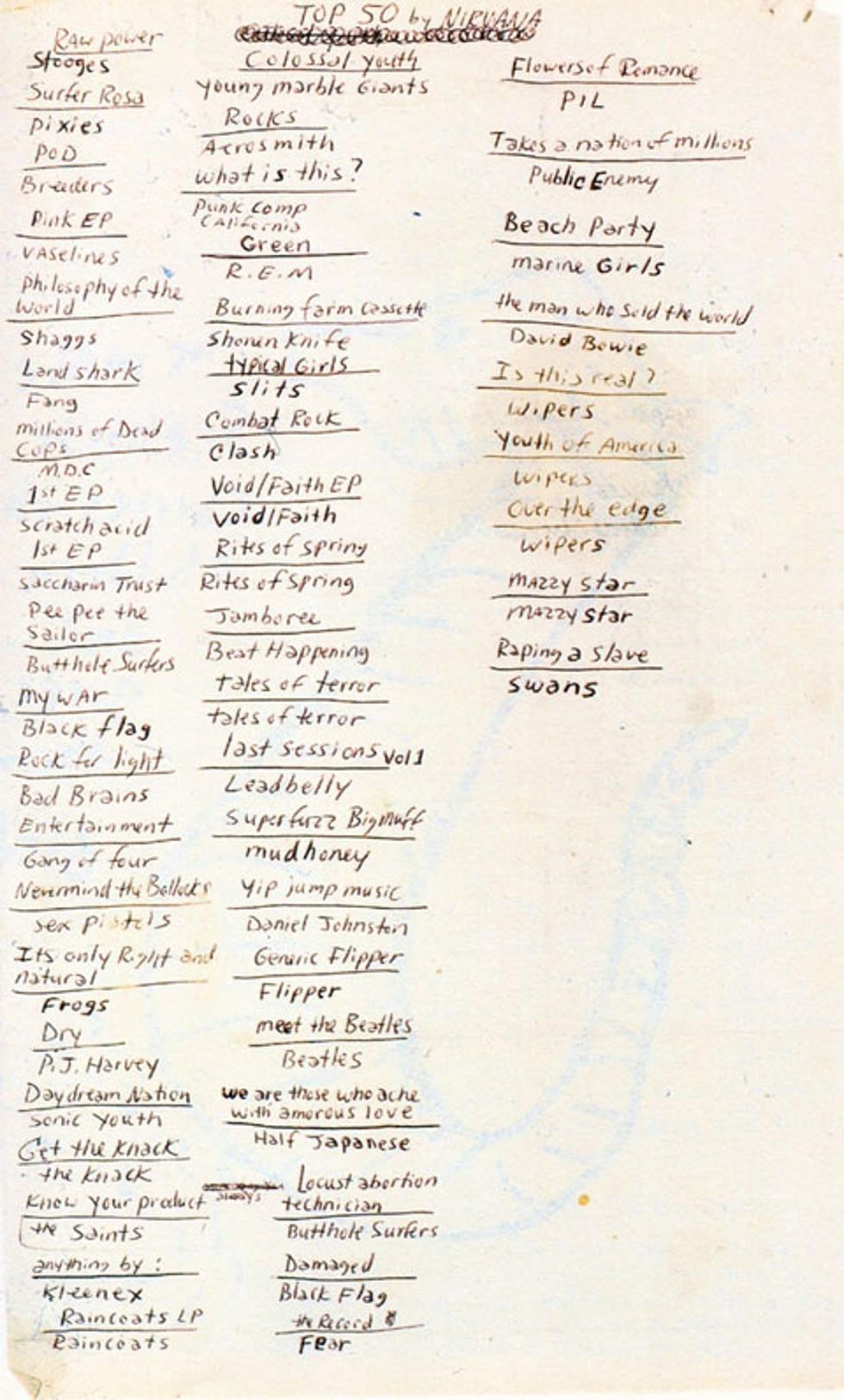
Was it simply a matter of chance? Or has The Shaggs' work been understood as a sort of avant-garde outsider work in a way that their contemporaries' was not, and so had genuine artistic merit?
For those who have not yet experienced The Shaggs' magnum opus, the album can be found on Spotify and on Youtube. The highlight is track 4, 'My Pal Foot Foot'. Having said that, The Shaggs' output was not all this sort of so-bad-it's-good material. Their 1982 compilation album Shaggs' Own Thing (Spotify link) contains a few covers that are pretty competent given that these were teenagers with little to no formal musical training.
In addition to their "outsider" appeal as noted by u/rocketsocks, the Shaggs have a place in the specific history of female alternative/underground music with its embrace of looser structure over order and of expression over pop/rock cliché.
That may seem paradoxical or even fanciful if we recall that they were driven by a domineering father into a release for which they didn't feel ready, but the result of a record by young women seemingly oblivious of the wants of a mass audience and untouched by conventional rock discipline or pop professionalism was gold-dust to many who relish such an approach.
And while their musical endeavours resulted from forceful paternal prompting, the songs and arrangements seem crucially to have been their own. Lester Bangs wrote in the Village Voice (while observing that *"*the only hope for rock 'n' roll... is women"):
How do they sound? Perfect! They can't play a lick! But mainly they got the right attitude, which is all rock'n'roll's ever been about from day one.
Despite owing much to their dad, the "just do it" philosophy of the Shaggs' LP was later to find independent expression in the female punk and postpunk bands of the 1970s - most prominently the Slits, the Raincoats and Kleenex/LiLiPUT (each also Nirvana favourites), who went on to inspire another generation of female musicians 20 years later and whose influence remains alive to this day.
Whether the record's "good" or "bad" is almost academic: despite its origins it retains a particular importance because of its date, well before the style became a genre in its own right: a window into a "what if" - is this what we might have heard in the late 1960s and early 1970s if more women had been encouraged to defy expectations rather than having to wait until punk's assault on convention?
There is certainly an element of chance, since there were very few copies of their album in circulation. As luck would have it, Frank Zappa heard it, liked it, and pushed it. This led others to listen to it, and also like it. They understood it as a great classic of outsider music. The writer of the liner notes to their album appears to have understood it:
Of all contemporary acts in the world today, perhaps only the Shaggs do what others would like to do, and that is perform only what they believe in , what they feel, not what others think the Shaggs should feel.
If this was written by their father/manager/"proprietor", it's more perceptive that I would have expected. Whoever wrote it, that kind of sincerity is IMO essential for great outsider music (for another example, see the late great Wesley Willis).
Charlie Dreyer, one of the engineers for Fleetwood Studios where the album was recorded, appears to have gotten the ball rolling. Dreyer left Fleetwood to work for Third World Recording, which then releases the album on their label. Major-label executive and musician Harry Palmer had recorded at Fleetwood, working with Dreyer, and they had become friends. Visiting Third World, he saw boxes of Philosophy of the World and asked about it. Dreyer told. Palmer took a box and was stunned, positively. Palmer made others listen, and went and saw the Shaggs perform live:
They sounded exactly like the record. It was unbelievable. The locals came out and danced in a clumsy arythmic, Night of the Living Dead sort of way. It was cretin-like. I remember thinking, "How can you dance to this music?" But they did!
He discussed working with the Shaggs with their "proprietor", but dropped the idea, feeling that it would be too exploitative (and this from a major-label executive!).
I don't know whether Zappa heard Philosophy directly from Palmer, but Palmer's pushing of the album is what made it heard by many. After Zappa publicised it, Philosophy circulated more widely, mostly on cassette due to the small number of albums. Once it had enough momentum, it was re-released and was then even more widely heard, with Lester Bangs praising it in The Village Voice, and with the likes of Kurt Cobain further praising it, it was on its way to cult classic.
From the above, there was clearly an element of luck. But Philosophy could only become an outsider cult classic due to its own internal virtues.
References:
The best coverage of the Shaggs that I've seen is the first chapter of: Irwin Chusid, Songs in the Key of Z: The Curious Universe of Outsider Music, A Cappella, 2000. Not only does the book open with the Shaggs, the companion CD (volume 1) also begins with the Shaggs.
Irwin Chusid has made the Village Voice article by Lester Bangs available on his website http://www.keyofz.com/