Today:
AskHistorians is filled with questions seeking an answer. Saturday Spotlight is for answers seeking a question! It’s a place to post your original and in-depth investigation of a focused historical topic.
Posts here will be held to the same high standard as regular answers, and should mention sources or recommended reading. If you’d like to share shorter findings or discuss work in progress, Thursday Reading & Research or Friday Free-for-All are great places to do that.
So if you’re tired of waiting for someone to ask about how imperialism led to “Surfin’ Safari;” if you’ve given up hope of getting to share your complete history of the Bichon Frise in art and drama; this is your chance to shine!
There was a question a while ago about the history of Dressage, which I’ve only just gotten around to finishing up an answer to. Alas, the OP deleted their account in the interim, so since it would be pretty useless to respond to their original question at this point, I’m going to post the full response here.
Dressage is simply a French word that is generally translated into English as “training.” In older works on equitation the two words are used interchangeably. To “dress” a horse means to train a horse. We can define dressage in three ways, most narrowly as dressage the sport, which has been governed internationally by the Fédération Équestre Internationale (FEI) since 1921. More broadly, we can define dressage as an art, the classical traditions of which continue to be carried forward in Europe by the Spanish Riding School in Vienna, Austria; the Cadre Noir in Saumer, France; the Royal Andalusian School of Equestrian Art in Jerez, Spain; and the Portuguese School of Equestrian Art in Lisbon, Portugal. Most broadly, dressage is the foundation of all horsemanship. More than just sport or art, dressage is the means through which equestrians develop the horse’s physical capabilities, using systematic principles grounded in biomechanically sound training techniques to build up a balanced and supple animal that can succeed in the purpose to which it is put.
If we consider dressage at its broadest definition, the earliest known work on training horses, the Kikkuli Horse Text, is an exemplary example. The text dates to the Hittite New Kingdom, roughly 1350 BCE. The author introduces themself in the opening lines of the text:
Thus [speaks] Kikkuli, the horse trainer from the land Mittani
Kikkuli’s text outlines a 184 day long program to condition horses for chariot work. This conditioning regime was structured around three stages of interval training. The first developed the strength of the horse’s legs. The second developed the horse’s cardiovascular system. The third conditioned the horse’s neuromuscular response. The interval training regime that Kikkuli recommended is highly reminiscent of modern conditions plans for three day eventing and endurance horses. Horses were led besides a chariot at the trot and canter before being driven in order to avoid the stress of driven work while building strength. Every interval of canter was followed by an intermediate pause to partially lower the horse’s heart rate. Horses were carefully cooled down at the end of each workout and rest days were built into the training plan. Kikkuli even recommended cross training -- horses were swum to help develop full body strength -- and massage.
To demonstrate how well designed Kikkuli’s conditioning regime was, biblical scholar, competitive endurance rider, and Arabian horse breeder Ann Nyland precisely replicated the plan with ten Arabians, though instead of leading her horses beside a chariot, she led them beside a car. The horses showed significant increases in fitness, as measured by maximum oxygen uptakes, plasma lactates, heart rates, and muscle composition. Perhaps most importantly, all ten horses remained physically and mentally sound.
The earliest known extant work on the ridden horse was written by Greek philosopher, soldier, and historian Xenophon. Written 1000 years after Kikkuli’s horse text, around 355 BCE, Xenophon’s Horsemanship is still widely considered in equine literature to be the foundational text on dressage. Alois Podhajsky, Olympic dressage medal winner and former director of the Spanish Riding School said of Xenophon that:
Any horse expert who has studied this book of Xenophon’s written 2400 years ago cannot fail to be impressed by the preciseness of his explanations and by his insight into the feelings of the horse. His training was based on intuition and kind treatment…
And indeed much of Xenophon’s advice is still recognizable to the modern equestrian. He presented the guidelines for the classical seat on horseback, recognized for the security it provides the rider and the level of control it provides over the horse:
A Good seat is not that of a person sitting on a chair, but rather the pose of a person standing upright with their legs apart.
He also recommended the volte for suppling the horse, as well as instructions on how to influence the horse to pick up one lead or the other when transitioning from trot to canter. Xenophon also states explicitly that the rider must reward the horse whenever the horse does as the rider wishes. Further, he cautioned against a harsh hand when developing collection in the horse, and his description of the collected horse is virtually identical to the description given in the FEI’s competitive dressage rules.
In this treatise, Xenophon didn’t just prescribe advice that remains relevant to the modern equestrian. He also captured the ethos that has guided sympathetic equestrians for over 2000 years:
Anything forced and misunderstood can never be beautiful
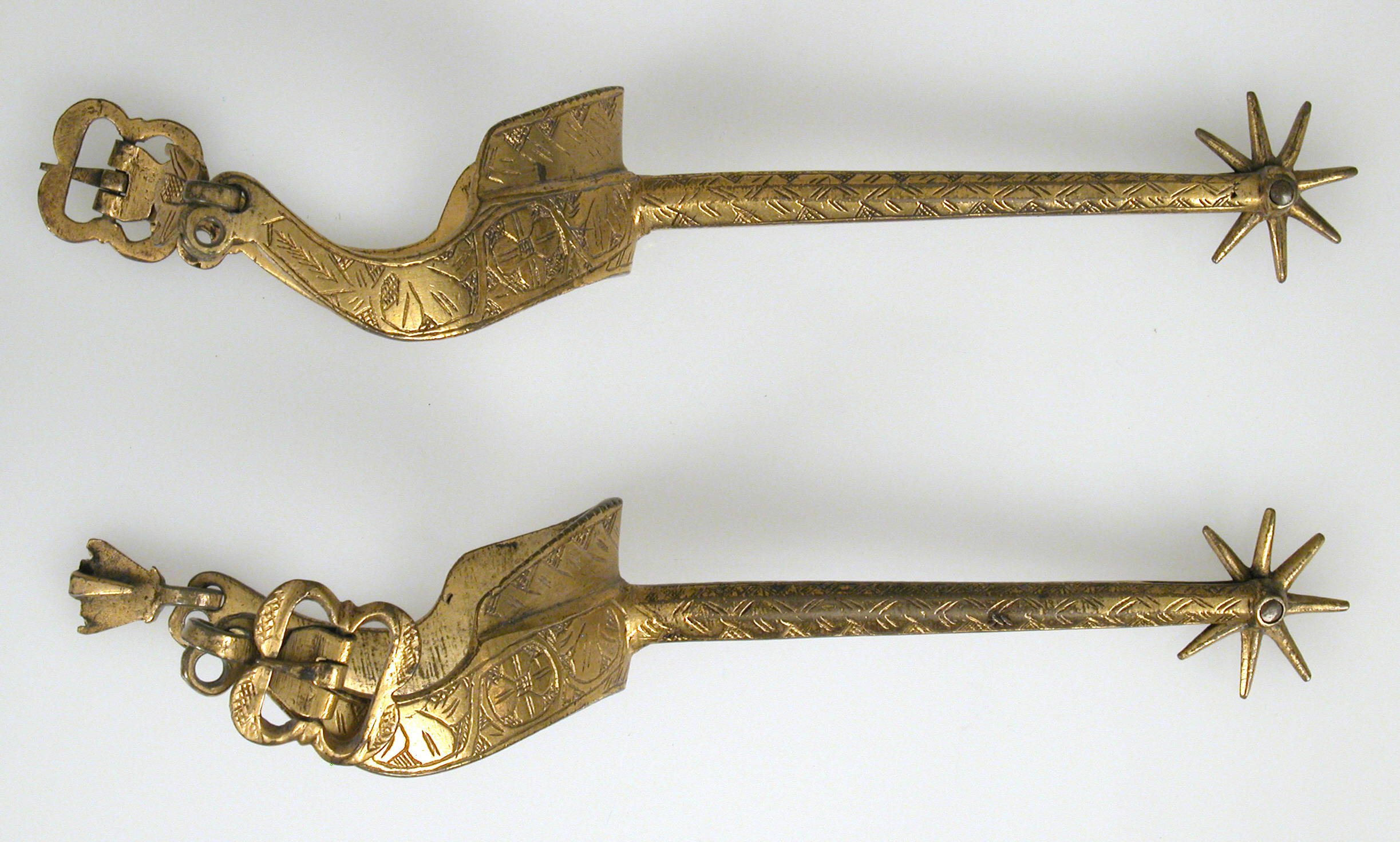
Although Roman horsemanship was likely less barbaric and better developed than equestrians will admit, the next major innovation in dressage would not occur until the 16th century. Italian gentleman Federico Grisone is credited in equestrian texts with developing the style of riding that would develop into dressage as a modern equestrian would recognize it. His 1550 treatise, Gli Ordini di Cavalcare, encourages the trainer to consider persuasion while schooling the horse, rather than just simply forcing the horse into submission alone. However, his work wasn’t a paragon of ethology, as he continued to use the harsh bits and spurs employed during the Middle Ages and recommended some torturous training methods, such as tying live hedgehogs under the horse’s tail.
Grisone’s treatise is considered by many equestrians to be the first systematic work on “educated” riding, but the roots of Grisone’s system are harder to determine. Aspects of this system are undoubtedly of Grisone’s invention. However, his descriptions of highly stylized gaits and airs more than likely have their roots in medieval parades and other public exhibitions. In fact, one 14th century copy of the Romance of Alexander features two illuminations of horses performing rears and kicks that resemble airs above the ground.
However, Grisone’s students would take his system of training abroad and develop this new art of dressage further. The art of dressage took root most firmly in France, where the aesthetics of the High School horse dovetailed into the pageantry of courtly splendor. 75 percent of the subscribers to the training manual Déscription du Manège Moderne, published in 1738, possessed titles.
Grisone’s students, buoyed by their royal patronages, innovated equestrian art. Antoine de Pluvinel, who served Henri III, Henri IV, and Louis XIII, insisted that the trainer must study the horse’s mind, and that good trainers leveraged their horses’ memories. De Pluvinel stressed soft aids, gentler bits, and frequent praise, in contrast to the harsh ideas of his his teachers. Further, de Pluvinel perfected the usage of pillars for developing higher degrees of collection, whereby the horse shifts its center of balance towards its rear by lightening its forehand and accepting a greater proportion of weight onto its haunches. The use of the pillars is a tradition that continues to be employed by the Spanish Riding School today. De Pluvinel is also credited with the invention of the work around a single pillar, which would develop into the technique of longeing the horse about a handler that is universally practiced today.
Another French equestrian, François Robichon de La Guérinière, who served as écuyer to Louis XIV and Louis XV, introduced the shoulder-in, one of the foundational exercises for developing collection in the horse. De La Guérinière’s shoulder-in forms part of a system of work on two tracks, where the horse’s forelimbs describe a different path than its hind limbs, intended to supple, strengthen, and lighten the horse more thoroughly than the systems of his predecessors. Indeed, the shoulder is still a staple of mid-level competitive dressage tests across the globe.
De La Guérinière’s contributions to dressage go deeper than just his exercises on two tracks. In the opinion of the Anglo-Dutch horse breeder and trainer Henry Wynmalen:
De La Guérinière was the leading master of the eighteenth century, certainly one of the greatest, possibly the greatest, equestrian of all time, and undoubtedly the father of modern equitation as we know it to-day….His definitions of the main principles of the art are admirably lucid and concise, and remain as true to-day as when written two hundred years ago….His method is reasoned and natural and he is the first to look for perfection in true balance of horse and rider.
(Continued below)
Week 146
In a far from unprecedented turn of events, I had hoped to cover more ground, but – again – busy week. Therefore this installment will amount to a sort of preliminary introduction to (the themes) of relatively recent interpretations of Fascism (and “fascism” as a broader cultural phenomenon) along the distinct but not unrelated lines of “aestheticization” and “sacralization” of politics.
On Wednesday – August 6^th 1919 – the day after the solemn funerary service for the victims of the “tragedy of Verona”, the first plane crash in the history of civil aviation in Italy, the Popolo d'Italia published a full front page, courtesy of the poet and passionate aviator Gabriele D'Annunzio. In a display of his propensity for articulate alliterations, the title “L'ala d'Italia è liberata” - “Italy's wing is freed” - gently conveyed an idea of lift, of levity, of lighthearted delight, the ecstasy of being taken and transported into the sky, into the future, into an ideal dimension, once remote and intangible, now immediate and conquerable. But, with the ascension, also the gravity, of mountains themselves, struggling against their weight, “almost on the verge of leaping into the sky”, of the fall, of death. And in the latter, the completion of the ideal dimension embodied by the aviator, who could experience that “sacrifice of the hero” - the redemption act of the fallen soldier – in its purest, and perpetual, form.
And our souls were rising with them, and our last sweetness was in glorious death. We didn't have enough of it. We are yet unsated. We do not come out of the war sated. Among all the combatants we are the privileged ones: we still can win, we still can die; we still want to win and we still want to die. Our fields aren't changing into fortresses and arms depots, but remain fields of challenge and of battle. We can depart every day, from here, for the marvelous adventure, for the last adventure. Same as we gave our heroes to war, same as we gave our heroes to the armistice, thus we'll give them to peace. […]
The death of the aviator wasn't merely an accidental occurrence but an integral part of the experience of ascension, both in terms of the individual act and of its collective function. The aviator always offered his life in sacrifice to a higher ideal, and in doing so – more so than other, less ideal forms – became the living embodiment of that abstract ascension that the fallen hero was called to symbolize.
“Let's fly! Let's fly!” Today's annunciation under the sky of peace is like yesterday's annunciation under the sky of war.
Prohibitions have been called off, restrictions are broken. In these dreary eight months of armistice the old sedentary chiefs objected to our restless impulse: “Why do you wish to risk your lives? Why waste such an expensive material? To what end? Keep to the ground.” […] Done with the war, we were condemned to rot away in the fields like in the beginning, when our first commandment had been to fly as little as possible and to risk as little as possible. Done with the war, we had this mandatory order sitting on top of our leather caps: “flying not allowed except for military reasons”. And there was nothing left in those military reasons but to sit there and ruminate and choke down the daily humiliations inflicted upon us by the Conference. The blood of Francesco Baracca, of Ugo Niutta, of Maurizio Pagliano, of Ignazio Lanza, of so many other stern heroes, was bartered away with the sniveling of the “softhearted pettifogger”. […]
The piece – dated to July 9^th 1919 – had been composed (this is, probably, the edited version of a speech) in the event of the new Ministry removing the restrictions on flight (which had been introduced by the previous military and civilian authorities due to the serious fuel and material shortages) and thus metaphorically and practically clearing the new aristocracy of the sky for takeoff, nearby that aviation field of Centocelle where the first “aerial demonstration” on and above Italian soil had been offered, little more than ten years before, by Wilbur Wright.
Comrades – D'Annunzio continued – flying is no longer forbidden. Instead, our marine mandatory term becomes a celestial one: “volare necesse est vivere non est necesse” […]
To fly was “necessary”, not to live – a cry of liberation, immediately to be delivered to each one of those who could hear it and understand it on “the wings of a Roman Eagle”.
Send a Roman Eagle to deliver them. Bring to each the sign of Rome, the name of Italy. Let them depart to seek the new citizens of Italy among the remotest villages and tent camps. Let them erase the deserts […] Bridge together Tripolitania and Eritrea. The victorious of the sky over Carso, of the sky over Venice, of the sky over Istria, shall go comfort the dead of Adwa.
Let the aviators find their only guidance in their instinct, like swallows, like storks, like cranes. Let us go, let us dare. Let us follow our fates, from end to end, from death to death, from glory to glory. Let us keep our privilege of combatants, who still can and want to prevail, who still can and know how to die. […] to rise “higher and further still”, towards the unknown, to try the un-tried and to dare the un-dareable. […]
There was resistance against flight, against the aviators, and obviously so – it was “the petty hatred of the goose for the eagle” - of men who either couldn't understand, or were envious of the ideal embodied by the new aristocracy of the sky. Men who resisted the will to fly, like they had resisted the intervention – the supreme calling of men, just as they had failed to understand the supreme calling of the Nation. They had turned the Italian aviation into a “caged eagle”, sad, diseased, an object of mockery, chained down
until yesterday by our chiefs, poorly dissimulated enemies of flight and of flying things: tired old men, or ambitious latecomers, inexperienced with new instruments and opponents of the divine instinct, unable to understand the genius of race, and to indulge and excite it.
The Italian aviators had not made war with the meager means reluctantly supplied by their “chiefs” - but by themselves, strong of their “divine instinct” and nothing else, following their own commandments: “closer, always closer”. To the enemy, to the ground, rising up along the mountain ridges, on their heavier-than-air machines, barely sustained by “riddled wings”.
Splintered propellers, shattered axis, rudders torn apart, broken pipes didn't prevent us from taking the sky. Fiery bees made their honey inside the metal honeycombs of our radiators. And each one of us knows the intoxication of that martial honey. […]
Prestige have become easy game. Temerity a habit. Man imitates the bird, but freer than birds, since he loves neither his nest nor his end. He wants to go from nest to nest and from end to end, and from death to death. Let him go then […] There is nowadays one Italy who wants to live with its belly, bend its neck, to return beast, pasturing in the enclosed dark? But there is one Italy as well, who looks at the distant heights, far away, scouting the winds far off the coast […] This vigorous courageous adventurous Italy is real […] Once we gave pilots and captains to the whole world. Now we can give the whole world both wings and masters of the wings.