There are a great deal of similarities between western (originating in Anatolia, spreading from there) coins and Chinese coins that I can see - circular, made of metal, etc. They both arose at around the same-ish time period (between about 700 BCE and about 350 BCE). Theoretically my understanding is that "western" coins originated somewhat earlier (around 700 CE) and Chinese coins a bit later (350 BCE).
Is there any sort of cultural transmission going on here, or was this sort of a "convergent evolution"? I tried to look into this and I can't really find anything that answers this question.
First I would like to point you to my earlier reply to a AH thread couple months ago about the origin of the Chinese coin design with "a squared hole in the center." Here is my original reply, and see also my follow up replies here and here. In that thread I was responding to the history of one particular Chinese coin design, but I think you could find many relevant information on the development of Chinese coinage during pre-Qin era (before 221 BC) there.
Now back to your question. I am not so sure what you mean by "a great deal of similarities between western and Chinese coins." Personally I am not aware of any coins from Iron Age Anatolia that closely resemble Chinese coins from the similar period, and would love to know if you have examples in mind. If by "similarities," you are just referring the the round, disc-like shaping of the coin in the most broad sense, then I'm afraid to say that the earliest known Chinese metal coins shapes are anything but round.
Unsurprisingly, Sima Qian's Shiji presents one of the earliest comprehensive study on the history of Chinese coinage, mostly in Volume 30 《平準書 》 "Treatises on the Standardization of Unites," where Sima Qian wrote:
"As soon as the first trade network was formed for the exchange of agricultural products, industry goods and merchandises, various metal coins in the shape of tortoise carapace, seashell, spade and knife emerged. Thus coins are extremely ancient in origin, and it is said that they were developed prior to the reign Gaoxin, although no precise record could be found. 農工商交易之路通,而龜貝金錢刀布之幣興焉。所從來久遠,自高辛氏之前尚矣,靡得而記云。"
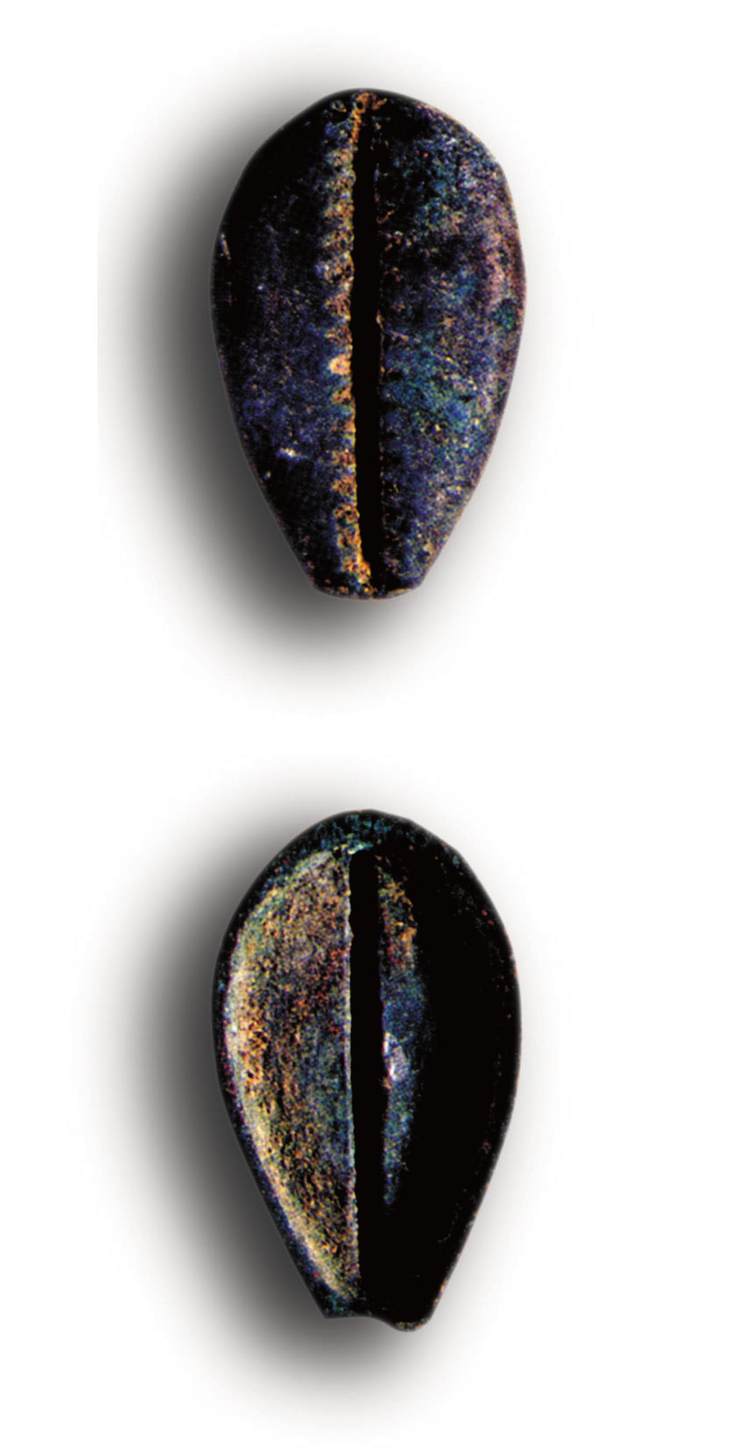
I am not so sure as to where you got this "350 BCE" date from, as even by the most conservative estimate, Chinese coinage has been going on for more than seven hundred years prior to that date, starting from late Shang period c. 1200 BC. Looking at present archaeological evidence, we have ample examples of all four pre-Qin Chinese coin types listed by Sima Qian from the quote above. However, most of them originated sometime during the Spring and Autumn period (771 BC - 403 BC). Prior to the Spring and Autumn period, the only type of metal coin we have found so-far are tongbei / 銅貝 or literally "bronze shell coins". The oldest examples tongbei shell bronze coins we have discovered so far are from late Shang dynasty, c. 1200 BC, as seen here as part of a collection of more than one hundred tongbei coins excavated in 1971 from a late-Shang era archaeological site located in Shanxi. Additionally, as of 2008, similar tongbei coins have been found in more than one thousand Zhou period archaeological sites throughout China. Interestingly, in the oracle bone script, which is the oldest known Chinese writing system, the character signifying "value" and "currency" is the same one used for "shell," and the character itself is basically an abstracted depiction of a seashell. Indeed, this “貝” character is still in contemporary Chinese (and Japanese) writing to signify seashell and things relating to money and wealth. Shell shaped coins remain a commonly currency throughout the Spring and Autumn period around the Central Plain region and in the State of Chu. We also began to see gold-plated and silver-plated versions of bronze shell coins appear around this time.
With the rapid decline of the Zhou court and intensifying competition between major Chinese states for hegemony throughout the Spring and Autumn period (771 BC - c. 403 BC), many new types of coin shapes also emerged around this time as well. The most common new coin types developed during mid to late Spring and Autumn era are bubi / 布幣, daobi / 刀幣 and yibiqian / 蟻鼻錢. Bubi are spade-shaped bronze coins most commonly associated with the State of Jin. Earlier bubi coins were quite large and heavy with pointed ends such as this one, and were cast in individually ceramic moulds such as this example from the State of Jin. Later bubi coins such as these from the Warring States period (c. 403 BC - 221 BC) and also briefly during Xin dynasty were much smaller and thinner, and were cast en-masse from carved-stone moulds like this one. Daobi coins such as these are mostly commonly associated with states along the northeastern coast, such as the State of Qi and the State of Yan. Yibiqian coins like the ones shown here were used almost exclusively within the State of Chu, and were typically cast in bulk from copper moulds like this one here. They are much smaller than other types of Chinese coins during the same period, typically 1.5cm (about half of an inch) long and weighing only ~3 grams. It is perhaps for this reason that despite shaped like small tortoise carapace, they were referred to as yibiqian which literally means "ant's nose coins."
Disc shaped Chinese coins did not appear until much later, in the Warring States period (c. 403 BC - 221 BC). Please see my earlier post linked at the top for more information on them. Now to briefly summarize my answer to your question: [1]There is no evidence of western influence of early Chinese coinage. [2]The oldest Chinese bronze coins we've found so far date back to late Shang period, around 1200 BC. [3] Earliest types of Chinese metal coins were sea-shell shaped, and subsequent early Chinese coins types developed in the Spring and Autumn period were typically in spade, knife, and yibi shapes.
Sources:
Sima Qian, Shiji, Volume 30 《平準書 》
周卫荣. 齐刀铜范母与叠铸工艺《中国钱币》2002年第2期
王毓銓.《中國古代貨幣的起源和發展》(北京:中國社會科學出版社,1990)
尹继志,陈小荣. 试论贝币在我国的行用. 《金融教学与研究》2008(3)
《錢錄》,清乾隆十五年梁诗正奉敕纂辑,合十六卷