Hoping this is the appropriate sub to ask, as I can’t seem to find a more relevant one. I’ve always wondered why we look so different as compared to artistic depictions of humans from ~1500 AD (Lucas Cranach the Elder comes to mind) and before, and if it was perhaps because we actually differ physically (height, stature, etc.) or if artists intended to depict humans in a certain way. I understand there was a higher prevalence of incest, as well as large disparities between classes (nobility and biblical figures were more likely to be used as subjects), but is there any academia as it pertains to history? Thanks in advance for any help!
There are a few earlier answers that address your question with respect to European art, specifically:
Did ancient Greeks/Romans sculpt everyone with a perfect physique regardless of how they truly looked? - by /u/Deprintfount
In Late Roman sculpture, Emperors are depicted with almost grotesquely huge eyes. Was there a symbolic reason for this or was it a purely stylistic choice? - by /u/Guckfuchs
Why did pre-renaissance christian art degrade so much compared to the classical period? - also by /u/Guckfuchs
Why do professional paintings look photo-realistic in 1700s England yet look so awful 100-150 years earlier? - by /u/pipkin42
You might also be interested in an earlier answer that deals with one of the most (in)famous examples of consanguinity and appearance:
And finally, this earlier answer concentrates on one small part of human anatomy, but does a good job illustrating how even "realistic" art is a cultural choice:
I'd love for someone to come along and address your question through non-Euro art, too!
Thanks /u/sunagainstgold for summoning me! Maybe I can add a few things to supplement the linked answers a little. First of all, it is of fundamental importance to understand that no historical work of art should be uncritically used as evidence for how things or people “actually looked like” in the time period from which they originate. Just like literary sources always have some kind of agenda which needs to be carefully analysed before you can mine them for information, so do works of art. They always were produced with some kind of purpose in mind and that purpose was pretty much never to just provide a random snapshot of how things looked like.
As long as we look at art epochs or styles that make use of a rather abstract language of forms, this is obvious to everyone. Take for example the stunning early Bronze Age idols from the Cycladic Isles. Of course, it is extremely unlikely that their makers lacked eyes, mouths, or any other facial features besides their noses. We know for a fact that the Baroness Renée Irana Frachon, who in 1912 was the model for Constantin Brancusi’s ‘Une Muse’, did actually have eyes. But to reduce the human form down to its most essential such details weren’t necessary, hindering even, and so Brancusi and the Cycladic masters simply weren’t bothering with them.
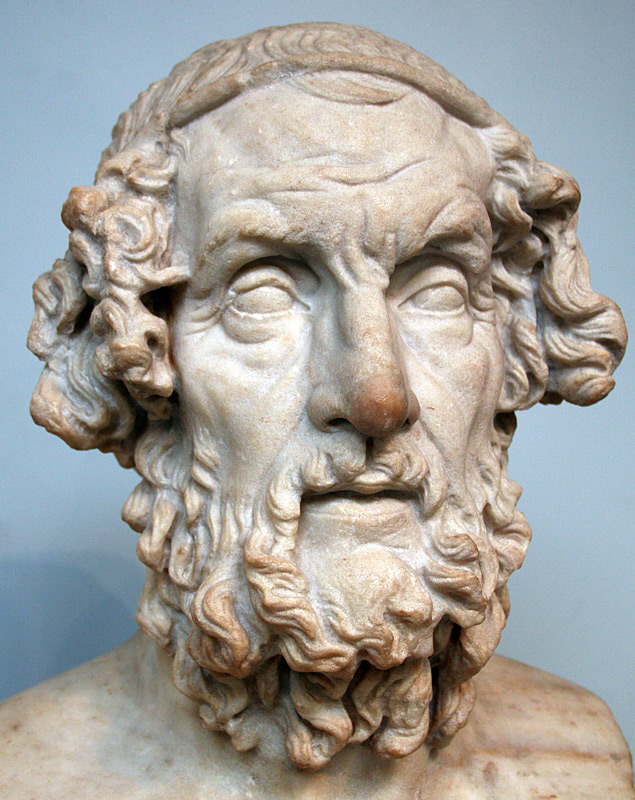
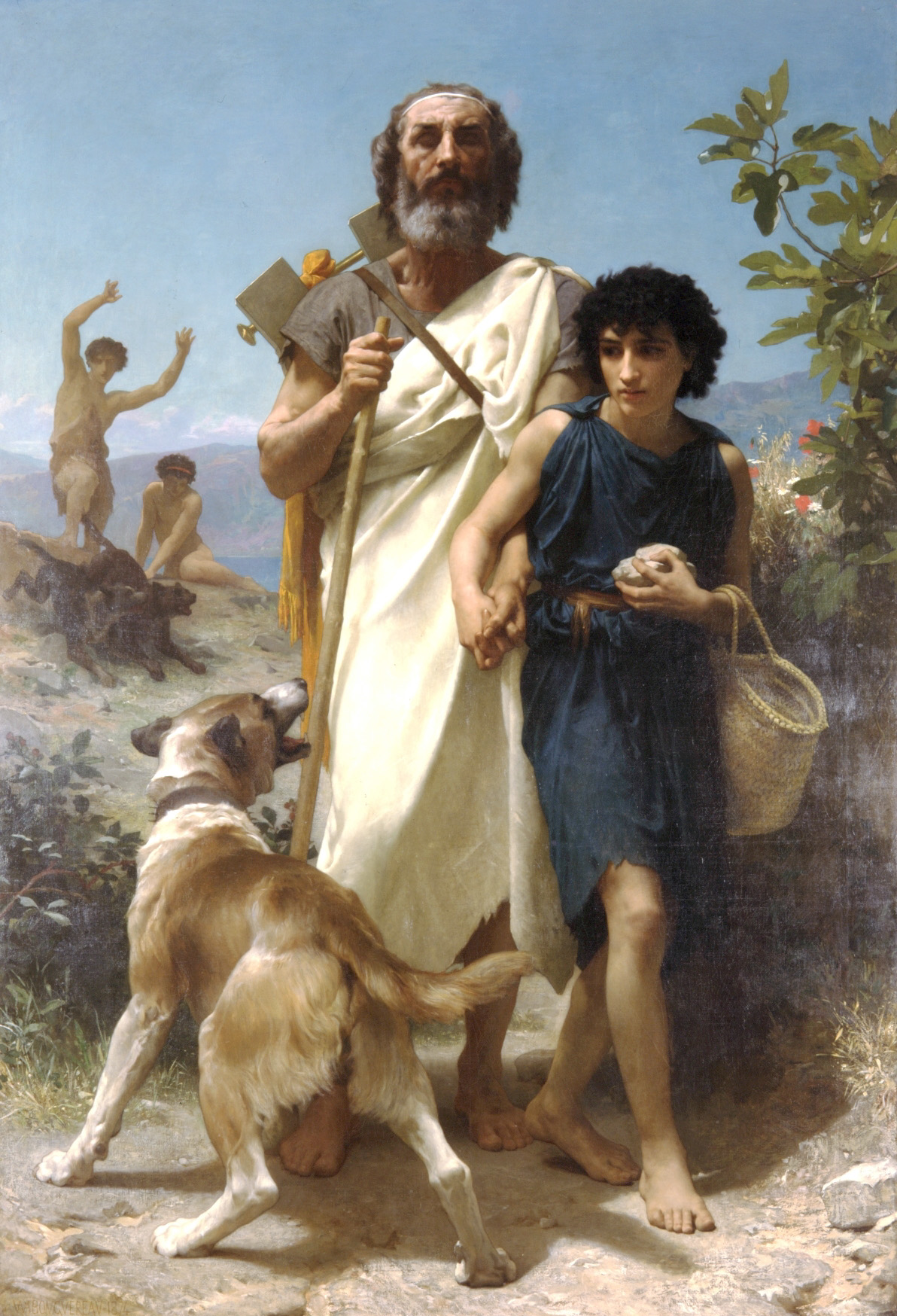
Of course, I can only make this joke because these pieces are so abstract and the gap in similarity between the representation and the represented is relatively large. Other works can be much trickier, at least if they seem to strive towards ‘realism’. The gap might appear much narrower then – but it is always there. Look for example at this famous head portraying the ancient Greek poet Homer. In many regards it is the exact opposite of a Cycladic idol. It is amazingly detailed and individualistic, seemingly reproducing every wrinkle in the face of its subject. You wouldn’t confuse this man for anybody else. So authentic does it appear that several later works make reference to it. William Bourguereau’s 1874 painting of the poet reproduces it rather faithfully. The face of the advisor from the recent ‘Total War Saga: Troy’ is also clearly based on it. There is just one small problem: that portrait was carved in Hellenistic times, centuries after the presumed lifetime of Homer. The artist had absolutely no way of knowing how his subject had looked like. But the faithful reproduction of the poet’s facial features was probably never the goal anyway. Its features relay information beyond the man’s outward appearance. His wrinkles bear witness to old age, as well as the wisdom and the many experiences that this hopefully brings with it. The shaggy hair tell of a life constantly on the move, travelling from court to court plying his trade. His mouth is slightly opened, ready to sing his famous verses. The small and sunken eyes make reference to Homer’s presumed blindness. The head tells us nothing about how ‘the real Homer’ looked like, but much about how people in the Hellenistic age imagined him to have been.
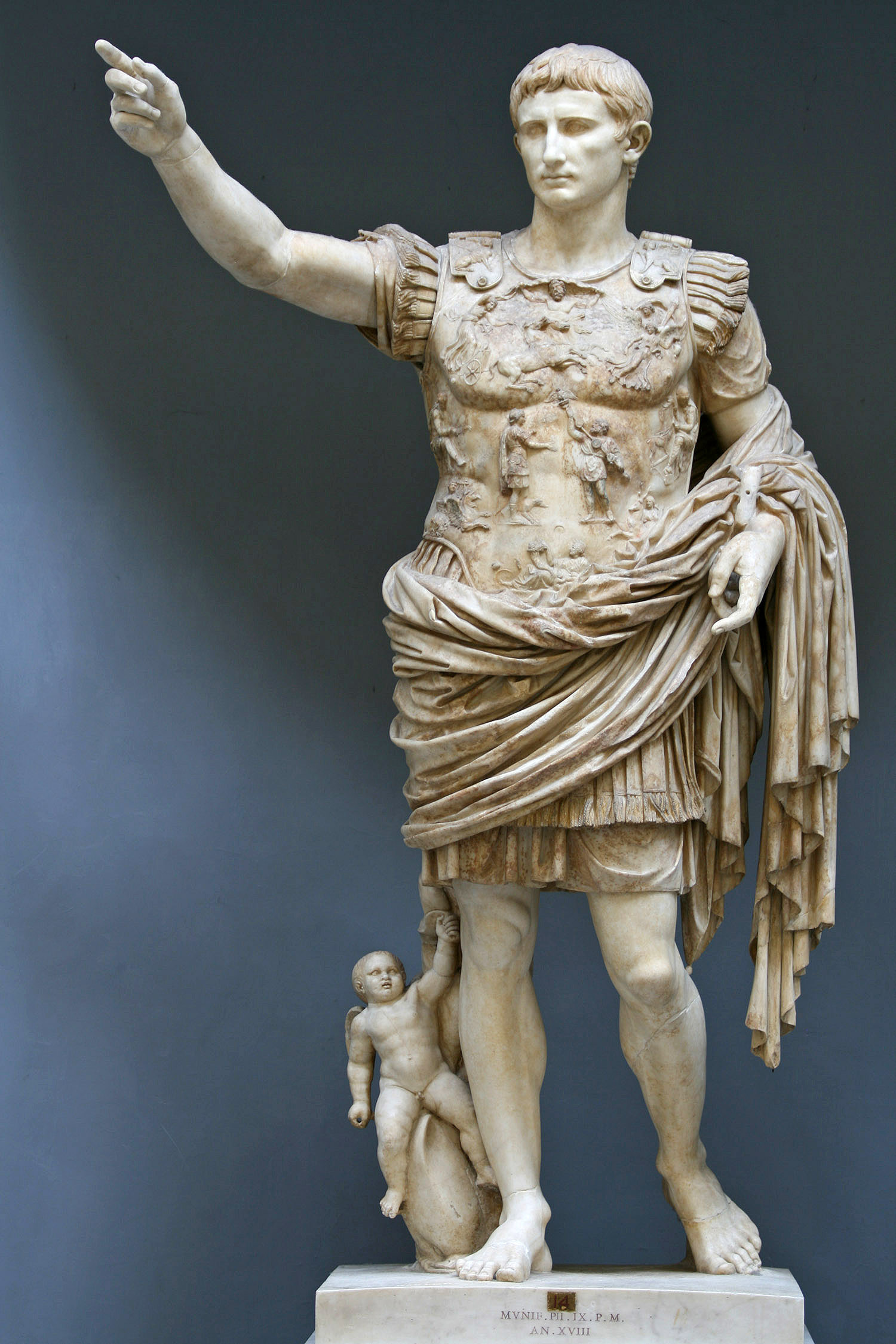
Obviously, not every artist is centuries removed from his subject. Some work to depict their contemporaries and therefore have the possibility to make reference to their actual features. Roman imperial portraits would be such a case. A prototype for them was established in Rome itself in close proximity to the emperor and then copies were produced in countless numbers all over the empire. It is easy to assume that these portraits provide us with authentic information on how the individual Roman rulers looked like. Projects like this are based on this assumption. But again, things are not that easy. For example, all the extant portraits of Augustus show him more or less in the prime of his life, even though he ruled for decades and died in his late seventies. One might be tempted to see this as the simple vanity of a man longing for his lost youth. However, even young or middle-aged Augustus had probably different things in mind than to simply promote his good looks. The famous Prima Porta statue makes conscious references to the idealistic sculpture of Classical Greece, like the 5th century BC Doryphoros by Polyklet. A portrait like this is well suited to represent the first emperor’s conservative political program and simultaneously elevate him into a larger than life figure. That wasn’t any less pertinent for seventy-year-old Augustus than it was for his younger self, so it made sense for the portrait to stay the same.
Later emperors could have different priorities and those were reflected in their portraiture. Vespasian was much older than Augustus when he gained power but also died shortly before his seventieth birthday. His portraits show him with clear signs of advanced age. Much of his hair is already gone, his face is wrinkled and his eyes squint as if to compensate for his worsening eyesight. A perfectly believable depiction of a man in his sixties. But it also works on another level. Vespasian was the first to establish a stable regime after the fall of dynasty of Augustus. That family’s last ruler, Nero, had been especially disliked by the senatorial elite, ultimately resulting in a civil war. It would have made good sense to differentiate the new ruler from his predecessors, especially from Nero’s love of luxury. And fittingly Vespasian’s likeness is much more reminiscent of the portraiture of the Late Republic. To the other senators this promised a much less autocratic style of rule that would be much more considerate towards their sensibilities. With this in mind Vespasian’s portraitists might even have had a reason for exaggerating the signs of his old age. We don’t know whether they did this, but it does mean that we can’t really be sure how similar Vespasian’s portraits were to his actual appearance, believable though they may be.
With all this in mind I’d say it would be a bit misguided to explain the stark variations in the depictions of the human form throughout time with actual physical differences between us and the people of the past. Such differences might have existed but chronicling them was never the intent of any artist. And it were those intentions that shaped historical works of art far more than the actual physical appearance of past humans.