The answer to this is stability. The Emperor had been an institution in Japan since the ancient feudal era thousands of years before. I believe MacArthur recognized this and sought to preserve the stability that the Japanese Emperor provided.
Firstly, I honestly believe had the Americans arrested or executed the Emperor it would have led to the occupation of Japan devolving into a messy guerrilla rebellion. The death of the Emperor at the hands of foreign conquerors would have infuriated the populace and pushed them to suicidally resist against the Americans. The Emperor still held huge respect and power over the Japanese people, and any harm that befell him would have infuriated the Japanese people into violently resisting the United States. Until WW2 he was widely believed in Japan to literally be a demi-god who was divine. The Japanese people to this day have a huge reverence for the Emperor.
For example I'm Japanese and my mom is from Japan. During her childhood she was taught that the Emperor was to blame for WW2 and that he was technically a servant of the Japanese people who failed them by leading Japan into war. When he learned about this my mother's father (my grandfather) was so infuriated he went to my mother's school, confronted and berated the teacher, and then went to the principal to complain about him and demand he be fired. This was a good 20-30 years after the end of the war.
Secondly, the Emperor provided a continuation from one government to the next and legitimized the new government. This made it easier for the Japanese to accept the new Western pro-American government, as the Emperor remained as a continuous institution. This made it less jarring for the Japanese people to accept the new government, as the Emperor was still there to reassure them. It made the transition feel less like a switch to a totally new government and rather simply shifting the existing government into a new direction. The presence of the Emperor also legitimized the new government. The Emperor calling for peace and endorsing the new government also was a huge factor in most Japanese accepting the new government as legitimate. MacArthur found it easier to reform Japan through the Emperor, who carried much more authority than his own orders as a military conqueror / foreign occupier.
Thirdly, MacArthur had no reason to execute the Emperor or punish him as a war criminal. The American occupation forces launched their own investigation into the war and rightly found that Tojo was largely behind the war crimes committed by the Japanese. The Emperor was merely a figurehead and had no say in the conduct of the war or the Japanese military forces. Only one member of the Japanese Royal Family was ever found to be a war criminal, Prince Yasuhiko Asaka, who participated and likely ordered the Nanjing Massacre, and even he wasn't punished due to the Americans fear punishing members of the Royal Family would spark violent resistance. In fact the investigation found that when the Emperor announced his intention to surrender to the Americans following the bombings of Hiroshima and Nagasaki the military launched a coup to depose and murder him in order to continue the war, a coup which quickly failed. The Americans took this as proof the Emperor was against the war and intended to stop it but was prevented by the military. I also believe to some extent MacArthur was moved by the Emperor's dedication to his people and didn't want to see him punished. When MacArthur met the Emperor the Emperor asked MacArthur to punish him for Japan's crimes, not the Japanese people. I believe this moved MacArthur and created a level of respect between him and the Emperor.
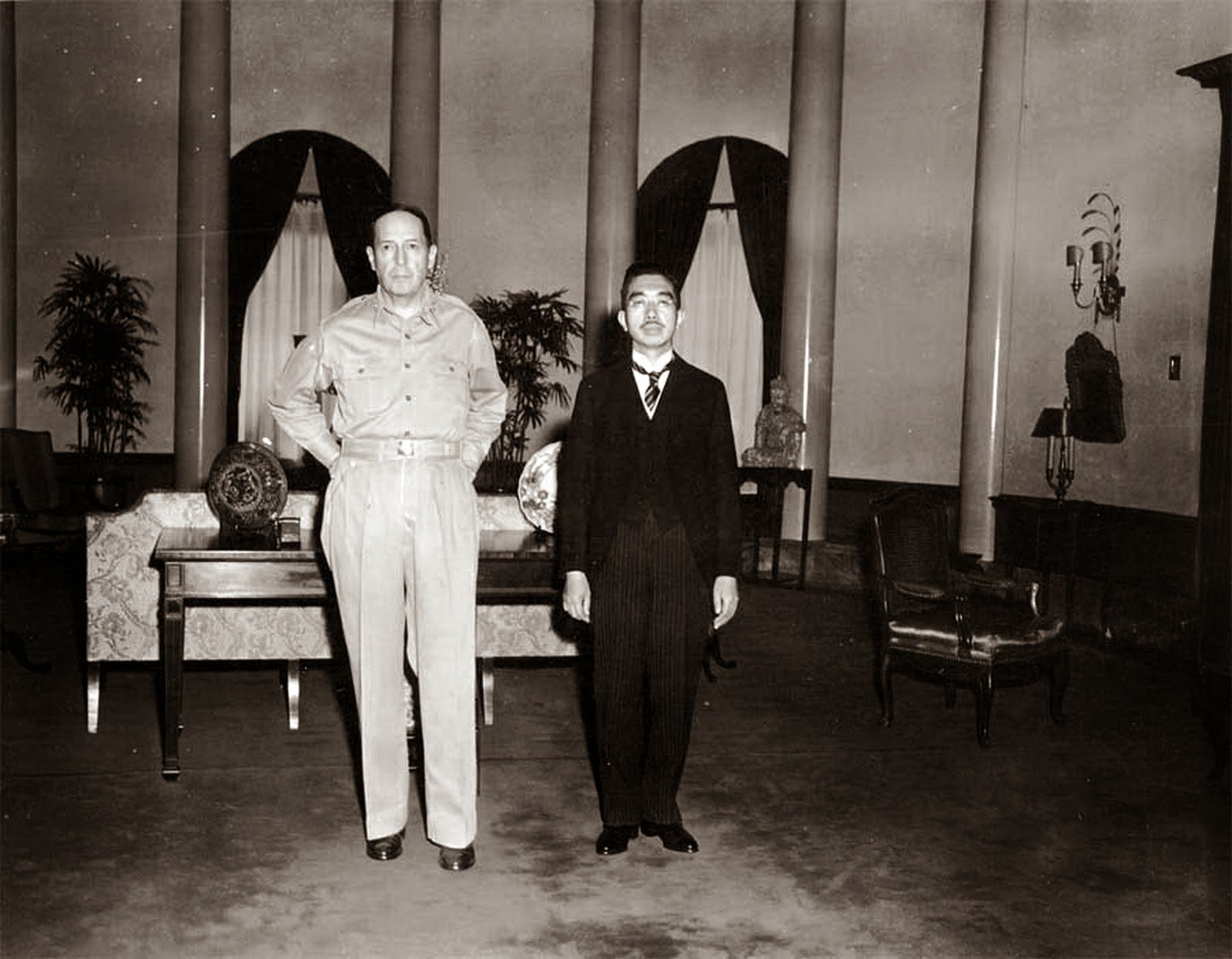
Now MacArthur didn't leave the Emperor as a divine demi-God in the eyes of the Japanese people. He used the Emperor as a way to cement U.S. superiority and to humble Japan. For instance, he famously took a photo standing next to the Emperor which showed him towering over the Emperor. He did this to show the Emperor was not all powerful or divine and was merely a man. The new Japanese Constitution written by the Americans forced the Emperor to renounce his status as a divine ruler. I believe this was also a reason they left the Emperor in power, because by showing that even the Emperor was submissive to the Americans, they showed Japan that the war was totally over and that America now held sway over Japan in East Asia. There was no chance to beat the Americans when even the Emperor was submitting to them. The photo of MacArthur towering over the Emperor was intended to show this. By humbling and pacifying the Emperor, MacArthur humbled and pacified Japan.
The famous photo:https://miro.medium.com/max/3200/1*K5AxUXVkuGBEbcrU2LoviQ.jpeg
As u/jbdyer recently commented:
This question gets asked quite a lot, so more answers are always welcome. In the meantime, you may enjoy these previous answers:
Why wasn't Emperor Hirohito tried for war crimes following WWII, and what reasons did General MacArthur have for steering things this way? as answered by /u/TheWinStore
Just Finished Herbert Bix's Hirohito and the Making of Modern Japan. What's the Scholarly Consensus? Is Hirohito a War Criminal? as answered by /u/kieslowskifan
After the Empire of Japan's defeat in WW2, why wasn't Emperor Hirohito put on trial for war crimes? as answered by a deleted user
Why was Emperor Hirohito allowed to keep the throne after Japan's unconditional surrender in World War 2? as answered by /u/restricteddata
Hirohito often gets lumped in with Hitler as an evil dictator in popular parlance, but to what degree can we actually lay the blame for Japanese atrocities like Nanking and Bataan on him? as answered by /u/Catfulu