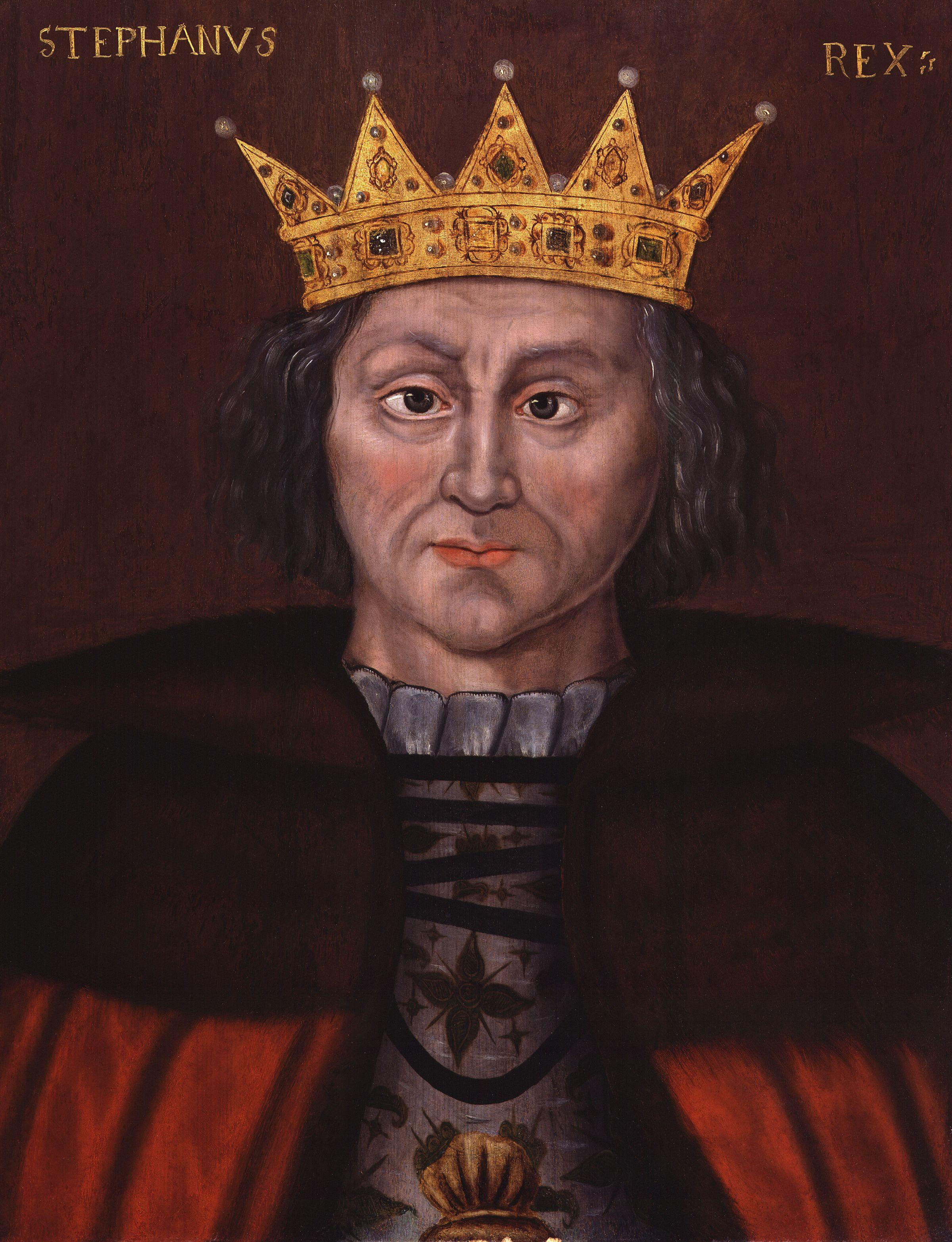
Briefly: we have no evidence that this was so.
The image you have linked to is not contemporary; it was painted some time in the period 1597-1618, or 450 years after the death of the English King Stephen in 1154. The painting, in turn, was based on woodcuts that appeared in Thomas Talbot's A Booke Containing the True Portraiture of the Kings of England (1597). According to the National Portrait Gallery, which currently holds the painting, it was one of a set of 16 and it appears to have been based on an earlier – but far from contemporary – engraving not of Stephen, but of his predecessor King Henry I (1100-35).
There's no evidence that Henry was cross-eyed, either. The chronicler William of Malmesbury mentions that his eyes were "mildly bright", but says nothing more of them than that.
Notable attributes such as being cross-eyed did get commented on in the medieval period, so it is probably safe to assume that neither of these English monarchs had significant issues in this department. Unlike, say, the 15th century Muscovite prince Vasily II, who was indeed sometimes referred to as Vasily Kosoy – the cross-eyed – before he fell into the hands of a rival to the throne and had his eyes put out, after which he was more generally known as Vasily the Blind.