By the time of the siege, the Ottoman controlled the entire Anatolia, as well as the land north of Constantinople.
So why was the chain even an issue then? Surely the Ottoman had navy in the black sea and could easily sail southward to the strait, wipe out the few ships the Romans had, and attack the weak sea wall of the city there?
I believe there may be a misconception at play here. But, if I've completely misunderstood your question, please let me know and I would be glad to revise my answer.
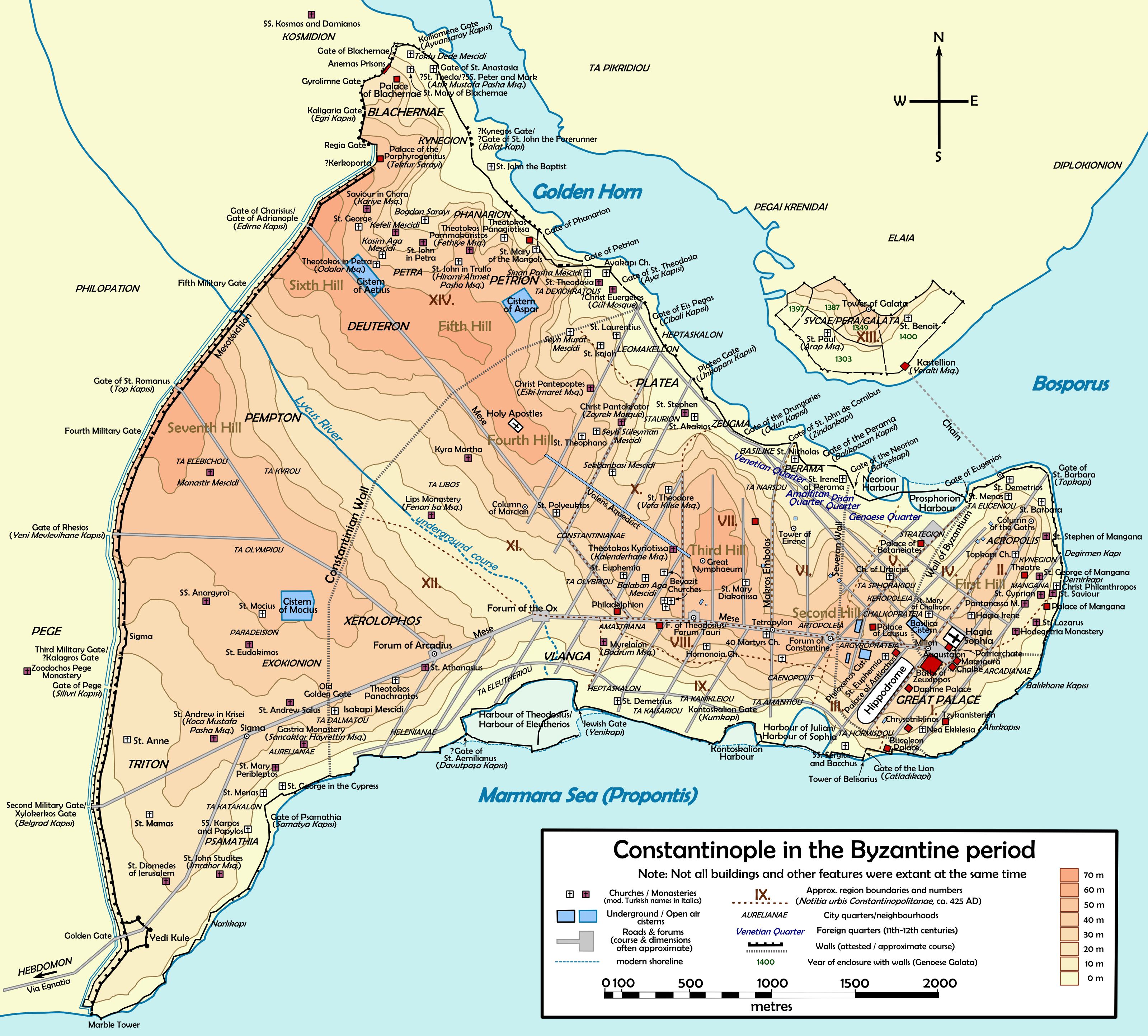
The chain didn't block access through the strait, but blocked access into the Golden Horn. This map provides a visual of where the chain would have been.^(1)
As is shown in the image, the chain does not block passage through the Bosporus or the Marmara Sea, but instead closes off entry into the Golden Horn. Because of this, north-south travel was not restricted to the Ottoman fleet. It had free range from the Marmara Sea, to the Bosporus, to the Black Sea, and back again if it so pleased.
Therefore, the advantage of a separate Black Sea fleet would have been limited. With the Byzantine-Latin fleet being defensive stationed inside of the Golden Horn, even an Ottoman fleet from the north would not have been able to reach them.
This placement of the chain is corroborated further by several sources. I have quoted the relevant sections below and provided their citations:
"...the dragging of his galleys uphill from the Bosporus shore near the present-day palace of Dolmabahçe, and down into the golden horn to avoid the boom laid across its mouth..."^(2)
"The Christian sails billowed out, and the great floating fortress began to move towards the entrance of the Horn...A few hours later in the dead of night, the boom was opened and the four vessels slipped quietly into the Golden Horn."^(3)
"The only area of Constantinople’s coast where ships could land was the stretch along the Golden Horn. Any possibility that enemy ships might try to take advantage of that by sailing into the harbour was closed off in times of crisis by a heavy iron chain, three hundred metres long, which was strung from a tower within the city to another in Pera."^(4)
The first quote actually goes into how the Ottomans beat the chain, which is a rather interesting story by itself and provides more evidence to the chain being located at the mouth of the Golden Horn. Around 70 Ottoman ships were quite literally dragged overland in Galata and into the Golden Horn, bypassing the chain.
The second quote in its full context actually shows that while the Ottoman fleet was massive compared to the combined Byzantine-Latin fleet, it still struggled to even challenge four Genoese ships. In fact, this is one of the only recorded naval battles at Constantinople during the siege. Even when the ~70 Ottoman ships landed in the Golden Horn, conflict was extremely limited. And, even once Constantinople was completely overrun, many ships were allowed to escape as Ottoman sailors landed to plunder the city.
Additionally, as the chain was only ~300m in length, it would not have been able to reach to Anatolia from Europe except in a few key places, that were often outside of Byzantine control.
From these sources, we can see that there is a general historical consensus that the chain only blocked entry into the Golden Horn and did not block north-south travel.
Bibliography
^(1) Byzantine Constantinople (Cplakidas).
^(2) Osman's Dream (Finkel), see page 52.
^(3) A Short History of Byzantium (Norwich), see page 376.
^(4) The End of Byzantium (Harris), see page 33.