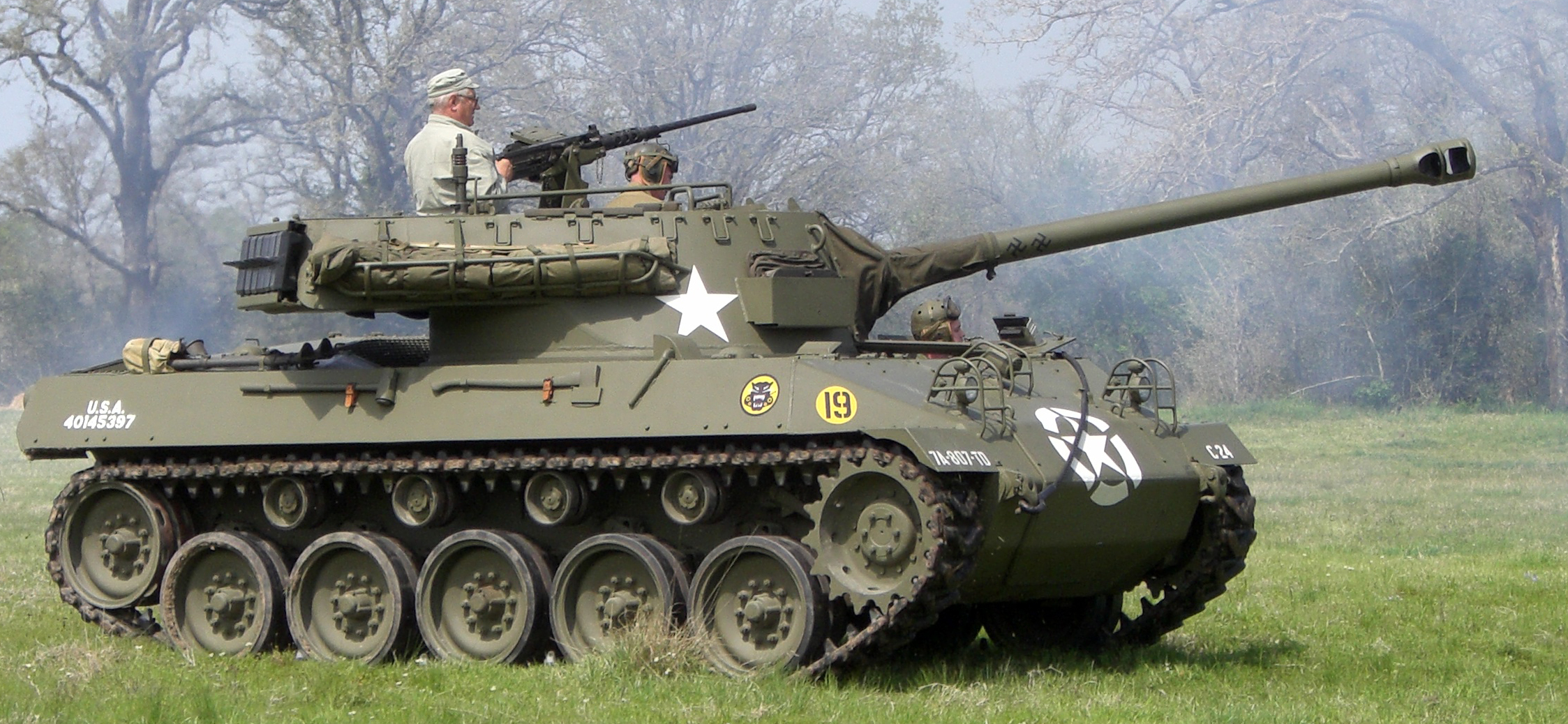
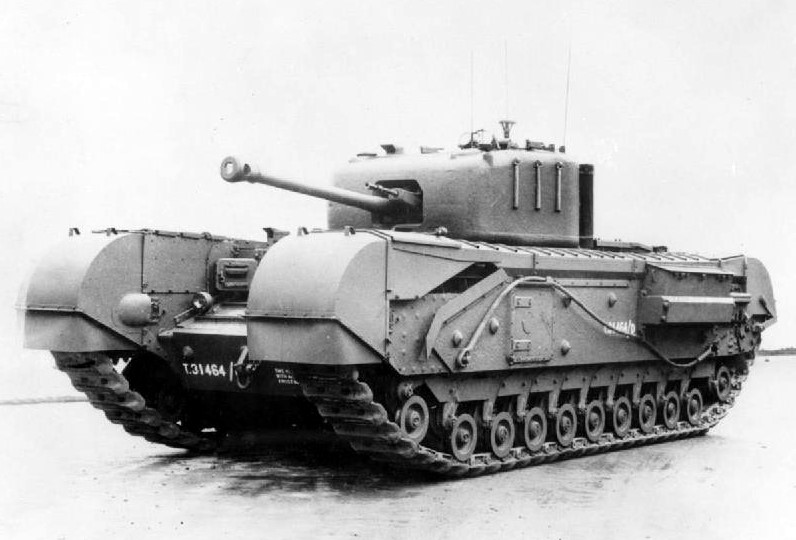
German and British tanks of world war 2, such as the Panzer IV / V or the Cromwell have turrets that consist out of multiple flat metal plates , that are wielded / riveted together. Meanwhile tank turrets of the US or the Soviet Union ( such as the T 34 or the Sherman ) have more extreme shapes and far less flat areas or even none at all.
I assume that this might be due to US and Soviet tanks utilizing turrets made out of cast metal which allows for more complex shapes ? But then again. Why didn't the UK or Germany make use of cast metal turrets, after all they seem to provide better protection due to allowing for less flat areas?
Great question! In general terms, it's easier to cast a complex component than to weld or rivet it from hardened steel. Something like a turret or even a hull is pretty easy to cast in one piece once you have large scale casting figured out, ie the startup costs are higher and then you can do it on the cheap. This was an incredibly tempting solution when the only other way to join armour was with rivets, which was a very expensive and time consuming process since you have to drill holes in all the plates after rolling them and then have riveters fix them in place. The rivets would also come off when the plates were hit with shells or bullets even when the main armour was not penetrated.
Once tank builders worldwide figured out how to weld hardened steel without it cracking this was a much faster method of joining plates without much of the drawbacks that riveting had. You still had highly skilled welders involved (at least until Paton's automatic welding method was put into production), but at least there were no longer any elements to dislodge when the plate was hit. The weld was still a weak spot and could be penetrated more easily when hit than the main plate (partially due to the micro-cracks around the weld) but rolled and welded armour was about 10% tougher for the same thickness than cast armour. Choosing one or the other really depended on what you already had factories set up for. The shape of the part made a difference too, like you guessed the more complex it is the easier it is to cast rather than weld.
Now, for specific designs. You'll find that while in general some nations preferred casting over welding for large components like hulls or turrets, almost everyone used both. If you look at French interwar designs, most tanks have cast turrets and hulls, aside from the FCM 36, which was assembled by welding. Same with the British: while Light and Cruiser tanks had riveted armour, by the late 1930s you start seeing tanks with cast armour (see the Infantry Tank Mk.I and Mk.II for instance). A mix of the two technologies in one tank was not uncommon, for instance the Churchills had cast turrets but riveted (later welded) hulls. The Canadian Ram tank had a cast turret and upper hull with a riveted lower hull. The American Shermans also had cast turrets, but then the hull depended on the manufacturer: some had cast hulls (M4A1) or welded with a cast component (M4 Hybrid, M4A6), others were wholly welded (M4, M4A2, M4A3, M4A4), but the differential cover was made of either rolled or cast steel depending on the production year. Interestingly enough, there was a proposed modernization of the M4 with a welded turret, but if anything the US ended up preferring cast components over rolled and welded ones. For instance, the M26 hull used cast components and the turret was entirely cast too. Since the US had a very mature steel industry there were plenty of factories set up both for casting and for rolling steel, and all of them could contribute to the war effort.
Similarly, the USSR had tanks that used both cast and welded components. The T-34 was initially composed of almost entirely rolled and welded parts with some castings (gun mantlet, final drive covers). However, with the introduction of the F-34 gun the mantlet was now welded. A cast turret was put into production pretty quickly and actually replaced the welded turret entirely in 1941. All T-34-85 turrets were cast. With the IS series the turret was always cast but there were welded hull variants. There were welded hull variants of the ISU-152 as well, it all depended on which factory produced the tank and what facilities it had on hand. With the IS-3 one important advantage of casting was realized: variable thickness. The turret armour was thickest in the front and gradually reduced in thickness towards the sides and rear. This was a pretty common technique in Soviet tank building in the late 1940s. This kind of part would simply be impossible to produce by welding.
Germany also used a combination of cast and rolled armour. For instance, the Tiger's gun mantlet, which is a pretty complex piece of metal, is cast. This is the largest cast piece of armour used in German tank production that I know of. Maybe someone else can fill in my knowledge gap on German manufacturing methods.
In short, whether a certain part was made by welding or by casting depended entirely on a specific factory's ability to produce the part and neither welded nor cast armour is inherently better. The performance against projectiles depends on what you do with the armour, for instance you can have a complex highly angled welded part (IS-3 hull) or a boxy cast part with lots of flat sides (Churchill IV).
Sources:
http://www.tankarchives.ca/2014/01/izhor-steel.html
http://www.tankarchives.ca/2013/11/is-3-armour-layout.html
N. Montgomery, Churchill Tank Haynes Icons
P Ware, M4 Sherman Tank Owners' Workshop Manual: 1941 Onwards (All Variants)
BIOS Final Report №614, Item №18, Welding Design & Fabrication of German Tank Hulls & Turrets
https://www.tankarchives.ca/2019/03/modernization-on-paper.html
The premise is a little bit flawed. It wasn't as if there were no all-plate vehicles in the Soviet (all-welded-plate T-34) https://www.worldwarphotos.info/wp-content/gallery/ussr/tanks/t-34_tank/T34_tank_abandoned.jpg ) or US (all-welded plate M18 https://upload.wikimedia.org/wikipedia/commons/4/43/M18_hellcat_side.jpg) but that's just more of a pedantic quibble. You are quite correct that in general, British and German tanks used flat plates. Even that, though, is not a constant, the British Infantry Tanks, for example, II https://upload.wikimedia.org/wikipedia/commons/5/5f/Bovington_191_Matilda_II.jpg is predominantly cast hull and turret and a number of IVs also had cast turrets. https://upload.wikimedia.org/wikipedia/commons/4/42/Tanks_and_Afvs_of_the_British_Army_1939-45_KID1265.jpg .
In fact, when it came to shape, the US wasn't actually all that picky about method. Compare the turret of the M7 Medium tank https://upload.wikimedia.org/wikipedia/commons/0/05/M7_Aberdeen.JPG with that of the T49 gun motor carriage, https://i.imgur.com/xDGFUj4.jpg , you'll see that they are exactly the same design, just that one is welded the other cast. Similar with Sherman hulls, the cast Sherman hull was built to the same design and protection requirements as welded plate ones.
The British preferred welded over cast due to the quality control process being easier, but, as mentioned, some Churchills were made with cast, for pretty much the same reason that Shermans came with both kinds of hull: Only so much manufacturing capability was available for either trained welders or casting. The latter is why early-war French tanks were predominantly cast and bolted together. Only the FCM-36 was all-welded, but FCM were actually a ship-building firm, and welding was preferred method of warship construction by this point. Only FCM had the trained welders able to make the things, but welding was also a very expensive process to train at the time, making the tank expensive and thus not many were made.
There is an argument that the Germans were world leaders in metallurgical development in the late inter-war period, with high welding skills and the ability to make very strong armor plate (Technology shared with the Swedes and Soviets). For this reason you'll see in the inter-war period that Germany, Sweden and USSR were building welded tanks when pretty much everyone else in the world was still bolting or riveting the things together. Also, the German armor in the early and mid war was face-hardened, a process which is far easier with flat plate than cast. Eventually the Germans stopped doing this, but the vehicles were already designed.
It's worth observing that the actual shape of the turret isn't all that related to the method of construction. If you look at a T-34-85 turret, for example, you'll observe it's generally flat sided/hexagonal, a shape not too dissimilar from the US's M10, and Tigers, for example, are rounded turret, as are the welded conical turrets of the Soviet T-26 ot BT-7.
Bottom line, in most cases, it comes down to capacity to manufacture the right number of castings of the right size. It wasn't as if the Soviets had a specific aversion to all-welded turrets, it could just have been that the welders were busy working on the thousands of all-welded light tanks (T-60 as an example, https://ru.all.biz/img/ru/catalog/4444345.jpeg ), as well as welding together the hulls and turret halves.